
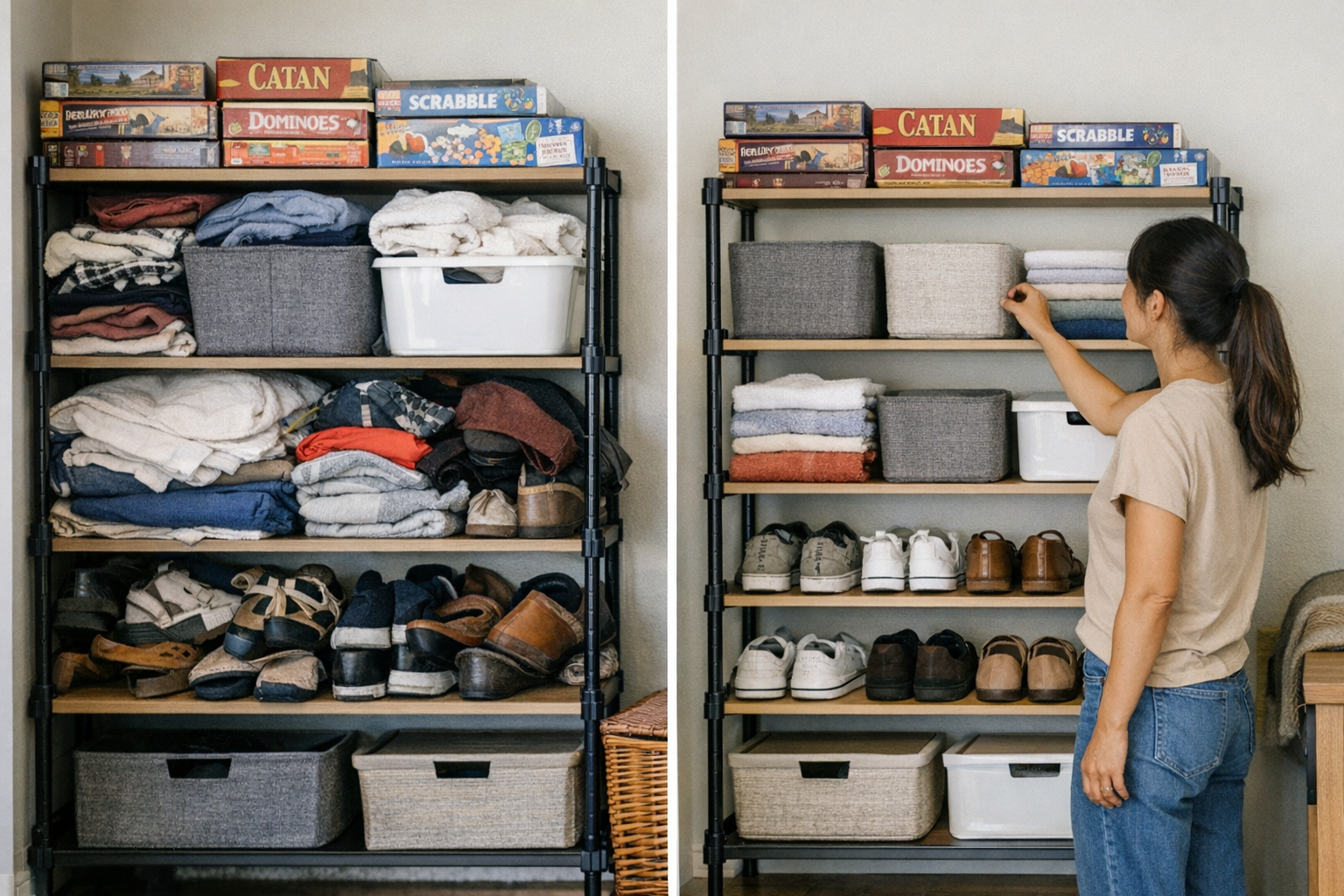
It starts out looking perfect—or so you think. You line up bins across your closet, pantry, or laundry shelf, pressing each container tight against the next. The shelves look satisfyingly full, like you’re making every square inch count. For the first day or two, you feel organized. Then real life creeps in: you reach for a towel, push aside a cereal box to grab coffee filters, wiggle a laundry basket out from under a precarious stack. Each move ripples across the shelf. Soon, bins drift, stacks lean, and your careful setup loses its edge. Instead of finding what you need—or putting something away—in one smooth move, you find yourself hesitating, shuffling, and reconfiguring. The shelf fills up, but your daily rhythm stalls.
Why “Packed Full” Makes Storage Harder
Rows of bins sitting shoulder-to-shoulder look efficient in photos—but in a lived-in home, this tightly packed approach is where the problems begin. There’s no breathing room between categories. Containers blend together; a section for linens blurs into board games, dish towels start inching into the napkin bin, and loose socks migrate to wherever they land. Every quick grab tugs at neighboring stacks, making the next reach a little more awkward. Categories lose their shape, and the act of putting something back becomes a slow puzzle—where did this even come from?
It’s not just a visual mess. It’s a practical slowdown. Wasted time adds up: searching for the right basket, moving three things to reach one, or returning items with a sigh instead of a snap. Little by little, efficiency leaks away—until “organized” no longer feels organized at all.
Purposeful Gaps: Small Spaces, Big Difference
The remedy isn’t to buy more bins, but to introduce small, visible gaps—about a finger’s width—between each container or category. This isn’t lost space. It’s a clean line between zones, a visual and physical reset point. Need to put away bath towels? The gap lets you target their spot without nudging a pile of board games out of the way. Categories stay sharp. Grabbing one thing doesn’t topple an entire row.
After just a few days of normal use, the difference is impossible to miss. The boundaries hold, even as you and your family reach, return, and repeat. There’s no guesswork. Resets take seconds, not minutes—because you know where everything lives, and the system doesn’t break down with every hurried put-away.
Real Storage Moments: What Changes With Gaps?
Closet Shelves: No More Stack Collapses
Think about a closet shelf holding out-of-season clothes, blankets, and shoe bins. When these touch, pulling out a single blanket means disturbing everything else—nothing is stable. Shoes wander into linen territory, hoodie sleeves snake their way into the sock bin, the “home” for each item feels temporary at best. Returning items means restacking or, worse, starting over.
Leave an inch of space between each bin: suddenly, each category stands on its own. Need something from the back? No more domino effect. Linens slide back in beside games, not on top. Shoes don’t invade towel territory. A week later, categories are still clear. Tidying up takes seconds, not a full-blown re-org.
Pantry: An End to the Scavenger Hunt
The pantry is where well-meaning systems go to die, fast. When bins are squished together, snacks migrate into the pasta basket, lunch supplies nudge pantry staples into hiding, and soon every shelf becomes a general “miscellaneous” zone. You waste time rooting around for the last pack of rice cakes or knocking over three cans just to grab the oats in the back.
Add narrow gaps, and the lines stay clear—less spillover, less shuffling. You see what’s missing before it gets buried. During the most rushed moments—packing lunches, prepping dinner—the right item is just a reach away, not a five-minute hunt.
Staying Clear When Real Life Isn’t Neat
Shelves always look their best right after a full reset. But as the week wears on, entropy wins—unless there’s a system that actually stands up to daily use. Visible gaps become a structural buffer, absorbing the chaos of life in motion: hurried hands, shifting needs, and family members who don’t see “organization” the way you do. Instead of everything devolving into one muddled heap, boundaries keep drifting items contained. When something’s out of place, it’s obvious—and fixing it is a quick adjustment, not a weekend project.
Those “lost” inches of shelf space? You get them back through faster resets, steadier stacks, and less drift—meaning you spend less time fighting clutter and more time letting your system just work.
Everyday Tips: How To Add Gaps Without Losing Space
- Target your busiest shelves first: Where do things get messy fastest? Pantry snack zones, closet top shelves, entryway cubbies—start there for the biggest payoff.
- Keep gaps just wide enough: All you need is space for a finger between containers—not a cavern. It’s about signaling a boundary, not giving up valuable real estate.
- Test and tweak: After a week, take stock: Does everything still feel “zoned”? Are bins creeping together again? Adjust as needed—move things back, or tighten up if the gap feels too big.
- Experiment small: Try this approach on a single problem shelf before committing. You’ll spot friction points fast, and see if the change holds up after a week of rushed mornings or after-school dump zones.
The Spaces Where Gaps Matter More Than You Think
Certain areas are naturally vulnerable to “category creep”: the utility room, the main entryway, any closet multiple people use. Gaps here are more than cosmetic—they keep peace and clarity. Kids see where shoes go, not just where the pile is biggest. Housemates don’t argue over where cleaning products start and party supplies end. Each reset—no matter how small—reinforces the order, making it durable instead of delicate.
Even in less-frequented spots, these breaks work as an early warning system. When bins suddenly fill, the overflow is obvious, not hidden. Instead of spending Saturday undoing a week’s worth of gradual clutter, you catch it mid-week with a two-minute sweep.
What You’ll Notice After Living With It
The real payoff isn’t on day one. After a week, maybe a month, compare the shelves that looked “full” with the ones you gave breathing room. The gapped shelves don’t just look calmer—they are easier to use, faster to reset, and hold their organization even as household needs evolve. When you swap out winter gear for swim towels, or kids’ clothes for school supplies, boundaries stay clear instead of vanishing overnight.
Just as a pause between songs makes a playlist better, intentional negative space is what turns shelves from stressful to sustainable. Those little gaps aren’t lost storage—they’re the invisible structure that helps order survive daily life, week after week.