
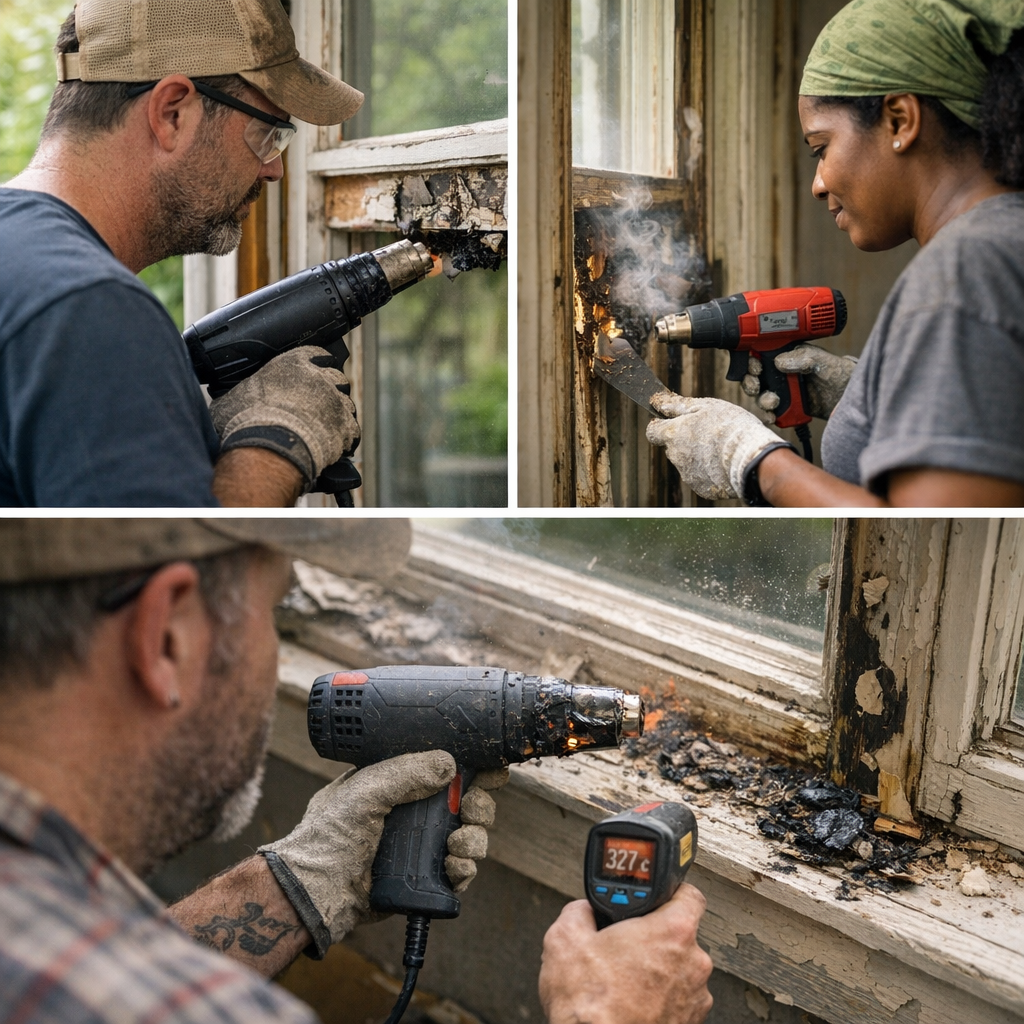
The truth about heat guns is this: the real differences emerge long after the first layer of paint curls away. Stripping one window frame can make any budget tool feel identical—but stack up a dozen sashes, spend a Saturday battling stubborn casement grooves, and the illusions fall apart. On the surface, every heat gun looks the same in the aisle: similar power, comfortable grip, maybe a few nozzles rattling in the box. But when you’re still on your knees, five hours deep and the paint is barely lifting, you realize it’s the invisible choices—insulation, endurance, airflow—that decide whether you end the day ahead or with a headache and scorch marks everywhere you look.
Where Real-World Pressure Reveals Weakness
Paint-stripping isn’t a test you do in a vacuum. The jobs that push you—cramped ledges, endless trim, old house quirks—pile up fast. You knock out one section just to reveal four more, each one rougher than the last. In the beginning, almost any heat gun feels up for the challenge. But when you’re chasing detail after detail and pushing through whole rooms, small flaws quickly become mission failures:
- Uneven airflow stalling your workflow. What started as a steady, predictable stream becomes erratic mid-task. You press the trigger and instead of that easy, skin-lifting peel, you get cold patches and stubborn stripes that demand extra scraping—and kill your rhythm.
- That sharp, plasticky stench isn’t nostalgia—it’s meltdown. The moment insulation falters, a whiff of burnt plastic hangs over the job. It’s the canary in the coal mine for tool failure: by the time you spot deformation, you’ve already scalded paint—or worse, the underlying wood.
- Nozzle warps before your eyes. Extended sessions expose which guns substitute bargain plastics for quality. Overheated, the nozzle necks down, narrowing the airflow, so you linger in one spot, extending scorch risks and draining energy.
This isn’t rare. Every overworked heat gun eventually exposes its shortcuts. What’s “good enough” on the first test run often becomes the friction that kills your momentum across a job, stretching hours into days, and forcing you to mask charred seams with extra sanding or primer later.
Spec Sheets Don’t Measure Fatigue—or Failure
The sales copy won’t save you when the job drags on. Power ratings and temperature stats sound solid, but in real workshops, tool survival lasts longer than any printed number. You don’t notice the difference on a quick demo, but move window to window, day after day, and the fakes start to falter:
- Can it keep heat at the nozzle, panel after panel? What sounds like “2000W” is meaningless if you’re hovering, waiting for the tool to recover, re-soften, reheat—over and over.
- Does the grip stay cool or cook your hand? With junk insulation, the tool becomes hot and clumsy, increasing fatigue and making precise scraping difficult fast.
- Is airflow reliable or sputtering? Consistency directly affects your control and speed; surges and stalls make clean removal near impossible.
I gambled on a popular “workhorse” once—on paper, it matched the ceramic-insulated leader watt-for-watt. Three hours later, thermal cutout, paint half-bubbled, I was forced to stand there and wait. Swapping to the better-insulated gun let me finish not just that sash, but room after room, with working temps below 290°C and zero interruptions. The stats were the same—but only one performed beyond a quick demo.
Fatigue Sets In When Tools Falter
Short tests tell you nothing about cumulative stress. Any heat gun will peel a sample patch, but full-house stripping exposes the weak spots. Common failure points you’ll run into:
- Paint that crumbles instead of cleanly lifting, creating a mess you sand for hours.
- Handles so hot you can’t grip them, forcing unplanned breaks or awkward gloves.
- Edges and corners that char, especially as airflow grows unpredictable, demanding multiple passes and careful sanding just to save the wood underneath.
The right gun keeps you working—steady, predictable, and less physically spent. The wrong one weighs your hand down, bloats cleanup time, and kills your focus at exactly the moment you need control.
From Frustration to Flow: Two Guns, One Jobsite
Picture the start of a long restoration day—sashes lined by the bench, tools at the ready. Both heat guns, fresh from the box, promise the same performance. After an hour, only one is holding up: the first staggers as heat cycles wear it down, airflow gets choked, and you waste minutes rehitting stubborn spots. Your sanding block never leaves reach. The other, its nozzle still shape-true and grip manageable, keeps a strong, even peel, so you spend the end of the day actually finishing, not just fixing.
What Really Drags Down Tools—And How Insulation Makes or Breaks the Job
The biggest culprit in real failure: bad insulation and bargain plastics. A heat gun that cuts corners here rapidly becomes a liability for jobs with any scale or repetition.
- Spiking nozzle temperatures. Subpar insulation can’t keep temps stable—jumping past usable 290°C ranges and surging up over 330°C. Suddenly you’re juggling not just failing paint lift, but scorched wood and deformed nozzles as well.
- Heat-fatigued internals. The plastic and wiring inside a cheap gun can’t handle repeated cycles. Expect mid-job thermal shutdowns, dropouts in airflow, or worse—a dead tool when you need it most.
Switching to a well-insulated, ceramic-nozzle model is less about numbers, more about maintaining pace. There’s a rhythm to paint removal: check, heat, scrape, rotate, repeat. Flimsy guns drop out, strong guns let you keep moving, scraping, sanding, and painting with fewer tool-caused delays.
Practical Shop Wisdom: Don’t Ignore Cooling Intervals
Even the right tool benefits from respect for the process. Every 60 minutes or so, give your gun a break while you sweep up or prep your next sash. If you sense pulsing airflow, pause and eyeball the nozzle—slight warping is a warning to avoid pushing further. Upgrading to ceramic insulation and rated duty cycles doesn’t replace common sense, but it does mean your stops are about the job, not saving the tool from itself.
What Survives the Job—Choosing for Endurance, Not Hype
Gimmicks and specs fade under real workload; only build quality endures. Across workshops, attics, or hundred-year-old porches, it’s the hidden insulation and reliability that quietly cut fatigue and let you end a project a day sooner. Bargain models might limp through a test strip but will double your cleanup and sanding once the flaws show up on the third or fourth frame.
If you’re staring down room after room, detail after detail, it pays to choose tools with ceramic-insulated nozzles and actual duty cycles—not hobby-grade promises. The end result? Fewer accidental burns, less wasted sanding, and a workflow that keeps you active, focused, and ready to move on instead of stuck fighting the tool.