
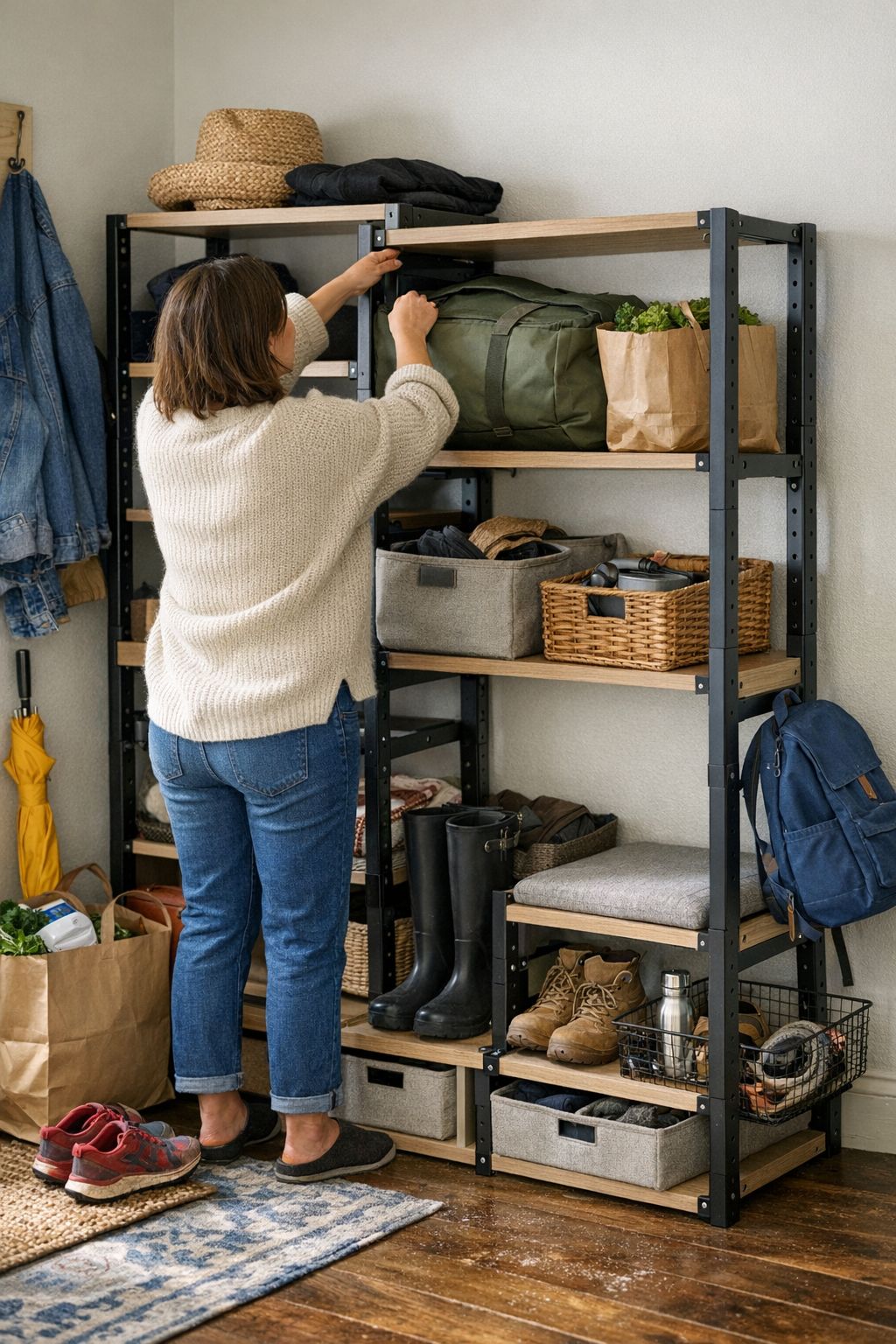
Most entryways look organized for a single moment—then the grind starts: Wet boots pool against the baseboard, backpacks wedge half-under the bench, and shoe rows double into the walkway by nightfall. Shelving promises order on day one, but by day three, the threshold packs tight. Resetting stalls, blocked by fixed shelf heights that never flex for real routines. In a live entry, nothing flows evenly: hockey gear collides with groceries, dripping coats smother dry hats, and every static structure turns retrieval into friction. The signals show up fast—the so-called “neat” setup slows you down every time real life hits the door.
Where Fixed Shelves Start Failing: Recognizing the Early Warning Signs
The giveaway isn’t clutter alone. Most clues emerge after a few days of use, not on day one. Boots worn through rain return sideways because they won’t fit as planned. Grocery bags snag and refuse to slide into cubbies sized for last month’s shoes. Every basic act—drop, grab, reset—drags, until items migrate from “their spot” to a pile at the threshold or spill into the walkway. Small crowding becomes blocking—especially on busy mornings or after a guest visit.
If you keep:
- Stacking shoes or boots to clear a walking path again
- Cramming bags in whatever orientation fits, ignoring intended “zones”
- Moving things a second time because their spot’s blocked by something newer
- Watching last week’s overflow stay dumped near the door, never making it to a shelf
—your shelves aren’t adjusting, so you’re still doing the work. The biggest red flag is bottlenecked movement: If you find yourself rerouting around your own storage, the structure is forcing the problem to repeat, not resolve.
Drop Zones and Entryways in Real Use: Patterns That Keep Repeating
Resetting is always temporary. You clear the area, but by the next influx—kids back from practice, a grocery haul, one muddy pet—it collapses. The bench you sat on this morning becomes overflow by evening; a packed tote perched at the edge blocks anything below. Shoes abandoned at the perimeter multiply, stretching the “put away” zone until it’s just a wider mess. The more the fixed structure resists new shapes and unexpected loads, the more disorder becomes routine. After a week, neatness is a memory; traffic lanes narrow, muddy boots cross turf with clean shoes, and temporary piles turn permanent by neglect.
The cycle is blunt: reset, squeeze, overflow, reshuffle. Soon a dropped umbrella or grocery bag lives on the end of a bench for days. Each new season exposes mismatch—boots won’t fit in autumn cubbies, dripping rain jackets flop across dry shelves, and nothing bends to new patterns. Fixed-height shelving is a template for last month’s habits. Your real routines outgrow it almost immediately.
Why Fixed Heights Waste Space and Time
The order promised on install unravels fast under actual conditions. Fixed heights make design blind to real needs: shelves that force flattening, cubbies that leave gaps above unused, and setups where only certain items actually fit. Every time you flatten boots, wedge a bag, or rescue essentials trapped at the bottom, you lose time and patience. What looks tidy feels dysfunctional, especially as every misplaced item slows the next drop-off or pickup.
The true overflow hits the floor—making each pass-through an obstacle course. Every “temporary” drop morphs into a permanent tripping hazard with no spot to claim, only a slot to clog. By midweek, fewer things make it back “home.” They pile at the edge, waiting for someone to get frustrated enough to clear the deck again.
The Difference After Switching to Adjustable Storage
Reconfigurable storage changes things on the first use. Raise a shelf by two inches—suddenly, boots stand up for winter, not lean and leak across the mat. Deep bags and wide totes slide into new zones without pushing out essentials. That daily catch-and-reset cycle lightens: shoe rows no longer creep wider, and the bench edge isn’t crammed with overflow each evening.
The shift isn’t just visual; it’s fundamental. Instead of freezing at entry, you drop and reset in a single pass—no five-minute scramble or awkward bottleneck. Unplanned grocery trip? Adjust the shelf and drop the bags direct. Kids switch from rain to soccer? Change cubby height in seconds. Routine friction fades; reset becomes habit, not hassle.
Setup in Practice: A True Transition Zone, Not a Showcase
Real entryways succeed when they absorb the mess without stalling the flow. No one lines up shoes for a catalog; they angle them, shove them under the bench, or toss them wherever there’s space. A modular setup—adjustable, removable cubbies, flexible heights—gives outlets for these actual moves. Need vertical space for boots in January? Widen it. Want compact packing for sneakers or book bags in spring? Shrink it. The unit responds, not resists. Movement stays open, even as routines bend and re-bend with daily flow.
Tips for Smoother Flow and Faster Resets
- Test for stubborn return flow: If bags and boots always pause before making it “home,” try lowering a shelf, or pulling a divider—make actual movement easier than waiting.
- Spot where overflow collects first: Reserve a loose “drop zone” near the entrance for outsized or in-process items, then ratchet it down once the rush clears.
- Favor setups that adjust on the fly: The less work it takes to re-slot or move a shelf, the less likely reset will break down. If it needs a tool, it probably won’t get changed in real use.
No zone erases chaos fully. But smart adjustments shrink bottlenecks and ease pass-through where most organizing theories break. When the setup bends, it keeps pace with real traffic, not just looks good once and then slows life down.
What Lasts Is What Flexes with Real Life
First-day order doesn’t survive a month of muddy entries and rushed exits. Lasting storage never expects perfection; it adapts to imperfect, repeated routines: shoes exchanged midweek, grocery drops, outgrown bags, gear that expands and contracts with the season. The more flex a setup allows, the less its bottleneck stalls your threshold. If passage narrows, resets drag, or you’re always rescuing items off the floor, it’s the structure that needs to shift—not your routine.
See flexible, setup-aware storage options for real transition zones at Betweenry.