
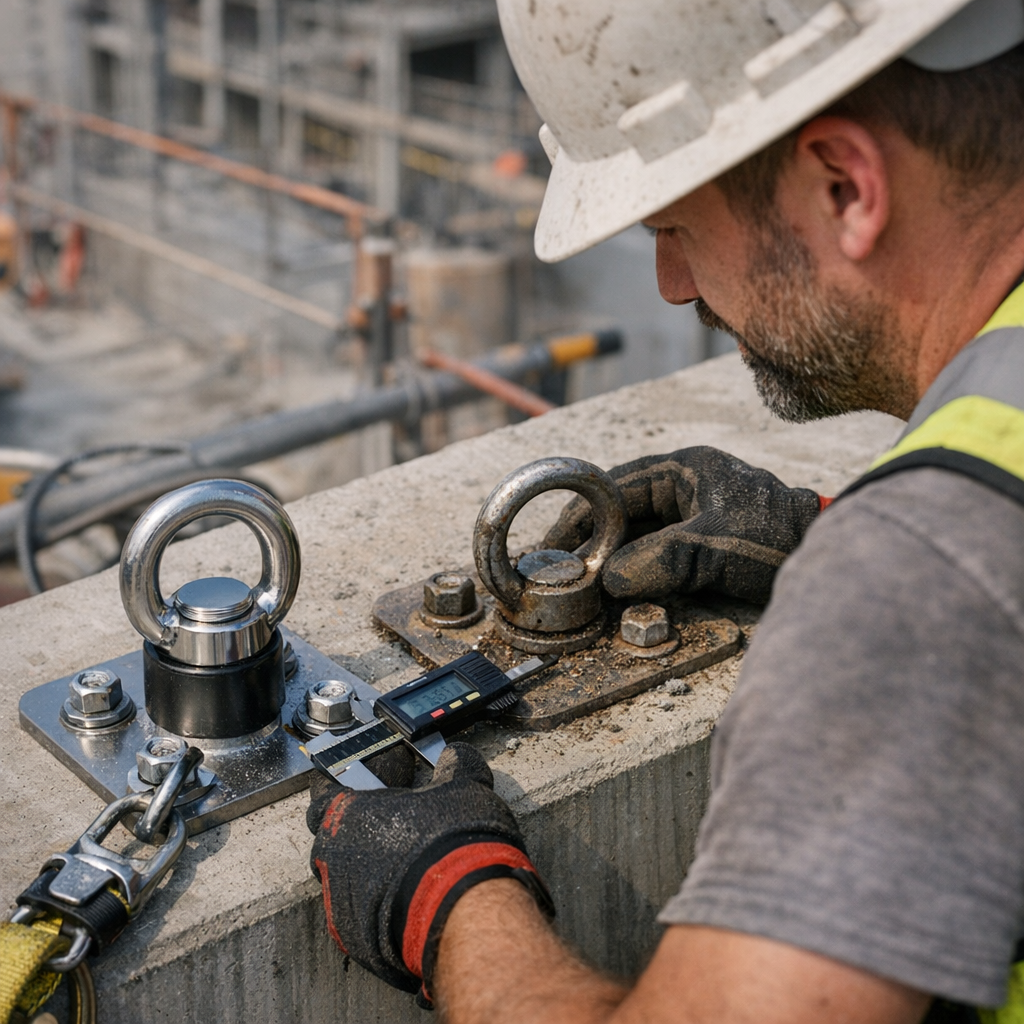
The separation between what’s claimed on spec sheets and what plays out day after day at the bench isn’t academic—it’s lived. Nowhere does that divide bite harder than with fall protection anchor points. You install a “rated” anchor, read the clean instructions, trust the paperwork. But fast-forward a week of real work—rotating between wood, steel, or chipped concrete—fatigue sets in, the surface isn’t pristine, and the anchors begin telling their true story.
Reality Check: Anchors Don’t Age Gracefully
Out of the box, anchors feel reliable—bolts spin in with honest resistance, tie-offs stay drum-tight, everything behaves. But the shine fades. That satisfying thread gives way to stickiness as dust, paint, and old finish collect. Classic scene: you’re mid-project, glove smudged with concrete fines, and that anchor you trusted yesterday now needs a forced grip just to bite in. Suddenly, what was supposed to be a five-minute reset becomes a wrestling match with stubborn hardware and creeping doubt.
These daily resets grind down more than just the finish. Minute movements, a half-turn here, an odd vibration there—tiny losses in tightness build up. Under the collar: flecks of metal, dull grooves, an aura of wear. Not disaster, but distraction. You sweep away accumulated shavings, knowing every cycle steals a little security—and adds a little frustration.
Spec Sheets vs. Jobsite Survival
Specs look identical until the real work starts. Every anchor in the lineup shows similar load ratings. Instructions copy each other. But in the constant churn—install, load, move, reset—anchors reveal their differences:
- That “meets code” model? It chews through soft wood after five installs.
- The one with the nice coating? It grinds against steel, leaving metal confetti at your feet by lunch.
What matters isn’t how an anchor sounds on paper, but how it survives dozens of cycles in mixed terrain—aged joists one moment, fresh paint the next, and always a crust of shop dust to throw off the fit. A good anchor keeps that confident resistance each time, while bad ones grind, slip, or slowly erode right under your hands.
Shop Floor Reality: Swapping Between Surfaces
Picture the pace: first task, you’re fastening into weathered rafters; after break, you’re on a steel I-beam that’s gone through five winters. Drop in your trusted anchor—solid, quick, clean. Next rotation, you borrow an “identical” anchor from backup stock. It snags, jams, and you’re forced to stop to wipe out shavings after every cycle. Not only are you losing time—your confidence dips. Now you’re checking your harness twice, asking yourself if a shortcut is worth the risk. Friction multiplies, both in routine and in the back of your mind.
Small Problems Stack Up Quickly
On a spotless test bench, flaws hide. But field anchors go gritty fast. Grind through five panels of concrete—one anchor still bites, the other slips, leaving debris on every reset. Suddenly, you’re spending ten extra minutes an hour just on cleanup. That’s fatigue the manual never warned about: grout dust on every thread, scored finishes, the edge of real-world tool performance, where “good enough” quietly downgrades into “maybe not today.”
This is where trust erodes: anchor play at the collar, visual debris piling up, lock-down checks performed twice. Nerves fray, especially high up or around crowded conduit runs. Anyone who’s spent a season at height knows the moment a tool stops feeling like an ally and becomes a liability.
When Quality Matters: What Actually Changes?
True shop-tested anchors do more than simply resist rust. Anti-corrosion coatings earn their keep spanning paint, rust, steel, and rough wood, shift after shift. Replaceable sleeves mean every fresh install feels like the first. The best anchors maintain a snug, confident “bite” and a steady torque—no surprises, no sudden drag or give—even as you run through a month of mixed surfaces and rushed resets.
The Payoff: Less Fatigue, Steadier Focus
A reliable anchor doesn’t just save a minute—it saves your energy and conviction. When the hardware behaves, routines settle. No overthinking, no drawn-out inspections, just the quiet confidence that every tie-off is going to lock in the way you expect. That’s more focus for actual work, less for second-guessing safety equipment.
After my crews switched to anchors with proven anti-corrosion finish and easily swapped sleeves, the fatigue curve changed. Less edge wear, barely any metal dust, and installs that kept their tightness through every PPE check—day in, day out. After thirty cycles, collar wiggle still below 0.8mm. On real jobsites, that imperceptible difference shows up in everything from faster turnarounds to fewer late-day mistakes.
Field-Tested Tips: How to Keep Your Edge
- Put your best anchor through the hardest work first: Save reliable hardware for mixed, dirty, or difficult surfaces—let budget copies handle the clean, stationary installs.
- Always clean before resetting: A fast wipe at every anchor point clears invisible debris that, left alone, accelerates wear and throws off critical surfaces.
- Pay attention to metal shavings or stubborn threading: These signals come before major slippage—don’t ignore them just because you’re on a roll.
Good Hardware Lowers the Friction—Not the Stakes
The difference between a solid anchor and a “good enough” anchor isn’t just paperwork. It’s found in the hundred small moments: the tool that resists every slip, the anchor that checks out perfectly even with dirty gloves, the gear that stays predictable across long shifts and three battery changes. Tools can’t eliminate friction, but the right ones lower it enough that you stay in control—job after job—when the pressure’s on.
See gear built for the realities of your work at Gumboll.