
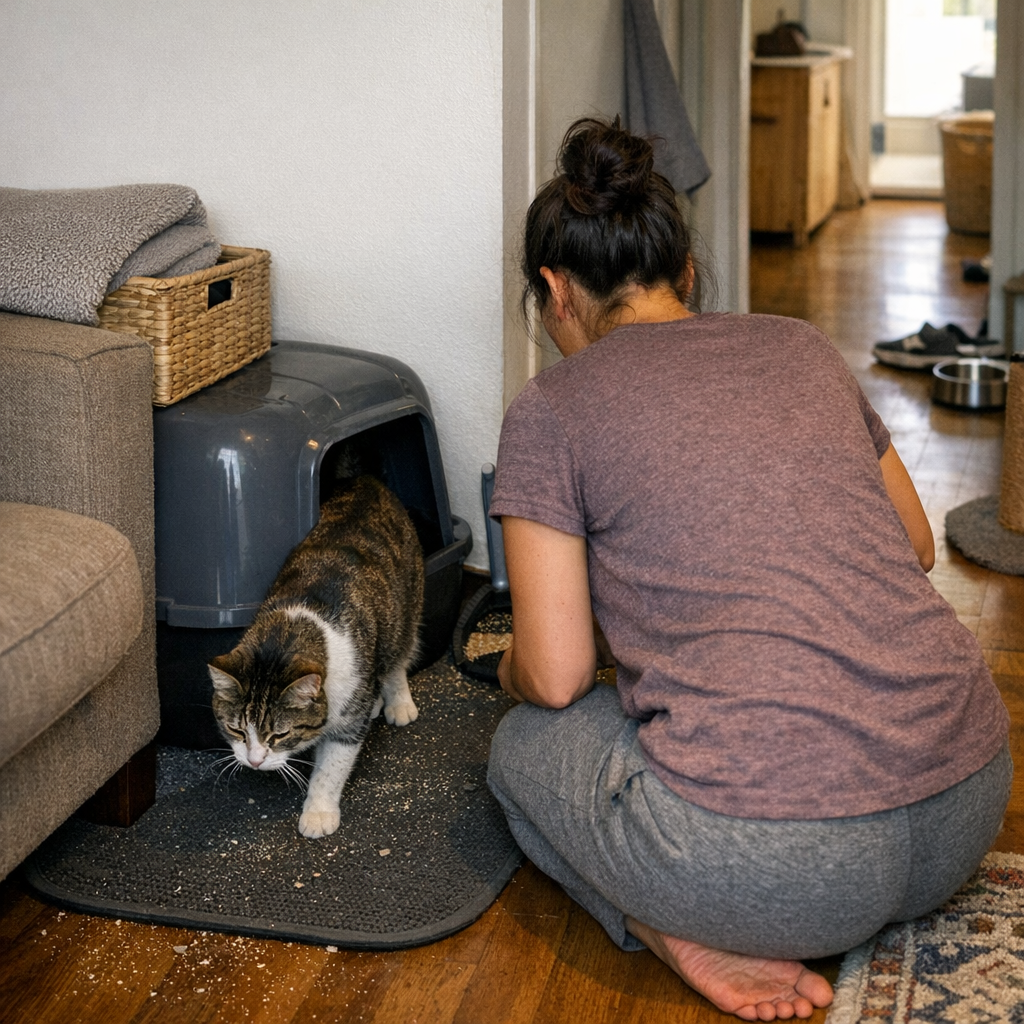
Setting your cat’s litter box flush against an open wall might look tidy after a deep clean—clean lines, empty floor, nothing in the way. But give it two days, and the “easy” setup turns into an annoyance you keep tripping over: litter creeping across walkways no matter how much you sweep, a cat who hesitates before every use, and daily reset work that starts to bleed into your main routine. What looked simple becomes a nuisance you can’t ignore, and the cost is measured not in appearances but in every missed spot and wasted minute spent tracking what escaped.
The Setup Trap: Open Placement Looks Fine—Until Real Use Begins
Most cat owners have run this pattern: after scrubbing the box and lining up the mat, the area looks freshly organized. For the first day, you can almost believe the reset will last. But real life doesn’t care about symmetry. Each round of feeding, laundry, or a stop to refill the water bowl means you walk past the exposed box—sometimes pausing to kick aside grit, sometimes realizing the scoop isn’t where it needs to be when the mess hits. Within 48 hours, a thin trail of litter escapes the mat, working its way under furniture and into spots you swore were safe. Your cat’s pauses become longer and exits faster, and the illusion of control fades with every stray bit you find stuck to your sock.
The earliest warning is rarely dramatic. It’s your cat standing at the edge, scanning the room with the box in open view—sometimes dashing in and out, sometimes circling for privacy. It’s you, reaching for supplies only to discover the dustpan was left two rooms away after yesterday’s sweep. The work keeps drifting. What started as a five-minute job becomes a fractured process: clean by the box, then by the door, then under the chair where you find the fourth lost toy of the week. It’s not a failure of willpower. The setup doesn’t recover fast enough to match real routines.
Daily Friction: When “Tidy” Stops Feeling Easy
- Tracked litter spreads into shared space: Grit finds its way past the mat, under couches, sticking to towels piled nearby, settling into places that have nothing to do with the box—but you still have to clean them. Wiping one zone turns into chasing stray crumbs that now belong to the whole room.
- Quick access, slow resets: Supplies seem within reach until you need them mid-mess: the scoop’s behind a door, wipes are forgotten, and you’re stuck improvising. Dustpans creep closer, tools that should be out of sight become part of the visual clutter just to keep pace.
- The cleanup cycle won’t stay short: A job meant to take moments now comes in waves—sweeping by the box, then the mat, then retracing steps as the cat races out, scattering fresh grit five feet away. The “reset” never really finishes.
- Cats signal discomfort in the margins: Open setups favor human convenience at the cost of a cat’s sense of safety. Some freeze at the door, others dart through, and over time, you see antsier behavior—rushed use, sudden detours, or a mishap nearby because the comfort zone vanished under traffic.
Room Order vs. Cat Security: The Hidden Tradeoff
Choosing an exposed setup makes sweeping look easy, but it splits comfort and function: humans get clear walkways, cats get anxiety. When boxes sit in open or high-traffic areas, you trade out quiet box use for stress cues—longer pauses, less time in the area, and accidents that were never part of the plan. Meanwhile, litter begins turning the rest of the room into low-level maintenance zones: chairs dusted before you sit, hidden corners checked again while getting ready for work, and the feeling that no spot is safely clear of cat residue between deep cleans. The upshot: what looks uncluttered on day one requires extra work everywhere else, all week.
One Change That Actually Stops the Mess: Shelter Without Sacrifice
Most owners only retreat from open setups when daily cleanup expands beyond what anyone signed up for. The smallest adjustment—shifting the box behind a solid object like an end table, placing it beside a low bench, or setting a tote to block open sightline—usually pays back in hours, not weeks. Sheltering two sides, without sealing off the box, interrupts both tracked litter and anxiety. The result is fewer escapes beyond the mat and far less cat hesitation. Sweeps become targeted, not endless; crumbs stop piling up at random; and the nerves fade out of every box visit. The main area starts feeling like part of the home again, not an extension of maintenance you can’t get ahead of.
The real test is the day you skip a touch-up and the rest of the room still doesn’t become a minefield. Your cat moves calmly in and out. You don’t keep catching edge-case messes after every meal, refill, or casual pass through. The friction lifts: you’re doing less, but the result is cleaner and calmer—for you and the cat.
Shared-Space Headaches: When the Home Gets Pulled In
The reach of a loose setup becomes obvious after a week: towels and socks pick up grit, laundry baskets get a crunch underfoot, and guests track bits through the house without realizing where it started. This isn’t about general mess, but about the invisible sprawl of a bad setup. An open lineup rarely keeps litter in its lane. Each pass through the area pulls more of the home into the orbit of box cleanup, making the mistake bigger than it looked when you first placed it.
Reset Routines Matter More Than First Impressions
That first-day sense of control fades fast; what actually makes a difference is how the area bounces back after real use. A structure that lets you reset in one sweep after a busy day is worth more than a display that looks perfect after a deep clean. When your routine shifts—quicker refills, cleaning focused only around the mat, less chasing down hidden grit—you know the environment is finally structured for real living, not just first impressions.
Placement vs. Box Style: Picking the Balance That Works
If you can’t move the box—tight apartments, shared food zones, or laundry rooms with no margin—you’re locked into solving with structure, not just location. The box style starts to matter more: open trays offer easy cleaning but force cats to perform in full view, while covered boxes add privacy but can hide odor unless cleaned often. Each compromise brings its own pattern of friction. If you can’t shift the placement, the repeated-use burden falls on your organization and daily reset discipline.
Keep Eating and Litter Zones Apart—But Not Out of Sight
A hidden but common issue: litter box and feeding setup crowd each other. Even a couple feet too close, and cats get fussy—drinking less, delaying eating, or missing the box altogether. The fix isn’t complicated: keep several feet clear between feeding and litter areas. Use a low divider, an offset storage bin, or even a hallway gap to create separation. This isn’t about building barriers for show, but about breaking up scent and sightlines just enough to avoid comfort tradeoffs—while keeping everything practical for your own refill and cleaning path.
Practical Sheltering: Real-World Tweaks That Actually Help
- Set a solid, low bench or shelf alongside the box—not boxed in, just enough to interrupt open views and give a sheltered retreat zone.
- Move a tall storage bin or heavy-duty cardboard box to one side—perfect for renters wanting less mess without drilling or buying new furniture.
- Position the mat so it covers a little more than the main exit—stopping the spread before it earns two extra cleaning spots. This can single-handedly shrink tracked litter for most homes.
- Place cleanup tools—scoop, wipes, dustpan—just behind a nearby door or tucked inside a low basket. Not in open view, but easy to grab when the next little disaster calls for it. Accessibility here is half the real-world solution.
These aren’t design upgrades; they’re ways to stop invisible effort from hijacking every room. The box doesn’t need a showcase—just a structure that limits headaches in repeat use.
Recognizing When Visual Calm Doesn’t Help Function
There’s a sharp break between a setup that looks neat at a glance and one that doesn’t interfere with your real life. The exposed, “organized” option rarely holds up when routines run long or cleaning lags a day. Tracked litter, shifting supplies, nervous cat responses—all are quiet but relentless signals the structure needs real adjustment. If you’re finding extra work drifting into new corners, or wishing the whole zone recovered faster, the setup’s appeal is only surface-deep.
The best test: after one full cycle, is cleanup limited to just the mat area, with your cat using the box confidently and the room staying livable between resets? If not, it’s time to rebuild the structure for actual living—starting with visible, honest tweaks, not just appearances.