
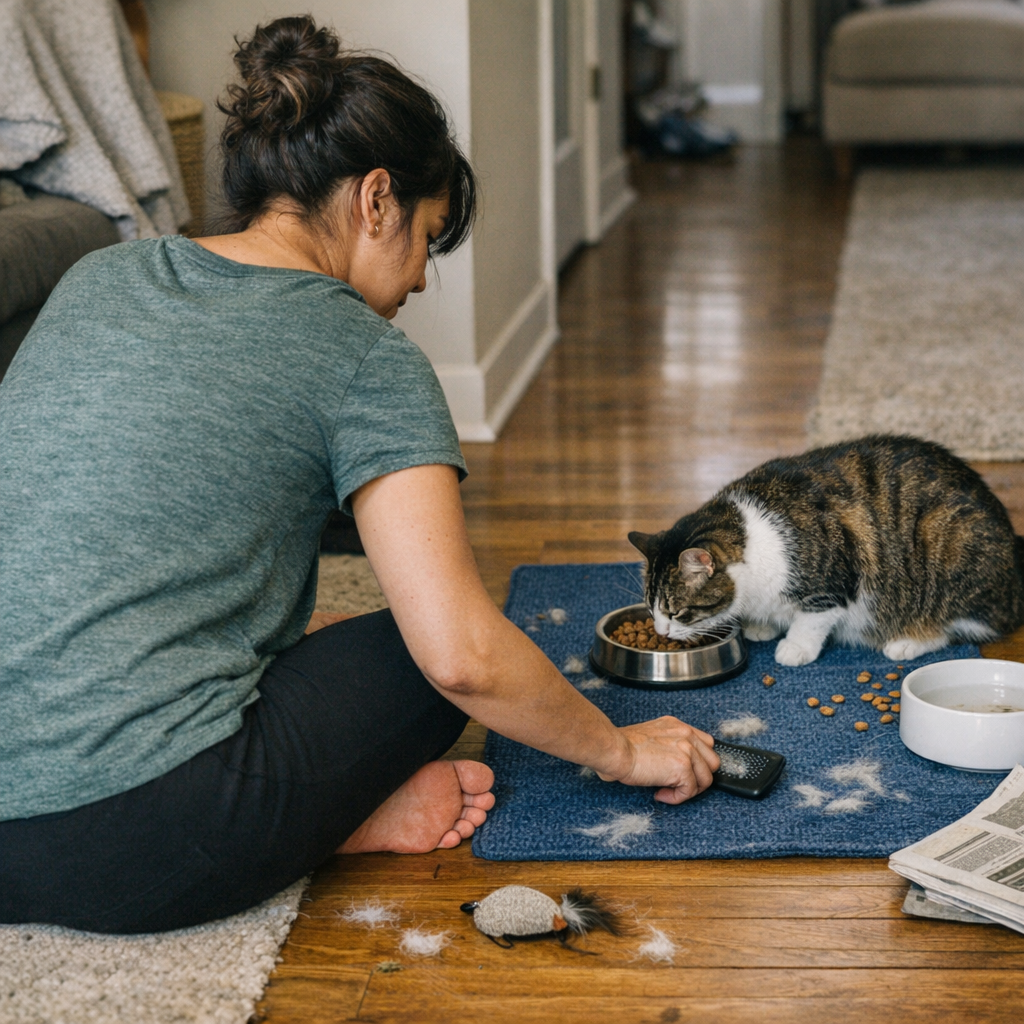
Indoor cat grooming routines rarely collapse during the brushing itself—it’s the aftermath that trips you up. You end a session a minute early because your cat twitches or squirms, thinking you’ve dodged a meltdown. But by morning, there’s new fur hugging the feeding mat, a shedding drift across the water corner, and your cleaning supplies just out of reach thanks to a grooming comb left “for next time.” A session’s real stopping point shifts everything: cleanup, reset, and how many fixes you have to make mid-routine. That difference is the line between a setup that works and one that quietly falls apart inside your everyday StillWhisker zones.
Why Your Stopping Point Matters More Than You Think
Stopping a grooming session isn’t just about your cat’s patience—it’s a fork in tomorrow’s routine. The moment you quit early, loose fur clings to mats and corners that look tidy now but become cluttered in the next reset cycle. Delay too long, and the grooming tools, wipes, and leftover hair migrate into places you’ll trip over. Most routines hide the cost for a day or two, but soon you’re finding fur stuck in crevices around feeding bowls, stray clumps where water mats meet tile, and that familiar pause when you have to wipe down surfaces twice before the room feels “done.”
Waiting for dramatic signals—a tail flick, a sudden leap away, a pointed glare—feels safe. But those forced finishes add friction everywhere else. Fur lingers in the high-use paths between feeding, water, and your own living space. The brush never makes it back to its shelf, and resets after meals or rests require double the effort. Over time, the “just finish later” compromise becomes a chain of longer, harder cleanups and a routine that drags.
Real-World Ripples: How Mess Travels After Grooming
Cat fur spreads by inches and interruptions. Stop brushing at your cat’s first hint of restlessness and you think you’ve contained the mess—only to find, days later, strands camping in every home zone. A missed session means every bowl top-up and water refill becomes a mini-trawl for shed fur stuck to dish rims, mat edges, or flooring gaps. You go to pour fresh water and end up detouring for the lint roller, or a meal becomes another cleanup circuit when you discover a line of fur baked into the floor next to the feeding mat.
Feeding and Water Areas: The Unplanned Scattering Zone
The feeding zone is where small grooming slips show up first and worst. A single unfinished session leads to fur edging around the bowl, crumbs clinging to stray hair, and water dish rims that gather shed like magnets overnight. These aren’t one-off annoyances: they turn each refill, each reach for a dish, into a frustrating two-step—wipe, then feed. If supplies aren’t close, you juggle damp wipes through a morning rush, or realize halfway through meal prep that the brush is missing from where you expected to find it.
The visual mess is only half the problem. Loose hairs join with whatever else collects near food and water, making every zone feel like it needs “just a quick fix” that spirals into a reset loop—extra wipe-downs, more tool searches, and a feeding area that never seems to stay clean past the next meal.
Shared Walkways and Reset Effort
Resets slow down not just at the edge of the mat, but along every shared home path. Small misses add up: fur lines edge down baseboards because you paused brushing at an inconvenient moment, or the grooming comb lands near the sofa and stays there. Each run through the living room means cleaning socks, nudging fur clumps with your foot, or squeezing in a mini-vacuum before company arrives. The more often you cut grooming short in favor of convenience, the more the chore grows—not just messier, but slower to catch back up. The routine stops feeling contained…and starts leaking into every other indoor-cat corner you use.
Short, Calm Sessions: The Subtle Advantage
Stopping grooming while your cat stays calm—before tension shows up—builds a cleaner, more predictable chain reaction. The session is short, but the benefits stack up where they matter:
- Less fur in food and water zones. Cleanup finishes in one sweep, not as a multi-area scramble.
- Tool reset is automatic. The brush returns to its spot; supplies don’t scatter from room to room.
- Future resets speed up. No wipes stashed mid-way through breakfast, fewer midday surprises when you kneel on stray hair.
- Cat cooperation holds up. The routine stays neutral territory, not a game of “who leaves first.”
Even if the session ends before you’ve “finished” every patch, daily flow improves by the end of the week. Feeding areas don’t track fur, water dish rims stop grabbing loose hairs, and the usual search for the missing brush disappears. Instead of persistent, low-grade cleanup, you get a true reset space—one that survives both heavy shed weeks and lazy evenings without backup wipes buried under the mail pile.
Patterns That Sneak Up: When “Still Acceptable” Isn’t Good Enough
Most grooming setups look fine until the background fixes stack up. The “acceptable” routine—one extra brush, one more tool left within arm’s reach—creates a nearly invisible workload. Instead of one midday pass, you’re now correcting after every feeding, every lounge, every walkway. Shed fur skips the mat and lands on the baseboard; combs travel from one room to the next, never quite back to storage; cats get twitchier with each session that overstays their patience. The setup seems organized, but function sags with each extra adjustment you have to make on the fly.
Skip a tool return, stretch the brushing time, or keep the wipes too far out of reach, and you’re trading neat surfaces for constant, low-level work. It doesn’t turn into a mess overnight, but routines creep—more chores, less ease, and an underlying sense that every reset has gotten heavier.
Grooming Tools and Spaces: Keeping Mess Contained
Initial setups feel promising—a brush on a washable mat, a quiet corner, the expectation that fur will stay put. But “just a minute more” sessions rarely respect boundaries. Mats migrate, tools drift into shared spaces, and before long, the feeding path or rest areas begin picking up the overflow. The signs aren’t dramatic: a brush abandoned near the kitchen, a pile of wipes stacked on top of other supplies, or a cat rerouting her walkway because her preferred grooming zone is now always occupied or two steps from the litter corner.
Small Fixes That Help
Habits that break this chain show up in details:
- Use a shakeable or washable mat parked out of key walkways. Fewer resets, slower mess travel.
- Keep wipes or a hand vac within true reach. If you have to search, you’ll forget them or skip cleanup entirely.
- Pick times that don’t overlap with other resets. Post-dinner works—but not if it butts up against your own tidy-up or feeding prep, turning one routine into an extended juggling act.
And the most useful rule: end as soon as you see unrest. Delay and the whole room inherits the fallout threefold. Early shutdown means faster home recovery and a setup you don’t have to rethink two days later.
Cleanup and Reset: The Cycle You Actually Live With
The real test isn’t the evening after a brush—it’s the next morning, when you move through the space on autopilot and the defects show up. “Looks clean” at a glance means nothing when breakfast prep reveals fur trailed past the mat, the tool in the living room, wipe-downs skipped until lunch, and tangle-ups you didn’t catch last night. Each missed grooming exit means starting your next cleanup half a step behind. Instead of one routine, you’re patching together three—and the satisfaction drops.
With the right stopping point and a habit of closing before tension hits, grooming and cleanup become a short, contained cycle. No tool hunt. No need for a stack of backup wipes lurking by the water dish. Even on busy weeks, the routines pull back to one reset, not a spiral of mini corrections every time you pass through the cat’s space or prep a meal.
Choosing Consistency Over Perfection
There’s no static, showcase-perfect indoor-cat zone—and chasing it guarantees disappointment. Strong setups judge by lived friction: less repeated work, faster resets, and comfort that doesn’t saddle you with after-effects. Ending grooming on a calm note, with tools parked and fur contained, trades the myth of a flawless day for a cycle you can repeat. Meals, water, and shared corners stay clean by default, not just by effort. You get space that asks less extra of you—and a cat who meets new routines without bracing for disruption.
It’s that small, early decision—choosing the right stopping point over squeezing in just one more brush—that separates a manageable routine from a messy