
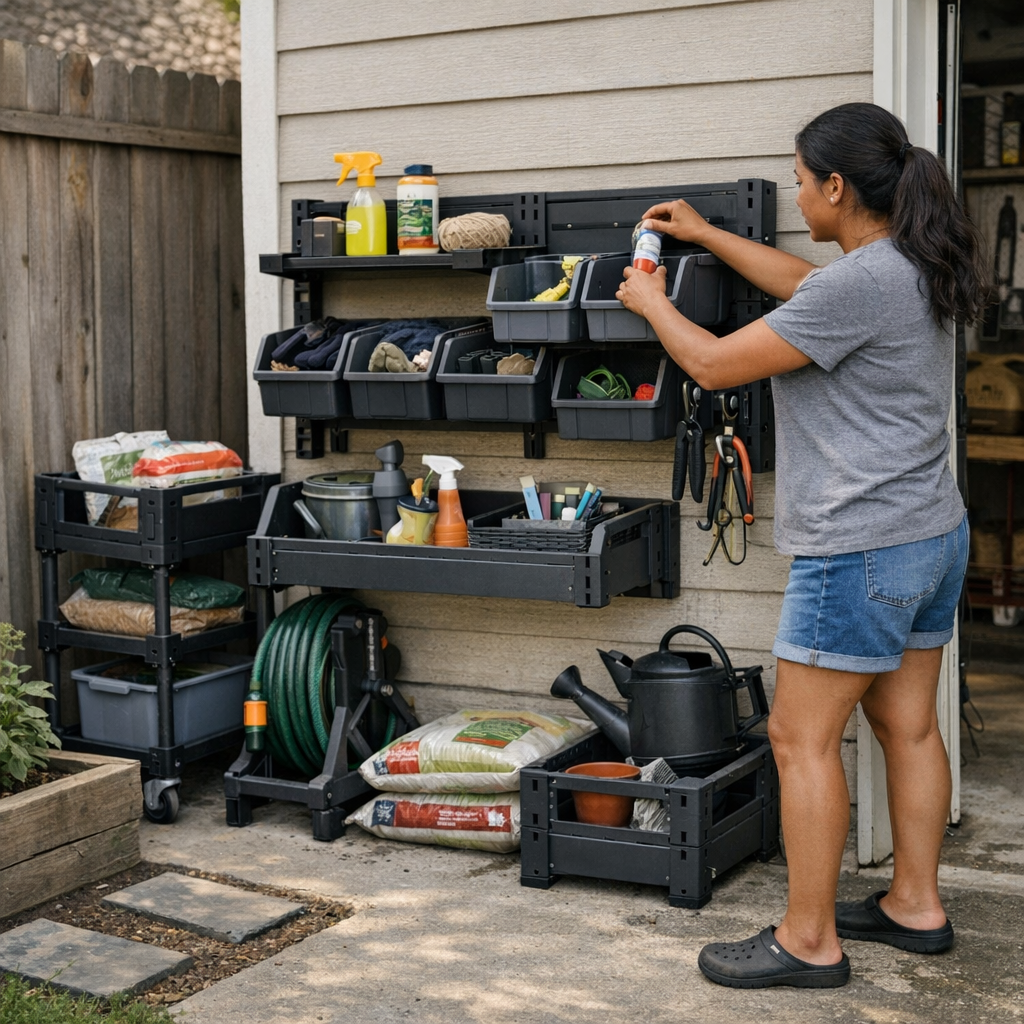
Most outdoor setups don’t fail because they’re too small—they fail because the reset breaks down. In the real world, side-yard strips and patio corners look organized for about a week. Then you hit the slow part: gloves draped over the hose reel, the trowel from Tuesday left on the grill ledge, that one rake you meant to return but never quite did. Every awkward return, every tool perched where it doesn’t belong, every slow shuffle through a too-deep bin—this is where “organized” quietly unravels into another edge pile nobody claims. It isn’t a lack of space; it’s the way reset friction turns each lived-in corner into clutter’s favorite hiding place.
The Real Test: After the Job, Where Does Everything Go?
The freshest setup always looks full of promise: tools lined up, bins labeled, wide walkways cleared. Then a normal Saturday hits. You pull a weeder, reach for a pair of gloves, toss the hose aside to run after a kid or finish lunch. That fast, the first items stall just outside their proper spots. A week later, they haven’t moved. Why?
Because return friction is built into the details. The lid’s too heavy. The bin’s just deep enough to require digging. You have to move a bag of soil just to make space. Nothing dramatic—just enough micro-hassle, every time, that the fastest route becomes “leave it here for now.” One “later” at a time, the clear path around the garage or fence line turns into a sidestep course over abandoned tools and bags that never got put back.
Closed Boxes: Tidy Promise, Hidden Trouble
Closed bins tempt with the look of control: toss whatever inside, close the lid, no mess in sight. It works until you need one pruning shear lost under extension cords—so you dig, unstack, reshuffle—and the next time, that tool lands on the patio instead. The heavier or fussier the setup, the more likely the return just gets skipped. By Sunday, the “overflow” sits quietly outside the box, blocking the same path the box was meant to clear.
Closed bins can hide a mess—but they can’t prevent the reset from breaking down. The area looks staged only at first. Give it two busy weekends, and the same gloves, empty pots, or tangled hose ends show up in the footpath, begging for another round of tidying that takes longer every week.
Open Racks: Never Perfect, Always Easier
Open racks and cubbies look exposed—hooks with garden snips, wall baskets holding spray bottles, open slots along the garage edge. But when the reset is just drop-and-go, clutter has fewer places to collect. Return a trowel? One motion, back on the hook. Grab gloves? Toss them on the open shelf as you leave the yard. No lids to fumble, no stacks to move, no out-of-sight layers. You see what’s out and what’s missing, so nothing quietly rots in a dark box for a season. It isn’t a catalog spread, but it’s workable and fast enough that the system holds even on the messiest days.
This “mess visible, friction low” balance is what makes the open setup more than a compromise—it’s a live counter to the way outdoor zones want to slide right back to blocked movement and quiet spillover.
Raise It to Elbow Height, Cut the Excuses
The reset gets even smoother when open cubbies sit at elbow height—right where your hand already travels. Mount a row 16–20 inches up along your garage, fence, or patio wall. There’s no extra bending, stacking, or reaching over packed bins on the ground. Dropping clippers in a cubby or hanging the hose sprayer takes the same effort as abandoning them on the lawn—and with the right reach, the excuses disappear. Daily-use gear runs on muscle memory, the “leave it here for now” pile shrinks, and the path stays open without conscious effort.
How Setups Turn Against Themselves
- Floor bins that become blockers. The big storage cube against the fence seemed smart until quick-grab gear covers its lid and you quit opening it entirely.
- Items orbit their homes instead of returning inside them. If it takes more than one step to put something away, the “just for now” pile becomes a permanent speed bump by the door or along the garage threshold.
- Every reset begins with reshuffling. Moving three items to get to one? That’s a friction point. The more you have to clear a path, the less likely you’ll keep clearing at all.
These aren’t accidents—they’re symptoms of setups designed to look organized, not to survive a real day’s movement. The setup isn’t the problem. The layout—where the work actually happens—isn’t matching the routine that needs to flow through it.
Real Scenes: When the Routine Meets the Reset
Visualize an average weekend. A set of hedge clippers hangs on the open rack just inside the garage door. Ten seconds, they’re back up after use—you keep moving. Shift that same hook too high, or tuck it behind a stack of reused planters, and suddenly the “temporary landing zone” becomes the real final stop. Four days later, you’re working around an obstacle you made by accident. Multiply this pattern by every tool and bottle you touch, and the zone goes from frictionless to blocked, fast.
The classic deck box tells the same story. It fits the footprint, but the lid’s heavy, inside is a scramble, and the nearest tool always ends up living outside, easy to grab but never quite put away. The box doesn’t fix the clutter—it just pushes the reset further down the line. Once you’re tripping over overflow, you’re not storing smarter, you’re just shifting the pile.
Tweaks That Actually Shift the Routine
- Raise open storage off the ground—hung racks or wall cubbies don’t eat into floor space, so walkways stay open and gear doesn’t slide underfoot.
- Push daily-use zones to your entry points—store gloves, pruners, and hoses by the gate, the patio edge, or just inside the garage so you’re not crossing the whole yard to reset.
- Put quick-grab gear on the wall, not the floor—if the first thing your feet hit is a pile of loose items, the setup is already losing to clutter.
If items pile up in front of a container or a bin goes unopened for weeks, that’s not a user error—it’s the setup sending a clear signal of friction. Shorten the reach, cut the busywork, and the overflow shrinks because there’s no labor barrier. This isn’t about impressing with order or matching magazine shots. Practical storage is about setups that run themselves between resets, not setups that demand one giant fix every Saturday.
Choosing Systems That Match What Happens, Not Just What Looks Good
Open storage belongs in high-turnover zones: toys, hand tools, gloves, gear that moves in and out. Closed bins make sense for bulk or off-season—cushions, holiday lights, bags of seed you use twice a year. But if a system slows you down, even by a few seconds, the clutter will work around it, and you’ll spend more time bending, stacking, or searching than actually using the space. Judge the setup by the return: When the burst of activity is over, did putting things away help you move forward, or did it just add another step to the next reset?
The Real Difference Is in the Return Flow
You don’t need more containers. You need setups that clear the path. Most outdoor spaces drift into chaos not from lack of storage but from layouts that ignore daily movement. Build for return flow and resets become invisible. Over time, open racks and elbow-high cubbies end up “unstaged” but quietly functional—the gear moves in and out, nothing stalls, and the zone doesn’t demand your Saturday just to look reasonable. When the setup reduces effort instead of shifting it, the space stays usable, even when it’s not picture-perfect. That’s what lasting organization looks like in practice.
Find setups built for real return flow and weekend momentum at TidyYard.