
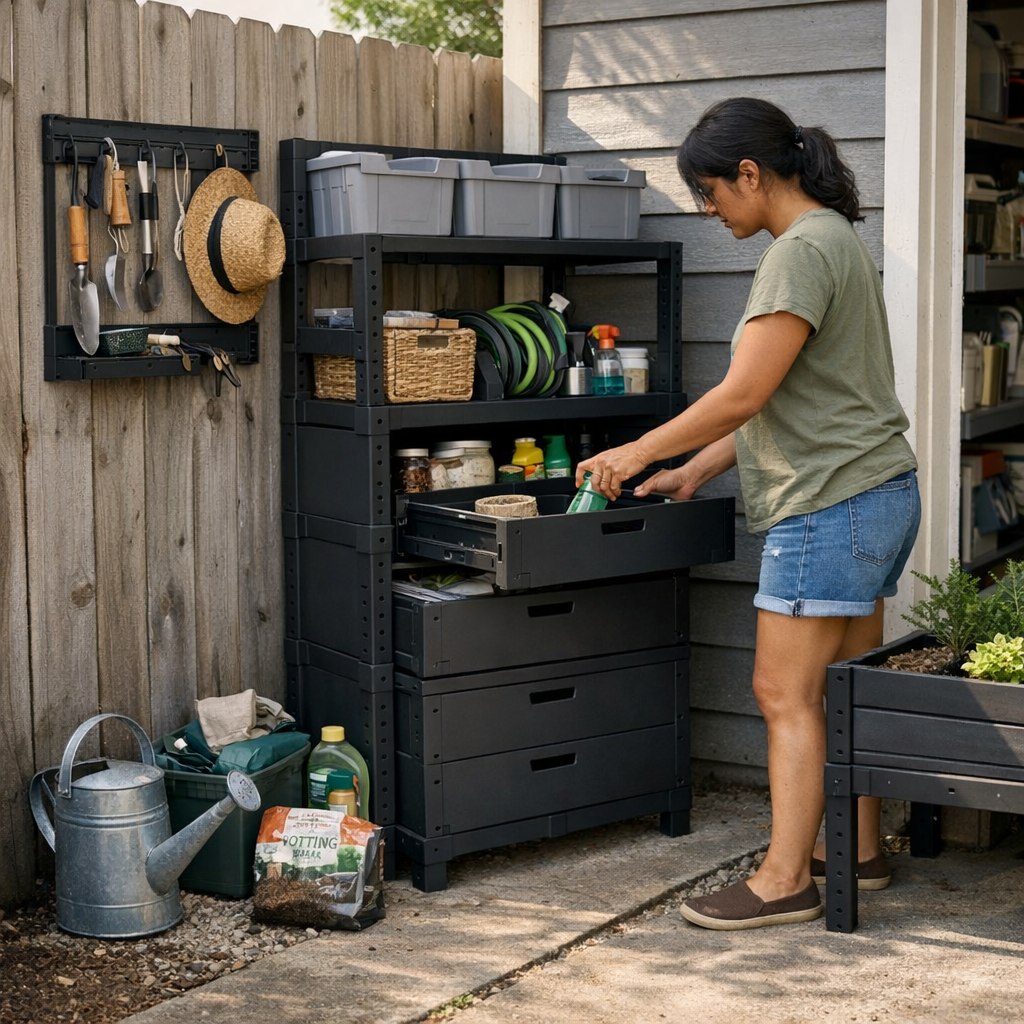
The tell: baskets versus drawers isn’t a months-down-the-line difference—it starts showing up within days of real use. Scan a hallway nook or a bedroom wall stacked with matching open baskets, and you’ll see clean lines and clear intentions. But wait until the weekday routine sets in, and that new order crumbles faster than you expect. Each rush-hour grab sends a basket scraping, tilting, or shifting; contents spill or mix; and shelf space that looked organized last weekend now breeds small, constant interruptions. Retrieval isn’t grab-and-go—it’s reach, knock, jostle, and then a reshuffle. In contrast, closed drawers—often overlooked in favor of “easy access”—stand up to repeated friction, containing chaos and absorbing movement you barely notice until you’ve switched over.
When Organized Looks Don’t Hold Up in Real Use
Open baskets seem to offer clarity: you can spot what you need in an instant, with no barriers to reach. But easy visibility doesn’t survive real-life habits. Grab your charger or a towel; cables tangle, bottles tip, and items shift out of place. The shelf amplifies every nudge, and pretty soon you’re re-lining baskets as the system falls apart. In shared or high-traffic zones—a family entry, hallway drop-spot, or linen closet—these breakdowns repeat with every interruption. What started as a sorted, open setup now demands daily adjustment just to keep up with basics.
The central pain isn’t just noise. It’s the constant drag on your routine. Baskets drift or wedge, and small items sneak behind them or migrate between zones. Each pass means a micro-reset: pause to move a basket, dig for a missing item, or re-sort categories merging at the edges. After just a few days, the reset work isn’t background tidying—it’s a friction that compounds until you start questioning the system’s usefulness.
The Work of Living with Baskets: Small Frictions Add Up
After three or four regular uses, baskets stop pretending to be effortless. Hunting for keys, you accidentally shove a bottle into the next bin. Folded washcloths topple over. Category drift sets in: hair ties and coins leak into the cracks, chargers slip behind the row, and soft-sided bins lose any real containment. The area morphs into an overflow zone that looks better in theory than it works under pressure.
The shelf structure exaggerates this effect. Each set-down creates noise or piles. If children are moving through, or if it’s a tight hallway, stray items build up at the edges and regular overflow forms—new piles inch along the shelves, rarely returning to their original spot unless someone does a full reset. Baskets’ open forms become porous, encouraging new disorder each time the space is touched.
Overflow Zones: When One Area Keeps Collecting Too Much
One bin inevitably morphs into a dumping ground: scarves, chargers, “just for now” tools that never leave. Instead of basket flexibility making life easier, it creates the risk of accidental avalanches every time you reach for something else. The lack of a firm closure or limit means each use generates a little more mess, and the basket edge becomes a magnet for whatever doesn’t fit elsewhere.
Drawers in Practice: Quieter, Contained, Less Reset Needed
Drawers change the daily rhythm. Closed sides and smooth runners turn “grab and go” into “slide in, done.” The whole structure absorbs motion. No rattle. No contents leaking into the next zone. Shared areas suddenly hold their order—not because people try harder, but because the system blocks category drift by design. The items you need—chargers, wipes, remotes—get pulled out and thrown back in with minimal disruption. On a rushed morning, you aren’t fixing a pile every five minutes. And the overlooked value: drawers hide visual clutter, stopping a mess from soaking into the rest of the room or hallway. Return flow improves. The surface stays visually calm even if the drawer contents are only roughly squared off.
Reset becomes nearly invisible: open, use, close. For families or shared apartments, this difference can be the line between a weekly “reckoning” and a setup that just works. You notice it because you don’t notice the system anymore—it simply fades into the background and stops demanding attention.
Getting Drawer Sizing and Loading Right
Drawers don’t solve everything if sized badly. Overlarge drawers cause lost-in-the-depths syndrome: small things migrate where you can’t reach them. Drawers that are too shallow jam and can’t take awkward shapes. Balance matters. Fill drawers so contents are visible at a glance— not stacked to the brim, but not so empty you waste space. Use trays or dividers for micro-items that might get lost (cables, toiletries, adapters). Even at half capacity, a properly loaded drawer stays stable and neat, sparing you the daily work baskets make inevitable.
Scenes from Real Life: Hearing—and Seeing—the Difference
Visualize a bathroom corner setup: baskets above for spare towels, drawers below for the daily-use odds and ends. Morning rush: someone tugs a basket; you hear the scrape and watch as a conditioner bottle rolls to the back. Later, the drawer opens—its motion almost silent—everything still in place, and nothing has slipped out of zone. Try moving your most-used items into a drawer for a week. You’ll see fewer things sliding out of position, and the routine “hunt for the missing charger” vanishes. Returning things becomes automatic—even for others in the house—because the contained space signals where things belong, not just where they looked tidy at first setup.
Why Baskets Keep Falling Short Once Routines Kick In
The openness of baskets—the very thing that sells them on day one—works against you after repeat use. Each careless grab, quick drop, or side swipe multiplies disorder: baskets slide back, wedge themselves off-center, and even the best-labeled rows collect stray belongings in the cracks and corners. Instead of maintaining their “system,” baskets quietly increase the daily maintenance load.
The proof is in your patterns: if you’re straightening up most days, shifting bins forward, rebuilding lines that collapsed, or re-sorting what should have been self-explanatory zones, the initial gain has failed the ongoing test. Nothing dramatic—just a slow drain on your time and routine, especially when more than one person uses the same spot and nobody wants to be the reset hero.
Practical Tips for Smoother Storage Flow
- If using baskets: Add non-slip liners or felt to kill the scrape, keep categories tight with simple dividers, and fight the urge to overstuff. Anything spilling over the edge is a future reset task in waiting.
- For drawer setup: Match drawer size to real daily items—not backup extras. Shallow trays help for small, loose essentials. Resist turning deep drawers into black holes: subdivide if needed and keep the most-used things accessible, not buried.
- Keep the footprint clear: In narrow spaces where every inch counts, replacing wide shelves and floor-standing baskets with slim drawer units or a tall, stackable cabinet can open up the path and block spillover zones forming at ground level. Watch for how much the area actually holds up between resets, not just what fits inside on day one.
The Bottom Line: Look Past First Impressions
The basket-versus-drawer decision is less about the fresh-sorted surface and more about what stays functional through repeated use. Drawers don’t just store, they stabilize. They make organization less dependent on your attention, cut noise, tame overflow, and leave shared or high-traffic spaces with less friction day after day. Baskets sell their flexibility, but the price is constant micro-maintenance. When real life returns to the storage zone for the third, fifth, or tenth time, drawers show their steady advantage—calmer routines, clearer return flow, and less clutter pretending to be order.
Explore Gridry’s solutions for calmer, more usable inside storage.