
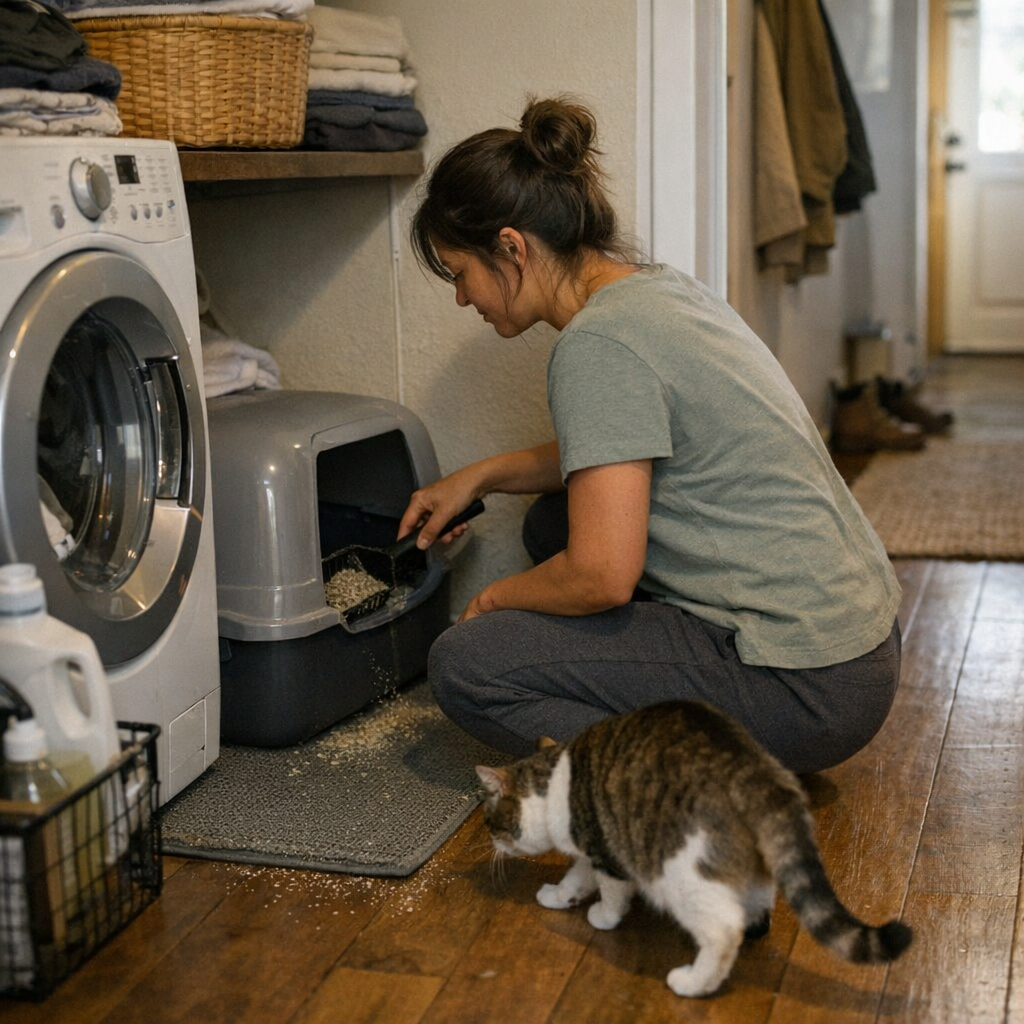
You notice the problem before you admit it: a thin line of litter just past the mat, a dust patch that reappears after yesterday’s vacuum, an odor that lingers even though everything looks “fine.” With an indoor cat, especially when the litter setup lives in a hallway, laundry nook, or near the main flow of your home, surface-level tidiness fades fast. It doesn’t take a mess—just a skipped scoop or delayed wipe—for these interruptions to start making movement less comfortable and cleanup more of a chore. What looks organized in the morning rarely stays that way by the next water refill or laundry run. In the world of StillWhisker, the setups that work are the ones that stay cleaner with less catch-up—not just look settled for an hour.
When “Tidy Enough” Stops Feeling Easy
Reset the litter zone, sweep the floor, lay down a mat: it all looks under control right after cleaning. By tomorrow, though, daily routines put that setup to the test. A single missed reset is enough. Suddenly, there’s ammonia in the air, paw prints bypassing the mat, or fine dust sneaking onto your socks. You recognize it when you’re already carrying something—laundry, groceries, or the water bowl—and realize you’re stepping around a new trouble spot you thought you’d solved.
It starts subtly, but the friction grows: day-old odors creep back, those stray grains of litter multiply, and what took effort to clean last time now feels like unfinished business. Pretty soon, you’re no longer just accepting minor annoyances—you’re preloading tomorrow with extra work you forgot you didn’t sign up for.
Why Small Daily Scoops Change Everything
A day without scooping isn’t neutral. It costs you later—extra odor sticks to fabrics, dust settles in ever-widening circles, and uncollected clumps attract one more round of footprints. The mess that “waits until later” simply takes more effort to erase, while the difference between kept-up and falling-behind shows up most in spots you don’t expect: the hallway edge, the foot of the laundry basket, the area around the refill bowl.
The real shift isn’t dramatic—just relentlessly cumulative. Extra sweeping, sniff-testing, or surprise wipe-downs become regular. Even if the area looks tidy after each deep clean, let the daily habit slip and soon every other step gets slowed by one more thing to clean or reposition.
Navigating Shared Spaces: When Litter Setups Meet Everyday Life
If the litter box sits anywhere central—hallway, laundry, near the kitchen—the limits of your setup become painfully clear. Litter doesn’t just stick to paws; it migrates directly into your main traffic lanes. Instead of flowing through the space, you pause before setting down laundry, step around the box on autopilot, or delay cleanup, hoping the right moment comes before things pile up. Usually, it doesn’t.
Miss daily scooping and the cost is obvious: the box takes over. Air shifts, grains spread, and the stretch from cat zone to human zone blurs. Worst case, you find yourself vacuuming when the plan was just a quick water refill. That’s routine interruption, not just pet mess—especially when those interruptions start rearranging your shared spaces instead of keeping them functional.
The Slow-Creep Problem: What Fails to Show Until It’s Too Late
Surface order is deceptive. Things can look “done” right after a reset, but a day skipped and grit shows up past the mat, odor lingers after a pass-by, and you’re suddenly wiping the same spot twice. It’s rarely a headline mess—just resistance, extra work built up in the background. Familiar? The best-looking boxes still send out warning signs: a shoe picking up grains, repeat wipes where none should be needed, or a routine that gets held up by a five-minute fix that was missed the day before.
Invisible Boundaries: The Difference Between “Looks Fixed” and “Stays Fixed”
Decluttering and wiping the area around the litter box gives the illusion of stability. But if your reset doesn’t last through one feeding or water run, it’s not holding up. Daily scooping adds an invisible barrier—one that keeps small issues from multiplying, even if it doesn’t make them vanish. It isn’t magic, but it’s the simplest line of defense between a controlled setup and a drifting one.
Scoop right after refilling the water bowl or serving food. Instantly, both routines flow better. Litter stays in the zone, smells stay contained, and you move through your space with less stopping and shuffling. You feel it most not when things look best, but when you don’t have to pause and correct the same issue again tomorrow.
Real-World Moments: How Routines Expose Weak Points
- Heading for the feeding bowl in the morning? Litter lines the path, so what should take ten seconds becomes a stop for a dustpan.
- Laundry comes out clean, but that stale edge in the air follows until you realize it’s from yesterday’s missed scoop.
- Cleanup wipes sit near the laundry but never close enough when you’re actually at the litter box. By the time you grab them, dust and scatter have spread.
- The mat corral most grains—but every few days, enough slip by that you’re still chasing tiny dunes across the floor later.
Each of these friction points signals the same thing: it’s not about how organized an area looks, but how often your real-life routine gets stuck dealing with what slips through.
What Daily Scooping Really Prevents—Beyond the Obvious
Odor stopped at the source. Catch clumps before they linger, and you won’t be masking smells—they simply don’t get a chance to settle in. Regular removal keeps air clear not just for your cat, but for anyone using the shared space. This matters most where human routines overlap cat routines.
Upkeep that never piles up. Small resets mean you’re not scheduling big deep cleans later. Surfaces—mat, floor, box edge—stay “usable,” so cleanup becomes a background task instead of a real interruption or a multi-step event that resets your day.
Boundaries that actually hold. Addressing issues early prevents litter, odor, and dust from drifting beyond their zone. Shared rooms don’t reorganize themselves around the litter area—they just work, without those micro-detours or “I’ll clean it later” habits that never quite catch up.
When the Setup Looks Right but Feels Slow
It’s common: the area looks like it should work—fresh mat, clear floor, box in place—but it still manages to hold you up. That’s what daily resets are for. Skip one and it’s not that something dramatic fails; it’s the slow trickle of small interruptions after each feeding or water refill, a trail of paw-prints, or a second glance at a spot you “just did.” Visual order without flow is just another type of friction.
The Markers of a System Falling Behind
- Crisp dust lines meeting you at breakfast or after work—signals of a mat edge that’s no longer stopping the spread.
- Scent tagging along just as you put laundry away, making clean clothes feel not quite clean.
- Litter grains showing up in new, random corners—shifting movement through shared spaces from casual to cautious.
- The simple run to refill water or toss in laundry suddenly becoming a detour for another sweep or a hunt for wipes.
The “almost fine” setup is a trap: convenient for a day, irritating by the end of the week. Wait for visible friction and you’re already behind. Seamless upkeep comes from routine resets—ones that fit into your flow instead of turning into extra chores. The right setup doesn’t chase perfection; it just keeps “organized” from slipping into “frustrating.”
Turning Daily Litter Upkeep into a Manageable Habit
If your home isn’t wide open and your time isn’t unlimited, the best fixes are small ones that fit real routines:
- Scoop as part of your water or feeding routine—if they’re connected, you’re less likely to put it off.
- Keep wipes and a trash bin right where you reach for the box, not across the room or in a spare closet.
- Sweep past the edge of the mat every time you reset. If you see grains, don’t wait—they’re advance warnings, not tomorrow’s problem.
- Pay attention to spots where routines stall: if laundry, hallway, or feeding gets interrupted, that’s the area to streamline.
The setups that live easiest are the ones that remove repeat pauses, not just add storage or coverage. If the litter zone, feeding area, or shared space keeps slowing you down, it’s time to reset—not for show, but for how the day actually moves.
See more practical structures for smoother indoor cat setups