
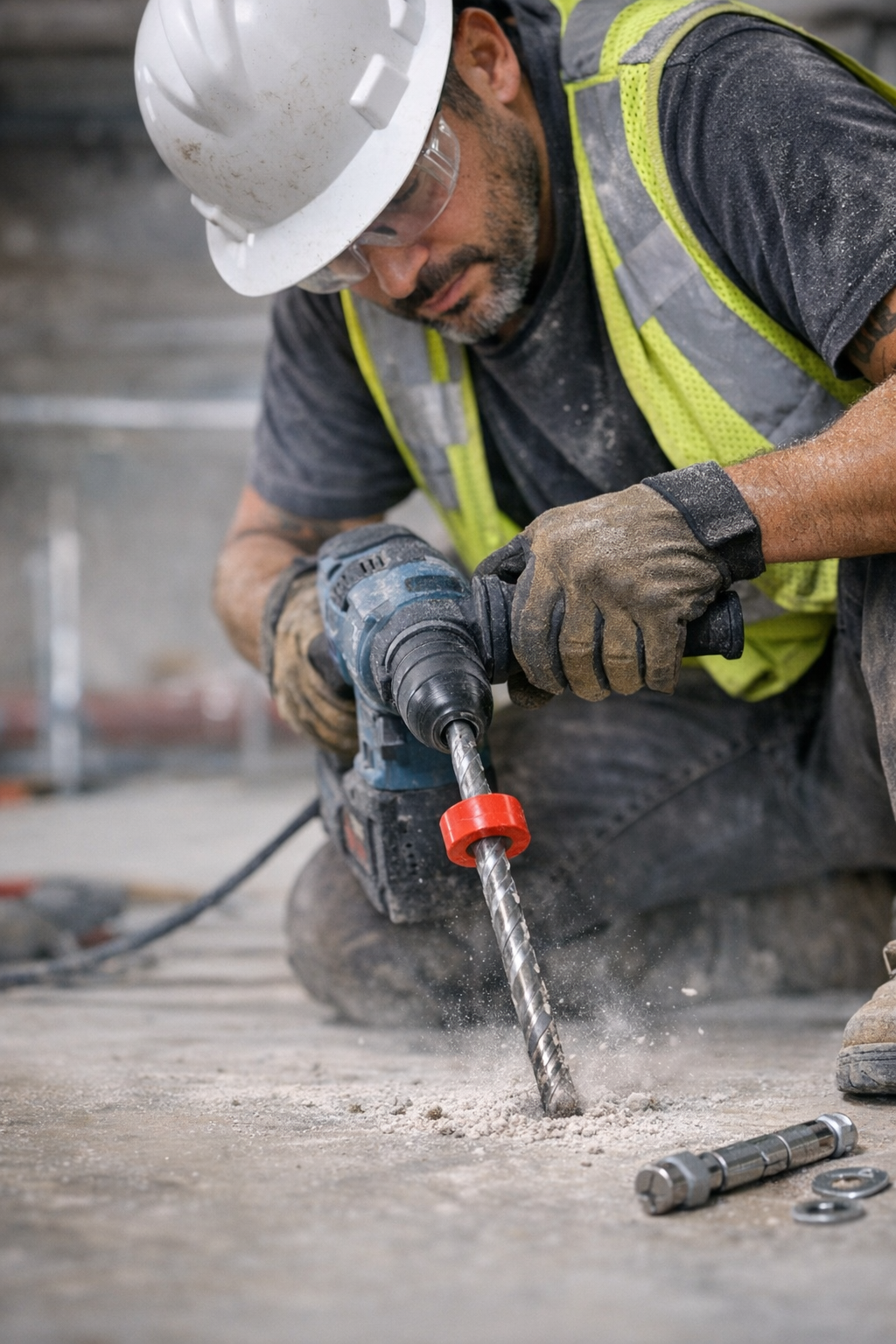
Depth control doesn’t get respect—until it derails your whole install. If you’ve actually spent hours on anchor holes—drilling for racks, brackets, or overhead hangers—you know how quickly a fast, tidy project slips into a haze of misfires and slowdowns. At first, every hole feels smooth. But after a dozen plunges, cement dust grinds into your gloves, sharp tape marks fade out, and you’re second-guessing every bit of progress. Suddenly the anchors sit proud, don’t seat flush, or bite too shallow. Now you’re reaching for a punch or chisel, halting that early momentum, and muttering about “good enough.” What should be a half-hour run turns into wasted energy, patch-ups, and frustration that nobody budgeted for.
The Real-World Mess of Measuring Anchor Depth
Whether you’re mounting heavy brackets in a damp basement or securing a pipe run in a grimy garage, every anchor has to land just right. That should be routine, but on real jobsites, the margin shrinks fast. Shop dust turns that crisp white tape into an unreadable smear before you’re even halfway. The drill’s built-in depth stop, if you bother setting it, can loosen from vibration or just get ignored in a rush. Even a collar, if set in a hurry, has a way of drifting after a few cycles. Every workaround has a weak spot, and small lapses quietly stack up until one “quick” job becomes an afternoon of fixing what the tape or stops missed.
When Tape Fails—and Morning Shortcuts Bite Back
Slapping a tape flag on your bit is fine for a handful of holes—but under real pressure, tape slides, gets obscured by cement, or peels off mid-run. By the fifth or sixth hole, you’re squinting at fingerprints and guessing depth by muscle memory. If your hands are slick or the lighting bad, good luck actually seeing any marker. There’s no consistency, and suddenly you’re shoving anchors and hoping they’ll seat. Of course, you hit one too shallow—so now you’re cleaning, prying, maybe running a new hole, and losing flow as your arms and patience give out.
Collars and Stops: Feel Without the Guesswork
Swap tape for a true depth collar and it’s a different job. The second you feel that collar touch concrete, you know you’ve hit target—no peering through dust, no second-guessing. It’s tactile, not visual. You can check depth by feel, even if visibility is shot. Proper stops or collars don’t win awards for perfection. They win by making every hole routine: line it up, drill till you hit resistance, move on without hesitation. The payoff is measured in smooth installs and projects that finish on pace with the first anchor every time.
Scenes the Shop Floor Knows Too Well
The difference shows up when you’re working at awkward angles or with your head pressed beneath a shelf, nose full of dust. Try keeping a tape mark visible when drilling overhead—concrete snow falls, your marker is gone in seconds, and now you’re guessing. Or drive anchors next to a web of old patched holes; you can’t afford a slip, but you also can’t clearly see your bit. The “quick fix” holes become repeat offenders—anchors end up proud, you reach for a hammer, and you know you’ll be explaining it later.
This is where a fixed collar saves time and nerves. You don’t have to see the mark. The bit stops where it should, no drama, no extra cleanup. Less fuss with tools, less chance of scarring the wall forcing in shallow anchors, and fewer do-overs. It’s these imperfect moments—poor visibility, awkward spaces, and fatigue—where real stops or collars quietly pull their weight.
Tool Setup: The Small Habit That Pays All Day
Setup is seconds; mistakes burn hours. Set up with a depth collar—just a minute with a caliper or even a tape measure. Dial it in a few millimeters deeper than the anchor to clear dust. That’s all it takes. Set tight, that collar gives you repeatable, reliable hits, no matter how many anchors or how tired you get. The payoff isn’t theoretical: it’s bracket lines that stay level, fewer anchors that have to be hammered, and no more “almost” flush fastenings that catch a critical eye at the walkthrough.
Stick with tape and, by hole number ten, accuracy fades. Each misstep demands a cleanup pause, sometimes fresh bits, sometimes redrilling. What felt streamlined at 9 am becomes a slow-motion loop of checking and fixing, slicing up both energy and jobsite morale. In the long run, control saves more than it costs.
Background Habits for Depth Consistency
- Set collars with actual measurements. Even a quick check with a caliper or tape beats a rough guess every time.
- Drill a little deeper than anchor length (4-6 mm is usually safe). That extra depth catches stray dust and lets anchors truly sit flush.
- Re-tighten collars every dozen holes. Hammer drills vibrate things loose—don’t assume nothing’s shifted.
- Change out dull bits fast. Rounded tips throw off both speed and control, dragging your workflow to a crawl.
The Win: Smoother Installs, Fewer “Do-Overs”
The best installers aren’t just quick—they’re steady. Reliable depth means reliable anchoring, and it shows up in cleaner work and jobs that finish right the first time. You don’t have to chase perfection. Aim for habits that limit surprises: a simple collar, a minute’s setup, and fewer corrections down the line. Less wasted motion. Less backtracking. Less aggravation when conditions are rough and the work just won’t wait.
Shop tools and accessories built for real job site reliability at Gumboll.