
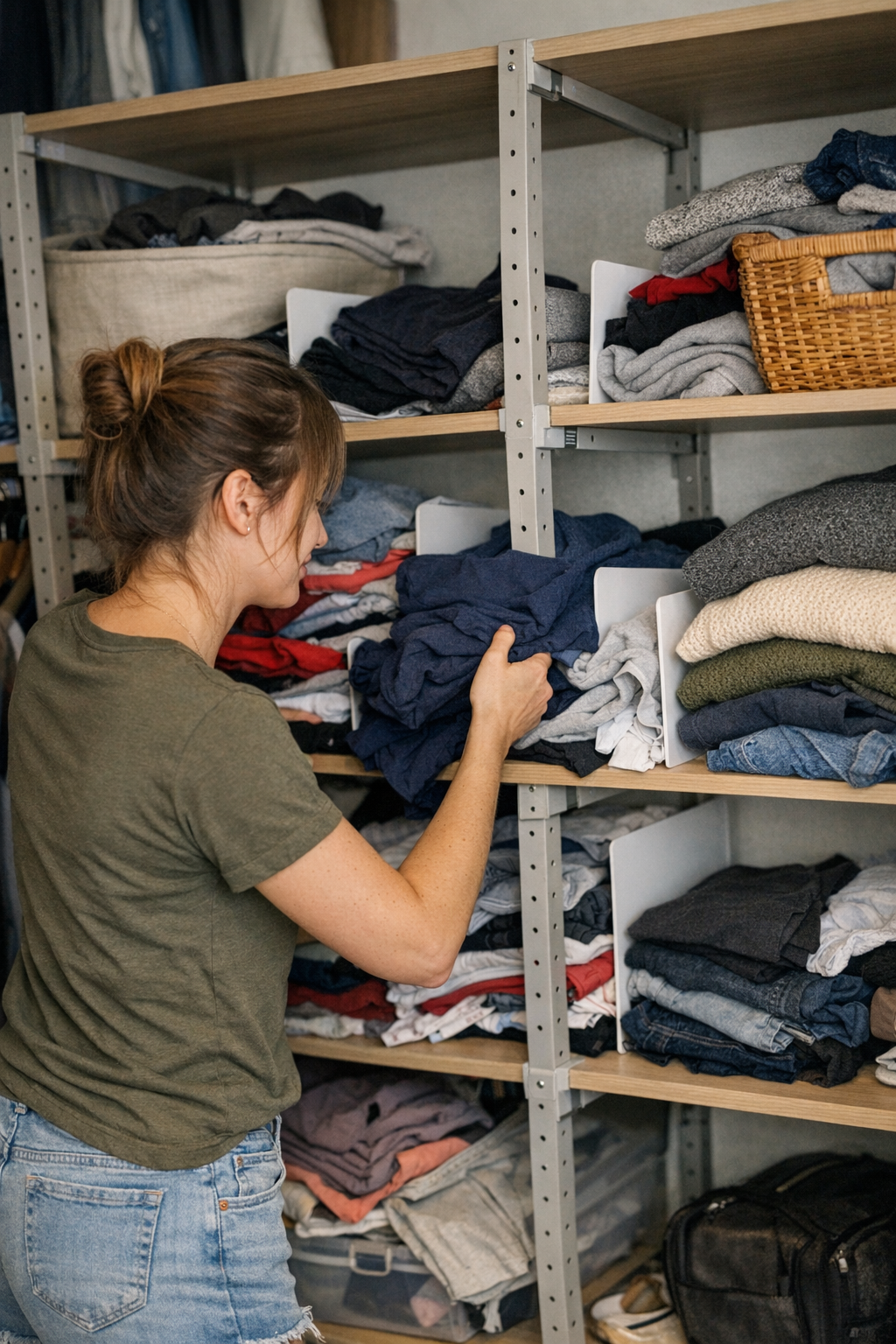
It’s not Sunday resets that reveal the real state of your closet—it’s Wednesday mornings at 7:32 a.m., standing in front of tidy-looking shelves that have already started to betray you. The piles that stood tall on the weekend now blur into each other. That basket you labeled “gloves” is suddenly housing socks, receipts, and a stray t-shirt. In these rushed, everyday moments, the true friction of a closet’s weak spots shows itself—and small flaws start to multiply.
Why “Looking Organized” Fails in Real Life
On day one, everything feels hopeful: shelves neat, shirts stacked, baskets aligned. But the order fades fast. The daily cycle is what tests your setup. Grab one shirt from the bottom of a pile and the whole stack wobbles. Put something away in a hurry, and the bin swallows it whole—along with other “categorized” items that don’t quite fit their intended home.
What undoes most “organized” closets isn’t a lack of effort; it’s the quiet, repetitive wear of daily life. Shelves that are too deep swallow small items until they migrate to the back, out of sight. Bins just slightly too big or vague become magnets for catchall chaos. Over a couple of laundry cycles, what started as distinct sections—sweater stacks, sock bins, accessory trays—become blurry, slow, and impossible to reset without a minor project. Each quick fix adds to the slow drift toward clutter.
Real-World Friction: What Actually Goes Wrong
The Vanishing Stack
The morning rush exposes every flaw: You reach for a specific tee, but as you slide it out, the pile collapses sideways. A classic domino effect—by Friday, shirts and shorts have blurred into one sagging heap. Now, getting dressed means untangling piles, shoving one stack aside to reach another, and promising yourself a “deep reset” on the weekend.
Baskets that Hide as Much as They Hold
Baskets and bins seem like shortcuts to tidiness, but the wrong fit invites clutter. Toss in a hat, a scarf, or a pair of running gloves “just for now,” and soon you’re rummaging blind. If the basket’s too deep, smaller items vanish underneath bulkier ones; if it’s too open, categories bleed together. Retrieval takes longer, and you start to avoid using the bin at all—even though it’s technically right there.
Dividers: The Quiet Fix Most Closets Lack
No item creates order like a good divider. Without a clear edge, even the best-folded stacks devolve. Shirts wander into sweaters; towels melt into the jean pile. Eventually, your shelving becomes a single, confusing landscape. Every time you “put things back,” you’re actually pushing against a system with no boundaries—dooming yourself to repeat the same reset every week.
Structural Details That Actually Matter
Closet performance comes down to how a space absorbs everyday mess. How far do you reach just to find a small item? If a shelf forces you to move everything up front just to access the back, it’s too deep for daily use. Bins that don’t match what you own—either swallowing too much or spreading items too thin—slow you down and encourage mix-ups. Without the right boundaries, vertical space goes to waste and every “zone” eventually merges into the next.
A closet isn’t made by one big storage buy. It’s tuned by the dozens of small, everyday decisions—where items land, which piles tip over, which sections become reshuffling traps. Miss the details, and you’ll always be one laundry load away from a new mess.
Practical Tweaks That Actually Stick
Small changes make mornings smoother. Adding dividers—even just every foot—can transform a shelf’s usefulness overnight. Suddenly each stack stays in its lane; you can pull out a pair of jeans without dismantling four other piles. Consider swapping a catchall bin for an open tray, so you can actually see and grab accessories instead of digging for them blind. Right-size your containers: shallow bins for socks, taller ones for sweaters, open baskets for daily gear.
Next time you speed-tidy midweek, stop and notice: Which items always seem out of place? Which shelves collect mysterious buildup? Would one or two more dividers keep categories from mingling? Does a bin hide more than it helps? Mirror the closet to your routine, not to the label on a container.
How to Tell if Your Closet Setup Works
A closet that really works doesn’t demand a reset every time you do laundry. Good storage keeps shape after dozens of uses. Each category stays obvious and quick to reach. When a section consistently collapses or a bin always feels like a grab-bag, that’s the sign your structure isn’t matching your habits. Resets become less frequent and less dramatic; you spend less time fixing, and more time simply finding what you need—without moving half the closet in the process.
Daily Durability: The Hidden Standard
Real organization isn’t what survives a staged photo—it’s what lasts through skipped cleaning days and rushed mornings. The strongest systems keep categories from collapsing into each other and make even your most-used shelves feel intuitive. They withstand imperfect habits and carry you through busy weeks, not just tidy weekends. If clutter returns before Friday, it’s not failure—it’s a sign you need tweaks tailored for your everyday routine.
The details don’t just make the closet look better—they make daily life easier and dramatically reduce the time spent redoing work you already did. Adjust your setup until finding things is effortless, not a mini treasure hunt.