
If you’ve ever knelt behind a washing machine to recover a vanished bolt or found yourself groping for a wire cap at the base of a cold stairwell, you know lighting installs aren’t just about style—they’re about real, persistent friction. The difference between flush mounts, semi-flush fixtures, and wall-mounted lights feels academic until you’re squinting at a ceiling in a tight hallway, watching small hardware skitter out of reach. A fixture can seem perfect on a product page, but once you’re kneeling on tile at 7 a.m. with a screw embedded beneath an appliance, the real implications show up: simple maintenance stalls, workarounds stack up, and the wrong choice keeps biting back.
The Domino Effect of Lost Lighting Hardware
In actual rooms—above laundry counters, jammed against mirror walls, tucked under cabinets, crowding narrow hallways—dropped screws don’t just disappear, they reroute your entire routine. The two-minute bulb swap stretches to thirty minutes as you hunt for a part that’s slipped behind a washer or vanished beneath baseboard. Suddenly, a routine fix turns into a mini project, with exposed wiring or loose covers left lingering until you can dig out the missing piece. The fallout isn’t just inconvenience: the fixture stays unfinished, a shadow spreads across a work surface, or a loose fitting turns into a safety uncertainty you notice too late.
Routine Lighting Maintenance: The Real Test Zone
The real test of lighting isn’t on install day—it’s every routine maintenance round after. Laundry rooms with damp air, vanity areas with awkward grip, or stairwells where a step-stool barely fits: these reveal how flush mounts can bury vital fasteners up against the ceiling or wall, out of direct sight and beyond easy reach. The practical moment is never glamorous: slippery hands, a poor angle, and gravity combine, and now you’re reaching blind for a screw that matters more than it seems. Once the cap is gone—wedged under a cabinet or lost behind the machine—you rethink “simple” lighting. With flush mounts, this isn’t a one-off: every cleaning, every bulb change, the setup keeps refueling the same hassle.
Looks Versus Real-Life Use
Side by side, flush and semi-flush fixtures can look nearly identical—but the use difference is impossible to ignore after a few cycles of real work. Flush mounts give a seamless, low-profile look that works right up to the ceiling but hide their hardware, forcing every twist of the cover into a guessing game. In a crowded vanity or above a laundry run, there’s nowhere for fingers, nowhere for dropped parts except into trouble. Semi-flush and panel designs, by contrast, add just enough clearance for hands and tools—giving you line of sight to each connection, space for a controlled grip, and a much lower risk of runaway screws. On day one, this is invisible; on day one-hundred, it’s the gap between quick swaps and repeat crawling.
A Laundry Room Scene: When a Small Drop Snowballs
Picture a damp laundry room, heat rising from the dryer, and you’re wedged into the space between counter and wall. You need to change the LED above the far edge. The flush mount’s cap, slippery with condensation, flips from your hand—bounces once—and vanishes behind the machine. Productivity stops. That little part halts your day, now demanding a flashlight, a coat hanger, or a contorted tilt of a heavy appliance. In bathrooms, a single wayward wire cap behind the vanity can leave the mirror light dead for days. Stairwells make it risky—one fallen nut skips steps and turns recovery into a safety hazard, with poor lighting compounding the danger.
Breaking the Lost-Part Cycle: A Field-Tested Tweak
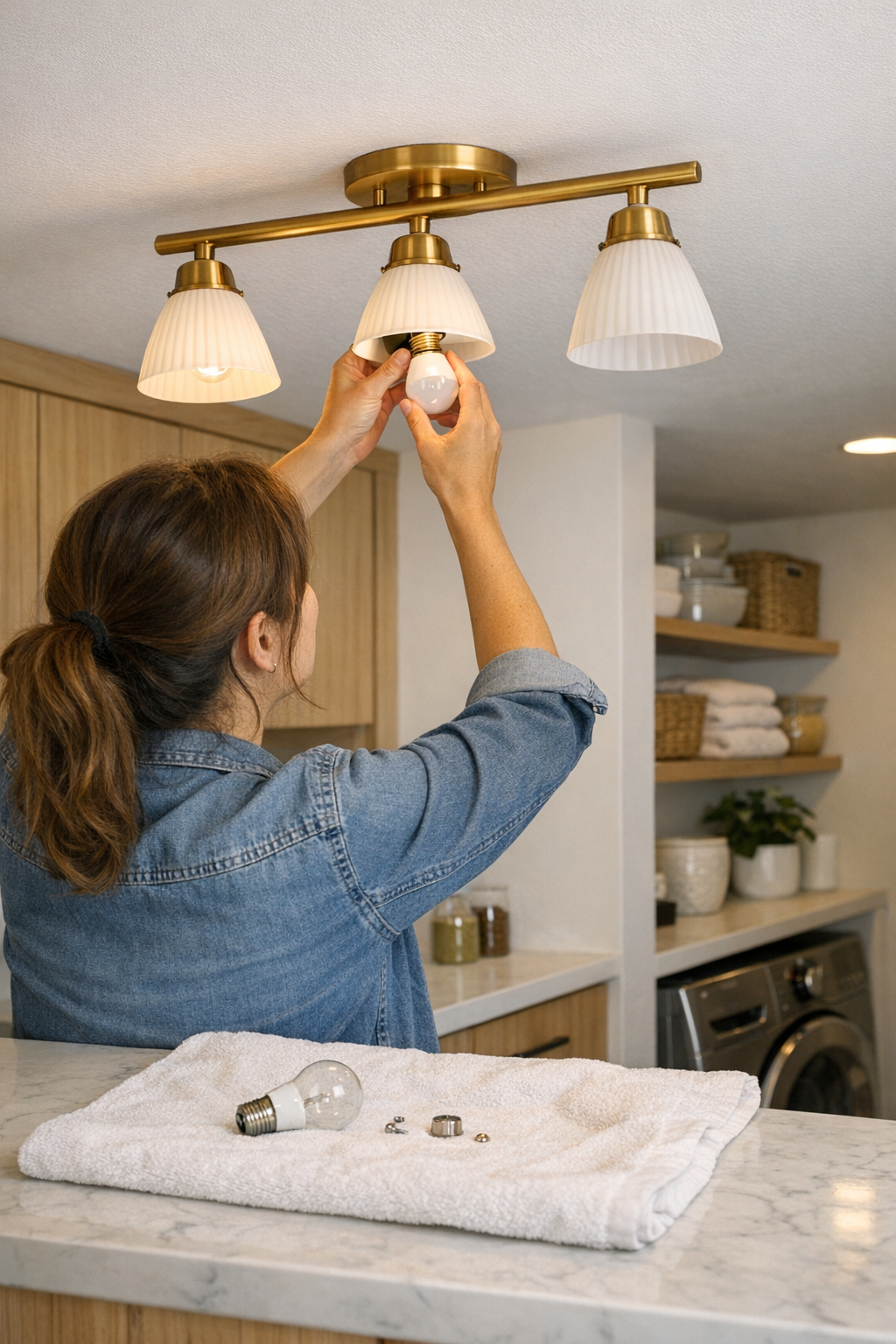
After enough lost parts, one adjustment cuts the repeat drama: put a thick towel or folded mat on the floor or countertop right under the fixture before any work starts. This turns hardware escapes from a chase to a catch—no fastener rolls out of sight, no part bounces straight to the void behind machines. In laundry rooms, simply folding a towel to meet the fixture edge keeps everything within view. In tight halls or bathrooms, a defined catch zone snaps the chaos back under control, letting you finish the fix and move on, not just start another search session.
Real-World Tip: Prep the Maintenance Area
Always set your own work boundaries—no matter how quick the job feels. Tile, grout, and trim eat dropped hardware alive. A towel or piece of cardboard on the floor is a small setup for a major payback: you get parts back instantly, kill the creep of delay, and reclaim lost minutes every time gravity strikes.
Why Fixture Type Repeats the Story
Flush mounts naturally choke access. Each cover removal holds a hidden dare: will a screw or bracket fall somewhere only a full-room upend can reach? Over time, frustration sets in—not because lighting isn’t bright, but because simple upkeep keeps getting sabotaged. Needed cleanings and quick swaps get postponed; dust collects, shadows spread, and the light that looks right overhead feels increasingly wrong in day-to-day use.
Semi-flush and panel fixtures—looser-fitting, with just an extra inch of drop—unclench the process from the start. That space is not cosmetic—it translates to steadier hands, fewer hardware fumbles, and easier lineup of cover and socket every time. In rooms where space is already tight—under cabinets, by stair railings, facing narrow corridors—that difference multiplies. It’s the quiet detail that keeps daily routines smooth instead of sabotaged.
The Bigger Picture: Lighting That Actually Supports Your Routine
It’s tempting to treat ceiling and wall fixtures as one-time set-and-forget—until they start breaking momentum at every routine pass. Good lighting isn’t only about lumens or finish: it’s about a fixture handling your routine without spitting parts behind appliances or forcing contortions for a bulb swap. In entryways, corridors, over worktops and mirrors, the wrong fixture keeps generating friction you don’t need. When setup syncs with how you actually move and work—hands steady, hardware visible, maintenance fluid—the whole space gets easier, not just brighter.
Everyday Proof: Lighting Frictions that Add Up
If you catch yourself pausing an extra beat at stair turns, leaning in to banish mirror shadow, or dodging bright glare that never seems aimed right, odds are the fixture type is fighting your routine. Pretty silhouette means little if the shadow keeps creeping on your countertop, or you need to fix, prod, or improvise every few weeks. The right fixture reduces these interruptions—making your space feel grippable, visible, and reliably usable, not a series of stops and workarounds.
Reducing Routine Hassle, One Small Fix at a Time
The real cost of poor lighting isn’t aesthetic—it’s the wasted time, the forced reroutes, and the sense that your home resists you instead of backing you up. Trade flush-mount friction for semi-flush ease, lay down your catch mat, and treat lighting as part of your working rhythm. Small tweaks accumulate. Over weeks and months, this adds up to less crawling, less squinting, less lost motion—rooms that run with you, not against you. When maintenance becomes routine again, not a setback, even the smallest fixtures change how every corner actually works.
Find ceiling and wall lighting that supports your real routines—not just your style—at LightHelper.