
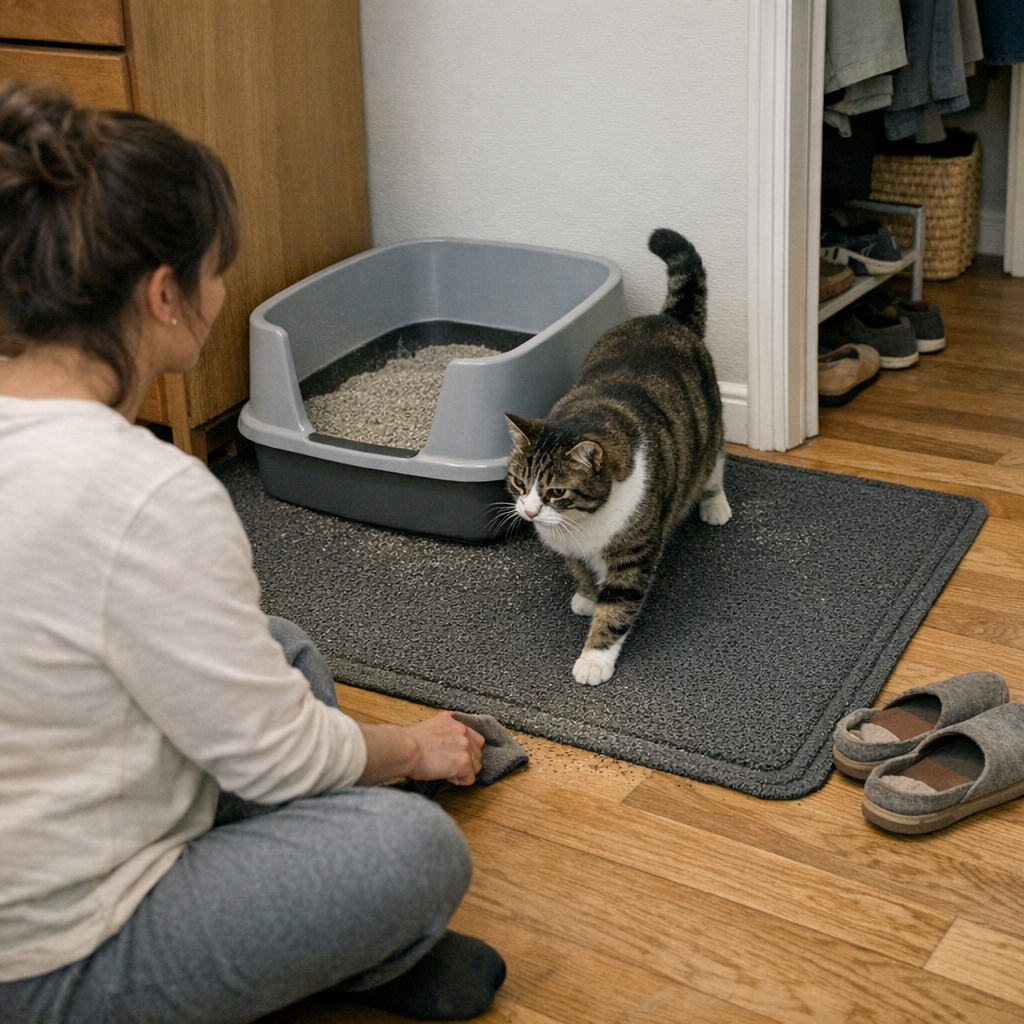
Every indoor cat owner knows the pattern: a fresh litter mat goes down, the floor gets a careful sweep, and for a day or two, it looks as if the litter zone might actually hold together. But by midweek, gritty granules crawl past the mat’s edge and wedge themselves everywhere you walk—into seams between floorboards, under the kitchen table, across the walkway where you top up water bowls or sweep out stray toys. What looked like “contained” order quickly crumbles, and routine resets become a constant, silent battle against slow leaks of mess that never seem to stop at the mat’s promised boundary. The real-life StillWhisker setup starts with recognizing this cycle, not glossing over it.
The Small Litter Mat Problem: Looks Can Be Deceiving
A standard litter mat gives a first impression of control—a landing zone that hints at less mess and a line your cat’s paws won’t cross. For the first couple of days, this seems to work: the edges line up, the walkway beside the box passes an eye test, and maybe you even vacuum with a sense of closure. But in reality, one look underfoot or a midday sweep tells you the boundary broke hours ago.
Repeated use is where the flaw opens up. Each trip to the box sends grains arcing just beyond the protective edge. The instant the mat fills up, stray litter launches directly onto tile, carpet, or wood. By Wednesday, you track a faint, gritty line right into the kitchen or the refilling spot for the water bowl. Even when a small mat “looks” full, the escape continues, creeping silently under doors and into daily footpaths you can’t avoid.
Where Setup Friction Shows: Beyond the Box
Indoor-cat life means the litter box zone isn’t isolated—food dishes, storage bins, feeding mats, and the occasional dash underfoot all crowd the same corner. Place the box near laundry, a closet, or a busy hallway, and it’s only a matter of hours before the supposed boundary erodes. Real friction shows up when:
- Reach Gets Interrupted: Topping up water means stepping over a scatter of litter pebbles—one misplaced mat edge, and suddenly each refill trip gets slowed by a surprise crunch or awkward sidestep.
- Surface Stays Gritty: Entryway and kitchen floors start harboring hidden granules. Go to wipe behind a table or check under a chair, and what should have been a 10-second reset turns into dragging out the mop.
- Cleanup Splits Locations: Instead of a contained spot, you end up wiping two, sometimes three different zones: by the litter box for the main dump, and wherever those persistent granules roll or hitch a ride.
- Resets Stack Up: Instead of one quick routine after breakfast or a food refill, you’re retracing your route, scooping and shaking down crumbs from every mat and walkway the litter crosses.
When the Mat Is Too Small: Tidy Looks, Messy Reality
The first warning sign isn’t a messy-looking space—it’s the sensation of grit under your heel when you least expect it. The mat might trick the eye with a clean border, but as soon as the cat takes a single stride outside the coverage zone, the boundary flops. Cats that exit sideways, sprint out, or pick a favorite off-center route guarantee those edges won’t hold. Each day, the line of debris creeps further from the setup, and what started as a focused space now seeps into laundry corners and high-traffic hallways, making each sweep or quick reset slower and less satisfying.
For anyone in a tight apartment or a home that pulls feeding, litter, and rest areas closer together than desired, the cost stacks up fast. Suddenly, you’re not just sweeping; you’re managing ongoing clutter in places meant to stay clear—across bare floors, under feeding stands, and in the very spots you hoped would be easiest to wipe down at the end of the day.
Shared Spaces, Shared Headaches
A mat that’s too small for the job doesn’t hide its failures; it just moves them around. You find clusters of litter in water splash zones, under the edge of a resting mat, or at the pivot point for stashed cleaning gear. Where cat space overlaps with daily life, narrow mats open up more places for debris to accumulate—and more moments where a quick task is derailed by unexpected mess or blocked access to a supply bin.
Re-Thinking Litter Mat Size: Why Wider Is Different
Choosing a larger mat isn’t just about adding width for looks—it’s about real, structural change to daily containment. Lay down a mat that extends 18–24 inches or more past the litter box exit, and you notice right away: gritty trails fade, the time until your next full sweep actually stretches, and the majority of kicked litter now lands in grooves, not on the open floor. This isn’t a small tweak. It’s a containment upgrade that stops the spread before it becomes a room-wide hunt for stray grains.
The difference is sharpest where routines overlap: The margin between the litter zone and where food or water is prepped, the line you walk to put away supplies, the visible boundary between pet setup and shared home space. Suddenly, cleanup shrinks from endless spot-checks to a couple of planned resets. You feel it when refilling bowls no longer means tiptoeing around scattered bits, and when “quick wipe down” no longer stirs up a hidden mess from under the mat’s edge.
Real-World Adjustment: Following the Cat’s Path
Cats aren’t precision machines; few exit directly out the front every time. If your cat favors a diagonal jump, a sideways stride, or the occasional burst of speed, a mat centered only at the box’s front becomes meaningless—grit carves its own escape lane. Watch the weak side after three days. Where the first trail appears is where the mat coverage is failing. Shifting or swapping in a wider mat cuts down the spots where litter slips past, shaving off those creeping “surprise” cleanup needs from your daily routines.
Compact Room, Large Mat: Fitting Without Overshadowing
It may feel awkward to drop a big mat into a snug laundry nook or entryway, but the trade-off is visible in fewer patrols and less scattered mess bleeding into living space. Instead of policing every odd corner or resetting the floor after each visit, you gain a boundary that contains, not just masks, the recurring friction between “cat zone” and the rest of the home. It’s a swap: slightly less open floor for far less day-to-day interruption.
Choosing the Right Mat: Details That Make a Difference
Grabbing an average mat off the shelf is rarely enough. Surface and depth matter as much as size. Flat or glossy mats let grains skid off, especially if a cat’s paws are caked or the exit is energetic. Look for deep grooves or mesh overlays—designs that actually grip, not just display, the fallout from repeated passes. These details show up in daily results, not just product tags:
- Size: Minimum 18–24 inches from main exit; wider if your cat has non-center habits.
- Texture: Deep grooves or mesh layers stop the skip-and-slide routine, holding microscopic litter that smooth mats leave behind.
- Reset Ease: Pick something you can shake out or vacuum in seconds, not a design that forces awkward flexing or constant wrestling. Plan to sweep or shake every few days, but upgrade to weekly resets, not daily fire drills.
What Happens When the Mat Finally Fits
A mat that matches your cat’s exit path doesn’t chase perfection—it creates repeatable containment. By Thursday, if the border still holds and the walkways feel smooth underfoot, that’s the test passed. The big relief isn’t eliminating every stray grain, but in reducing the number of times a “quick clean” stretches into a whole-home sweep. Fewer interruptions, walk zones stay comfortable, and the “reset” pressure falls back into line with actual living, not endless maintenance. The difference won’t always be obvious in photos, but you’ll feel it walking from room to room without the underfoot crunch returning on day three.
Routine Tweaks for Easier Litter Zone Maintenance
A well-fitted mat helps, but a few small habits make life easier:
- Shake out or vacuum the mat every 2–3 days—or daily for multi-cat or high-traffic spaces.
- Relocate water and food bowls if you spot litter working its way in—distance helps isolate the problem and shortens cleanup cycles.
- Keep a brush or hand-vac within arm’s reach, not buried behind a storage tote—if it’s easy to grab, it actually gets used when quick messes appear.
- Avoid letting supply bins or storage crowd reset routes. If access slows you down, relocation is overdue—storage should help the flow, not block it.
Containment that actually holds up through the week means less time spent correcting the same old weak points and more space that works for both you and your cat. Litter management