
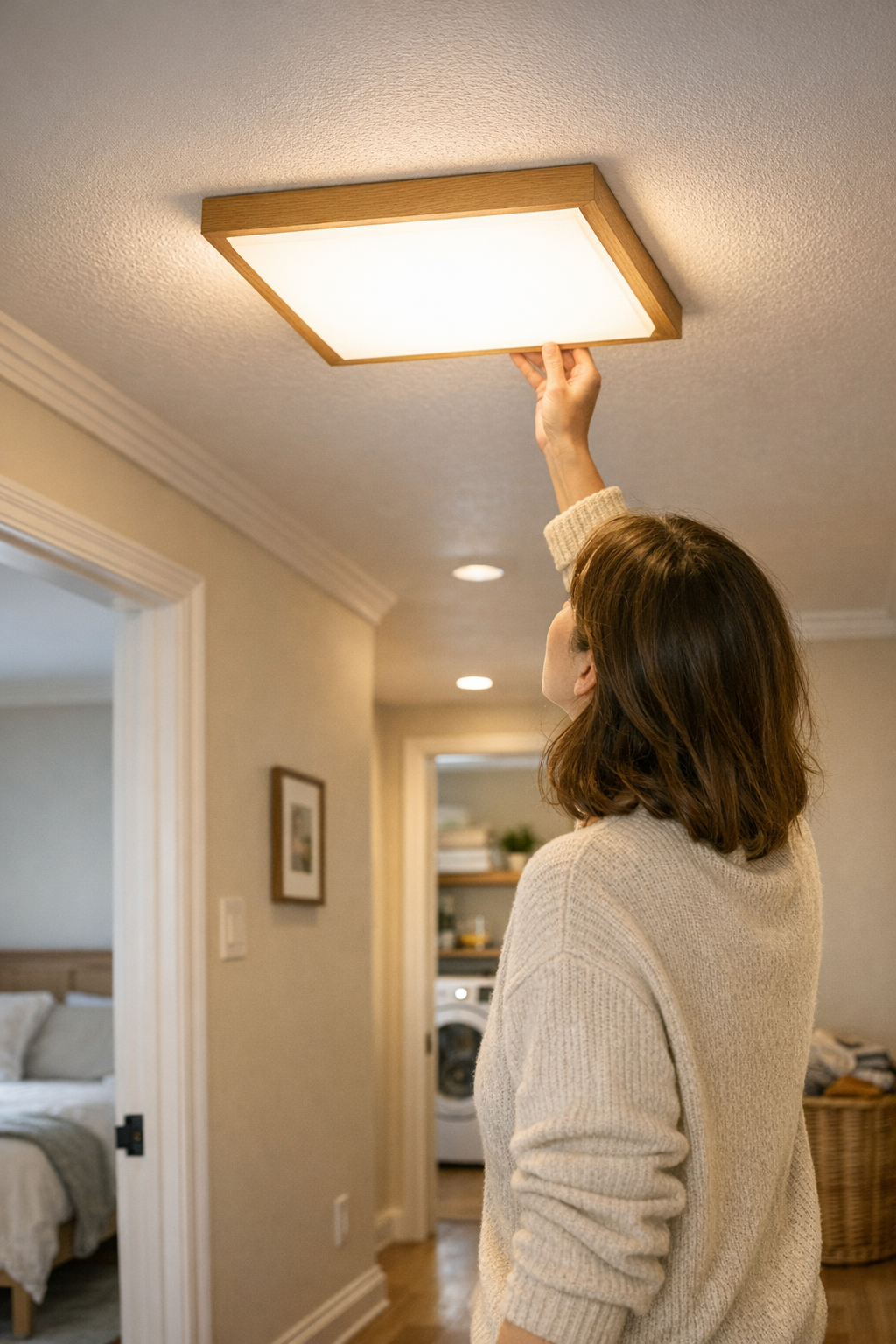
Most indoor lighting problems don’t start with dramatic failure. The fixture powers on, the room looks “done”—but you only notice the real problem after weeks of daily use. That soft flicker at the stair turn, the moment your bathroom vanity light creeps from crisp to uneven just as you lean toward the mirror, or the faint buzz in the laundry room when your hands are wet and visibility matters most. The issue is almost never sudden blackout; it’s the subtle, repeated interruptions—tiny hesitations at corridor thresholds, unexpected shadows over the only uncluttered patch of counter, light drifting from reliable to irritating. Poor connections behind the plate turn “okay for now” into a routine inconvenience that’s easy to excuse until it costs real comfort or clarity. In the world of flush mounts, sconces, vanity lights, and under-cabinet runs, the difference between “lit” and “usable” emerges only as you live with the light day after day.
Where Weak Connections Surface: The Spaces That Reveal Trouble
No one expects a new ceiling or wall fixture to become unreliable after just weeks—but certain spaces turn small flaws into daily friction. Hallway lights often flicker as you cross a worn patch or nudge a door closed; the bathroom sconce dips or hums, just when you’re checking your face in the mirror; under-cabinet spots lose even spread as you stack groceries or slide dishes, leaving the work surface half-shadowed. The frustration isn’t a full outage. Instead, it’s a ritual of double-tapping the switch, pausing to adjust, or shifting your stance to catch clear light. Every movement near these fixtures tests their stability—one closet slam or laundry pile can jar a “good enough” connection, pushing it closer to failure. When wiring shortcuts hide out of sight, even the best fixture can undermine your daily routine without warning.
How “Just Installed” Turns Into a Daily Problem
Lighting that looks flawless on install often reveals its weakness at the worst times—not in showroom calm, but during daily repetition. That’s when the second, tenth, or hundredth switch cycle, a week of humidity in the bathroom, or the steady thumping upstairs finally exposes how well (or badly) the fixture is wired. Flush mounts in hallways might rock subtly when doors close, and corridor edges can fall into shadow with uneven connection. A semi-flush or wall sconce, fine out of the box, begins to buzz or dim as vibrations or damp air creep into the wiring. Nowhere is this clearer than at the vanity: a rushed job creates exactly the kind of shadow line or color drop that makes you second-guess the mirror. Lighting that looks “bright enough” on day one can become tiringly unreliable when every movement, appliance, or passing footstep exposes inconsistency.
Seeing the Bottleneck: It’s Not Always in the Bulb
If you change a bulb and the flicker or dimness returns within days, the problem is almost always deeper. Poor wire connections behind the fixture turn every use into a gamble: laundry room lights blink as you slam the washer shut; under-cabinet strips create jumping shadows when drawers slam. Counter edges vanish at the wrong time. When a fixture regains brightness after a nudge or goes silent after you tighten the switch plate, it’s the wiring—out of sight, but not out of impact. Each repeated action—a pulled drawer, cabinet door swinging, stair footfall—tests whether the connection is solid or primed for another minor failure.
Warning Signs in Everyday Spaces
- Hallway and corridor: Flickers or dull spots as you cross, breaking your pace, even as the fixture glows overhead
- Bathroom mirror zone: Dimming, buzzing, or shifting shadow bands as you reach for the hair dryer or swipe at condensation
- Under-cabinet task areas: Light dims or jumps as you move items, and the work surface loses even coverage right where you need it
- Stairways: As you turn the landing, light lags or steps fade into unevenness, making each transition less automatic (and less safe)
The Simple Fix: Intentional Wiring, Real Results
The gap between a light that just looks right and one that stays reliable year-round is almost always care during installation, not expensive maintenance. Deliberate, tight wire connections—slow, confident twists and fully seated connectors—prevent nearly all the habitual flicker, fade, and hum that creep up after the fixture’s in place. A single local laundry upgrade proved it: once the strip light’s wires were resettled with screw-tightened firmness, months of machine vibration and wet hands couldn’t shake its steady glow. The “fix” isn’t complex; it’s a matter of blocking the gradual decline before it picks away at your routine. No more squinting over stains, no more second-guessing if the counter’s actually clean, no more need to tap the fixture back to life.
Why Reliability Matters in High-Use and Humid Zones
Certain home zones—stairs, tight corridors, bath vanities, laundry nooks—demand lighting that just works, every time, without pause. In these areas, each missed step, hesitated movement, or shadowy patch adds up: a flicker on the stair isn’t just annoying, it slows you down or nudges you into leaving a light on all day out of caution; a foggy, shadowed mirror means you might miss details or repeat tasks. These aren’t theoretical problems. A small break in visual confidence can disrupt your whole routine, making once-simple spaces a source of unease or delay. True lighting success isn’t a burst of brightness—it’s steady, invisible support that stays out of your way no matter how often you cross the threshold.
Diagnosing Unstable Wiring Before It Disrupts Your Routine
The real giveaway is repeat disturbance: flickering after a new bulb, light that comes back with a nudge, brightness ebbing after every round of switching, or sudden buzzing when the room is crowded. These aren’t “just” quirks—they’re clues that the problem is wired in, not a function of bulb or fixture style. Try crossing the hallway at dusk and see if your eyes ever need to catch up; check a bathroom mirror on a rushed morning for even, unwavering light; experiment with under-cabinet strips, noticing any fade or jitter as you stack, clean, or cook. Reliable connections make light vanish into your day. Unstable wiring keeps reintroducing itself, just enough that you adjust your routine without even seeing why—until you finally pause to fix what’s hidden behind the plate.
Lighting You Can Trust: The Payoff in Everyday Calm
A fixture you don’t notice is not just free from outages—it’s free from interruptions and doubts. Each unbroken trip down the hallway, every mirror check without a frown, every unobstructed kitchen task is a direct result of solid, intentional wiring and fixtures matched to space demands. Indoor lighting isn’t decoration—it’s the silent backbone that keeps rooms not just looking good, but working right. The best setups aren’t always the brightest or boldest; they’re the ones that let you move without friction, see without squinting, and trust the space to keep up with your routine, no matter how often you pass through.
Find lighting designed for real indoor movement and clarity at LightHelper.