
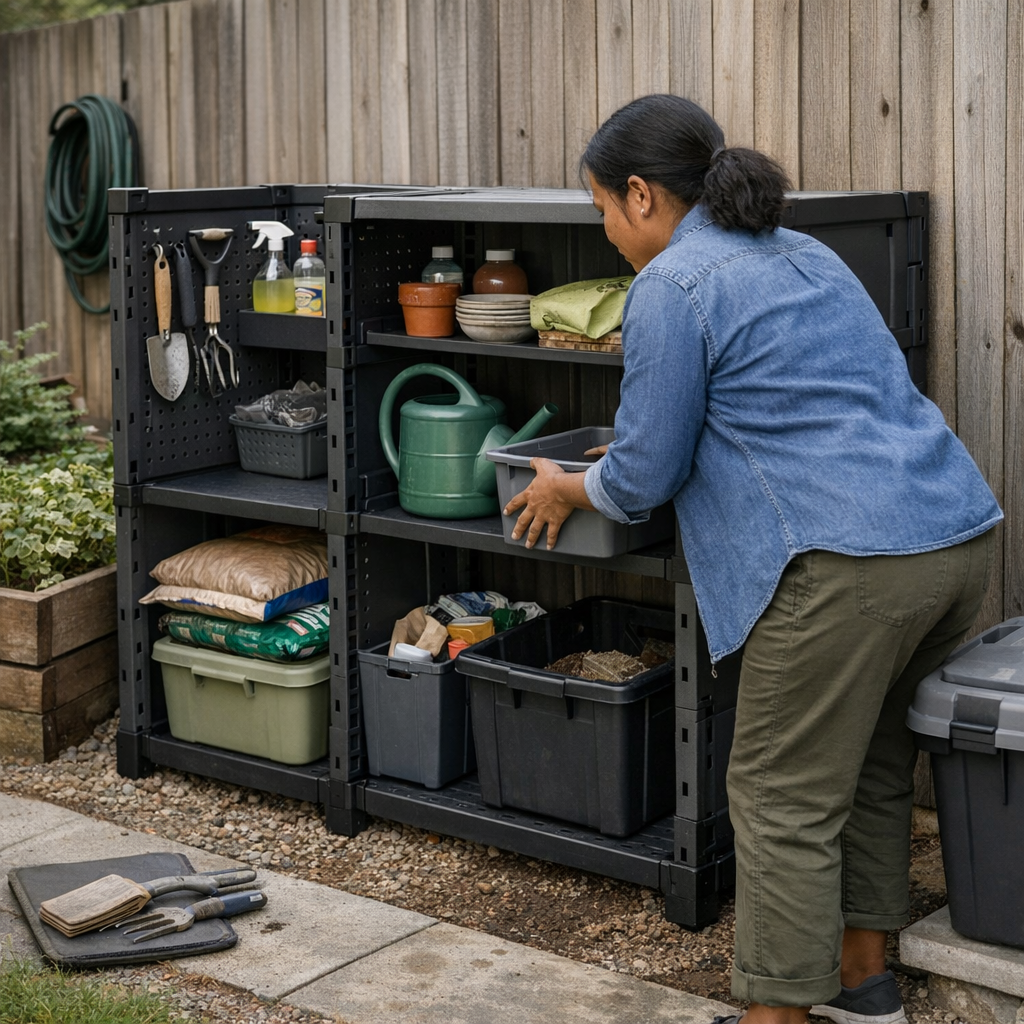
The tension between surfaces that look organized and storage that stays organized quickly shows up wherever serveware gets used day after day. The dining area becomes a kind of test lab: do you keep platters and bowls visible on open shelving where resets are constant, or do you hide them in a buffet cabinet, closing the mess behind doors? At first, both systems promise “order”—but once a week’s worth of dinners, rushed hands, and hasty returns have passed, only one setup lets you find what you need fast without triggering a re-sorting project just to keep up.
The Everyday Reality: Open Shelving vs. Closed Cabinets
Open shelving signals calm—rows of plates, cups, and platters look easy to grab. But daily action quickly unravels this order. Dust gathers on exposed surfaces. Steam and splashes mark whatever sits out. The simple act of reaching for a mug in the morning or pulling a tray at night shifts the whole row, and neat stacks start to tilt. By Friday, your shelves can look less like curated storage and more like open proof of every last rushed breakfast or dinner prep. Resetting means either constant attention or facing a messy display until you make time to restore everything to its place.
Closed buffet cabinets seem like a shortcut to order—doors shut and the clutter disappears. They block dust and hide chaos as long as what’s inside matches how you need to use it. But push an oversized platter onto a shelf sized for bowls, or stack mismatched trays just to get the doors closed, and you haven’t solved clutter—you’ve hidden it for now. The mismatch isn’t always visible, but it doesn’t disappear; it just waits until you’re searching for a serving bowl and end up digging through piles of mixed-up, jammed-in pieces while the meal pauses and stress rises.
Where Storage Systems Actually Get Tested
Night after night, serveware is cycled in and out—stacks of bowls on the move, platters back from washing, glasses quickly corralled in time for guests. That’s when the real test begins. If your buffet cabinet’s interior forces you to balance three trays on top of a row of bowls just to get the doors shut, you’re setting up the next retrieval for a mini landslide. If the shelves in your open system are too shallow, or not separated by type, things go missing behind tall platters, and what needs to be accessible is instantly buried. Nothing signals a failing storage setup faster than having to pull out half the cabinet just to find a matching set—or realizing you’ve chipped a plate because it was hidden behind a teetering pile.
Open shelving leaves these failures in plain view; after a busy week, the disorder is public, every small misplacement adding to a mess that’s on display for anyone to see. Cabinet doors contain the sprawl, but only for a while—until you’re slowed down by blocked access, category mixing, or one section turning into a catch-all overflow bin. Both setups begin to break down as soon as the layout doesn’t fit the pressure points of real meal prep, clean-up, and return flow.
Common Scenes That Signal a Mismatch
- Reaching around a leaning stack of trays just to get a bowl parked behind them.
- Dragging out the entire front row to rescue a seldom-used serving piece wedged in back.
- Opening two or three sections before you can assemble a full set of glasses or utensils.
- Watching one low shelf collect everything that doesn’t fit—the overflow zone no one wants to sort.
None of this is rare. It’s the reality of a storage system that almost supports daily routine—but ends up requiring extra time and reshuffling just to keep running smoothly.
Why What’s Inside the Cabinet Makes or Breaks the System
Cabinet doors hide, but don’t fix, an interior that doesn’t fit real use. Fixed-height shelves rarely match the mixed heights and shapes of serveware. Tall bowls force smaller plates to sprawl sideways or double stack, and awkward gaps open up where nothing fits cleanly. After just a few hurried returns, categories blur together: a ladle gets lost behind trays, stacked platters shove smaller serving pieces into corners, and the system buckles under normal use. If the cabinet’s footprint forces you to bend, reach, or shuffle every time you need something, the storage starts working against you.
These aren’t just minor hassles. Every bottle-necked shelf, blocked pathway, or overspilling edge adds seconds to retrievals, risks chipped dishes, and makes resets a heavier lift than they should be. A buffet cabinet that once looked like a calm surface starts dragging out meal prep and making the dining area feel cramped by clutter you thought you’d contained.
The Quiet Impact of Adjustable Shelves and Clear Zones
This is where adjustable shelving turns the whole equation. When shelf heights flex to fit your tallest platters upright, deep bowls rest securely, and every item has a home—not just a spot where it fits for today—storage finds its rhythm. Assigning sections by use (platters upright, mixing bowls nested, utensils within reach) simplifies retrieval and makes returning items a frictionless reset rather than a complicated reshuffle. Categories stay visible and usable all week, instead of blurring after a couple meals worth of rushed returns.
Instead of a sweeping weekend overhaul, resets become quick—a five-minute scan: are large trays still standing, are serving spoons in their zone, is overflow contained where it belongs? The difference isn’t invisible: it shows up in uncluttered footpaths, fewer chipped dishes, and shorter pauses mid-meal because you can actually grab what you need without a search-and-rescue.
Practical Tip: Assign “Return Zones” For Faster Reset
Tape a simple marker or line a shelf to create clear “home base” zones—one for upright platters, another for nesting bowls, a bin for loose utensils. Even in shared households or during busy weeks, these defined landing spots cue everyone to put things back where they belong. The hidden system holds up even when routines get unpredictable and turns resets from a dreaded job into a simple, almost automatic check-in.
What Lasts Is What Matches Real Use
Hidden storage is only as useful as its interior logic. Only when adjustable shelves, clear category boundaries, and intentional landing spots align with the real movements—what gets grabbed most, what drifts, what sticks out or crowds shelves—does a buffet cabinet reduce frustration rather than just hiding it. Watch for:
- Flexible shelving to adapt to each season’s changing serveware.
- Dedicated areas: big items aren’t stacked with little ones, overflow is contained.
- Enough depth and spacing so nothing gets buried, and everyday pieces are always in reach.
- Zones for the pieces that constantly migrate or get lost in the mix.
On paper, any cabinet can “contain” clutter. But it’s the invisible structure—how shelves change, how return flow works, how zones fight overflow—that earns back time and calm in the real world. When the inside fits the way you actually live, the difference is not just neater storage, but a dining area that works—less frustration, fewer slow-downs, and resets simple enough to keep up with actual life, not just first-day order.
Find practical buffet cabinet and home storage solutions that hold up under real, repeated use at Gridry.