
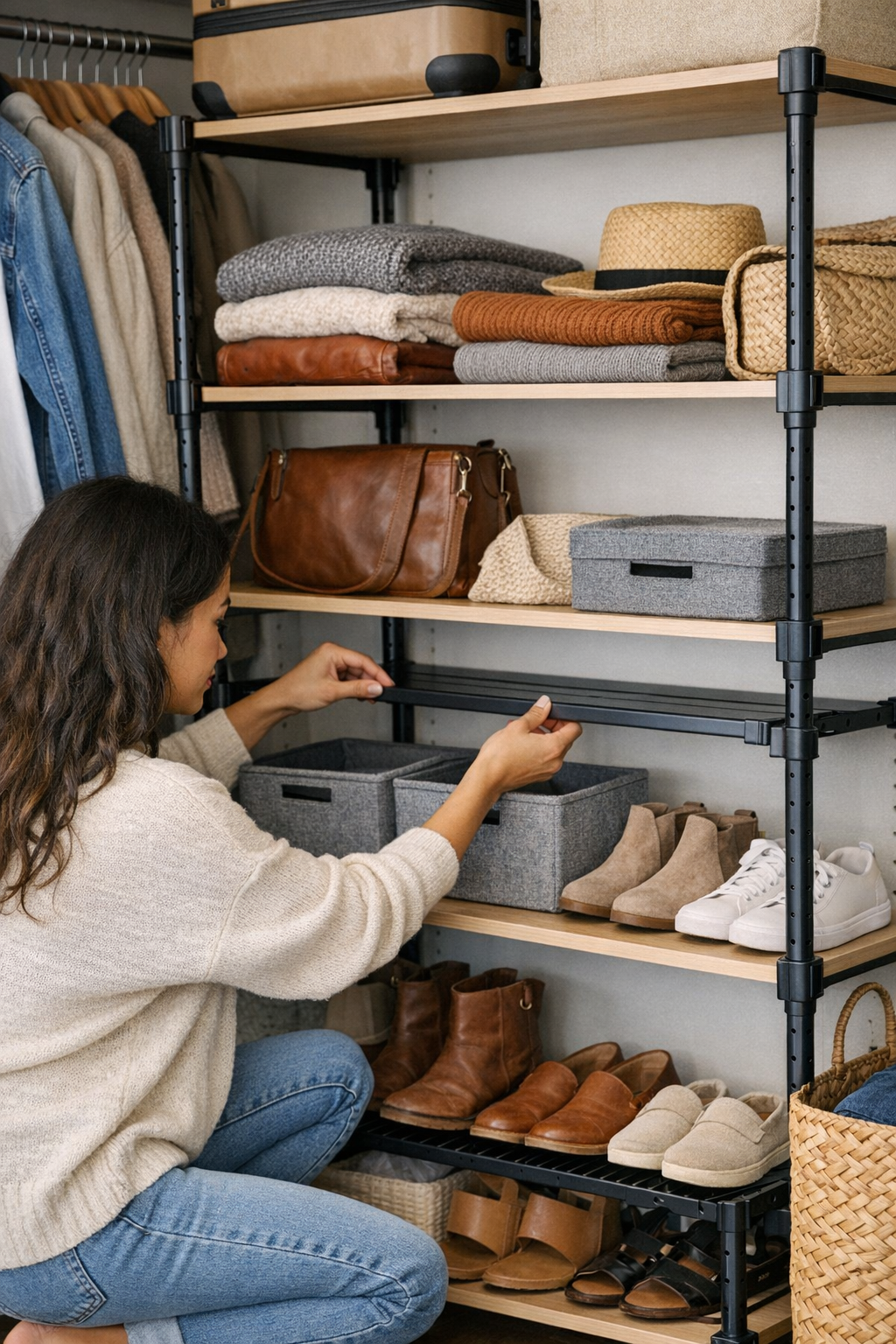
Closet shelves—the quiet accelerators or slowdowns of your daily routine. At first, the choice between adjustable and fixed shelves can feel like an afterthought. But fast-forward a few weeks into real life—rushed workdays, laundry catchup, last-minute swaps—and that detail quietly starts steering how your closet actually works under pressure. Shelves that seemed well-planned on install day soon reveal where efficiency holds, and where daily habits hit frustrating snags: that extra sweater that won’t quite fit, the tangle of shoes at the bottom, the stack of shirts that’s lost its shape by Thursday. The organization you started with slips, replaced by recurring micro-battles against clutter—and how your shelves are built is at the heart of it.
How Closets Slide from Order to Overflow
Fixed shelves deliver that immediate, showroom-worthy look. Shoes in a line, shirts neatly stacked, space mapped out by type. But give it two weeks—season changes, shopping trips, a busy family morning—and the seams start to show. Need to fit in new boots? You end up cramming them in wherever there’s a gap. Grab a bag from the bottom? Now you’re digging through a pile. Bins that were once sorted get mixed as you shuffle to find space for winter accessories. The edge where one category ended and another began blurs fast, and soon you’re bracing a stack with one hand just to pull something from underneath. It’s not chaos, but it’s slow, and it doesn’t reset with a quick tidy. Every reach, every restock, is a reminder—these shelves set the rules, not you.
Why Adjustable Shelves Shift the Everyday Reality
Adaptability isn’t a bonus upgrade—it’s a lifeline for real-world use. The biggest difference with adjustable shelving is felt on ordinary days when your routine flexes. Shoes spill from a gym trip? Raise the bottom shelf for fast toss-back. Winter sweaters crowding out tees? Drop a divider shelf so each stack stands alone, instead of merging into one toppling column. A tall tote bag that won’t fit anywhere? One minor reposition and it’s effortlessly slotted, not awkwardly wedged.
The strength isn’t in the aesthetics—it’s in the reset speed. Adjust, stack, and slide bins without unearthing an avalanche. Edge lines stay crisp, categories stay divided, and you spend less time reshuffling and more time seeing exactly what’s there. The tiny pin holes fade into the background next to the time you save never double-stacking again.
Scenes from the Closet Frontlines
Consider a family entryway on a rainy Friday. By the end of the week, the shelf is a patchwork of shoes kicked behind other shoes, gloves tumbling out of bins, backpacks teetering on top. If the shelves are fixed, everyone’s fishing awkwardly—reaching behind boots to find sneakers, accidentally mixing hats in with shopping bags. The aftermath? A permanent bottleneck, slow mornings, and an open invitation for clutter to just spill onto the floor.
Switch to adjustable: five minutes, a shelf clicks up, and suddenly boots and gym gear have a home under one section, while gloves and hats settle in organized trays above. Instead of improvising a “temporary” pile, there’s just enough breathing room. Cleaning up isn’t about major overhauls—it’s about slotting things back where they belong, quickly, before the clutter cascade even starts.
Where Fixed Shelves Still Serve (and Where They Don’t)
There are spaces where fixed shelving works just fine: a library of identical books, or a guest room with neatly folded linens that barely move between seasons. But closets—especially in homes where needs shift with weather or lifestyle—rarely look the same for long. That’s where the cracks show.
Tall or irregular items are the pressure test. With fixed shelves, you’re often wasting that extra six inches above a sweater stack, or you’re forced to pile higher than is practical. Reaching for a light jacket means moving three big sweaters, and putting anything away usually means breaking the stack again. After a few rounds, all those neat divisions dissolve, and “organized” becomes more about appearance than function.
The True Differentiator: How Fast Order Can Be Restored
Few people look forward to the monthly closet reboot. Fixed shelves guarantee this will take longer—moving stacks, accepting awkward gaps, and resigning yourself to living with sagging piles. The edge that was once flawless becomes a seesaw. Even when technically “put away,” nothing is easy to grab or return in a single step.
Adjustable shelving stops the cycle. Raise a shelf a couple inches and the bottom is immediately useful again—boots, bins, backpacks find their zones with zero balancing act. The reset isn’t a project; it’s a natural part of the routine. Categories can be re-established, and the urge to start a new pile “just for now” fades away because there’s finally room for what you’re actually storing, not just what fit on opening day.
Common Concerns with Adjustable Shelves—Answered
Do adjustable shelves support real daily use?
A quality adjustable shelf system, with sturdy pins and hardware, meets everyday needs for clothes, shoes, and household bins—without sagging or shifting during normal use. For especially heavy items, confirm load ratings, but for 99% of closet gear, adjustables hold steady if correctly installed.
What about the look—are all those holes a problem?
The real visual threat isn’t a row of discreet pinholes; it’s an untidy shelf edge, buckling under awkward, misfit piles. Spaced right, shelves give each group a home—meaning edges stay sharp, contents stay contained, and the scene looks managed, not make-do.
And bulky items? Where do they go?
This is where fixed shelves collapse as a strategy. Tall boots, helmet bins, or the out-of-the-blue winter bedding all force major compromises with fixed systems. Adjustable shelving turns that pain point into a quick solve: shift, slide, and it fits—no more abandoned overflow on the closet floor.
From “It Looks Great” to “It Stays Great”
Every closet starts organized; most don’t stay that way. The real test is three months in: does putting something away feel easy, or do you flinch at the thought of yet another re-stack? Fixed shelves guarantee initial order, but rarely adapt as real life intrudes. Adjustable shelves do what storage is supposed to—bend to fit your needs, not the other way around. The system moves with you, making small resets a normal part of every week, not an exhausting event. Clear lines, fewer piles, and a setup that’s ready for whatever comes next—most days, that’s the advantage you feel, every single time you open the door.
Ready to build storage that fits around your real life? Explore ClosetWorks for more ideas and practical solutions.