
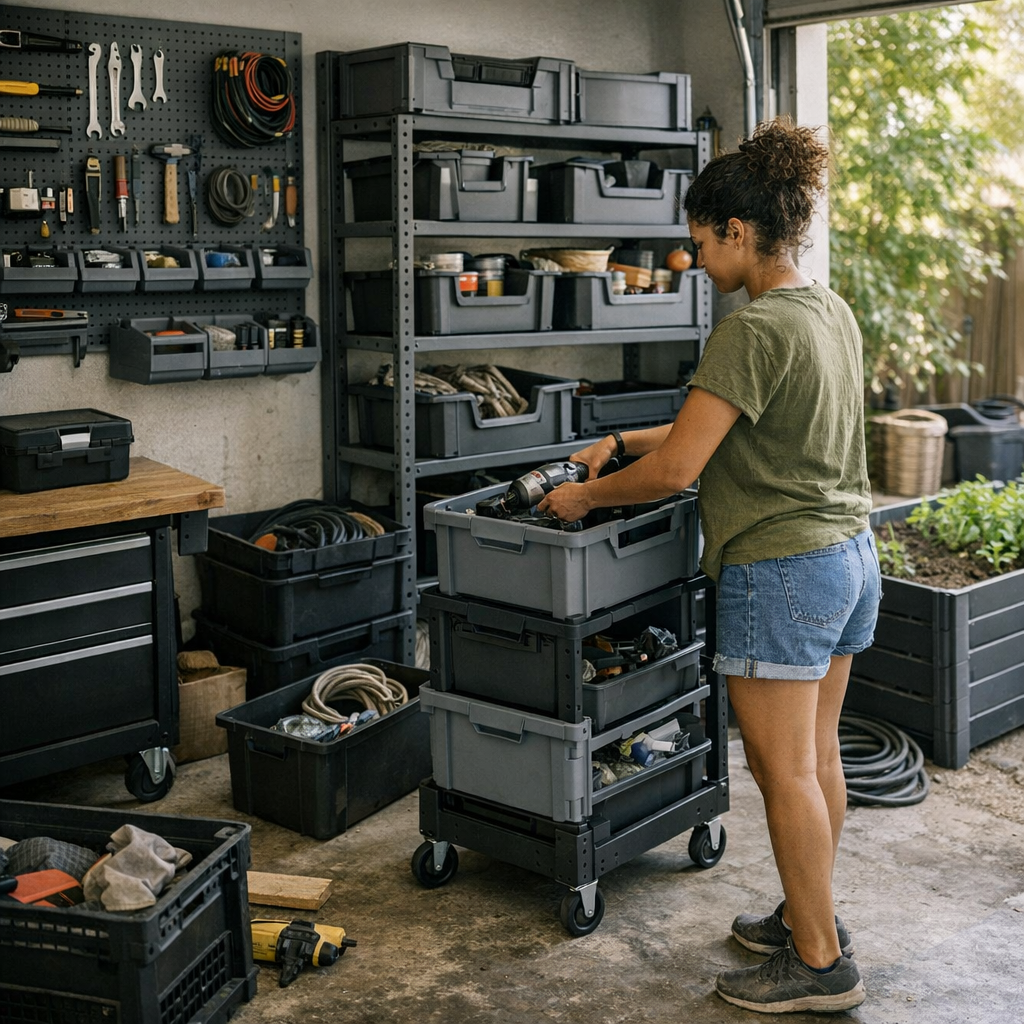
Set up a garage, workshop, or utility space, and you know the initial satisfaction: every shelf snapped in, bins stacked, tools racked in clean rows. But the real test comes weeks later—once normal projects and everyday mess start rewriting your layout, one shortcut and pileup at a time. A setup might look perfect the first day, but when you walk in midweek, rushed and juggling hands full, how well does it stand up to real-life use? That’s the real question of storage performance.
The Real Challenge: Routine Use, Not First Impressions
In the beginning, modular carts roll smoothly, wall panels gleam, and every tool has its numbered spot. But the moment jobs get busy, reality intrudes. Need your sander? You set it down “for just a minute” on a cart—then never move it back. Slide a bin to open the cabinet. Nudge a rolling chest sideways so you can squeeze past. A good plan on paper starts eroding every time you have to move two things just to get at a third.
The signs are everywhere: corners morph into dumping grounds, overflow baskets settle into main walkways, and wall hooks once lined with tools transform into extra shelves for boxes and gear “waiting for later.” The more you adjust your movement to avoid blockages, the slower everything feels. Showroom order fades fast; daily function starts to drag.
Where Friction Builds Up—And How Fast
Little obstacles quickly become walls. Maybe it’s the cabinet that always catches your hip because you have to angle around it, or the rolling cart permanently parked across your main path because there’s nowhere else for it to go. Pretty soon, your setup isn’t serving you—you’re serving the setup, reshuffling bins and sidestepping baskets just to get started.
It’s deeper than not having enough storage. The true issue is the return flow—the ability to bring the space back to ready without a restructuring marathon every Saturday. When every task involves juggling, shifting, or detouring around awkward footprints, even the best-planned layouts grow tiresome. That’s how what promised smooth access turns into slow frustration.
Overflow Creep: The Silent Space Stealer
The constant enemy? Overflow that appears quietly and never seems to leave. It’s the “later” pile—leftover hardware, half-used rolls of tape, project scraps balanced on a bin for just a day or two. But as soon as one session ends and another begins, nothing’s actually cleared. The piles migrate: a bin mound by the wall, stray gear teetering on a cart, a bag wedged into a corner that was supposed to be open.
Instead of a clear area, you end up weaving around makeshift stacks, stretching to reach what used to be directly in front of you. Overhead shelves become landing pads for random overflow. Corners you thought would boost capacity instead just collect things nobody wants to deal with. The cost? Your main routes shrink, work slows, and you start avoiding your own setup.
The Reset Rule: What Separates Usable from Unraveling
The secret behind workspaces that actually stay clear is surprisingly simple: a minimal, truly doable reset routine. Not a complete overhaul, but a short, repeatable step you can manage every time—even when you’re in a hurry or done for the day. It’s less about neatness and more about preventing drag: identifying where stray tools or overflow bins belong (even temporarily) and making sure key movement paths are always open for next time.
In practice, it could be as basic as this: at the end of a session, anything left out goes to one designated catch-all spot next to the exit. Quick scan, five items into the overflow zone—then you’re free. The workspace isn’t museum-grade pristine, but you aren’t starting the next job clearing a runway. The crucial difference? Resetting no longer feels like work; it’s just routine, no matter how chaotic the project was.
How to Tell If You Need a New Reset Rule
You don’t need a full-on mess to spot a setup problem—just small patterns that signal friction:
- Constantly shifting a cart or basket just to open a path or cabinet
- Finding random tools or supplies stranded in areas they don’t belong
- A recurring pile in the same dead corner, never quite cleared
- Avoiding certain zones because “temporary” clutter keeps lingering a little too long
- Resetting the space feels like an intimidating commitment, not a quick evening wrap-up
When you notice movement slowing, routes narrowing, or stalling before a task because of blockages—your storage needs less organizing and more routine resetting.
Why Hardware Alone Falls Short
It’s easy to believe another wall rack or set of bins is the answer. And yes, modular gear helps showcase a catalog-level workspace—at first. But when there’s no fast path to clearing overflow, even the nicest wall panels end up buried under “on hold” gear, and rolling bins morph into roadblocks. Tools and supplies have a place to live, but getting them back there feels like a mini project every time.
In the end, storage only works if it supports constant return to clarity. Otherwise, you’re stuck in the classic shed trap: gear technically organized, but in practice, always one pile away from chaos, and momentum lost to endless reshuffling.
How to Build a Reset-Resistant Layout
1. Create a Single Overflow Zone
Designate just one spot for overflow—a visible, convenient area by the door or the main walkway. When a session ends, only this spot needs attention. You avoid the spread of piles and keep the rest of the space functional.
2. Guard Your Main Artery
No matter how you arrange storage—rolling chests, racks, bins—commit to never blocking the core walking route. Protect it: if you have to wrestle a cart or step over a basket to get through, the risk of friction and buildup multiplies.
3. Redefine “Good Enough”
You won’t always have time for deep resets. That’s normal. Make it your pattern to do the five-minute version: stash what’s loose in the overflow, realign anything left astray, move on. The art is routine return, not visual perfection.
Real Use: The Only Test That Matters
Setup success isn’t measured by how impressive it looked the first day, but by how smoothly you can walk in, start work, and reset the space—even after a stressful week. If the layout lets you return to baseline with minimal effort and almost no thought, friction stays low and the workshop remains an asset rather than a source of dread.
The best storage never stops you in your tracks. Its real promise isn’t perfect rows, but routines that hold up when you’re tired, distracted, and in a hurry. Every setup fails eventually if resets are too hard—but the right reset rules keep your space useful, no matter how often chaos visits.