
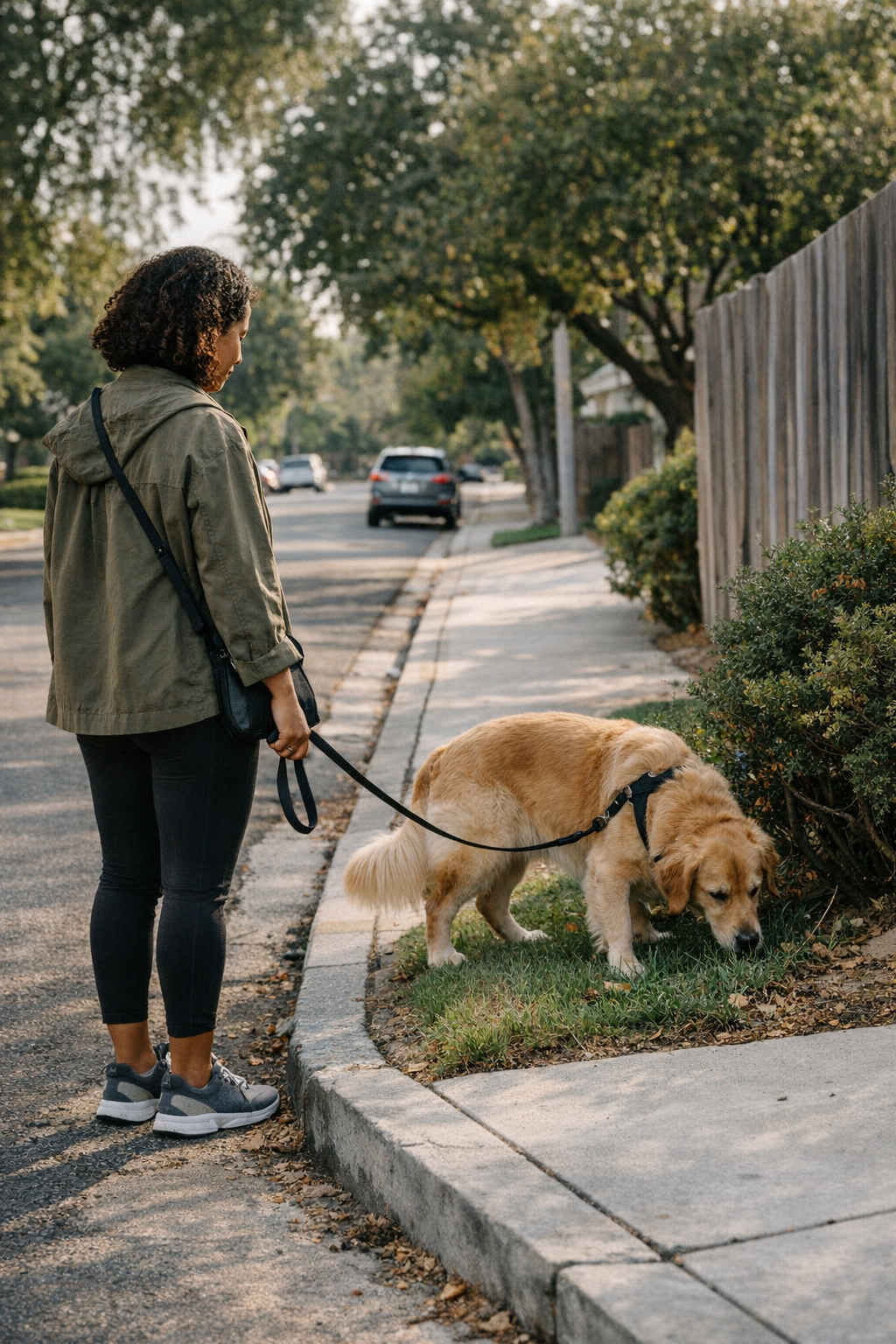
The problem isn’t the drama you expect—a yanked leash, a sudden dog detour. It’s the grind of small frictions stacked into every walk. You grab the leash expecting a reset, but end up bumping into the same old hang-ups: leash knotted around the treat pouch, cleanup bags lost under the keys, the towel just out of reach right after muddy paws hit the floor. These aren’t one-off annoyances—they’re repeated signals your setup isn’t working as well as it looks. And if you walk often, those signals don’t fade. They accumulate, turning “routine” into another source of tension, with each misstep reminding you nothing is as ready-to-use as it should be in a DogPile day.
The Everyday Walk: Where Routine Runs Into Micro-Issues
No walk is ever truly effortless. The plan: leash, bag, door, done. Reality: you clip the leash but the roll of bags is jammed tight, the treat pouch dangles and catches, the dog tries to bolt before you’re set. That first confident step gets jammed up when the same corner always triggers a stop, the curb generates another delay, or a side-street patch of grass becomes non-negotiable territory. If you’re rushing before work, these routine stalls cost real minutes and patience—especially when the point of the walk was to make the morning flow smoother, not slower.
The frustration isn’t a single stall but a loop—each pause triggering a series of tiny corrections: leash goes taut, you tug, the dog hesitates harder, your stride falls out of rhythm. It’s almost never dramatic. But the low-level disconnect grows walk after walk, and you get back inside tenser than when you left. Even a short outing leaves traces: your dog acts restless, takes too long to settle, cues you for help instead of resting, and suddenly the door isn’t the end of the walk friction—it’s where it morphs into indoor interruption.
Noticing the First Signs: Glances, Pauses, and Stubborn Spots
Every owner sees it eventually. The slow turn of the head, the loiter at a familiar gate, the set of paws at the edge of a sidewalk slab. It happens in the same place, again and again—a kind of waypoint your dog almost dares you to ignore. The easy reflex is to dismiss it as stalling, tighten the leash, and try to push through. But every micro-correction creates its own cycle: nudge, stall, pull, repeat. The walk, in practice, turns into a string of friction points—a negotiation that leaves both of you less settled than before you left.
Overlook enough of these “minor” signals and you’re not just dealing with dawdling—you’re stuck in a loop. The leash is tense, your pockets are reorganized mid-walk, and neither you nor your dog gets the smooth return to normal you wanted. If the same weak spot shows up every block or two, it’s not just habit—it’s structure calling out for a tweak.
Scene from a Real Walk
Early morning, leash in hand, you set off with the best of intentions. But midway down the street, your dog brakes at the same yard edge, sniffs, drags feet. You’re tight on time, so you pull gently, hoping to move along. The dog resists, then finally follows, but the rhythm is broken. Now you’re watching for the next slow zone—and finding your mind rehearsing the same correction steps before each corner. By the time you’re back, instead of being ready for what’s next, you’re retracing the sticky parts of the walk and prepping for more friction at the next transition—wiping paws with the misplaced towel, moving bowls so you don’t trip, regrouping for another try tomorrow.
The Ripple Effect: How Minor Friction Multiplies
One chopped-up walk isn’t the problem. The real cost comes when micro-friction follows you inside. Your dog circles the water bowl, delays settling, re-charges with more energy instead of winding down. What should be the calm reset after a walk flares up into more routines—clean up, settle, re-cue—that strain the rest of your morning.
The invisible thread: a missed leash adjustment at the curb leads to fumbled entry, then to a tangle in the hallway, then to a messy water bowl zone. You feel the tension accumulate in every after-walk move, not just during the outing. When a walk is choppy, everything downstream tends to get sticky—resetting takes more effort, and the day keeps echoing with tiny interruptions you didn’t sign up for.
Stalled or Sticky? Recognizing When Your Walk Structure Needs a Tweak
The test isn’t whether your stuff looks organized. It’s whether you can get what you need—leash, wipes, towels, treats, bags—exactly when you need them, setup after setup, even as routines change. When the leash is blocked by a forgotten jacket, when wipes vanish after muddy paws streak in, when you reach for a bowl and have to push toys aside, you know your dog-life structure is all display and no real function. Even a neat-looking area trips you up if a single item is never truly at hand, or if every new day exposes the same old routine drag.
Patterns matter more than appearances. Bowls lined by the door but blocking access, toys neatly stacked right where you need to pass, a rest corner that looks inviting but sits in a high-traffic splice between rooms—these choices seem smart until you actually run through the dog’s routine more than once. If it slows you, interrupts you, or makes you reshuffle every day, it’s not working—no matter how “organized” it seemed at first glance.
What “Working” Looks Like—and Where Setup Fails
Most routines stall in the split-second an item isn’t where you need it. Maybe you fix one thing—hang the leash by the door—but the towel is still in the wrong room, or the treats migrate under the table. A setup that looks under control on Sunday night collapses by Wednesday afternoon. You’re faced with small, repeat failures: stretching for a cleanup towel that’s never close, tripping over a water bowl in the doorway, pulling a leash only to find it tangled or blocked by a crate edge. The surface says ‘ready’, but the friction is constant—and always shows up when you’re least able to deal with it cleanly.
Small Adjustments, Noticeable Results: Changing the Walk Flow
A good dog routine doesn’t fix itself with repetition. It changes the moment you notice which friction point drives you up the wall and do one thing about it. See your dog pause at a known slow zone? Give an extra leash’s slack for just a moment. Instead of pushing, wait out a few seconds—often a small shift settles the tension before it grows, and the next patch actually flows. The difference is easy to spot over a few outings: less tug-of-war, lighter steps, fewer “do I have everything?” scrambles.
No, it won’t rewrite your whole week. You’ll still face a frantic morning or a botched handoff when routines collide. But you’ll spot the snag earlier, cut off the correction cycles before they tangle into a full standstill. Over days, these mini-fixes add up—fewer arm yanks, steadier leash, easier re-entry, less pacing after the walk. The shift isn’t just physical; it’s the end of wasted energy on hidden stress points that keep coming back unless addressed where they start.
Real-World Benefits—But Not Perfection
Expect setbacks. Some days, the old weak spot returns—the wrong corner, the blocked entry, the towel missing again. But the friction is new: it stands out, it’s easier to spot and interrupt, and it stops dominating the whole routine. You spend more time resetting, less time correcting, and the cost of ignoring a setup flaw becomes impossible to shrug off. One practiced adjustment means the week doesn’t get away from you with the same slow flow of repeated mistakes.
The Walk’s Impact on the Entire Routine
Every setup you use—leash at the door, towels in the entryway, water in reach—is multiplied in dog-life. A smooth walk transition means easier paws to wipe, calmer bowl time, straighter path to rest, and less time hunting for missing supplies in the middle of a jammed flow. When essentials are ready, and hesitations are met with quick access rather than tension, the after-walk routine finally gets easier instead of trickier. But when weak points repeat, they bleed across your whole schedule—the difference between a streamlined flow and a low-level drag that never quite clears no matter how hard you try.
The fix isn’t a top-to-bottom overhaul. You don’t have to move every bin, add more gear, or retrain every slow spot. It’s about targeting the one friction point that keeps showing up—reaching for a leash that’s always tangled, scrambling for a towel in the wrong room, shuffling bowls you can’t step past, or tripping over toys at the threshold. The best tweaks are almost always small, structural, and low-drama—a cleanup pouch where you actually need it, supplies by the door for real, not just for show. Every step that becomes frictionless under repeated use pays off all day long.