
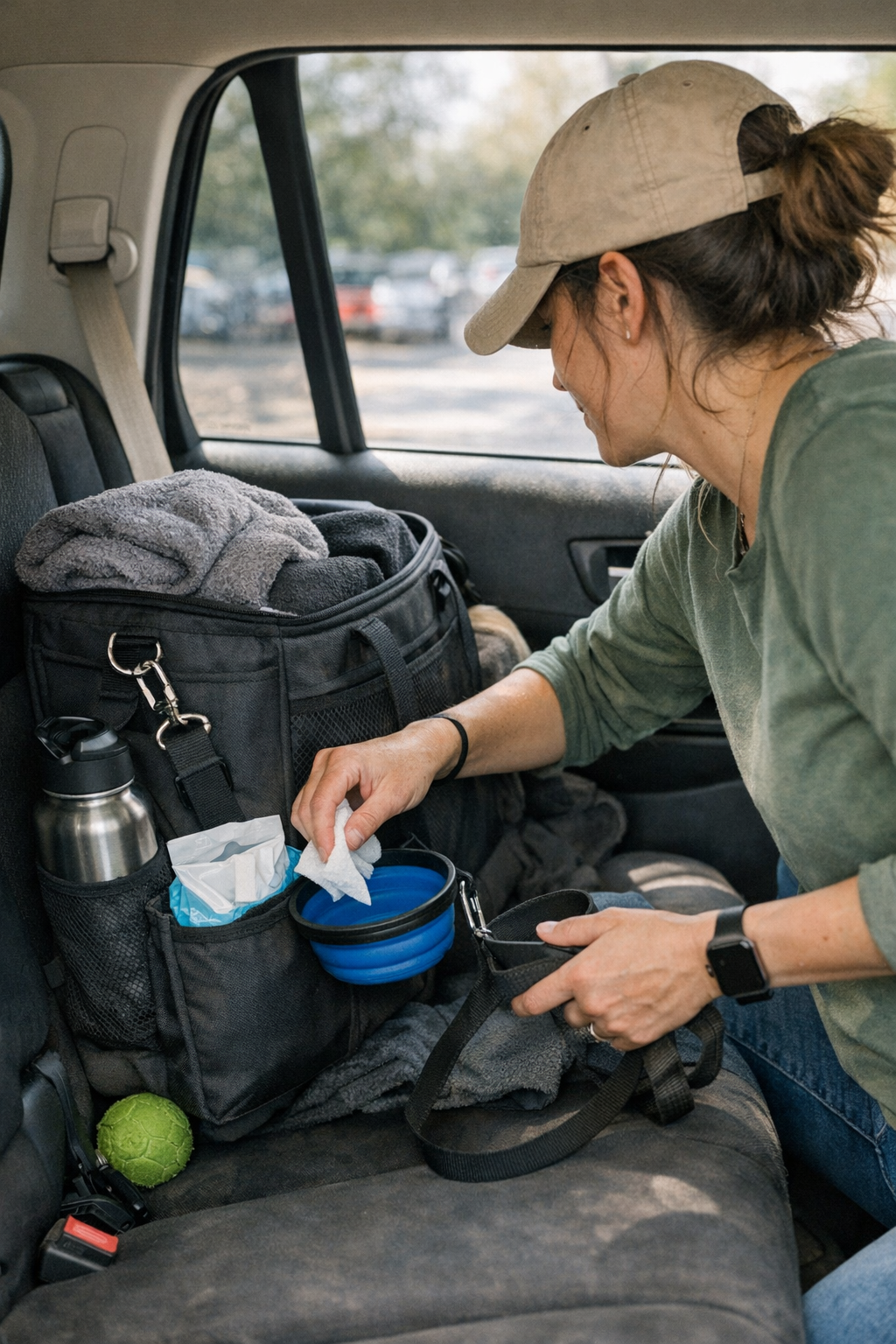
A pet travel setup can look perfect for the first five minutes—until real movement exposes how much it actually slows you down. Try driving a loop of city errands with your dog or cat: carrier buckled in, bag zipped, everything packed where it “belongs.” That illusion lasts until the first pit stop. Now a water bottle rolls out, wipes are wedged under a leash, and a comfort blanket you packed for the pet has pinned the bowl at the bottom—just when you need it. By the third stop, the calm start is gone. You’re digging for cleanup gear, unburying the leash for every break, and bracing for the next round of mess or fuss that your “organized” setup keeps making harder to handle.
Bench Breaks: Where Organization Gets Exposed
The difference between packed and usable starts as soon as the doors open away from home. The driveway feels neat: every section zipped, supplies in place. But once stops stack up—gas, walks, sudden cleanup—most setups unravel. Moving from one patch of grass to the next, the bag turns awkward. The leash crosses over wipes. That water bowl that was easy to find is now buried under “just in case” gear. Instead of smooth access, you’re stuck shuffling the same four things in circles, frustration climbing with every pause. Any sense of “ready” falls apart as the main pouch becomes a tangle and you second-guess what you packed where.
That Hidden Friction You Start to Expect
Even seasoned pet owners fall into the same setup traps: essentials stashed where they look organized, but turn unreachable when actual cleanup or fast handling is needed. It’s always the small failures: wipes forced behind the leash; the comfort blanket in a spot that now blocks quick water access; a phone you thought would stay clean, now under something muddy. You know friction’s baked in when grab-and-go moments keep leading to the wrong pocket or when your “quick” bowl is tangled in a harness that wasn’t in the way before.
Why “Looks Organized” Doesn’t Mean It Works in Motion
A photo-ready carrier might feel like progress, but order on paper collapses under real travel rhythms. Most all-in-one bags promise every essential in one place, but not in the right order. The first moment your hands are full—one on a leash, the other reaching for wipes during a scramble—the setup’s limits show up. Soothe a stressed cat while sifting for a bowl, or untangle a leash from the cleanup pouch while your dog presses for the exit. In practice, the clever compartment layout often gets in its own way.
The Slippery Slope of Overlapping Items
The downfall isn’t dramatic—it’s months of small annoyances stacking up. Mid-morning, the water bowl’s jammed below the harness. Wipes slip deep behind a leash, and the blanket—slightly damp from a water bottle that never fully closed—now covers what you actually need. Soon, the main zip strains to shut, and each “quick stop” ends as a scramble to pull one thing without dismantling the rest. What started orderly becomes a perpetual reshuffle, slower after each use.
Repeated Stops: Where Little Problems Turn Big Fast
No matter how perfect a pet travel kit feels at home, repeated stops expose every weak link. One key trigger: the seat-edge handoff point, where dog leash, bowl, water, and your own keys compete for space. That edge fills up fast. Leash over bowl, wipes jammed where you can’t grab them, and anything loose falls under the seat with a single motion. Now a two-minute water break becomes a mess: the dog fidgets across the bench, you search for wipes while trying not to spill, and lost supplies drag the whole reset into a slow-motion shuffling act.
Blocked Quick Access Multiplies Frustration
By stop number three, you know the routine is working against you. Supplies exist—they just won’t cooperate. Seconds lost hunting for a leash or wipes stretch each interruption, pushing your patience and your pet’s. What seemed “organized enough” on paper becomes a twitchy game of find-the-thing-you-already-packed, every time the car door opens. The trip turns more about wrestling your setup than about moving smoothly.
Turning “Ready” Into “Reachable”: The Shift That Actually Matters
A travel setup gets better not by adding more gear, but by changing where and how you store each thing based on the rhythm of stopping and going. The breakthrough isn’t a bigger bag—it’s moving the high-frequency essentials into instant reach:
- Wipes clipped separately and visible at seat height—never buried under the leash.
- Bowl snapped right beside the leash clip, always outside the pouch or carrier.
- Comfort blanket rolled in a mesh pocket that doesn’t cover the hydration spot or force a reshuffle.
With wipes in reach, a muddy paw cleanup becomes a three-second grab, not a bag-emptying search. Resets after stops are shorter. The carrier doesn’t balloon with “just in case” gear you have to work around at every break. Over a handful of trips, less shuffling means a cleaner seat, calmer transitions, and fewer lost supplies stuck between seats or in door pockets. Those small, repeatable improvements—faster grabs, less overlap, easier resets—accumulate into setups that feel less like a project, and more like silent help.
A Setup That Stops Fighting Every Trip
The biggest difference isn’t showy—it’s in energy saved over a dozen stops. Fewer frantic scrambles, fewer forgotten wipes, and a bench that stays cleaner with less effort. Pet settles sooner, the awkward shuffle at seat edge disappears, and missed supplies don’t lurk waiting to trip up a reset. These aren’t headline wins, but over weeks, they decide whether local runs with your pet become manageable or a source of dread every time you reach for the carrier. When the structure stops fighting your routine, every short trip—however messy or hurried—remains workable all the way home.
From “Prepared” to Actually Easy: What Structural Change Really Feels Like
The calm of a good-looking setup at home is no match for the reality of pet travel: stop, move, pause, repeat. Weak spots only reveal themselves late in the trip, when friction accumulates and energy drains. A system that lets you move without endless reshuffling and searching marks the true difference between “set out once” and “handled every break without stress.” If you keep getting slowed by jammed wipes, lost bowls, or comfort gear that just gets in the way, it’s the bag’s structure—not your planning—that needs to change. The sharpest upgrades come from honestly diagnosing which section slows you down, then reworking access so your next break helps, not hassles, your progress.