
Does your outdoor storage actually speed up your routine—or quietly make every task harder? If you’ve crossed the same garage edge, side-yard, or backyard corner a dozen times, you already know: even a “tidy” storage box can turn into a slow trap fast. Floor bins and bulky chests promise order, but too often leave you wrestling tangled hoses, digging for lost tools, or drifting mud across the path—until “getting things done” becomes “moving stuff out of the way, again.”
Where the “Tidy Bin” Breaks Down
After just a couple afternoons in and out, that closed box starts showing its cracks. The pattern is predictable: toss a shovel in here, wedge a bag there, and one tight lid turns into an avalanche waiting to happen. Next time you need the hand shear, it’s under a kinked hose and beside a handle you barely recognize. Every shortcut becomes a setback—what was meant to be grab-and-go spirals into digging, shifting, and stacking just to use the next tool. All the while, the outside looks organized, but the inside is quietly grinding your routine to a halt.
The more you rush, the worse it gets: a rainy evening turns a half-organized box into mud-caked chaos. The lid resists closure, things pile on the floor, and that single bin starts blocking the whole path. Each reset asks more: bend, search, shuffle, go again. Tools start to wear from friction, not from use.
The Real Cost: Every Reset Slows Down
Small yards and tight side returns make the problem more immediate. What looked like a clear run from garden to gate soon becomes a shuffle: one badly placed rake, and you’re sidestepping piles; one “temporarily” coiled cord, and you’re untangling just to leave in the morning. The moment one tool clogs the zone, the rest turn into debris, and the open path you counted on is blocked three days later.
It creeps in: that trunk by the patio, the hand trowel buried under a hose, the streak of grit tracked inside after a hasty grab. The old bin, once helpful, becomes the thing you avoid resetting. The gap between storing and actually being able to use your stuff widens—resetting for the next use gets slower, and suddenly, every outdoor job comes with cleanup you didn’t budget for.
When Storage Adapts: Modular Systems Change the Routine
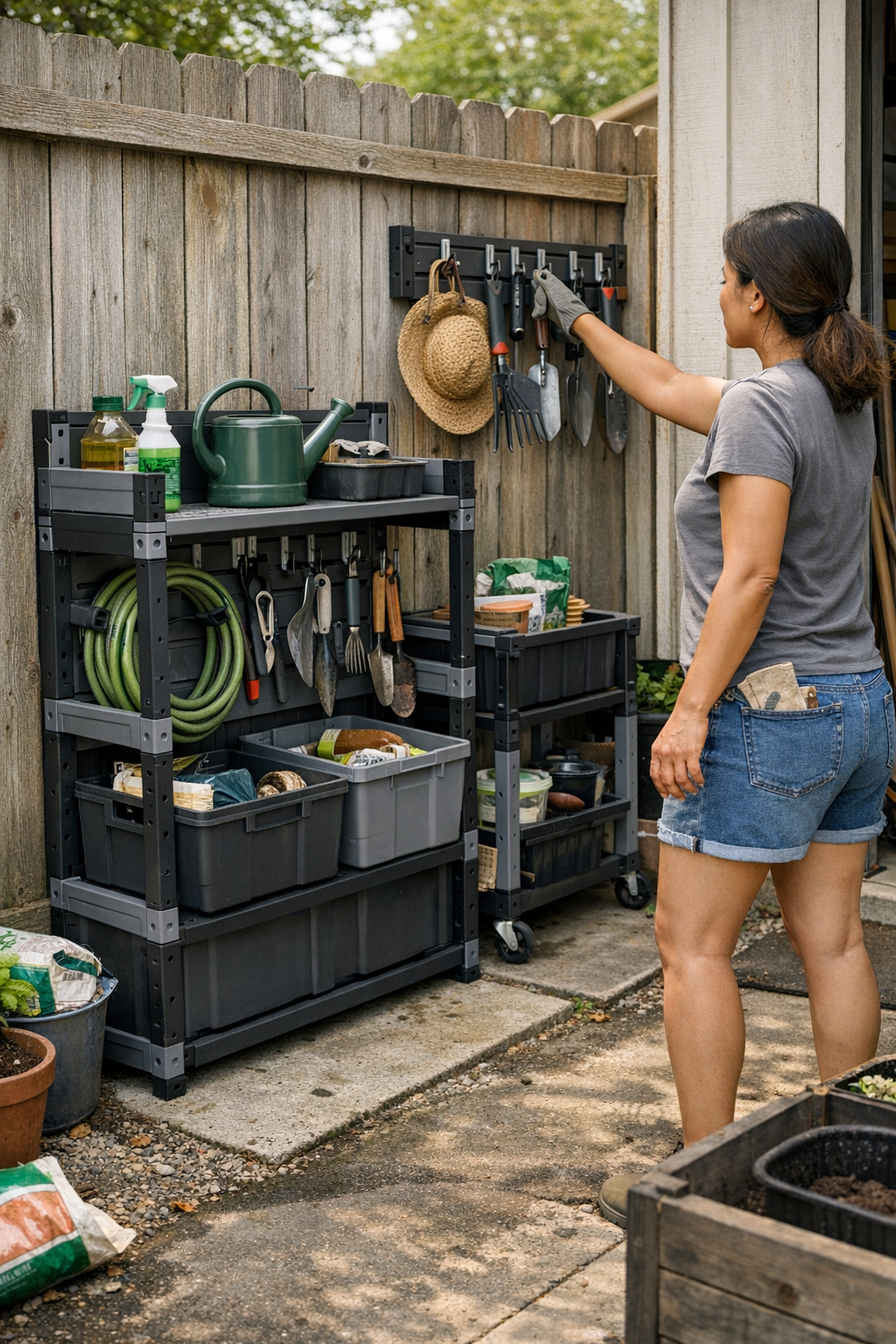
The shift isn’t just about footprint; it’s about return flow. Wall rails, split shelving, and visible hooks don’t just organize—they keep things from colliding. Daily-use tools get a clear slot; bulky gear sits on an open shelf. Instead of forcing everything back into a mystery pile, each item has a landing zone. Grab one rake, and the others stay put. Return a muddy trowel, and you’re not burying the clippers beneath it.
Visualize a fence-line reset: hooks for rakes and loppers, a shelf for that awkward fertilizer tub, rails handling hoses in a single loop. After rain, nothing’s sinking to the bottom or blocking the lid—items land in sight, and you can count what’s missing before the last light fades. The reset isn’t a big project; it’s a single action, repeated without friction.
On-the-Ground Tests: How the Setup Actually Performs
Late-day returns: At the end of a muddy job, tossing tools in a bin is the usual shortcut. But open hooks mean no excuse for piling up. A wall rack makes “putting away” as quick as dropping it—but without the next trip becoming a dig through packed gear.
Side yard traffic jams: One dropped shovel or a mismanaged cord can stop movement cold. Modular rail systems let you hang items flat against the wall, keeping the walk clear—so you aren’t forced to clear a mini-obstacle course just to take the garbage out the next morning.
Overflow magnet corners: Every layout collects junk. It’s always the same dead corner, right where you step—or worse, where you can’t reach without moving everything else first. With visible rails and shelves, the corner stays empty: you see when overflow is starting, and stop the pile-up before it needs a weekend fix.
Clear Resets, Less Mess: What Changes
Swapping out the bin for panels and shelves won’t give you a bigger yard—but it will change how you move. No more doubling back to fish out a lost spade, or stacking on top of stacks just to squeeze the lid down. Boundaries show up: a rail for daily stuff, a shelf for what you use less, and an absence of “just toss it” zones.
Here’s what actually stands out after the first week:
- Returns feel automatic—no extra hunt, no pile-up, no “where does this even go?” pause
- Obstacles vanish: fewer blocked paths, no tripping over handles that don’t belong on the floor
- Muddy and clean don’t mix—one glance and you know what needs cleaning, what’s set for tomorrow
- Any mess appears early, so you reset a little at a time—instead of one dreaded, hours-long overhaul
The line between “stored” and “still outside” becomes impossible to miss. If something didn’t come back, you know instantly—no hidden trowels or buying a third pair of gloves you already own.
Keeping the Setup from Backsliding
Mix rails and shelves where you move most. For small or tough-shaped spaces, a low shelf for overflow, a rail above for daily tools—the difference is immediate. Heavy gear stays off the walk, frequent-use items are right at hand, and nothing’s hidden beneath another thing.
Give everything a return spot—down to the last hook. Numbered rails, lined bins, marked hose loops. The more you lock in the landing zones, the less likely piles creep up. It’s not about perfection; it’s about reducing the excuses for drop-offs and makeshift stashes, so the area resets after each day, not after each season.
Notice the warning signs. If reaching for a tool means bumping another, if you keep setting gear down “just for now,” or if corners fill up again, it’s time to adjust—not overhaul. One new hook, a moved rail, a fifteen-minute de-clutter every month: these tweaks keep the system matched to how you actually use the space as the months roll on.
Long-Term: Why the Routine Stays Easier (or Doesn’t)
Real outdoor organization isn’t measured by how much you can fit in a box. It’s about how smoothly you can put things away and find them again—without rerunning the same obstacle course every evening. Modular rails and wall systems don’t eliminate the cleanup, but they keep the return easy enough to avoid delayed resets and slow build-up of spillover. The hidden win: fewer “now where did I put that?” moments, less junk creeping over the threshold, and gear that actually lasts because it isn’t getting chipped, mixed, or buried every week.
The right setup keeps the mess from sneaking up on you. When space is divided by use, not just by size, you spot missing or overdue items at a glance—and you don’t end up reorganizing from scratch. Small, practical boundaries keep everything moving, make cleanup obvious, and cut the stress out of everyday outdoor work.
For more hands-on outdoor organization ideas and practical storage setups that stand up to real use, visit TidyYard.