
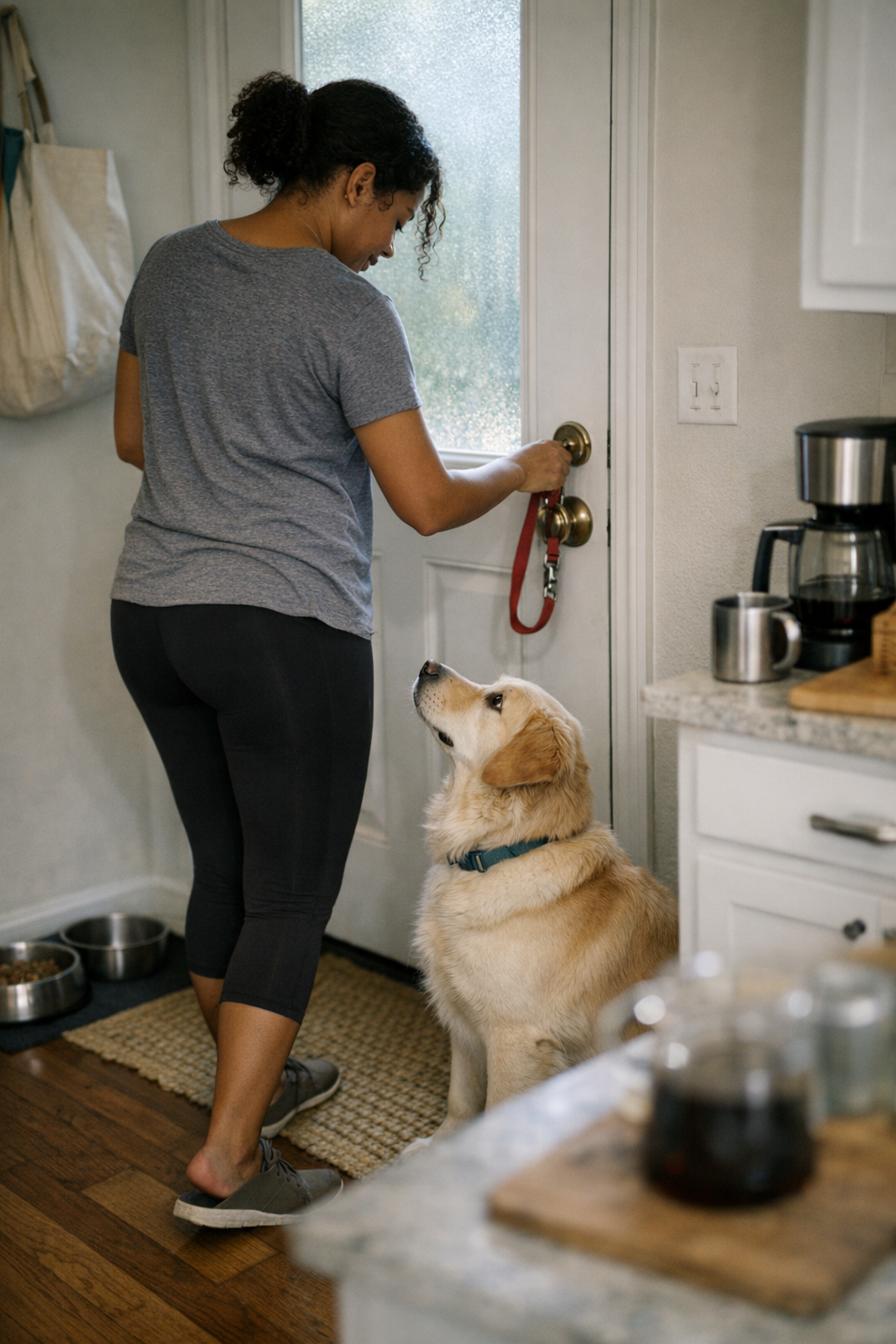
Every dog owner knows the low-grade scramble: hands full, dog dancing by the door, and the leash is—missing or blocked by a basket of shoes. You’re already running late, yet again. Add an off-center water bowl or towels you have to cross the whole house to grab, and morning friction becomes routine, not exception. The difference between a routine that moves and one that drags isn’t chaos; it’s the same few setup mistakes showing up every single day.
When the Routine Looks Tidy but Trips You Up
You scan the area and think it’s organized enough. Leash somewhere by the door, bowls in a corner, toys out of walking space—or so you hope. It looks fine for a photo, but right as you’re trying to get out or clean up, something blocks the flow. You cross the living room for the third time, tripping over the chew toy near the door you meant to move. You’re patting down counters for wipes while your dog shakes mud across the entryway, because the container is tucked under the sink—out of eyeshot when you really need it. Visual neatness fades the moment real routine kicks in: every misplaced item turns the next dog task into a clumsy shuffle.
The Small Pauses That Stack Up
Individually, missteps feel harmless—a leash not at hand, a bowl placed three feet from where you actually feed the dog, wipes forgotten again. But when you’re backtracking five mornings a week to collect the same leash, or doubling back with a full mug and kibble scoop, that wasted motion is the real cost. Your dog’s circuit of anxious waiting at the door, your own silent grumbling, and the slow creep of clutter all feed each other. Routine quietly devolves into repeated micro-resets, never quite clean or calm. It’s not one mistake—it’s the same weak spot tripping you up in familiar ways, day after day.
Spotting the Predictable Stalls
The real warning sign? You already know where you’ll get stuck, every morning. If the leash is never on the right hook, the bowl always winds up blocked by a chair, or wipes migrate anywhere but the place your dog actually enters after a walk, you’re staring at built-in setup failure. These aren’t flukes—they’re spots where your current layout actively resists your daily rhythm. Like potholes you stop noticing, until another morning grinds to a halt for the same reason.
Scene: Late Again, Same Leash Scramble
Normal weekday, familiar scramble. The dog paces at the door, expecting you to move, but your hand comes up empty where the leash should hang. It’s looped over a dining chair two rooms away, from last night’s soggy walk. Your tone sharpens, the dog circles tighter, and now the delay turns up the tension for both of you. Five minutes later, you’re finally out, energy already drained—and it all started with a tiny, fixable placement blind spot.
Access Over Appearance: Why Placement Beats Neatness
Setup that looks “managed” often founders under real pressure. Bowls stashed just out of sight make sense until you’re caught mid-breakfast parade, detouring around chairs. A stylish leash hook isn’t much help if it’s in the wrong corner. Function fails before form—because repeated use, not first-glance tidiness, reveals where the friction lives.
Movement reveals the cracks. The real test is whether everything you touch during the routine—bowl, leash, wipes—can be reached in stride. Are you forced to sidestep, double back, or stash items in spots that interrupt both you and your dog? The pause to hunt for a towel, the hesitation as your dog waits for a signal you can’t deliver yet, or the water bowl hidden behind your coat all signal a setup that absorbs, instead of easing, daily motion.
Example: The Breakfast Path Change
A minor shift—sliding the bowl directly along your kitchen entry—meant breakfast no longer involved acrobatic sidesteps. Now, food goes down on your way to the coffee, the dog settles on cue, and space stays clear for you to move. Not perfect, not pretty, but suddenly, mornings stopped grinding at the same spot. Small repositioning stripped out the repeated friction, lightening the start of every day.
After the Walk: Reset or Repeat the Mess?
Post-walk—the real test zone. You’re juggling a leash, keys, and a dog who just found every puddle. Where’s the towel? If you have to leave the entryway to track it down, wet paws get everywhere and cleanup snowballs. Wipes drifting out of reach, or the leash dumped on a random shelf, only guarantee a bigger mess and a slower reset for the next outing. When the gap widens between what looks “put away” and what you can grab with one hand, friction climbs quietly.
Walk cycles fail if reset is a hassle. Every extra step between where you unclip the leash and where you wipe paws is a step you’ll be tempted to skip, setting up a bigger problem tomorrow. A towel bin at the door, wipes within easy reach, the leash always ending up on the same hook—all reduce the temptation to defer reset, turning chaos into habit you can repeat even when tired.
Scene: The Never-Ready Towel
It rains. The dog comes back dripping. The towel you need is nowhere near—the linen closet’s around the corner, the entry mat’s already soaked. So you let the dog in, and the job shifts from simple wipe to chasing muddy prints across two rooms. Reset gets pushed later, and soon, every entry brings new mess. Multiply by a week and no one wants the cleanup job, so the “routine” blurs into an ongoing, losing battle.
When Looking Organized Makes Living Harder
An area arranged for the camera does not always serve an actual daily routine. Bowls under low shelves look neat, but force a crouch every meal or spill into walkway space. Toys in stylish baskets overflow and block the path by lunchtime. Crates installed for symmetry end up blocking closets or making shoe access a daily obstacle course.
The mismatch rarely shouts for attention—it’s the low-grade drag you ignore until a spill, a trip, or frustrated shoes-in-hand finally snaps you out of autopilot. Accepting small, daily delays or discomforts eventually crowds out time and energy. It’s rarely a crisis; usually, it’s the buildup of silent resistance every time you run the same clunky circuit.
How Tiny Setup Shifts Restore Rhythm
Some fixes are so low-tech and effective they disappear into routine: hook the leash on the doorknob, breakfast bowl in your flow, cleanup bin beside the return door. The change is instant—walks start on time, feeding blends into your own prep, wipes are always actually there when mud happens. There’s no app, no gizmo—just setting up to match the way you already move.
The real payoff isn’t in how it looks but how it feels to use, over and over. The best setups ask nothing extra from you—no willpower, no memory games, no daily search party. They force friction out of the pattern. Suddenly, mornings are lighter, not flawless. You don’t win by chasing tidiness, but by clearing what always saps time or patience, one tweak at a time.
Sign: Routine Holds, Even When You Don’t
You know the setup works when stress spills over but the basics hold: leash in reach, bowl in place, towel at the door. Less doubling back. Fewer silent curses. The dog waits, but not in a confused circle. Routines tighten up just enough that even on a bad day, you notice any new friction immediately—because the absence of hassle finally stands out.
Friction Always Returns—Here’s When to Rethink
No matter how dialed-in your layout gets, daily use pushes things out of alignment. Bowls shift after a mop, leashes go rogue after a last-minute walk, the best entry spot gets blocked by new clutter. If you’re pausing, searching, or sidestepping for the same item more than twice in a week, it’s time for a tiny rethink—or you’ll just keep resetting a routine that never quite fits the day it’s supposed to serve.
What looks neat at rest might undo itself the second real movement resumes. If the bowl lands back in the high-traffic lane, or towels migrate away from wet entry points, or the leash needs constant hunting, set up again, this time matching where your routine actually pulls you. When the setup serves you instead of slowing you, the whole day runs with less drag—and you’ll notice the difference at the door, the kitchen, and every return trip after a muddy walk.