
Sit in a car that looks spotless, and you still might catch yourself fumbling for your phone, reaching around a loose cable blocking the cupholder, or digging past a seat organizer that interrupts every quick entry—over and over. Even “organized” setups can make daily car use clumsy and slow, especially for anyone running tight errand loops, school pickups, or regular commutes. The most common frustration isn’t visible mess—it’s the grind of items that are always one awkward move or delayed grab away, turning a neat interior into a repeated source of small aggravations. DriveWellSupply’s world starts here: not with showroom order, but with design that keeps daily driving friction from stacking up.
Why “Organized” Isn’t Always “Easy” in Real Car Use
It’s easy to believe order means efficiency: surfaces clear, organizers zipped shut, cords draped cleanly. Yet a setup that photographs well can fall flat within days of real use. The main problem: items are stored for looks, not for where your hands actually go during stop-and-go routines. What feels under control on Sunday becomes a slow-motion obstacle course by midweek.
Picture a phone mount chosen to blend in—out of direct reach, fixed at an angle that seemed fine until you try to swipe or tap while stopped. Every small stretch costs attention. Or a sleek charging cord, perfectly “managed,” but crossing your cupholder so you bump it with every coffee or key grab. The setup didn’t break—but each day’s annoyance is repeatable and gets harder to ignore.
How Repeated Use Reveals Hidden Weak Points
No organizer or layout survives daily routines unchanged. The weak spots appear where habits clash with setup: busy commutes, family drop-offs, grocery runs, and continual slide-ins and outs flush out hidden flaws.
The Return-to-Car Ritual
You return to the car with bags, a phone, maybe a drink, and find the only open hand-space blocked by a packed seat-side pocket. The quick “I’ll grab it after” pile smothers essentials beneath less-used gear. Then, on cue, your charger ends up wedged below the seat edge—again—forcing a clumsy scramble just as you notice your battery is nearly dead. Every time, the pattern repeats: small, location-driven hassles that weren’t obvious during cleanup.
Buried Essentials: Small Delays That Add Up
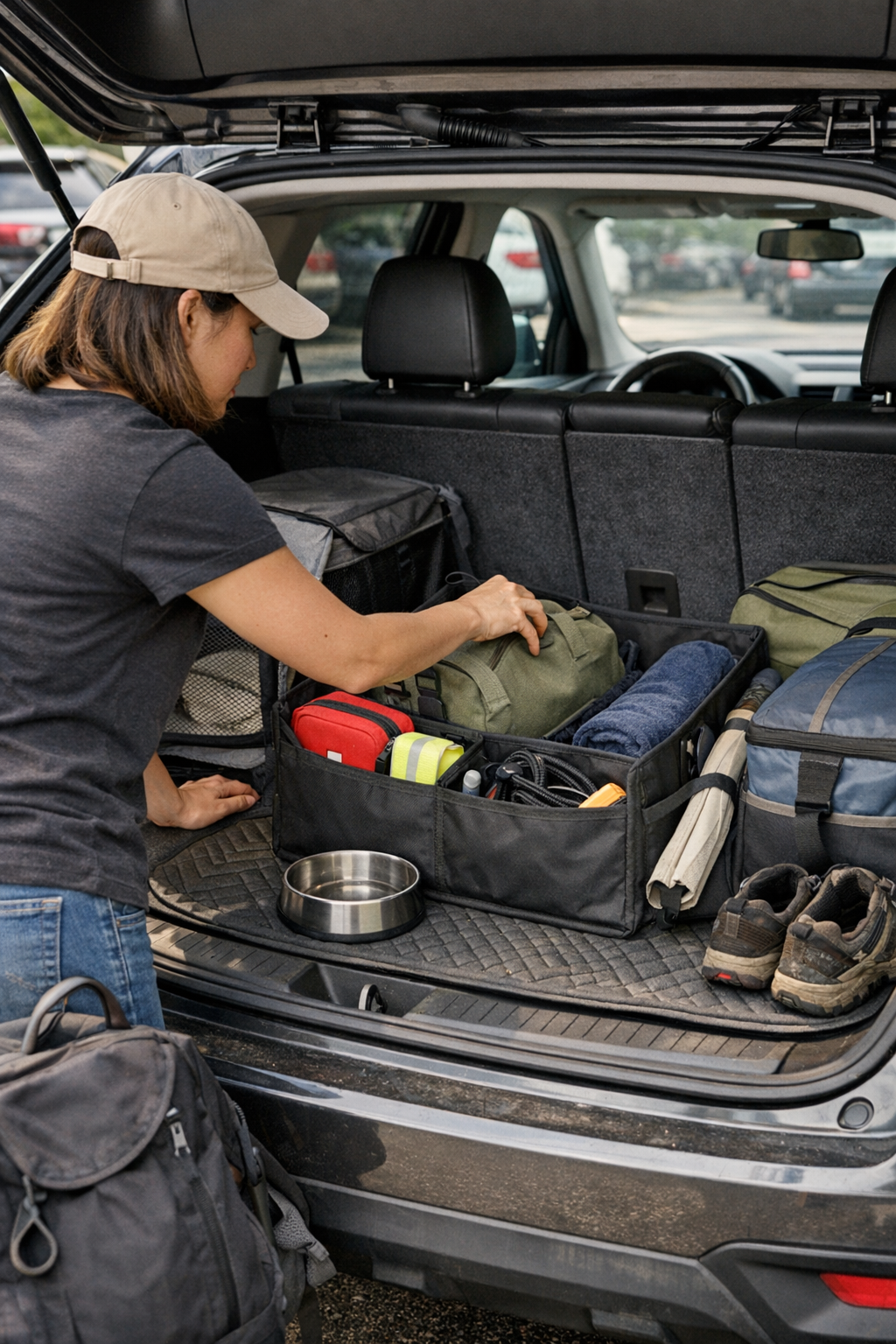
Many drivers stash emergency kits, wipes, or spare cables for a tidy look, but real-world use exposes the downside. When flooring gets wet or coffee spills, the carefully hidden cleaning supplies mean rooting through trunk bins or seat trays—slowing things down just when you want fast fixes. The “smart” weekend arrangement transforms into a midweek annoyance, especially when weather, spilled snacks, or a drained battery create pressure and you can’t reach what you need quickly.
When Neat Setups Interrupt the Flow
Ultra-organized layouts often backfire with daily repetition. Floor trays corral loose change but fail to contain puddles after rain, leading to water escaping off the edge and into carpet traffic zones. Deep organizers can swallow keys, emergency tools, or dog leashes beneath layers of less-used clutter—leaving high-use items blocked exactly when you move quickly. The drag isn’t disorder; it’s the need to fix, re-fit, or dig past “organized” gear in the middle of a normal drive. The car looks better, but you spend your commute mentally managing small corrections: shifting the seat cover again, re-angling a sunshade, untangling the charger trailing across a grab area.
Routine Pressure Makes Weak Points Return
The friction goes from minor to memorable when you’re pressed for time: school runs in bad weather, tight parking, armloads of groceries. The moment you need dry footing, the seat-edge mat slides away, or the safety tool you meant to keep accessible is buried behind another bag stuffed into the trunk organizer. These layout faults only show up under repeated, real-world loading and fast, multi-bag entry—not after a single organizing push. The cycle continues: clean lines on the dashboard swap for ongoing fiddling with phone mounts, cables, and organizers. As the setup stiffens the car’s flow, errands take longer—and you realize that “order” hasn’t fixed your driving routine. Instead, it’s become its own slow leak of convenience.
Redesigning for Real Access, Not Just Order
The leap forward comes from rethinking for reach, not just storage.
What actually works after a few weeks of real use? Small, intentional access shifts:
- Mounting phones at arm’s natural line—centered, not obstructed by gearshift or cupholder reach zones
- Laying a textured mat where wet boots or umbrellas go, so runoff never slides under carpeted patches or pedal zones
- Routing charging cables along fixed anchor paths, away from high-traffic grab points and out of cupholder territory
- Placing emergency and cleaning kits in door or seatback pockets—reachable with a single hand while seated, not buried in trunk storage
After this realignment, the background friction drops: no more routine searching for cables, no more half-blocked grab for disinfectant wipes after errands, fewer fixes to shifting gear during daily parking. The car starts functioning as you move, not demanding regular reorganization to stay usable. What seemed like tiny inefficiencies stop accumulating, and the interior supports, instead of slowing, your driving flow.
The Real Mark of a Car That’s Under Control
The best setups don’t erase all signs of use, or make your interior look untouched. They shorten the path to what you reach for most, hold up to actual traffic, and reduce the steady low-level stress of repeated fixes. If gear stops drifting, hand-space stays clear, and the temptation to “just shift this again” vanishes, you’ll know your layout finally works. The visible difference isn’t just tidiness—it’s a car that keeps up with your day, drive after drive.
For practical and reliably accessible car-use gear, visit DriveWellSupply.