
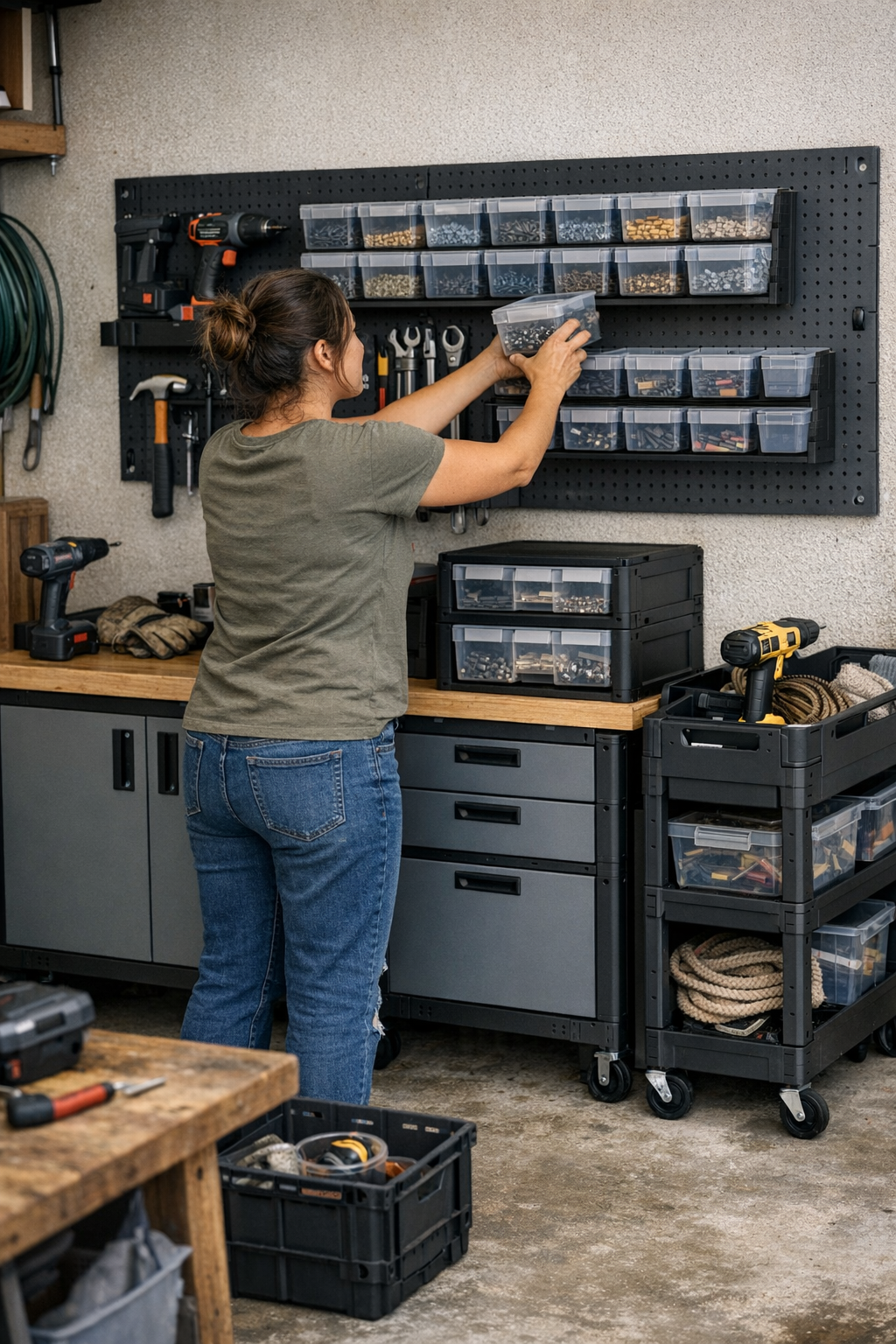
The real verdict on any garage or workshop setup isn’t the way it looks on install day—it’s what survives a week of actual use. Projects pile up. Hardware and hose reels creep onto open countertops. Carts—meant to be mobile helpers—drift sideways, blocking paths. Pegboards fill, plus one more hook gets squeezed into every sliver of wall. A few days later, the promise of order already unravels. Every reset drags out longer; the sense of control you built is chipped away by the return of clutter, disguised as “flexibility.”
More Options Don’t Equal More Order
It’s easy to believe that another shelf or bin will finally fix the chaos. Why not add just one more rack, try another cabinet with deeper drawers, or squeeze in a second rolling cart? On the surface, these tweaks seem smart—tools off the floor, every supply sorted. But as the real routine resumes, the trap sets in. Each new surface competes for your attention. Tools drift: the hammer lands on the new shelf “for now,” screws get split between wall bins and the bench tray. Instead of a single obvious return spot, you end up with a dozen “temporary” drop zones battling for permanence.
Bit by bit, clear floor space surrenders to piles that have no real home. That rolling cart, meant for efficiency, wedges itself in front of the cabinet you use most. The path from the garage entry to your workbench? Blocked again, this time by a tote you only meant to leave out for a minute. Even a quick reset after mowing or fixing a bike turns into an extended shuffle: shoving carts aside, rerouting around half-empty bins, deciding (and re-deciding) which shelf “should” hold the mallet today. The space that looked so usable on paper now asks for detours every day.
Choice Overload: How Storage Stops Serving You
When every tool has several options, putting things away gets harder, not easier. That moment of mental pause—“Does this belong on the pegboard, in the drawer, or maybe the top of the cart?”—kills return speed and builds resistance. Multiply those split-second choices across a Saturday’s worth of fixes, and what should be a quick cleanup turns into a wandering circuit through your own maze.
You start to feel it in daily habits. Clamps get parked on the workbench corner “just for now.” Hose nozzles, left out because the wall bin’s out of reach, start multiplying by the doorway. Screws never travel back to the right shelf, because the cart they landed on is still sitting by the door—where you dropped it mid-project. Little by little, the system that once felt crisp and organized slowly bogs down into familiar frustration.
Spaces That Work Against Your Routine
If you find yourself dragging a cart into the hallway just to swing a cabinet open or sidestepping around a wall shelf that stays half-used, you’re not alone. These small, regular hassles are the fallout of overlapping zones and storage footprints that take more than they give back. That “versatile” rolling cart? If it’s living in the thoroughfare, it’s just another obstacle. Dead corners in the garage get even less useful, while lines of motion—carefully mapped out in theory—clog up under the weight of competing organizers. Resets get slower, and those quick grabs turn clumsy, not precise.
Clarity, Not Quantity: The Zones That Outlast the Mess
The best setups aren’t the ones with the most spots—they’re the ones with the clearest, most defined paths. When every essential tool or supply has exactly one predictable home, you don’t have to think about where it goes. Resetting after a project becomes a short routine: each piece in its place, each bin with a single job. The habit sticks—not because you’re suddenly tidier, but because the return is frictionless.
For smaller shops, shared garages, or tiny backyard sheds, paring back options usually makes the biggest functional difference. If you have one labeled hardware bin, two key hooks for the hand tools you use daily, and a single, purpose-built utility cart (never parked in the way), movement and access feel effortless. Clutter recedes—not because you own less, but because what you do own is easier to put back, every single time.
Two Saturdays, Two Very Different Resets
Picture it: one weekend, you pull out the drill from a wall hook, fumble for the right bit in a mobile cart, and find fasteners in one of a few overhead boxes. Ten minutes in, halfway through your task, every flat surface is buried under drill bits, clamps, and hardware. The return trip is a mess—walking long, uncertain routes to return each tool, dodging a cart that’s now blocking the only open lane. Resetting takes twenty minutes; the urge to “just leave it for later” follows.
Now try it with a cleaner setup. You ditch that second cart. Fasteners go in one bin—always—right next to the tool they match. Suddenly, you work in straight lines; movement is direct instead of zigzag. The open section of your workbench stays open all week, not buried in “to be sorted.” There’s no question about where things go, so nothing sits out “just until next time.” Your space doesn’t just look organized—every piece of it genuinely makes your routine faster.
Micro-Tweaks With Major Impact
Real change isn’t about stripping down to the bare minimum or adding new “miracle” organizers. It’s about recognizing dead-end zones, combining redundant bins, and tuning each spot for daily flow. Group garden hand tools on a single rack, not scattered between pegboard, drawer, and windowsill. Rework any cart that never stows cleanly—convert it into a project kit, or simply let it go. If a certain corner catches overflow week after week, that’s not a coincidence; it’s feedback. Tighten boundaries until every returning item lands without a second thought.
Set a simple timer on your weekly cleanup. If putting everything back eats up more than a few minutes, you’re still fighting your own setup. A strong layout isn’t about visual minimalism—it’s about resetting without a mental list or wasted trips. That’s the sign your storage is finally working with you, not against you.
Quick Fixes for Real Storage Trouble
Is less storage the same as having less gear?
Not at all. What needs to go are the extra, optional drop zones—the holding tanks for stuff that rarely sees use. What you actually use stays, but its home gets easier to spot and harder to forget.
How do I know if my setup’s too complicated?
Ask yourself how often you hesitate at the end of a job. If tools wind up on the floor, chairs, or migrate to surprising corners, setup sprawl and decision fatigue have crept in. A little annoyance now is a lot of clutter later.
Wall storage or carts: which works best?
Walls are gold for daily grab-and-go tools and predictable routines. Carts work when they’re single-purpose—rolling out for a specific project, then stowed. When floor and wall systems start overlapping or fighting for the same tools, dead space and blocked access are right behind.
Routines Decide If a Setup Actually Works
The best-organized space isn’t the one crammed with organizers. It’s the space where you can move, reset, and grab what you need—without pausing, rerouting, or reshuffling every time. Every time a return path gets blocked, or a reset takes too long, it’s a sign to consolidate, not expand. Your area should fit your habits, not slow them down.
For storage that’s actually designed for the way real routines run—not just for showroom photos—visit StackNest.