
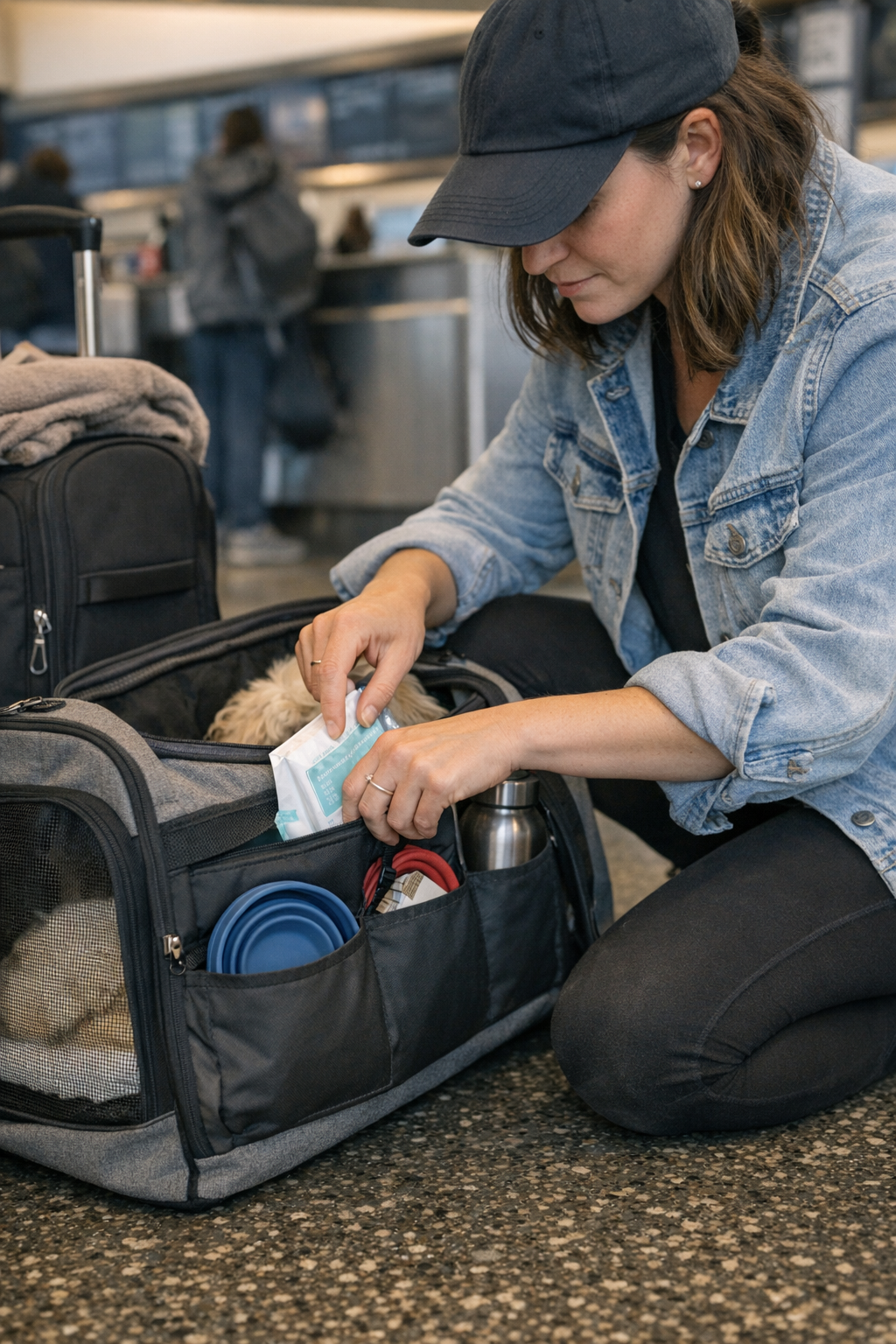
Most pet travel bags fail during the second stop, not the first. The problem isn’t that you forgot supplies—it’s how every “organized” bag starts breaking down as soon as you’re forced to work out of it on the move. At home, that bag looks calm and squared away. But the moment you hit a hotel lobby, airport check-in, or rest stop, tidy pockets get blocked by a shifted bowl, wipes wedge under a leash, and suddenly, reaching for paperwork mid-line means an awkward shuffle while your pet tugs and the minutes drag. If you’ve ever fumbled for wipes with a nervous dog underfoot or tried to fish out health documents only to pull out snacks instead, you’ve already seen how surface order barely survives three real-world uses. This is the moment the PawGoTravel world begins—not with what to pack, but what actually works once you start moving, stopping, and reaching over and over.
The Real Slowdown: When Bags Stop Working for You
A “ready” carrier looks fine before you leave—zipped, stacked, nothing visibly out of place. The real trouble starts after you’ve had to grab something quickly, set the bag down, picked it back up, and started the next leg. That original setup is now scrambled in small ways by every move.
Repeated stops expose every flaw in your structure. At the airport, by the car, or at a cramped waiting bench, the first access feels smooth enough. But after boarding, waiting, detouring for a pet break, then rushing to your gate, familiar friction points keep derailing your flow:
- Cleanup wipes buried or sliding against the leash clip
- Essential paperwork tangled with a bowl or spillover comfort toy
- Treats sinking under bulkier items, impossible to grab when you need to calm your pet
- Pouches blending together so you crack open the wrong section first—and have to reshuffle again on the fly
These delays feel trivial in isolation. But each minor snag—an interrupted reach, a misplaced wipe—breaks your routine and lets handling get more scattered. The more “organized” your kit looks, the more aggravating it becomes when you still lose rhythm at every handoff.
Packing for Movement, Not Just Order
Most bags are built to look ready standing still. Movement exposes their limits. You can lay out every pouch at home, but real travel means lifting the carrier, threading through crowds, setting it down, reaching in with one hand while your pet shifts. That perfect setup becomes a collection of slowdowns: wipes blocked by a rolled blanket, bowls tipped sideways under health forms, treats now underneath the leash handle.
Think crowded security lines: you’re balancing your pet, your bag, and a boarding pass. Snacks are supposed to keep things calm, wipes to catch a surprise spill. But reaching for either means fighting through papers and tilting compartments just to get to the right section. Seconds stretch while the line grows. From home, the design looked smart—after two stops, each reach gets slower. This is where “good on paper” becomes a real problem under pressure.
Why Tidiness Fails When You Need Speed
Zipped pockets and stackable pouches promise order, not true access. Travel isn’t about how things look when they’re slotted into place—it’s about how fast you recover, how easily you grab what matters with one hand while nudging your pet with the other. Bags that only chase tidiness fall apart in transit. Over repeated cycles—pick up, set down, reach in—the items you need most are the ones that wind up buried, blocked, or tangled. What worked in your living room can’t keep up with real stop-and-go travel.
Speed Access and the Power of Separation
The difference isn’t just more pockets—it’s how fast you can actually grab, reset, and move. Organizers that separate “grab-now” items (wipes, collapsible bowl, key treats) from deeper storage for spare leashes or backup gear instantly change how you handle every interruption. A single cavernous pouch means everything gets jumbled—one urgent search and your neat order collapses. Then the next mess takes even longer to fix.
Adding a small, quick-access side pocket or seat-edge sleeve resets this dynamic. When you kneel mid-wait to calm your pet or scramble for a spill fix at a stranger’s feet, you reach straight for wipes or snack—no digging, no tilting. Suddenly, each transition blurs less. Your setup isn’t just packed—it’s actually ready to move again, fast.
Real-Use Test: The Shallow Seat Pocket Shift
An early morning dash—airport, pet in tow, fluids tight, nerves high. Moving just two essentials (wipes and a bowl) to a seat-edge pocket cut the friction out of every stop. Those items stopped slipping under other gear—they were always upright, always in reach. When a spill hit or a meltdown started, the fix was now one-hand, one-motion. No two-handed digging or spill risk. This kind of structural tweak—one clear division, not just another compartment—reduces handling time at every checkpoint and makes each restart less stressful to manage.
Comfort Versus Agility: How One Fix Can Cause New Friction
Better organization isn’t a magic bullet. Adding comfort matters: a soft blanket or calming toy can make a wait bearable for your pet. But too often, those extras migrate to wherever you’ve made fastest access—blocking wipes, swallowing paperwork, slowing your hand just when you need to act fast. The trick is not simply to add calming gear, but to question where it lives: if it helps your pet but creates a new block for you, it needs a new home in your structure.
Access Over Aesthetics: What Survives Repeated Use
The biggest upgrade isn’t in expense—it’s in structure that still works after the third or fourth transition. A pet travel setup that survives repeated, seat-side, one-hand access beats one that’s still “neat” after three checkpoints but constantly forces you to reorganize. The weak spot isn’t always obvious at first glance: sometimes it’s a too-deep pocket, sometimes a bottle wedged just where you need to grab treats. Finding and fixing those repeat offenders—however minor—does more for smooth travel than any gear “upgrade” alone.
Routine Problems, Small Fixes, and the Real Decline of Friction
The awkwardness of pet travel rarely explodes in big errors—most pain comes from microscopic, sharp-edged slowdowns: a wipe out of reach, a tangled leash, a second delay that breaks your flow. Move your fast-use items to clearly separated, stable spots. Keep comfort and cleanup zones split. The bag might never feel perfect, but each simple, repeated-use tweak brings the friction down and the confidence up—each restart less clumsy, each mess easier to handle without a reset.
In real pet travel, what matters isn’t how “packed” you look—it’s how your setup behaves after three stops and five quick-access cycles. If your bag keeps forcing you to pause, shuffle, or restart, it’s time to rethink not your checklist, but your structure.
Find more practical setups at PawGoTravel.