
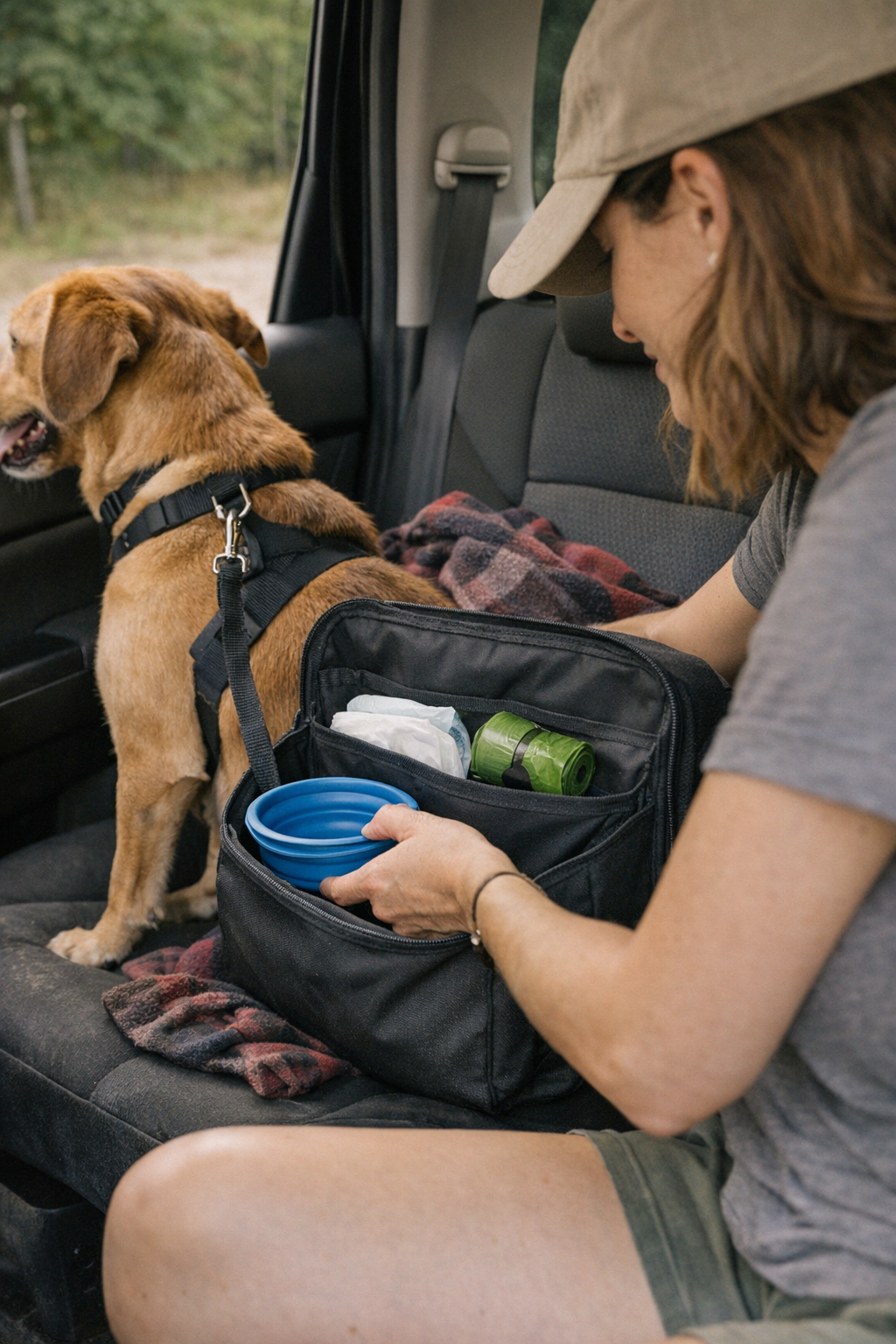
A pet-travel organizer can look perfect right up until you actually use it. In the controlled, packed moment before leaving, every compartment seems ready and every item has its spot. But on the road—at the fourth parking lot or the next curbside detour—the setup that looked organized starts slipping apart at the seams: wipes buried, leash tangled, treats mixed in with owner essentials. That’s where real friction shows up, and it rarely matches that “ready” photo from a few hours earlier. PawGoTravel exists for this gap: the failure of organization that only reveals itself in repeated, real movement.
When “Organized” Fails During Real Movement
The first drive out, your confidence holds—everything looks settled, bowl nestled between wipes and leash clipped just so. Yet the first stop shows cracks. A leash that “has a spot” pulls from behind a stash of bags. Cleanup wipes, supposedly at hand, are wedged under a zip you can’t grab one-handed. As stops multiply, the tangle compounds: bowls shift further down, essentials overlap, and each reach feels less predictable than before.
This isn’t an obvious systems failure. It’s a pattern of small interruptions: fumbling for the cleanup pouch with a dog trying to bolt, opening the “right” section only to find the wipes in another, pulling a zip only to see toys and treats spill out. By trip number three, your “packed” look is just surface. The organizer asks for extra reach, extra guesses, and just too much time for each simple grab.
Recognizing Real-World Friction Points
The break happens in routine stops—not in the plan, but in the repeat:
- What looked compartmentalized mixes as contents migrate and layers shift with movement and quick grabs.
- Separate pockets become mini barricades when main supplies end up buried or require both hands—especially as your pet tugs at the leash beside you.
- Cleanup gear is present, but rarely where muscle memory expects—which means more delay, more mess, more accidental overreaching.
- Comfort items—soft blankets or extra toys— squeeze out the space your go-to supplies need, forcing overlap and slower reaction every stop.
The price is cumulative. Once you’re forced to set everything down just to dig out a wipe, or when every short stop starts stealing a few more seconds, your patience and rhythm start to fray.
Seat-Side Zones: Where Access Matters Most
The seat-side area is the breaking point for most setups. It’s not how organized things look, but whether you can reach what you need, in the exact moment you need it, without stalling holiday traffic or wrestling a harness with your knee. When “grab and go” means unpacking two layers for a water bowl, or sticking your wrist through a narrow opening while your pet pulls, your bag is holding you back. Small obstacles pile up fast: messier reloads, skipped reloads, and a simmering background chaos that undercuts a calm ride for both you and your pet.
Repeated Return, Repeated Delay
Picture returning after a quick walk. Leash is loosely wound, cleanup zipped away, supplies still technically where you left them. But after each trip, wipes drift under spare toys, the bowl hides deeper, and your grab-and-go system tilts toward slowdown. Each return drags—now it’s three stops in and nothing is where you expect. Every “quick stop” is longer, harder, and slightly more irritating than the last.
Simplifying for Real-World Repeat Access
The root cause isn’t missing essentials—it’s too many compartments, competing pockets, and stacked sections that never seem to unlock what you actually need first. Every extra closure, layer, or overlap multiplies the effort needed for a basic action.
Correction comes from directness, not extra organization:
- Remove or ignore compartments if their only purpose is to “tidy” what you use every stop.
- Keep one always-visible, always-reachable side zone open just for the real priorities: leash, wipes, cleanup bags, bowl.
- Structure the order by actual use—not category—so you never dig for what you reach for most.
- Push rare-use items (spare toys, specialty gear) deep so their delay doesn’t interrupt rhythm at every turn.
This isn’t about minimal looks. It’s about touch-path: the exact, repeatable reach—one trip, one movement, no digging, no repacking. A system that preserves speed and sanity every single time, not just on departure.
Improvement Feels Subtle—Until It Doesn’t
Refining your layout by need instead of category doesn’t invite compliments. But with every repeated stop, you notice the real benefit: less manual reset, fewer accidental empties, no more doubled-up handling just to restore order. By the end of a busy circuit, your bag isn’t spiraling into chaos—and those stops where the leash, bowl, and wipes appear in the right place start to multiply. The improvement isn’t a claim; it’s the disappearance of friction: no more micro-pauses, no doubled-back searching, no silent dread before another parking-lot leash-wrestle. When what you need is in the spot your hand expects, movement becomes automatic—and your trip actually keeps flowing.
Signs Your Layout Isn’t Helping Repeated Motion
- Needing both hands just to retrieve basics on an ordinary stop
- Opening three sections before you find the right item, even though you “organized” before leaving
- Watching access get slower as the trip gets longer, not faster
- Pockets going unused because the time cost to put items back is simply too high
- Feeling pushed to repack mid-afternoon or in the parking lot just to restore order
- Recognizing that your tidy setup at home is dragging you down on the move
If these habits are routine, your setup isn’t helping—it’s quietly creating friction, even if it looked perfect before you left.
Move Beyond “Prepared”—Aim for Smooth, Repeat-Use Travel
Real-world pet travel isn’t won by systems that only look neat at the start. It’s about seat-side setup, fast access, and gear that keeps up with messy, real movement—errand to park to curb, over and over. Only a structure refined by repeated use manages that: a flow where grabbing, using, and moving actually gets easier, not harder, as the day goes on. It’s a difference you stop noticing—until the friction returns.
Ready for a setup that’s built for more than show? Explore practical, seat-side-tested pet travel gear at PawGoTravel.