
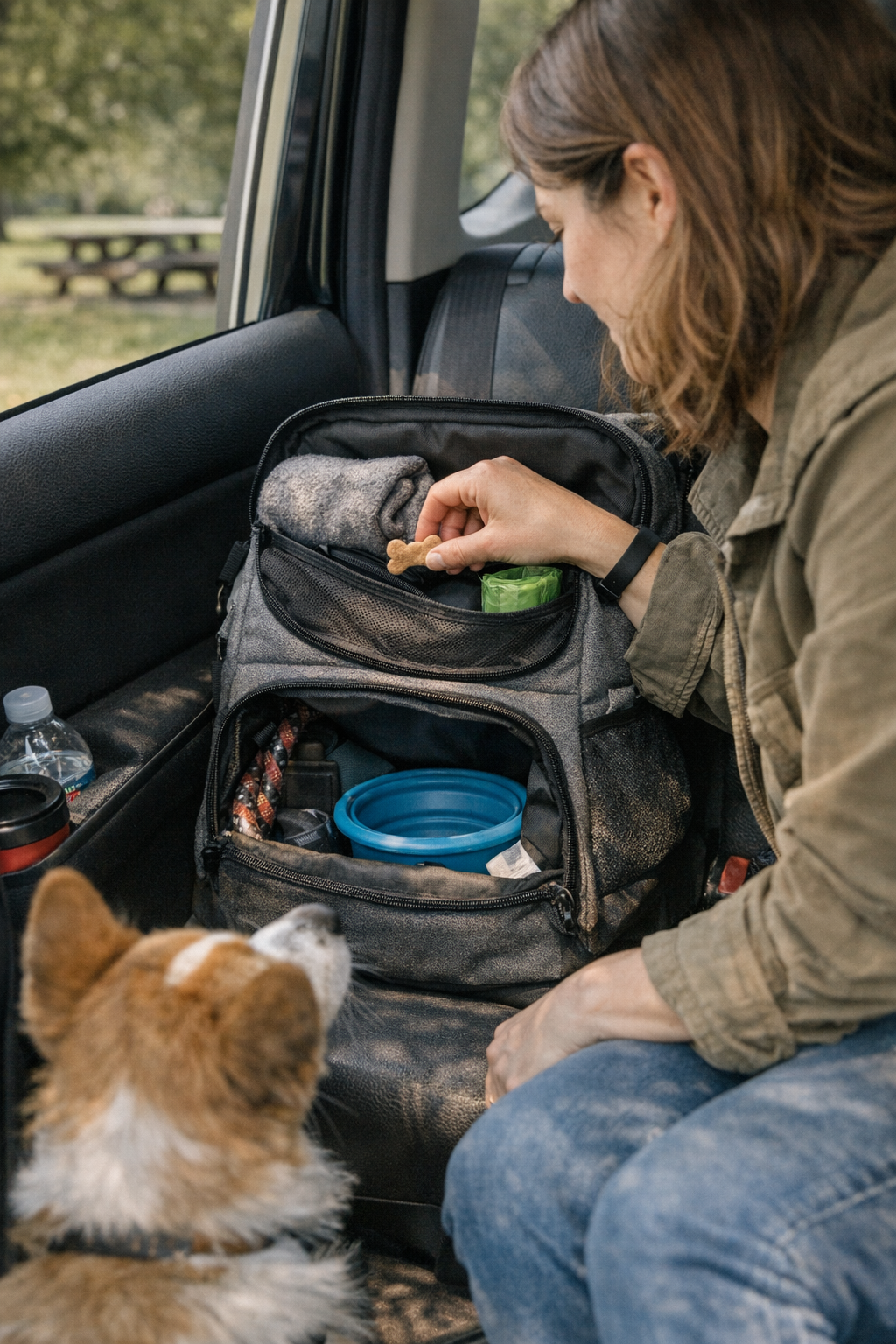
No pet travel bag feels as ready as it looks once the trip actually starts. Even perfectly packed, with every treat and cleanup supply tucked in, the first curb stop or rest area exposes friction you didn’t see standing still. Reaching for a blanket, you open the wrong compartment. That waste bag you swore was handy? It’s caught behind wipes and a balled leash right when your dog pulls, waiting for relief. The bag promises streamlined comfort, but as soon as real movement and quick stops return, familiar cracks open up—items buried, quick grabs blocked, calm moments lost to scrambling. In actual use, the gap between being packed and being prepared is hard to ignore, especially when your setup is supposed to make things easier. PawGoTravel’s world starts where those details matter—not just in what you bring, but how you reach it in motion.
When “Ready” Doesn’t Mean Reachable
Packing with care feels reassuring at home: treats zipped beside wipes, bowls nested cleanly, comfort items placed “within reach.” But these neat arrangements miss what happens in transit—pauses aren’t planned, and grabs rarely go as pictured. The tighter the packing for visual order, the more likely it is that you’ll be fighting layers or fumbling for the one thing you need before the moment slips away. At every stop—out of the car, leash in hand, juggling curb cleanup or vet check-in—the bag’s structure begins to resist the flow. The blanket isn’t “just there” if it’s beneath tomorrow’s food. Waste bags blend into lined pouches. Each delay stacks on the next, and the routine—supposedly smooth—starts stalling in quiet, annoying increments.
The Hidden Cost of Deep Packing
Put a well-organized bag through a real trip: twice in, and the logic breaks down. The treat meant for reinforcing calm is wedged under a towel and two zipped pouches. Cleanup bags require one hand’s blind fishing just as leash tension spikes. Every extra layer converts “well prepared” into “awkwardly delayed.” The surface stays tidy, sure, but new micro-delays creep in; frustration replaces the ease you packed for. The plan doesn’t fail all at once. Instead, every rescue-moment exposes the overlap: pet gear and owner gear shifting mid-journey, urgent items ducking behind non-essentials, repeated restarts burning through smoothness. After three stops, the so-called system can feel more work than your old, messier improv setup.
The Fast-Fizz Routine: Real Scenarios That Wear You Down
Hunting for Comfort During a Curbside Pause
You pull up for a park break, prepping to reward a calm moment. But the blanket is at the bottom—wipes, harness and half a day’s snacks on top. Reward timing passes as you dig. Your dog waits, then squirms; you’re still flipping zippers. Instead of reinforcing comfort, you’re managing container chaos.
Owner and Pet Items in the Way—Again
Phone, wallet, waste bags, treats—stuffed together for “convenience,” but the moment you reach for a cleanup pouch, you end up sifting past keys or knocking snacks to the floor. Each overlap is a silent break in flow: a few seconds lost at each stop, patience thinning on both ends of the leash.
The Mid-Drive Water Bowl Dance
Midway through a drive, your pet needs water. You know the bowl is there—stored neatly behind a zipped divider. But by the time you unzip, double back, and fish it out, your pet’s already distracted. The illusion of being “prepared” falls apart the minute sequence matters: wrong zip, wrong grab, timing gone.
What Actually Keeps the Routine Moving
Bringing more gear doesn’t fix the problem; shuffling still kills momentum. The real shift is reorganizing for actual reach: putting the most-used comfort cues, treats, and wipes at the edge, at true seat-side or curbside access every time you need them—not just “somewhere inside.” One proven fix is reserving an open pocket along the bag’s edge or flap for the blanket, reward treat, and a waste bag, arranged for single-move access—so they come out together the instant you need them, no reshuffle required. This is not about neatness. It’s about making your bag or carrier work as fast and frictionless as real travel demands.
How “Immediate Access” Feels on a Real Trip
- No layering gymnastics when your pet’s hit their limit—just a direct grab.
- Comfort handed out at the exact moment your cue is spoken—word and action synched, no scramble.
- Cleanup is a two-second job—no more “almost there, just wait” delays.
- Items drop straight back into their pocket, prepping you for a repeat grab, not a new puzzle.
With that structure, tracking “where things are” fades. You focus on your pet’s body language, not zipper-order. Each stop-and-go cycle gets closer to seamless—less stuttering, more ready motion. The payoff isn’t a look; it’s a routine that finally matches how you and your pet actually move and wait, together.
Real-World Observations: Less Mess, More Flow—But Not Perfect
No system is bulletproof. Items still get jostled, pockets aren’t immune to scatter, and after a rushed day you’ll curse even a smart layout. But the real gain shows up in the numbers that don’t draw attention: fewer double-grabs, rarer wallet-treat collisions, less “where is it?” muttering with a leash and a waiting dog. The over-promised gap between “looks organized” and “actually travels well” narrows into something manageable—enough for seat-side access and timely handoffs to become the default rather than the exception. The instant fix doesn’t exist, but the everyday cost of ignoring true access becomes impossible to justify when you’ve lived the alternative, stop after stop.
Find practical pet travel organizers, quick-access kits, and real-use travel gear at PawGoTravel.