
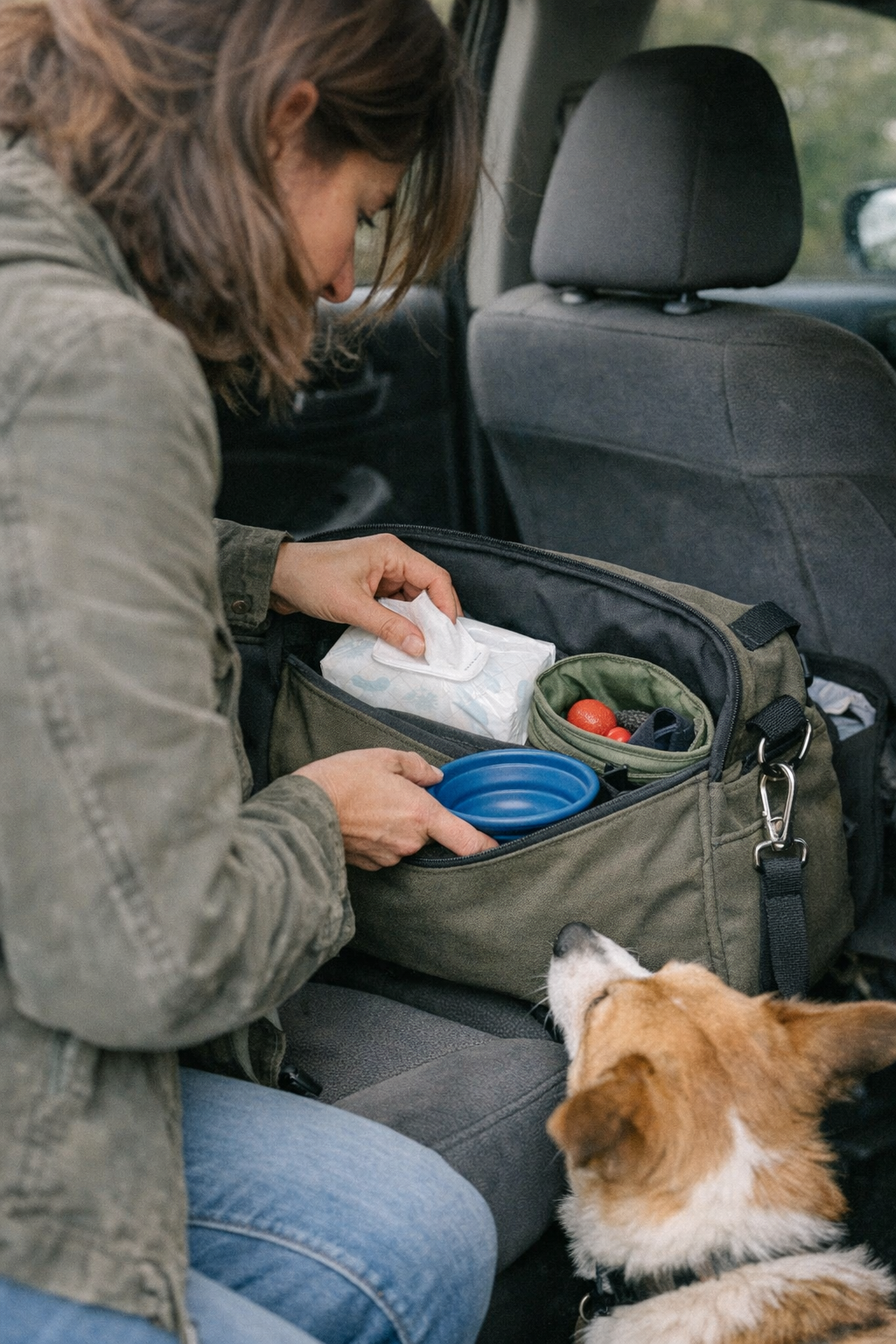
The real trouble starts when the “organized” pet-travel bag gets put through its paces. It only takes a handful of real-world stops—car to park, park to car, seat to leash, leash to bowl—to see if your setup keeps up, or just looks neat sitting still. The test isn’t in one tidy photo or the first leg of your walk. It’s the third or fourth routine stop, when every buried leash, hidden wipe, and tangled comfort blanket forces another slow, awkward reset. Suddenly, what seemed travel-ready is slowing you down in ways you can’t ignore. The difference is clear by the time you’re back at your car and realize you have to dig, reshuffle, and fumble for the basics all over again. PawGoTravel exists for this—when a pet setup meets repeated, seat-side real use, not just first-glance order.
Why Pet-Travel Routines Break Down (Even When Your Setup Looks Ready)
Anyone who’s shuttled a pet through a normal outing knows that well-packed gear is only half the story. The sequence is relentless: park, walk, re-enter, repeat—your hands fill up, your dog expects movement, and anything awkward about your bag gets exposed almost immediately. Setups that seem ready in a hallway or online don’t always survive actual use, especially after a few stop-and-go cycles.
The core problem? Serial access friction you never knew was built in. Pet travel bags packed with pockets, zips, and pouches sound helpful—until you have to reach for the same bowl or leash for the fourth time in an afternoon. And it’s always right when you’re juggling a leash and a door handle, with a pet twisting at your side, that the wipes vanish to the wrong end of the bag. Instead of a smooth routine, you get a clumsy, interrupted rhythm—one that gets worse, not better, the more you use it.
Real Scenes: Pet Travel Setup Interruptions You’ll Recognize
“Just a minute—let me find it… again.”
You’re leaving the park, leash in hand—or actually, not in hand, because now it’s wedged beneath the travel bowl and a crumpled treat pouch you pulled out earlier. Your pet is straining forward, you’re reaching blind into a half-zipped pocket, and each second spent hunting feels longer in the parking lot. This isn’t accidental; it’s the flow-breaking outcome of layered pockets and drifting gear, repeating visit after visit.
When Cleanup Isn’t in Reach (or When It’s in the Way)
Busy roadside stop: you’re trying to manage a dog and a cleanup while traffic rushes past. The wipes are somewhere in the bag, technically present, but blocked behind toys or crushed beneath a comfort blanket. Needing two hands, you use one—fumbling under pressure, then finally yanking out half the contents just for a quick wipe. Cleanup gear you can’t reach on the first try might as well be missing in moments like this.
Your setup didn’t fail on packing; it failed on real timing, blocking access right when seconds matter and tempers run short.
Comfort Items: Help Here, Hassle There
A calming blanket makes sense—until you have to pull it out first for pet comfort, only to discover you buried the waste bags or the leash underneath. The more you try to solve one comfort problem, the more you slow down the rest of your process. The real tradeoff isn’t between “messy” and “organized,” but between comfort and reliable, repeat-use reach.
The Cost of “It Looked Organized” Setup
Chasing more compartments, zippers, and hidden pouches seems smart until you go hands-on: what starts as “fully prepared” becomes a source of repeat micro-errors. Each layer is another point where you forget which pocket hides what, or accidentally grip something only to knock over a bowl or dump treats into the footwell. One-handed frenzies become the rule, not the exception.
It happens trip after trip: the pet gets antsy, you keep pausing and restarting, and the whole flow of the outing fractures into little delays. A travel bag that resists real movement doesn’t just slow you—it disrupts the whole backseat dynamic, right down to the pet that senses your tension every time the search starts again.
What Actually Improves the Routine?
Single-Move Access for Everyday Transitions
Repeated friction drops away when your setup lets you grab what matters in one move. Seat-facing wide pockets, leash clips that always land inside the same opening, and wipes stashed flush with the top edge—these design shifts mean you aren’t pausing to dig, unstack, or re-zip at every stop. A bag or mat that puts the must-haves on your natural reach path means cleanup, resets, and leash grabs just happen—right as you need them, without breaking your stride.
Suddenly, re-entry after a walk feels almost automatic and your pet stays calm, since you didn’t turn a basic movement into a small crisis. If the bowl never hides under the blanket and the leash never falls two zips deep, you’re free to actually move—not just reshuffle gear.
Divided Side Pockets versus Pile-Ups
Broad side-access pockets and seat-facing slots outperform deep vertical pouches every time you need speed. The essentials stand alone and don’t pile on one another, so you aren’t risking a cascade—one awkward lift, and the whole arrangement doesn’t collapse. In practice, the bag holds its form between stops, not just at “pack time.”
What to Watch for When Evaluating Your Own Setup
- The search cycle: Are you repeating the same hunt for a leash, bowl, or blanket every time you return to your car?
- Blocked access: Do key items keep ending up behind or beneath something else, slowing every quick grab?
- Reset required: Does getting organized again after each walk mean rearranging a stack of stuff you just used?
- Organization that falls apart: Does your bag look neat before leaving, but unravel completely by the return trip, leading to a frustrated repack before every new outing?
If these keep happening, it’s not you—it’s a setup that can’t keep pace with real movement, especially at the seat edge where you need it to work most.
How Small Tweaks Deliver Big Changes
Small, structural shifts change everything: a broad seat-side pocket means wipes and bowls never disappear out of reach. When the leash always clips where your hand lands, repeated digging drops out of the equation. The effect is immediately clear—no more one-handed scrambling, no repeated repacks, and no core items drifting out of position between stops. Every time you slide into the car, you find gear exactly where you expect, so you move, not manage.
That’s the real win: routines smooth out, the pet stays settled, and the “reset” becomes a non-event, not a project.
Repeated Routines Expose the Setups That Fail
No design flaw is obvious in a still room. But after seven, eight, or twelve trips—city errands, dog parks, edge-of-town stops—anything that blocks direct, reliable access announces itself loud and clear. Pockets that sounded clever hide basics exactly when you need them. Deep pouches trap wipes. A comfort seat cover blocks the quick wipe, not just dirt. With each repetition, interruptions pile up, stressing both you and your pet.
The true test? If the bag slows you after repeated use—if you hesitate, rattle through zips, or feel forced to reshuffle at every turn—the setup isn’t built for real travel rhythm, just static order.
Does Your Pet-Travel Setup Work With Your Flow?
The best setups work in motion, not on paper. If your routine is quick, seat-to-walk-to-car, the decisive moments are always reach, grab, move—never pause, dig, or reorganize. If your bag or carrier interrupts that rhythm at the same spot on every trip, it’s not a minor inconvenience—it’s a design problem that compounds over time.
Look for the friction point you always meet. Is it buried wipes at cleanup, a leash under pet snacks, or owner gear spilling into pet space? Changing just that structure—usually a pocket layout or access opening—often resets your entire flow. When your setup truly matches your movement, every return to the car is part of the journey, not another reset waiting for you at the door.
Find practical pet-travel gear and smarter repeat-use setups at PawGoTravel.