
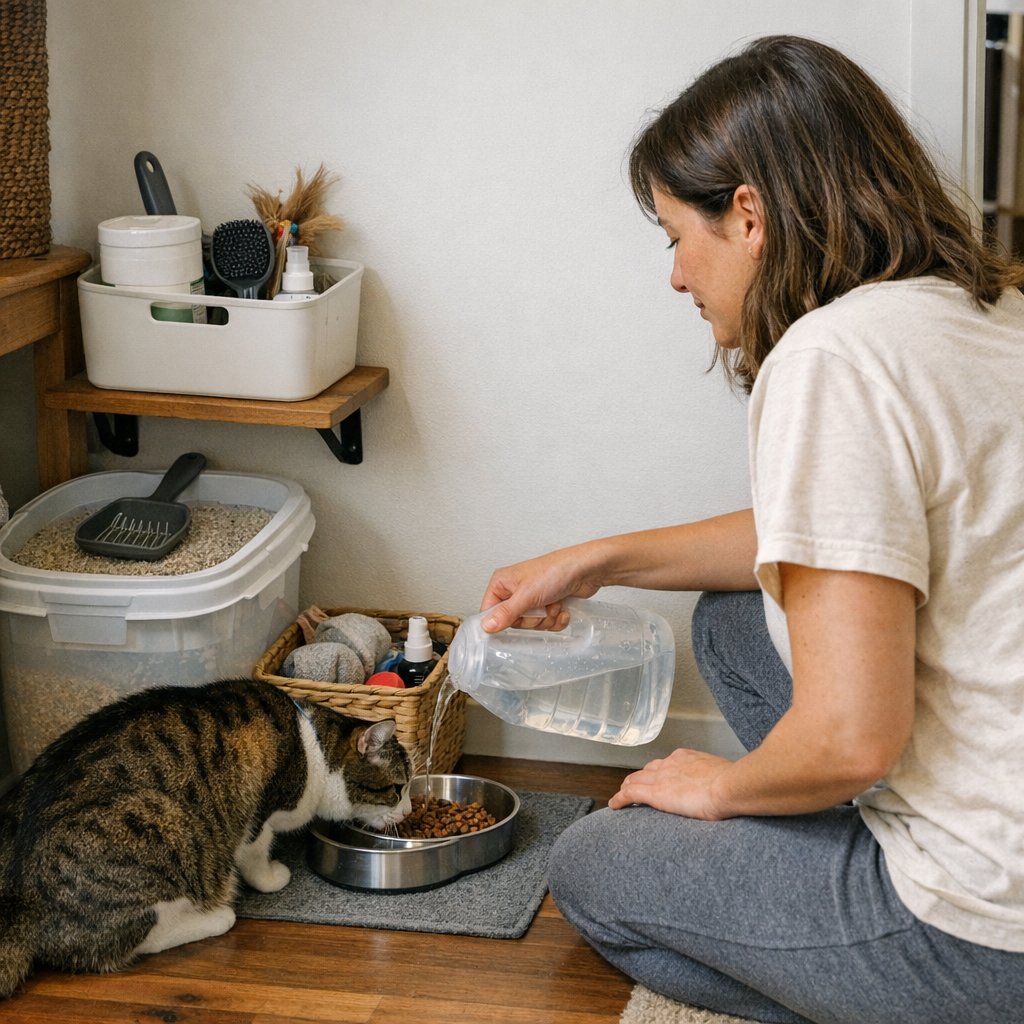
The difference between “running smoothly” and “wearing thin” in any indoor-cat routine usually starts with one small mistake: putting the essentials just out of reach. Grab the food bowl, and you’re suddenly making a side trip to the bathroom to hunt down the scoop. You’re topping off water from the kitchen while the refill jug sits hidden under the hall sink—just distant enough that you skip it until the next complaint. It doesn’t look like a problem at first, but by midweek, those indirect routes—fetching litter from a closet, tracking down wipes across two rooms, sliding back boxes—turn every reset into an interruption. Surfaces still appear calm, but underneath, each refill or cleanup brings back the hassle of split routines and missed steps. What passes for “organized” on day one quietly becomes a friction loop by Friday in any real home with a cat. StillWhisker setups are built to break that cycle early.
Why Does Point-of-Use Storage Matter So Much for Cat Supplies?
The drag on your time—and your patience—doesn’t show up in a single, glaring mess. It shows up in the disruptive pauses: standing in one room while realizing you need something stored two rooms away. Stashing supplies in closets keeps your place looking tidy for visitors, but as each detour stacks up—especially on repeat—you start working around your own setup, not with it. The real friction isn’t just the extra steps; it’s the routine losing all flow.
- You reach for the kibble scoop, but it’s buried in a bag outside the room. Now your cat is persistent, and you’re sidestepping paws while searching drawers.
- The plan was to wipe scattered food after breakfast, but the wipes aren’t here. By the time you return with them, crumbs have multiplied—and so has your annoyance.
- Litter tracking appears at the doorway, but the handheld vacuum isn’t where it should be. The odds of leaving it “for later” climb sharply each time you need to dig for a tool.
Each interruption seems minor, yet together they unravel any appearance of control. The cost isn’t just time lost—it’s the silent buildup of avoidable friction, dragging routines from automatic to laborious.
The Hidden Tradeoff: Looking Clean vs. Working Smoothly
We all want living spaces that look settled and calm—especially with pets around. But there’s a catch: hiding litter behind closet doors, stashing scoops in drawers, or relegating water jugs under utility sinks keeps rooms looking bare at the expense of function. When you separate supplies from where you actually need them, each routine picks up invisible baggage—a few extra steps, a few delayed resets, a little more “not now” every day.
Here’s the pinch: the more attractive your hidden storage, the more likely your system quietly adds work on the back end. An organized closet feels neat until you’re detouring for something the moment you need it, while a caddy right beside the box or bowl looks slightly busier but keeps routines on track. What works better isn’t what hides more, but what shortens the distance from intent to action—without forcing yet another round of “I’ll tidy this up later.”
Common Spots Where Supply Placement Breaks Down
- Litter Storage: Litter bags shoved in a back closet force you into hauling refills at awkward moments—making last-minute top-ups and emergency resets feel like chores worth postponing.
- Feeding Tools: The bowls might always be in place, but the right scoop or measuring cup often migrates out of arm’s reach, turning what should be a one-hand motion into a two-room expedition.
- Water Refills: If the jug or pitcher isn’t right at the water station, bowls run low longer, and fresh water gets delayed—right up until the cat starts announcing the problem.
- Wipes and Cleaning Supplies: When cleanup wipes or vacuums aren’t right near the scene, small messes linger or spread; you catch yourself crossing the house to fetch them and sometimes just let the spot wait, “just for now.”
- Toys and Rest Mats: Toys and mats drift steadily toward high-traffic zones. If there’s no easy drop spot at hand, objects collect under furniture, triggering that familiar “search and rescue” routine every week.
Real-Life Routine: How Small Gaps Add Up
Picture a standard morning: you reach for the food scoop but it’s with yesterday’s litter bag in the hallway. By the time food’s down, you spot kibble on the mat edge—except the wipes are deep in the bathroom. When you get back, your coffee is colder, and the scatter has made its way across the floor for a second lap, courtesy of impatient paws.
A five-minute routine has turned into fifteen minutes of reshuffling, solely because supplies aren’t anchored where resets happen. None of this looks dramatic, but multiplied by days and weeks, it frays the line between “well-organized” and “always one step behind,” even if everything looks calm on the outside. Visually, the room reads clean; practically, it’s an obstacle course of micro-delays.
Group Supplies by Task, Not Just Appearance
Bare counters and hidden bins look organized, but only if you ignore the slowdowns. The setups that actually survive repeated use are built around where each task starts or finishes—not just what looks calm. Stash a sealed tub under the box, keep wipes and scoop together in a basket or caddy you can grab with one hand, and accept a little visible “clutter” in exchange for a routine that doesn’t drop you out of stride.
- Litter, scoop, and wipes within arm’s reach of the litter box—preferably in a bin or caddy you can carry or clean out without scavenger hunts.
- Feeding cup, spare food, and cleaner slotted right by the food station—a slim bin under a table wins in tight spaces.
- Water jugs belong next to or above the water bowls, not across the house. A closed basket or shelf neatly tucks it away while keeping it present enough you never skip a mid-day top-off.
- Keep a tray or shallow basket near the main play area—grab-and-drop toy returns cut down on the spread and lessen the “where’s that ball?” spiral.
The goal isn’t hiding every sign of pet life—it’s to make each reset quick enough that tomorrow’s mess never becomes an excuse to let today’s slide.
Examples of Structure That Withstand Real-Life Use
Practical storage doesn’t need to look custom-made. An airtight bin under the box saves you two-thirds the time of refilling from a closet down the hall. A lidded basket shelved above means wipes and bags are there at the instant you spot the mess, not fifteen minutes later. For feeding, a caddy tucked just under the feeding zone corrals scoops, spare mats, even brushes—so you stay on track instead of peeling off for missing tools at every step.
One rule holds up: choose containers or baskets that open with one hand and can be closed without fighting the lid. Snap tops, slide-outs, or baskets that don’t jam are worth more than any fancy box—especially when a tail or paw has made you a little clumsier on the fly. Systems that stay easy in daily movement are the only ones that hold up when routines are repeated under pressure.
Bumping Up Against Small-Space and Shared-Space Limits
In apartments or tight homes, hiding supplies feels mandatory—until the first time you stall out mid-routine because a bin is out of reach or a lid needs a free second hand. A closed basket in open shelving near the box or food area holds the line between calm and clutter, but too much effort to access, and you’ll soon skip the process “just this once.” Those skipped steps always boomerang by week’s end.
The best setups balance tidiness with single-step reach-in access: containers that don’t require untangling or clearing other items first. In shared rooms, restrict supplies to a dedicated bin or basket per major cat zone; otherwise, you’re chasing your own system from room to room in a daily shuffle. Order that asks for too much obedience won’t last.
How to Spot the Early Warning Signs of Inefficiency
- You keep interrupting your own day to chase supplies, or tidying messes that would have vanished if tools were closer.
- Tools left for visual calm keep migrating back to the spot they’re used—clearly trying to fix the routine you won’t admit is broken.
- Water bowls drop below “fresh” before you notice, and litter refills get delayed until the last possible moment, not because you forget—but because the storage location adds resistance.
- Cleanups happen only after problems are visible, never as part of your natural reset rhythm—showing your structure is built