
An organized shelf is only a snapshot. Step into your closet after a weekend clean-out or admire a pantry you just sorted—everything looks under control. But by midweek, reality creeps back in. The baskets you labeled last Sunday are overflowing, jackets spill over shoe racks, and folded shirts start to lean into a single, sagging mass. The problem isn’t the room itself. It’s how fast the small details—where bins sit, how shelves are divided, what gets prime real estate—either support you through hectic mornings or quietly conspire against you by Friday.
How “Organized” Slips Away—Faster Than You Think
It’s easy to get fooled by how good a finished space looks on organizing day. Baskets line up neatly, snacks and cereal each have their own boxes, and T-shirts are fanned out for display. But life isn’t gentle. In a rush, you reach to the back of a shelf and drag out two things to get at the one you want. Someone tosses an umbrella into the scarf bin. Pretty soon, the borders blur and you’re back at square one, spending extra time hunting for your boots or fishing socks from under sports gear.
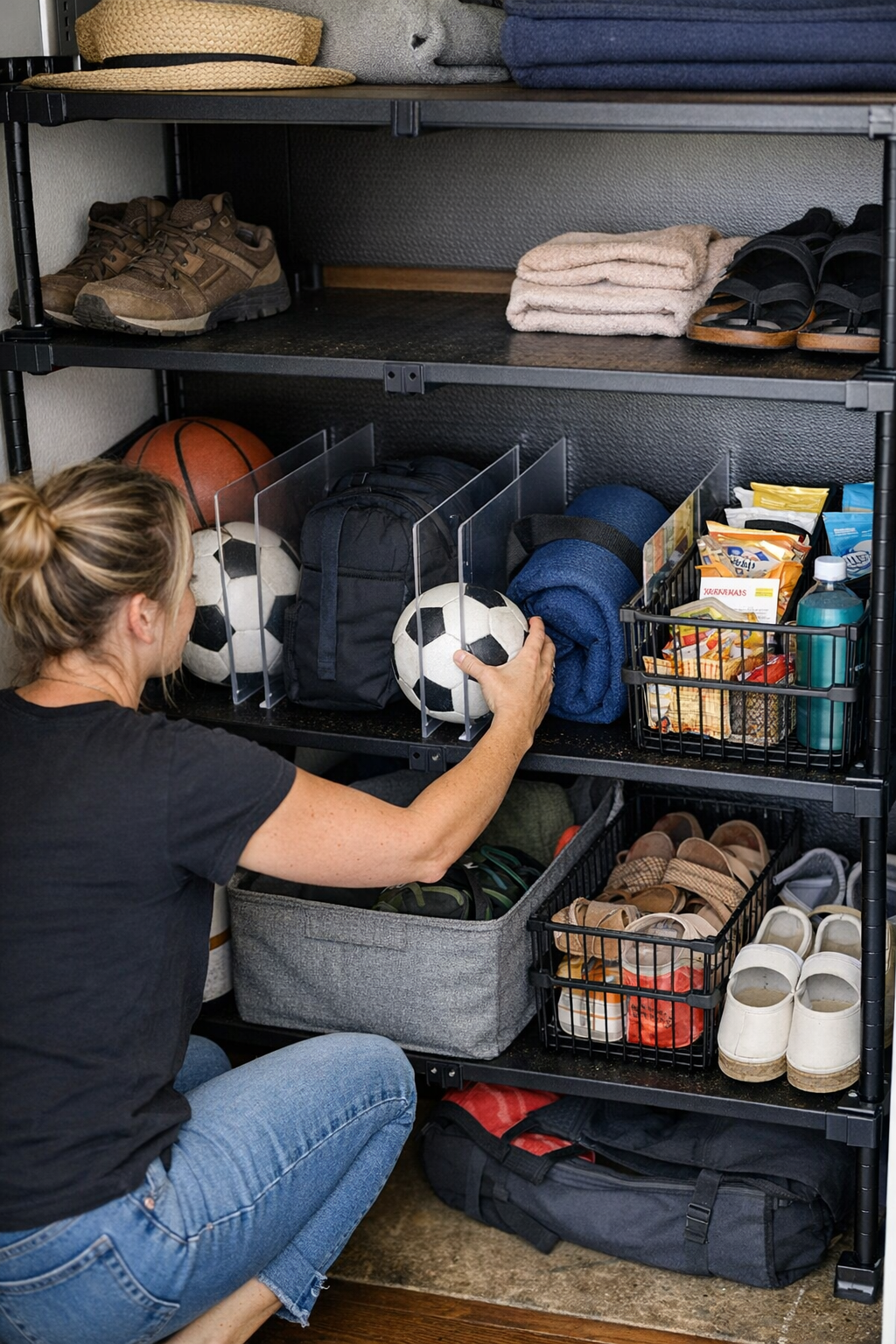
Everyday friction in action: The entryway closet. Monday, backpacks, soccer balls, and shoes each claim a shelf. By Wednesday, gym bags are blocking the shoe rack and balls have rolled into coat territory. That “grab-and-go” confidence is gone. Instead, you’re playing item-Tetris, shifting piles to free up the space you just organized two days ago—most noticeable on the mornings you’re running late, when you feel every lost second.
Chronic Friction: The Real Cost of Small Storage Mistakes
Most organization failures don’t come with a bang—they wear you down with repeated, inconvenient moments. You reach for a charger and have to plow through mixed-up cords. The snacks, once separated, are now packed tight in a single basket. Folded shirts that started crisp are now slumped and collapsing, forcing you to lift two piles just to grab the one shirt you actually wear each week. It’s the subtle cost: every hesitation, every minor shuffle is a drain you only notice when you’re already stressed.
Baskets as Black Holes and the Collapse of the Fold
Baskets are meant to gather clutter—but when you can’t see inside, they fill with random odds and ends. Eventually, gloves, slips of mail, and surplus keys clump together in a single bin. Instead of making things easier, the basket becomes a scavenger hunt. It’s no better with folded stacks: towels or T-shirts promise efficiency, but after a few uses, the stacks lurch sideways. Each grab leaves the piles less stable, until the space below becomes dead space—just an awkward layer beneath slouching linens.
Looking Tidy Isn’t the Same as Working Smoothly
The biggest letdown comes when your shelves “look” organized but don’t actually feel easy to use. Maybe you’re always digging through bins to rescue something at the bottom, or you keep nudging boxes aside to read the label behind. The sense of order is there, but each routine trip—packing lunches, grabbing gym shoes, putting away groceries—takes a little too long, and the system unravels with every rushed handoff or distracted put-back.
The Stealth Time-Suck of Manual Maintenance
What began as a quick reset becomes a weekly slog: upend the baskets, restack the leaning piles, play bouncer for items that never stay in their lane. You lose minutes here and there, but over time, the drag is real—especially when you have to move a pile just to reach a single thing, or when whole bins get dumped out because no one remembers what belongs where. The result: you’re spending more energy maintaining the system than actually benefiting from it.
Real Fixes: Storage That Keeps Up With Real Life
The best setups don’t look like magazine spreads; they work for actual routines, even the imperfect, urgent ones. If shoes keep wandering into bag territory, or folded stacks keep crumbling, it’s not a sign you’re failing at tidiness—it’s a hint your setup just needs a tactical upgrade. Sometimes a simple, well-placed divider does more than any big overhaul.
A subtle upgrade that stuck: Instead of tearing apart my entry closet, I slid a clear divider onto the shelf that suffered the worst category creep. Suddenly shoes, sports gear, and umbrellas had borders—even if someone tossed things in quickly, nothing slid into the wrong space. That five-second fix replaced my old habit of re-sorting the shelf every few days and made it actually functional. Grabbing shoes stopped feeling like defusing a pile that wanted to topple at every touch.
Practical Tweaks With Real-World Payoff
Dividers aren’t just cosmetic—they make physical boundaries you (and everyone else) can see and follow. Low, open bins prevent daily-use items from vanishing into deep containers, so you can grab and replace things quickly. Put the heavy hitters—the shoes you wear every morning, the most-used towels—in the front, not buried behind out-of-season gear. If stacks won’t cooperate, cut them down or corral them in cubbies: a smaller pile is far less likely to topple, and you won’t spend every evening tidying the same shelf.
Easy Upgrades to Reinforce Your Setup
- Draw clear boundaries: If you can’t tell what a shelf is for in two seconds, add a visible divider, a labeled basket, or even a sticky note—anything that reminds users where things go.
- Use shallower bins: Deep containers tempt you to pack more in, but they turn into junk drawers before you know it. Shallow bins keep categories honest and essentials in plain sight.
- Max out vertical—but don’t over-stack: Use the height of your closet or shelves wisely, but never pile things higher than you can easily reach. Over-stacking doesn’t create space; it creates chaos out of sight.
- Fix the failing spot first: If one area keeps going off the rails, swap in a divider or break up the contents before rethinking the whole closet. Small changes often fix stubborn trouble zones.
Organization That Actually Sticks—Even When Life Doesn’t Slow Down
Closets and storage shelves will always drift off-course as the week barrels forward. But with simple changes—a divider here, a targeted bin there—the boundaries between categories hold longer and put-backs really are quick. True organization isn’t about a flawless look; it’s about a system that can withstand real family life, surprise messes, and imperfect routines. The end result: less reshuffling, faster resets, and a reliable sense of order that greets you every time you open the door.
See solutions that make everyday storage work at ClosetWorks.