
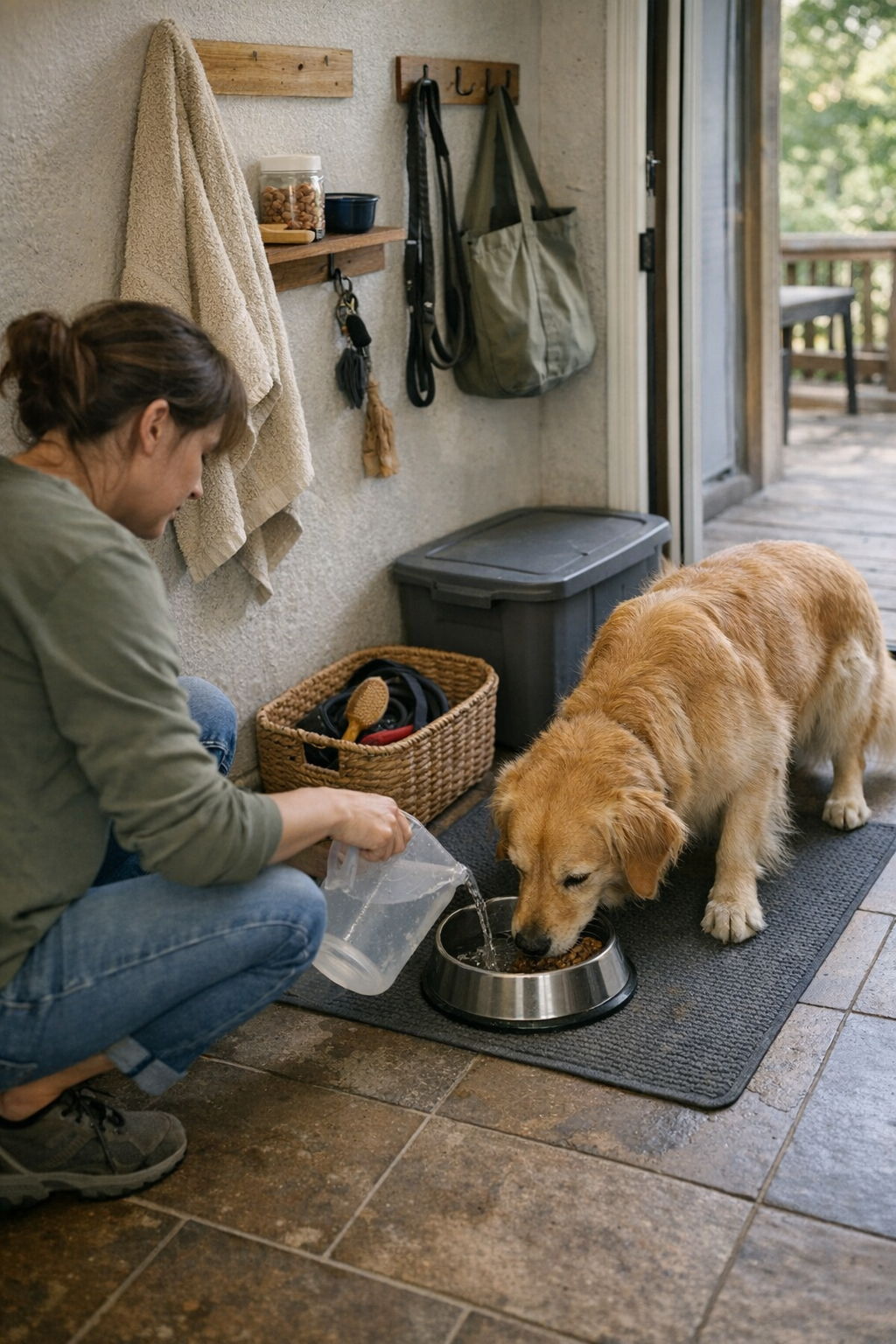
The spot where you feed your pet might look organized first thing in the morning—until the routine starts to repeat. Fast-forward past breakfast: the food bowl is empty and pushed under the cabinet, the water bowl is running low, the wipe you meant to keep nearby now sits damp in another room. Each missing item becomes another pause, another trip, another moment retracing steps instead of moving forward. What began as a “tidy setup” can unravel midweek, especially when bowls or brushes drift, bins aren’t fully closed, and cleanup tools are never in reach when the dirt actually arrives. A setup that seems ready at 8 AM is often no match for daily feeding, quick paw wipes, refills, and shared-space resets—the spots that CalmPetSupply tries to simplify.
The Hidden Friction of Daily Pet Care
In daily pet care, what slows you down usually isn’t the size of the mess—it’s the silent friction from tools that leave you hunting for basics in the middle of a routine. You come to refill water and the clean towel’s gone again, or you reach for kibble only to find the scoop missing under a bag left open the night before. Delays add up: every time you detour for a leash, reach over a landing scattered with toys, or unearth wipes from the bottom of a bin, you multiply the drag exactly when your attention is limited. Repeated care cycles expose what simple organization can’t fix—if access isn’t easy, friction keeps returning.
Real-Life Disruptions (and Why They Happen)
Picture the overlap: after a muddy walk, groceries dangling, you reach the door with your pet eager to get in. You want to wipe paws quickly, but the towel is missing—maybe in the laundry, maybe somewhere not obvious. Now, you’re left juggling muddy paws, hopping bins, and refilling a water bowl that’s lower than expected. Even as you handle one task, the next thing you need isn’t where it belongs. Over a few days, these gaps become routine stumbles: the brush goes missing again, the same bin lid isn’t shut, a quick reset turns into a back-and-forth through three rooms. These aren’t isolated annoyances—they’re frictions that slow care down whenever you can least afford the drag.
The cause isn’t missing supplies—it’s weak return points. If the towel doesn’t have a visible hook right by the bowl, it walks away. A scoop without a single home gets swallowed in clutter. “Organized” stations break down with ordinary use: bowls drift underfoot, brushes left out mean cleanup gets delayed, wipes disappear behind stacked items. Look past the initial tidy—most breakdowns begin the first time you don’t reset everything on autopilot.
Setup That Looks Orderly, But Slows You Down
After a weekend re-set, the area feels in control for a day—until you start repeating normal care. Suddenly, the scoop’s been knocked behind the bin, the mat under the bowls bunches up and catches crumbs you can’t sweep easily, the brush makes a round-trip to the living room and never returns. The result: feeding gets slower, cleanup slips behind, and you start cleaning more after care—not less. The routine that looked smooth on Sunday stalls out on Tuesday night, and “temporary” missing basics linger just long enough to slow down every step.
Patterns repeat. The bin lid’s left open overnight, so supplies disappear deeper into clutter. The “just-for-now” towel settles elsewhere and isn’t found when paws are muddy again. Small, recurring breakdowns make every round of feeding or grooming slower—and the fact that the space looked organized becomes irrelevant. Visual order that doesn’t survive repeated use is a trap: it hides the return of daily friction until you’re forced to repeat work.
Practical Adjustments for Smoother Care
Actual improvement comes from fixing placement and return—not buying more tools. Mount a towel hook directly above the water bowl so it’s never out of sight when you need it. Use a marker or edge cue on the water bowl so you spot low water before the next mess. Designate a single reachable spot by the door for wipes and brushes: basic items land there as soon as you’re back inside, not wherever you empty your hands. If storage bins aren’t easy to snap shut, clutter escapes by evening even if things were tidy at lunch.
Keep all quick-grab supplies—towel, wipes, grooming brush—within the same gesture’s reach by the main entry. If you’re moving more than a step to get basics, mess or delay follows. A habit as small as closing a bin every time matters: what’s left open returns as a nighttime hazard or a missing wipe when you need one in the morning. Zeroing in on repeated weak points makes every reset after feeding or an outdoor loop happen with less drag, not just less “visual mess.”
Defining the Pet Area and Containing Spread
Set a feeding station well out of hallway traffic and place a washable, non-slip mat underneath. That prevents early-morning spills or quick bowl shuffles from spreading food bits through the week. Keep a shelf, bin, or basket within reach—not in view of the kitchen but not hidden in another room—for scoops, packets, and brushes. Group dailies together, and create a traffic boundary for pet gear: leads, wipes, and towels by the door, not scattered on countertops. You’ll spend fewer steps backtracking and have less pet gear leaking into main living areas—so cleanup, night resets, and last-minute care become simpler and faster even when routines get busy.
Seeing the Real Difference: Appearance Versus Function
Over four or five days, you spot the shift: water and food bowls don’t walk off or run dry by accident, towels hang where you expect them, the brush shows up on command—just as you finish a walk, not half an hour later. The floor stays clearer and bins hold their contents, but the real difference is in time saved: you aren’t detouring or delaying every care step. A space that resets quickly after each round of feeding, grooming, or a late-night check-in sheds invisible friction that, left unchecked, turns pet care into a chore pile. What matters isn’t a space that stays “tidy”—it’s one that stays usable after a real day with a real pet.
In the end, the calm in daily care comes from setups that work as hard on day five as they did on day one. Small, structural fixes—clear return spots, one-grab supply zones, better bowl placement—quietly cut repeat work and make resets something you do as you go, instead of something you must fix later. The smartest improvements vanish into the routine—which is often the real signal you’ve found a setup that works.
Looking for more ideas on simple, daily pet care setups? Visit CalmPetSupply for practical tools and routines to keep your day running smooth.