
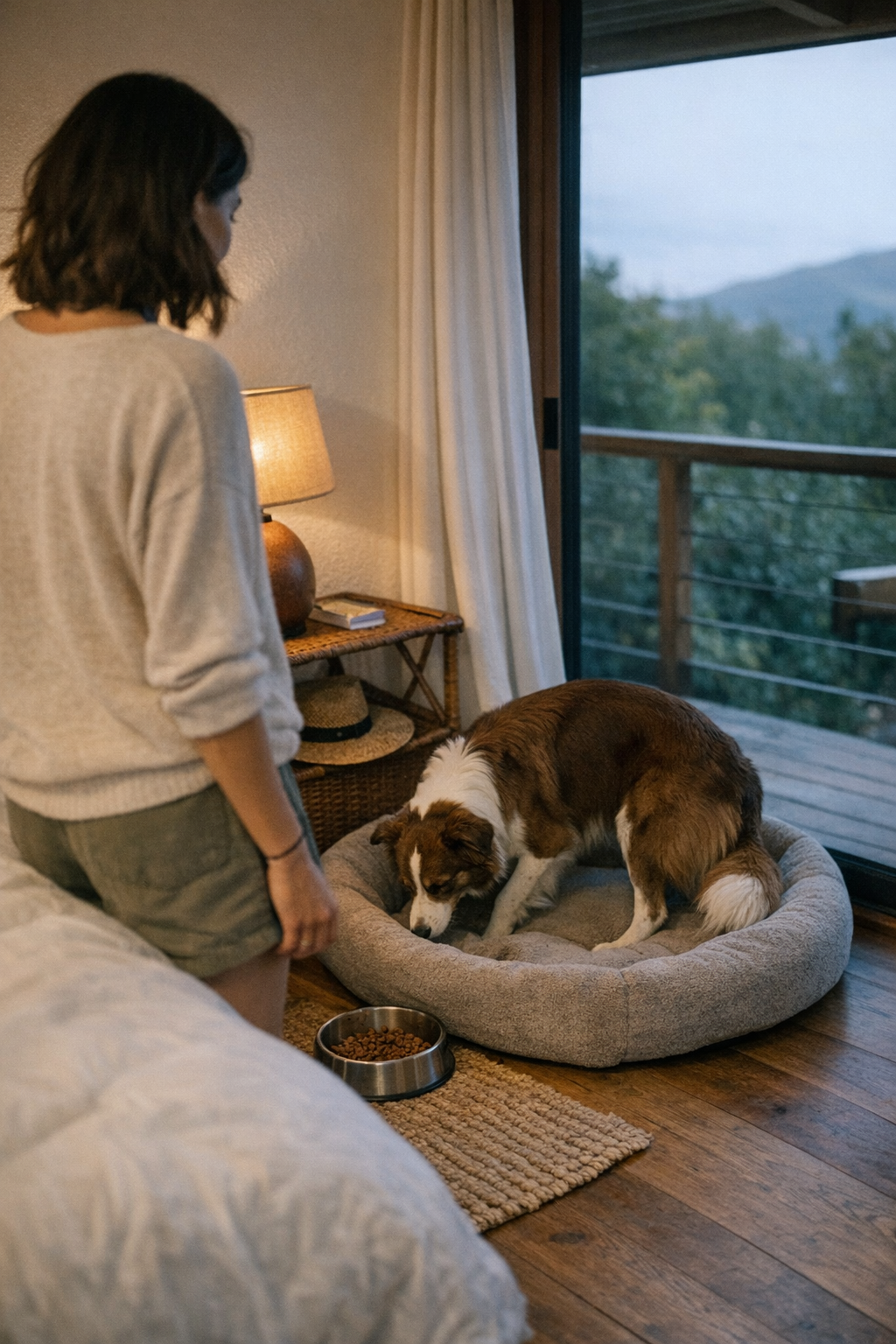
The evening routine with a dog rarely breaks down in obvious ways—it’s the small, repeated frictions that drag you off course. The leash is on its hook, the floor is clear, and yet—just after feeding or the last walk—your dog circles the food bowl again, stalls near a cluttered bed corner, or stands caught between entry and rest. Every night, these minor holdups pile up: the towel you need for paws isn’t within reach when the door opens, a plush bed blocks the shortcut to the kitchen, or the water bowl sits just where your foot lands during cleanup. Instead of winding down, you’re stuck in a cycle of half-finished resets and second-guessing what’s holding things up.
Everyday Friction Hiding in Plain Sight
Most dog owners run the same drill: feed, tidy, toss a toy aside, expect the dog to settle. But when mealtime ends and the dog hovers around the bowl, paces between spots, or hesitates near a rest corner, it’s usually not pent-up energy—it’s the setup itself quietly working against you. These patterns reveal the problem before you notice: the essentials are present, but their arrangement keeps putting friction in the path of actual comfort.
You’ll see:
- Your dog lingering at the bowl with nothing left to eat, unwilling to walk away.
- Pacing a groove between feeding and rest, never choosing one.
- Starting to settle on the bed, then popping back up to check another spot.
- Stalling in a doorway, stuck between activities—not truly resting, not busy either.
Even when the room looks tidy, persistent micro-interruptions stretch simple routines. You spend extra time resetting beds, grabbing towels too late, or shifting gear that keeps creeping into the wrong spot. None of it seems “wrong” on its own—but in combination, these small misses add up to a routine that never quite flows.
Why Restlessness Keeps Returning After Meals
If your post-meal routine is slower every night, repeated friction is likely the culprit. The moment you expect calm, you see circling, step-backs, and hesitation—not because your dog needs more training, but because the route from eating to rest is physically awkward: bowl and bed overlap, the cleanup towel hides behind a bin, or a toy pile blocks the path. These aren’t random quirks—they’re direct feedback from a setup that looks neat but breaks down under real pressure.
Food and bed crammed next to each other? You’ll see hesitation, not transition. The lack of a clear boundary between feeding, waiting, and resting zones means your dog gets mixed signals. The more these zones overlap, the longer it takes for both dog and owner to switch gears. Instead of a smooth movement from food to bed, you get double-backs, stalling, and repeated glances for cues that never come.
Small Delays, Cumulative Drag
A single pause near the bowl doesn’t ruin an evening, but stacked up night after night, these stalls stretch transitions, make bedtime drag out, and chip away at real calm. The very routines designed to bring order end up slowing things down—a cost you barely notice until you’re stuck waiting for your dog to settle, again.
How Subtle Friction Disrupts Calm for Everyone
What makes this friction hard to spot is its normal appearance. A bowl tight against a bed, or a plush rest spot barely brushing a hallway, might look organized, even efficient—until you live with it. Dog toys migrate into high-traffic spaces. The towel for dirty paws is present but not actually within reach when you need it. Beds nudged out for tidiness block your path during cleanup. Each fix creates a new, hidden snag:
- The towel’s there, but you stretch for it while pinning the door open with your knee.
- Entryways crowd with gear that looks “put away” but isn’t accessible in the rush.
- That new bed makes floor space look cozy, until it’s the reason two people have to shuffle sideways between kitchen and couch after dinner.
Looking neat isn’t the same as feeling settled. Repeated-use awkwardness signals that something “efficient” on day one is actually breaking the flow of day-to-day life.
Scene from a Real Evening: Where Routines Tangle
Picture this: walk’s over, leash hung up, dog paws wiped (the towel still damp from last time, stashed behind the shoe basket). Dinner goes down next to a fluffed-up bed, so everything’s together—too together. The dog eats, steps toward the bed, stalls, sniffs at the old towel, circles back to the bowl, then freezes half-in, half-out of rest. You wait for the sign she’s ready: instead, she hovers, you hover, the lights stay on. No crisis—just a cycle of stop, start, repeat, because the layout invites hesitation at every step.
- Meal ends; dog moves halfway to bed—then doubles back.
- Licks a bowl already empty, pauses at the towel still out of reach.
- Blocks the path just as you try to step through with groceries or mail.
- The whole evening slows—not ruined, but never smooth.
This is what a too-tight or awkwardly shared setup feels like after real use: constant low-level interruptions, with comfort zones turning into conflict zones, and nobody quite settling in.
The Hidden Weak Points: How Everyday Setups Work Against Flow
When Efficiency Backfires
Squeezing everything into one corner means less walking—on paper. In reality, dog spaces packed together blur the lines between routines. The bowl sits under the table, but now you bang your toes or spill water every time you reach for it. Bed and towel share space by the entry, so grabbing one means shifting the other, and the dog never gets a clean cue to settle. Owners and dogs alike run loops around objects meant to help, not slow, the routine.
Overlapping activity spots create confusion and hesitation for your dog, while repeated detours cost you time and patience. Nothing dramatic—just enough to chip away at calm and stretch the end of your day.
Blocked Access and Repeated Reshuffling
You might line up supplies to look tidy, but can you actually reach them when a muddy dog barrels in? If the towel is hidden behind the food bin, or toys slip out into walkways, every cleanup turns into a scramble. Resetting after walks or meals becomes a repeated shuffle—gear gets moved, then returns to block the same spot next time. Even “organized” setups end up causing slow reset and subtle frustration.
The Subtle Cost: Repeated Interruptions
Left unadjusted, these setup misfires force you to adapt in small, inefficient ways—waiting for your dog to circle three extra times or shifting your own path to avoid upending a bed. The home may look under control, but the routine underneath stays awkward, incomplete, or just slow.
Small Fix, Big Difference: Adjusting the Setup
The most powerful change is often the simplest—repositioning a bowl, moving a bed, clearing a path. No elaborate overhaul required; just realigning the essentials to match the flow you and your dog actually use. For example, moving the food bowl a stride away from the bed creates a clear separation: the dog eats, then heads straight to rest—no looping back, no stuck transitions.
This isn’t about making the room prettier or adding more gear. It’s about making routines work: bed where the dog won’t block you, towel close enough to grab before muddy paws hit the floor, toys contained so they stop spilling into your path. The right setup fades into the background—what stands out is how little you think about it after.
One Measurable Change, Immediate Payoff
Move the bowl just one dog-length away from the bed, and you’ll see instant progress. The dog finishes eating, turns, and settles with a single, no-hesitation movement. That repeated pattern—circling, backtracking, stalled hovering—disappears, replaced by a clean, single transition. The proof isn’t in a claim; it’s right there in how easily both of you switch from action to rest, night after night.
Other fixes work just as fast when matched to the real sticking points: a bed set in a quieter zone, a towel snapped to the wall near the door, or toys corralled away from high-traffic areas. When everyday friction drops, both routine and rest improve for everyone.
Recognizing Unsettled Patterns (And Undoing Them)
If your dog keeps pausing after meals, gets stuck in doorways, or retraces steps between bowl and bed, the message is clear: the routine isn’t just slow—it’s being blocked by the setup itself. These aren’t personality quirks; they’re red flags left by ordinary layout choices. Overlapping spaces mean mudd