
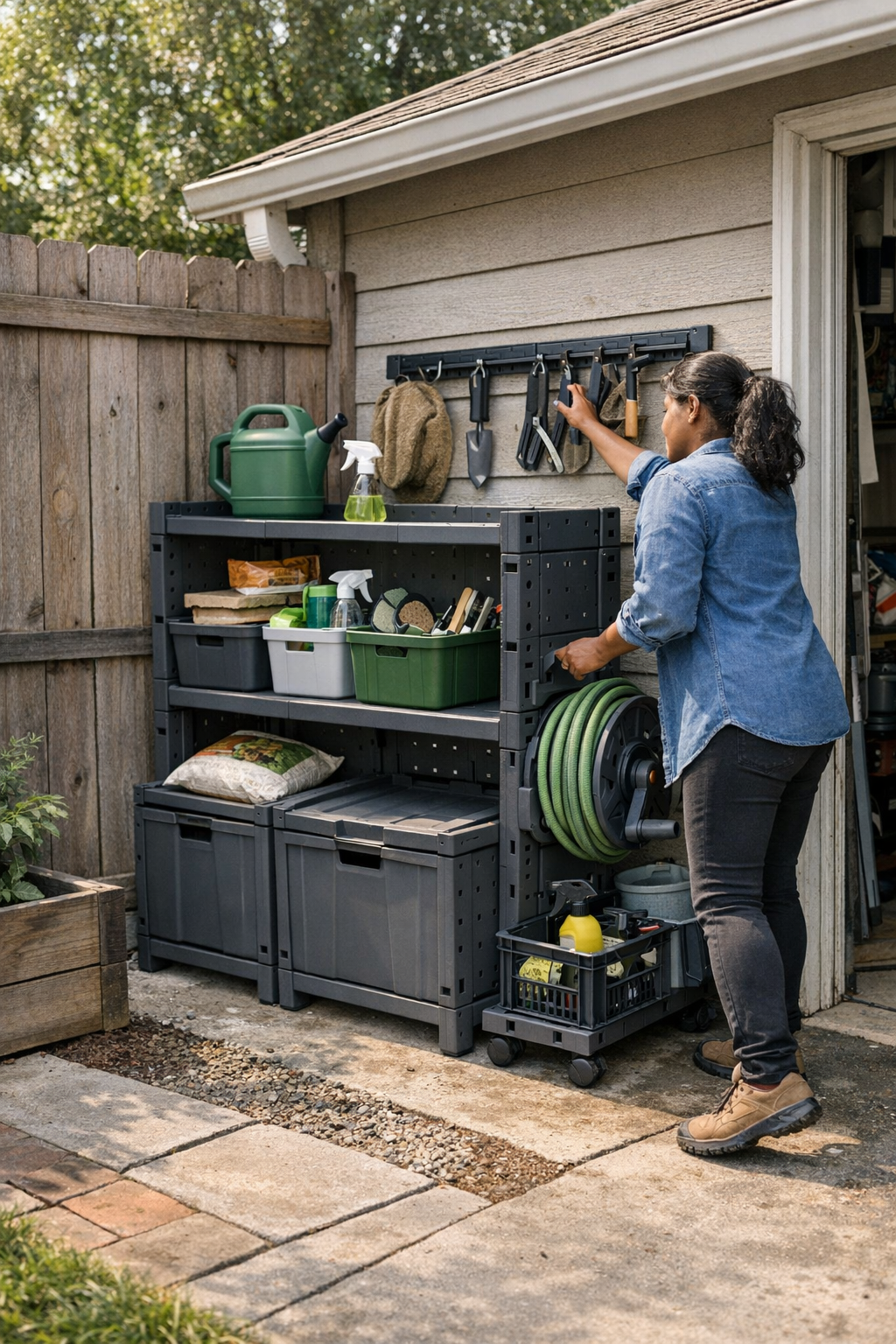
Every backyard storage setup looks polished for the first two weeks—until real routines start grinding it down. You place a bench under the window, squeeze a deck box along the fence, and swear you have it all covered. Then the rhythm of actual life hits. Suddenly, that smart setup slows you down: you wrestle a lid one-handed, muddy tools dangle off open bins, and every return trip becomes a test of how many things you can juggle or sidestep before quitting and stacking gear wherever there’s space left.
When Small Storage Decisions Cause Big Hassles
It always starts with innocent choices—a box pressed just a foot too close to the path, a toolkit wedged into a corner, a wall rack mounted slightly out of reach. Every slightly-off placement quietly adds steps to the routine. After mowing, you juggle a trimmer and have to clear a shovel just to latch the deck box. Or you wheel a bag of soil around bins that have drifted until every errand doubles back on itself. These setups don’t implode. They just keep nudging you off course, again and again.
What Looks Good Isn’t Always What Works
The easy answer is to bring in more containers, tighter bins, sleeker wall rails. The real world is less forgiving. On day one, those wall cubes line up neatly and every hook has a purpose. By week three, you’re inching around a bracket to reach a rake, or peeling a tarp back to grab clippers and finding the garden fork now blocks the path. The minute a layout gets in the way of returning something, the frustration shows up in every corner—walkways shrink, bins overflow, cleanup stretches from two minutes to ten.
A Scene You Already Know: Order Collapses in a Weekend
Say you’ve lined up four storage cubes along the garage and hung tools on the fence. Looks sharp. But rain hits, and now boots pile near the wall, bags lean across bins, and the only open path gets pinched by a box lid that refuses to close. Each step means nudging bins or stepping into mud. The next day, nobody bothers with the cubes—instead, tools land in the nearest dry spot. The system hasn’t failed loudly, but it’s already fallen apart.
Invisible Costs: Fatigue in Every Blocked Route
The real problem isn’t what you see—it’s the slowdowns you can’t ignore. That rack mounted barely out of reach makes every shovel return a pain. Floor cubes that crowd the main lane mean you’re always sidestepping or squeezing past, especially after a rainy project. Return one bulky item and you need to rearrange three others before you’re done; by the time you finish, a simple reset feels like a second job.
This kind of friction turns the whole setup heavy. Gear starts to “temporarily” pile up outside its intended home. Suddenly, the area feels smaller, less usable, and every organized zone blurs around the edges.
How Fast “It’s Good Enough” Stops Working
Things unravel quickly—one busy weekend, an extra load of tools, or guests in the yard, and storage that “almost works” stops working altogether. When returning anything takes more than a few seconds, it sits out. The overflow creeps back and you find yourself negotiating with the setup rather than moving through it.
Fixing Friction Means Lightening the Load
Most outdoor storage problems aren’t about needing more containers—they’re about needing clear movement and less crowding. Try raising a wall rack five inches, or sliding bins a half-foot off the main walkway. Instantly, that end-of-day cleanup gets smoother. No more ducking under low rakes or banging shins on poorly placed lids. You can stow muddy gear without rerouting around boxes, and the return path stops feeling like a game of Tetris.
If the daily return means guessing or shuffling gear, the root problem is lack of breathing room—not lack of storage. Even a hand’s width extra makes a difference when you’re carrying yard tools, trying not to trample new grass, or just eager to be done after a muddy job.
Repeated Use Will Expose Your Setup’s Weak Spots
Check your routine after a month: Does putting away one tool make it harder to return the next? Are you shifting bins or leaving items on the edge because reaching the main zone is now a hassle? Watch for overflow piling up where the system “almost” works—that’s your signal. The actual limitation isn’t square footage. It’s the hidden work of constant resets.
Designing for Flow, Not Just a Finished Photo
Start with the footpaths—every zone should have real elbow room, even if storage density drops. Racks belong at arm’s reach (account for gloves and boots), not as an afterthought above head height. Freestanding bins work best when offset from high-traffic paths. Split up zones so it’s obvious where the wet boots or muddy shovel should go, even after a draining day.
Don’t let awkward corners become overflow traps. If the same dead spot always ends up cluttered, rethink its use—sometimes removing a box or swapping a freestanding chest for a wall bracket is all that stops the mess from coming back.
What Makes the Difference
The best outdoor storage doesn’t just hold more—it lets you move without tripping, shifting, or stalling. Most layouts fail in the everyday reset: too much bending, too many sidesteps, too many decisions before you’re even done. If every trip out back adds a reset chore, nothing stays put for long and the “system” becomes just another place to avoid.
The setups that actually last are the ones that stay easy on the worst days as well as the best. It’s not the number of containers—it’s whether your yard can reset itself at the real pace of your life. Organize for motion, and watch the frustration finally lift.
Ready for a setup that helps instead of hinders? See what real outdoor organization can look like at TidyYard.