
Crowded lighting setups erode usable space—slowly but relentlessly. In tight work zones or shared surfaces, oversized lamps, jutting brackets, and trailing cords become more than visual noise: they’re real, daily obstacles. After a few weeks, it’s not just about how the room looks; it’s about what you have to push aside, reach around, or keep re-correcting. That lamp base that eats up half your desk, the cable that snags every time you roll your chair, the under-shelf fixture with an awkward bracket throwing shadow on the only spot you actually use—they’re not minor quirks. Each becomes a repeated interruption, carving out less comfort and less clear space than you planned for. The shine of a new fixture dulls quickly when every routine runs into one more setup drag.
The Real Price of Bulky Lighting in Daily Routines
Bulky or crowded lighting rarely feels like a problem on install day. In reality, the trouble appears as friction: moments where a lamp foot competes with your notepad, or a chunky fixture pushes your elbow off the best part of the counter. It’s the slow grind—clutter accumulating at the edges, cables slipping into view, dark lines forming wherever a bracket interrupts the throw of light. Kitchens with boxy under-cabinet fixtures often trade one shadow for another, with “solved” spaces gaining a new dead strip where the countertop matters most. Workstations seem complete until you’re forced to squat and untangle a cord cluster after your bag catches a loose plug yet again.
Every “just for now” setup steals from your routine in ways that build up: keeping one hand clear of a bracket that won’t stay tight, or shifting bills and pens away from a murky desk corner. A fixture that looked resolved still demands navigation, cleaning detours, and extra care you never intended to give it.
- Turning a lamp to chase paperwork, only to leave half the desk lurking in shadow
- Bumping a too-tall bracket on your way to get a book, elbow stinging for the third time this morning
- Vacuuming around a nest of cords, adjusting your path out of habit, never quite trusting the setup to stay put
- Re-straightening a desk light that never sits flat, interrupting your routine every single week
Slim and Low-Profile Lighting: Not Just for Looks
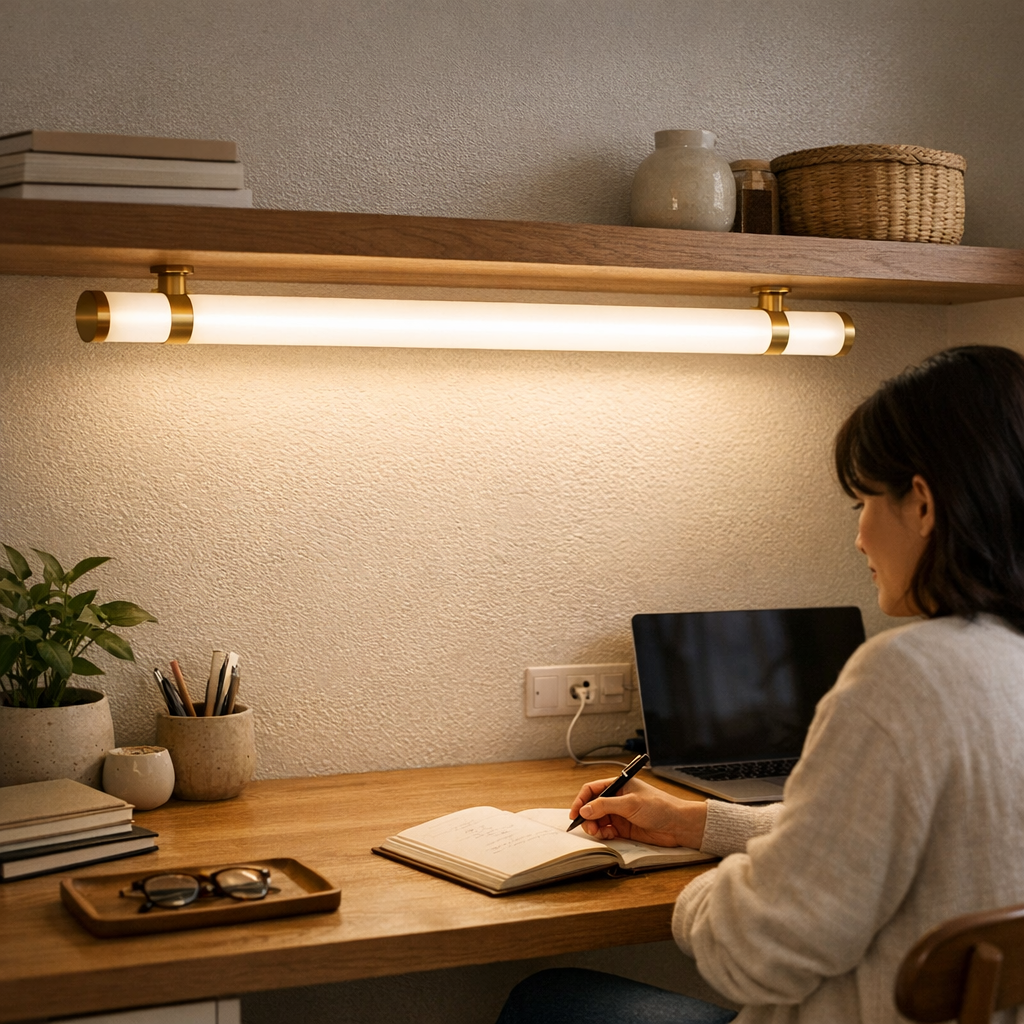
Thin, low-profile lighting changes the surface rules the moment it’s installed. Instead of sacrificing desk area or walk space to lamp feet and curling cords, flat panels and compact strips tuck tight to shelves or stretch across wall edges, opening every inch of usable zone. Cables are routed sharp and out-of-sight, mounting hardware disappears below line of sight, and the surface feels genuinely clear—nothing to sidestep, no exposed cable path to snag or clean around.
But the proof isn’t in the first day’s photo. Over weeks, the absence of friction stands out most: no glare skim across half the desk, no need to prop a book around an awkward support, no mysterious shadow right where you jot notes. Each workday, clutter remains at bay. Shelves stay practical—not just presentable. The improvement is lived, not just seen: you stop navigating around fixtures and start using your space without second thought.
Spotting Common Pitfalls in Slim Lighting Setups
No slim fixture can save a poorly supported or half-planned install. Mount a sleek LED bar too close to one edge, and you’re left with a constant patch of shadow under the opposite arm. Choose a bracket that interrupts the light run, and even the flattest fixture can cast a useless dark strip where you prep. Hardwired wall lights might banish cable clutter, but mess returns instantly if power lines are routed awkwardly or brackets wobble with every reach. Even slim plug-ins fail if a lazy cord loops across the writing area—visible, vulnerable, and always needing to be brushed aside before the work really starts.
Scenes from Real Life: Where Lighting Friction Sneaks In
The breakdown isn’t usually dramatic; it creeps in through daily use:
- Dim desk corners: Install a slim panel just a little too far to one side, and pen, note, or keyboard falls half into shadow—the zone where clarity disappears and you catch yourself shifting everything for one more inch of light.
- Cord drift: Unanchored cables snake their way back into view, curling across mousepads, knotting with laptop lines, and multiplying the mess every time you adjust position or swap a device.
- Under-cabinet dead zones: Mounting a light short of wall-to-wall—or letting brackets interrupt the run—leaves a visible dark strip along the edge, right where kitchen tasks or sorting happen most.
- Support failures: A bracket that starts solid sags with every routine shelf grab, pulling the fixture off alignment and making each day’s use less smooth and less trustworthy.
Making Slim Lighting Work: Placement and Support Matter
The real upgrade isn’t just visual—it’s practical space freed by correct placement and smart support. The best results come when fixtures span the entire usable length, not just the space between existing brackets or wherever seemed easiest to mount. Extending a slim panel to cover shelf-length or rounding a fixture around small obstacles prevents those recurring dead spots and shadow patches that sap clarity no matter how nice the room looks.
Cable management needs more than hiding: it’s about rerouting cables so they never drift or intrude. Replace loose lines with a rigid, clipped-down feed that runs flush behind shelves or out of reach, and everyday work stops bumping against unsightly slack or exposed plugs. Every inch of the work surface stays open and genuinely ready—no cord to dodge, no bracket jutting out, nothing in the way when you move, lean, or wipe down the counter.
Immediate Results, Noticeable Comfort
- Full work surface stays visible and evenly lit—instead of fighting glare, shadow, or cable clutter
- No physical distractions to dodge when cleaning or clearing space for a task
- Cords and fixture supports disappear from daily memory, tucked snugly enough to stop snagging, drifting, or reappearing in the corner of your eye
Tip: Plan for the Real Surface, Not Just the Fixture
Start by reading the actual paths you use—not only the easiest spot for a fixture, but the full stretch where light and access matter. Choose mount points that allow the fixture to cover the whole run, even if this means modding the install with extender brackets or trimming panels to fit tight edges. Route every cable with intent: power lines should drop out of the way and outside all main work and walk zones. Small touches—flush clips, tight cable channels—cut down weeks of micro-interruptions and keep cleaning simple instead of a fight against creeping mess.
Don’t Let the Details Sabotage the Solution
Lighting that “looks clean” can still sabotage your work if cabling sags, a support gives way, or a bracket puts press on the wrong spot. Loose clips, visible slack, or unstable mounts remain in your awareness, spoiling hours of use with a single repeated annoyance. The best low-profile fixture will still frustrate if mounted in haste or supported by parts that flex, fail, or just don’t suit the real-life friction of your routine.
Solid support turns thin lighting from a cosmetic fix to a routine-saving upgrade. The setups that earn their keep are the ones that feel as good on day 30 as day one—nothing to trip over, no new shadows to chase, and no fussy details clawing at your attention. A truly finished surface means less fuss, smoother movement, and open space you don’t have to think about beyond just turning on the light.