
A ceiling light in a hallway or staircase often seems fine when you first move in—bright, central, out of the way. But use that space for a few weeks, especially with kids darting back and forth, and the flaw emerges: every time a bulb burns out or dust builds up, suddenly all traffic stops while a ladder blocks the only route. One fixture turns a whole stretch of your home into a zone that’s hard to use and awkward to maintain—no matter how good it looked on day one. This isn’t just a style snag. It’s a built-in maintenance headache, right where the family most needs clear, safe movement. LightHelper’s world of ceiling and wall lighting is shaped by these daily practicalities.
When Ceiling Fixtures Collide With Daily Routines
Flush and semi-flush ceiling lights promise simplicity, but their placement—almost always dead center—creates long-term maintenance friction in heavy-use passageways. In most homes, hallway and stairwell ceiling fixtures are installed for symmetry, not for reach. The first maintenance day, you drag a stepladder into the narrow strip everyone uses. Suddenly, it’s not just your reach at risk: you’re in the way of school runs, laundry hauls, kids clutching toys, or adults carrying arms full of groceries. Every routine detours through the maintenance obstacle. One “tidy” fixture creates repeated standoffs, not improvements.
The Unseen Ladder Zone
Center a ceiling light above a walkway or stairs and you create an invisible hazard zone waiting to happen. For months, the fixture is invisible—until it isn’t. Once a bulb fades or the glass clouds with dust, the only way to fix it is to set up right in the central lane. The main path becomes half corridor, half work site. Kids hear, “Hold on! Don’t run! Wait there!” as you balance, arms overhead, your foot inches from dropped toys and rolling socks. Every ordinary pass down the hall becomes a minor crisis—one more interruption added to the week. And over time, fixes get put off, risk grows, and the ceiling shines less bright, more out-of-reach each month.
Real-World Example: The Awkward Hallway Change
Think of the typical narrow hallway—a shiny flush-mount fixture dead center. The light is even, at first. But when the bulb dies, the only repair route means ladder legs straddling laundry baskets or snack trails. Repairs turn into rushed jobs or get delayed “until the weekend.” Cleaning glass diffusers? That task drifts to the bottom of the to-do list. It’s not just annoyance; it’s an ongoing interruption—one more reason to dodge maintenance, or pause the family’s flow.
Visibility Isn’t Everything—Access Matters
Overhead fixtures deliver even, central light, but not always where clarity is needed. In tight hallways, the central beam can glare or cast bands of shadow down the wall. On stairs, a bright overhead light often leaves steps or the turning corner in semi-shadow—just where eyes and feet need confidence. When fixing the fixture means blocking the main route, brightness turns into a repeating source of stress and near-misses: chores and daily movement working against each other instead of together. Warnings multiply. Routines lose their smoothness. Lighting stops working as intended—no matter its wattage or style.
Contrast: Wall-Mounted Lights and Offset Fixtures
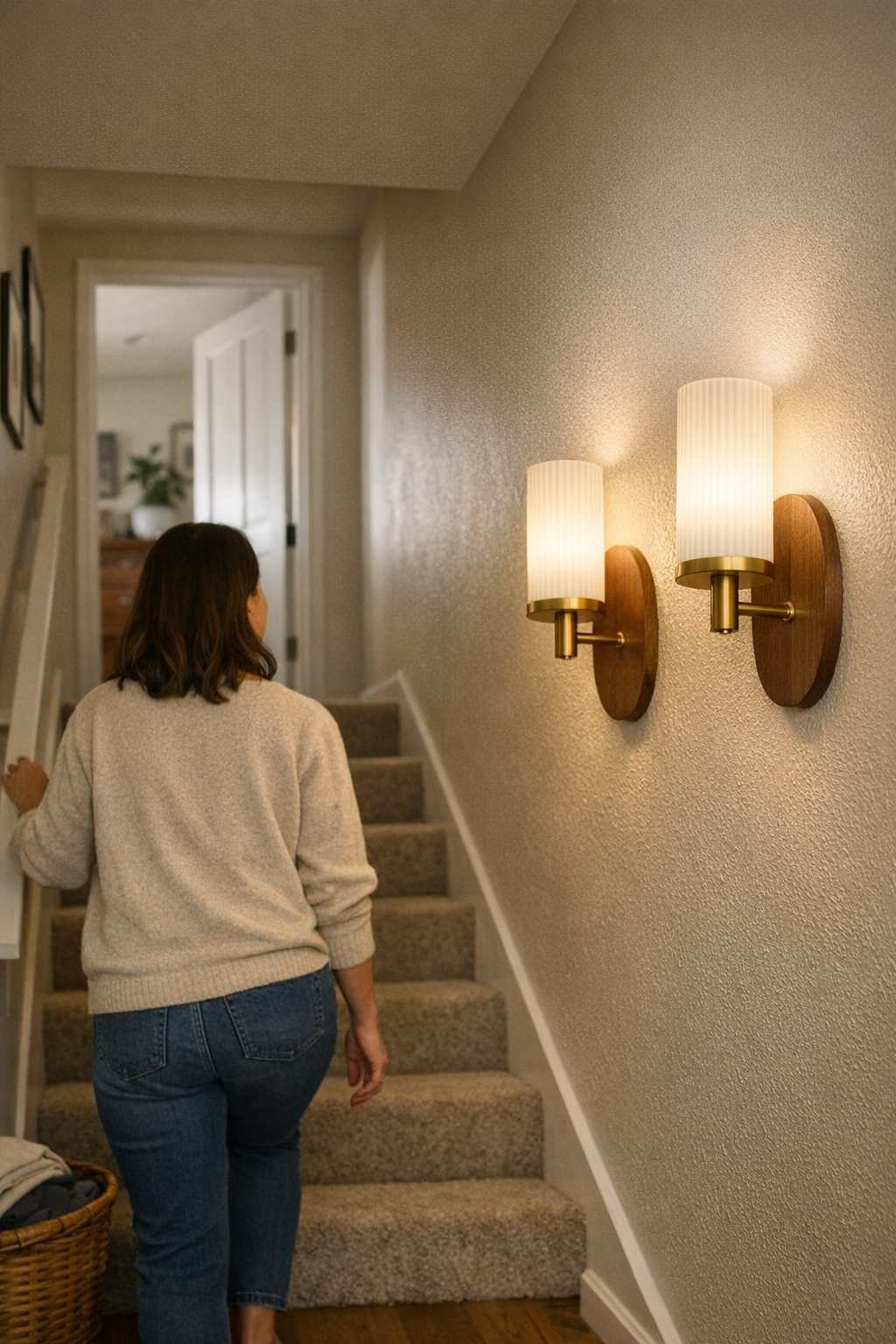
The alternative? Shift the lighting away from where people walk. Wall sconces, side-mounted fixtures, or even linear panels along a hallway edge can transform maintenance and daily use. Cleaning or changing bulbs happens from along the wall, at shoulder height, with a small step stool or sturdy chair—never in the walk zone itself. Suddenly, family traffic flows past without detour. Kids and pets scoot by. The urgency is gone: upkeep turns from a tense disruption to a background chore, barely noticed.
The Tipping Point: Maintenance Interrupts the Flow
Many homes reach the tipping point quietly—maintenance postponed once, then again. After a few months, that simple ceiling fixture above the stairs or in the hallway becomes the source of backed-up chores and low-level parental warnings. Pause at the stair turn. Check for toys underfoot. Call out to pause movement—again. The issue isn’t isolated to big jobs; it’s the steady erosion of easy routines that once worked smoothly, now thrown off course by the need to manage ladders and central fixtures again and again.
What Shifting the Setup Changes
In one stairway, swapping a flush-mount overhead with paired wall lights along the rail transformed the space. The stairs stayed bright without glare. Maintenance meant dusting or bulb changes from solid footing—no more staged balancing acts, no holding back kids at every trip up or down. The difference didn’t just look better; it felt better each week. The family moved unimpeded. No more hallway stand-offs while maintenance dragged on. The space finally matched its intended use—clear, dependable movement, routines uninterrupted, risk reduced.
Tips for Recognizing a Problem Fixture Location
Stand back and see where the ladder must go. Assess each ceiling fixture in your high-traffic corridors or stairways. If changing a bulb or cleaning means parking a ladder where people always walk—especially in kid zones—there’s a future issue brewing.
- Follow the normal movement path. If a ladder would block stairs or a landing, accidents and hassle are likely, not rare.
- Notice where shadows and glare actually fall—don’t trust general brightness. Is a hallway corner lost in shadow? Is there an eye-level glare line or bands of uneven light?
- Consider cleaning realities. Diffusers and glass shades above main routes collect dust and grime shockingly fast, especially near bathrooms or kitchens. If a stepladder is your only cleaning route, risk and avoidance both rise.
Balanced Lighting Should Keep Routines Smooth
Lighting isn’t just about avoiding darkness; it’s about removing roadblocks from everyday movement and chores. The wrong fixture, in the wrong spot, makes maintenance dangerous and disrupts daily life, multiplying the risk of shortcuts and sidestepping. Rethinking placement—using wall sconces, offset ceiling fixtures, or combining lower, easier-to-reach lights—restores both habit and safety. It’s about more than looks; it’s about lighting that serves the rush of real life instead of making it harder.
Explore more practical indoor-lighting solutions at LightHelper.