
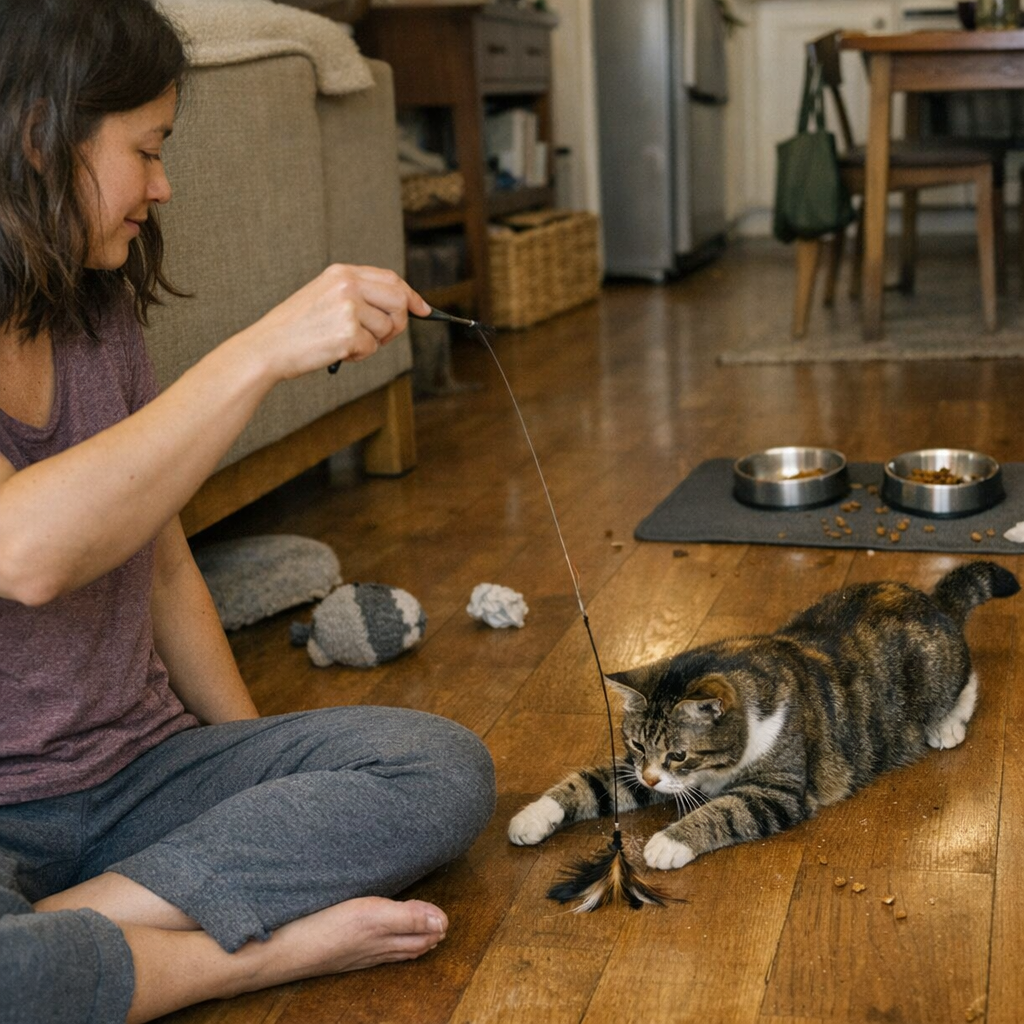
You spend five minutes setting up a perfectly tidy feeding area: bowls right where you want them, mats realigned, counters cleared for later. Then, as dinnertime closes in, that surface order begins to unravel—fast. Mats slide, bowls migrate, crumbs creep beyond the “easy clean” zone—your supposedly organized setup turns into another late-day scramble that makes cleanup feel longer, not shorter.
Why “Photo-Ready” Feeding Setups Break Down at Dinnertime
On paper, a feeding station looks low-maintenance: mats line up, bowls seem anchored, and wipes are within reach. But when the clock ticks toward evening, repeated weak points show themselves with real consequences:
- One cat noses under the bowl, pawing for leftovers and dragging crumbs right off the mat.
- Another cat nudges a bowl off course—straight into the path you just cleared for walking.
- Dry food scatters outside the once-clean lines, slipping beneath furniture or into main walkways.
- Cleanup wipes are nearby in theory, but actually reaching them means shifting a cat that plants itself in the way, or pausing to move toys piled against storage.
The friction isn’t about a mess you can see—it’s about constant micro-disruptions that keep resetting your hard work. Organized spaces that “look right” at 4 p.m. can unravel into change fatigue by 6:05. Looking neat is easy. Staying workable through the real-life rush is what breaks down.
Recognizing the Pre-Dinner “Build Up”: When Routine Turns Restless
Indoor cats sense the schedule better than any clock. About an hour before feeding, routines slip into tension points:
- Cats stake out spots near bowls—pacing, yowling, or sprawling across the mat edges.
- Group anticipation means swatting or bowl testing spreads to every cat, pushing limits inches further than yesterday.
- Bowl drift spills over into hallways, and feeding zones expand into shared space when you least have time for it.
This isn’t cute anticipation. It’s pent-up energy compacting into agitation, just as you want transition—not chaos. Especially when the feeding corner borders a living area, the “waiting hour” isn’t just noisy; it’s a structural weak point that invites repeated cleanup and crowd control.
Surface Order Isn’t Enough: The Real Reset Cost
After dinner, most owners do the same checklist: scoop for crumbs, refill bowls, rinse or wipe mats. Yet by the next meal, the same old disruptions crop up. The “organized” reset reveals its limits once cats test every gap between mats, bowl anchors, and storage grabs.
No-tip bowls and tough mats only slow down—not solve—this feedback loop. Bowls drift back into shared space, dry food trails out under couches, and a quick reset turns into another delayed circuit around the kitchen. What saps energy isn’t a single clean-up; it’s the drip of repeated corrections that break your routine all over again.
The answer isn’t more wiping. It’s changing the pressure just before it peaks.
Interrupting the Waiting Game: Why Pre-Dinner Play Resets the Cycle
Adding a play session in the 30–45 minutes before food can intercept the very friction most setups miss—no elaborate machinery or specialty gear required.
What actually happens in homes with more than one cat:
- Anticipation and energy max out long before you start prepping food.
- If you do nothing, the tension explodes: cats vocalize, crowd in, and scatter items that seemed stable hours earlier.
- Targeted play—ten minutes with a wand, a quick ball chase down the hallway, even a cardboard box routine—draws off restless energy before it wreaks havoc in the feeding area.
The change isn’t perfect order. It’s less agitation at the hot zone. After play, cats edge into feeding spaces with less urgency. Bowls move less. Mat chaos fades. Pre-dinner play doesn’t make problems vanish, but it softens the cycle so reset and cleanup stop feeling like repeat punishment.
What Actually Changes: Real Life after the Pre-Meal Play Shift
The benefits are visible and practical, not just feel-good:
- Bowls and mats stay put longer. Instead of being shoved aside by eager paws, feeding gear remains close to where you set it—meaning less last-minute straightening.
- Cleanup gets quicker. There’s less spilled food and stray kibble to track down, and fewer obstacles underfoot when you try to wipe up or refill.
- Noise and crowding drop. Protests, yowls, and mid-prep interruptions taper when cats have discharged some build-up.
- End-of-day resets feel lighter. The pressure to reorganize is lower, and routine chores shrink back into quick fixes instead of another round of problem-solving.
If you’ve ever chased food bits into the next room late at night, or left a mat crooked because you were too tired to deal with it—these small but repeatable improvements matter more than any “perfect” photo moment.
Living with Shared Spaces: Where Feeding Chaos Escalates
In open-concept homes, one displaced bowl means stray dry food ricochets into high-traffic zones, where it sticks in corners or skitters under furniture. Toys or carrier bags clog walkways you need clear for dinner—or worse, cleaning supplies are blocked behind a mound of stuff at the one moment you want fast access.
With multiple cats, this friction snowballs: one cat redirects a bowl, another blocks quick cleaning, and each movement presses feeding chaos further into shared home areas. Rushed meal prep multiplies annoyances, and any delayed cleanup expands beyond the feeding zone into places the entire family uses.
The best setups do more than contain the mess—they interrupt the cycle where feeding stress crosses over into prime living space. Tuning the pre-dinner routine, not just the layout, breaks the loop far more than lining up new containers or bins ever will.
Timing and Play Type: What Actually Helps vs. What Doesn’t
Not all play sessions are equal. Skipped or badly timed play does nothing for meal-hour friction. Random or last-minute activity barely dents that anxious, crowding energy. Instead, what matters is a window—starting 30 to 45 minutes ahead—where you redirect pent-up focus into physical play: multi-cat chases, interactive toys, or a solo box session if space is tight.
Done consistently, even one well-timed session dulls the edge of the pre-meal pressure. Feeding setup becomes less about surviving the chaos and more about resetting efficiently—especially when you still face the same tired, food-smudged mats at the end of the day. Predictable routine changes structural friction in a way no “hardware upgrade” can.
Improvements You’ll Actually Notice After a Routine Change
The payoff isn’t drama, but consistency that builds over time:
- Feeding gear crowds the walkway less; reaching a bowl for refill or reset is no longer a wrestling match.
- Cleanup supplies are where you need them—fewer contortions to reach a pack of wipes, less pausing to shoo cats out of the spot you’re about to clean.
- Mats and blankets stay lined up through most of the evening instead of bunched up by frantic pacing.
- The room feels not just less cluttered, but easier to use—comfort isn’t paid for by extra fix-up work.
- The “how is this a mess already?” feeling fades; the station fits your day, instead of forcing the day to bend around setup failures.
The real gain isn’t a perfect feeding corner, but a space that won’t undermine itself at every friction point. Owners don’t need an installation—they need a setup that can roll with repeated spills, excited cats, and daily resets without demanding more maintenance than it saves.
Feeding Success Is in the Repeat Use, Not the Snapshot
How your feeding setup handles five repeat resets—especially during the bottleneck before dinner—defines its real value. Sharpen the pre-meal routine, not just the gear, and you’ll see the difference in less scattered food, lighter cleanup, and a routine that finally keeps pace with indoor-cat life. For arrangements that hold up under actual use, explore structure-first solutions from StillWhisker’s practical collection.
http://www.stillwhisker.myshopify.com