
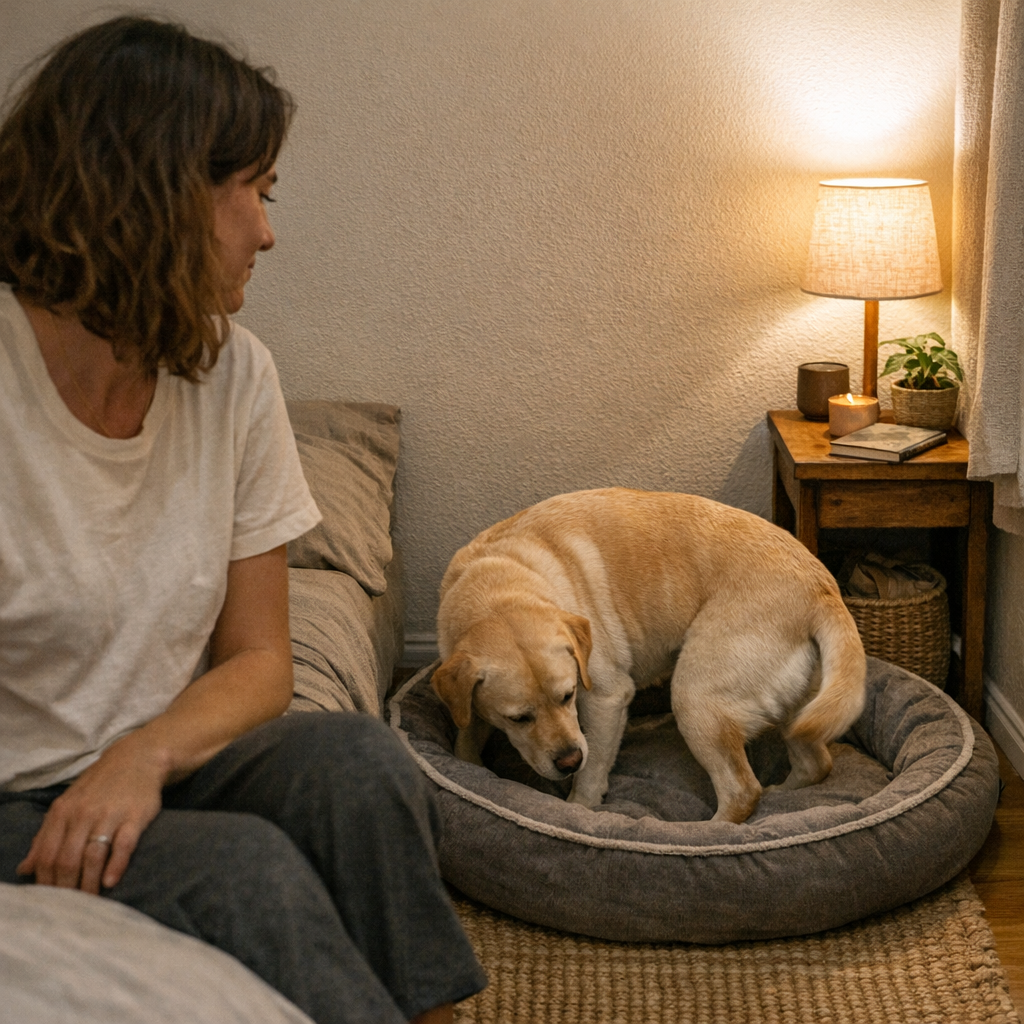
Rest doesn’t break down with drama—it fails in small, repeated ways you barely notice at first. You set up your dog’s bed in a quiet corner, thinking you’ve solved comfort for the night. Yet, every evening slips into a familiar loop: circling, nudging, a quick hop up after settling, or pushing toys aside that keep spilling in. By the fifth interrupted bedtime, it’s clear—you’re not fixing a single quirk; you’re running laps around a friction point that looks neat but never delivers real calm. The setup says “ready,” but the routine keeps snagging.
Everyday Friction: When Rest Feels Almost Right
Most owners chalk up extra spins, fidgeting, or late-night rearranging as just “dog stuff.” But the real problem appears when a harmless routine morphs into nightly inconvenience. Circling doesn’t just waste a moment—it disrupts the flow, makes you pause mid-conversation, and turns a simple goodnight into a restless process you end up managing nightly. By the time you’re weaving around your dog’s feet or tiptoeing to not trigger another bout of shuffling, the cost quietly stacks up: sleep arrives slower, both for you and your dog.
Unsettled routines aren’t isolated to the dog. Owners adapt without thinking—sidestepping paws in the dark, timing the last water check to avoid triggering more movement, or feeling the wait for quiet spill into your own wind-down. If silence feels thin and every “settle” seems temporary, friction has already moved from the background to the center of your night.
Beyond the Obvious: What Restless Patterns Really Signal
What looks like a momentary inconvenience—a fourth lap, a quick leave-and-return, or sniffing at every fold of the bed—doesn’t stay minor when it repeats. Over time, these interruptions tug at the whole house’s rhythm. Instead of drifting into rest, your dog keeps resetting: circling, scratching, reconsidering the spot. You feel it in your own routine—small, repeated starts and stops that push you out of the flow every evening.
Real-world: you’re shutting down lights, expecting your dog to settle, but the next phase is a restless pacing, a stray toy blocking a smooth flop, a water bowl placed just close enough to disrupt. The actual problem isn’t the visible mess—it’s the setup exposing a weak spot night after night. When the fourth circle blends into a new attempt to settle, you know: this is no longer a quirk, it’s an embedded friction point.
The Cost of Repeated Adjustment
Disruption is rarely dramatic. It’s a chain: the dog paces, you wait, the routine gets fragmented, and the sense of rest becomes work. Ignoring it means bedtime turns into effort—managing paw shuffles, moving supplies out of the way, steering clear of a toy pile in the middle of your path. “Letting go” stops feeling automatic and becomes something both of you have to manage repeatedly.
Invisible Triggers: The Setup Behind Restlessness
Even a bed that looks soft and perfectly placed can sabotage routine if the structure doesn’t fit lived-in flow. The real enemy is invisible: too much cross-traffic, supplies tucked just out of reach, toys infiltrating the rest zone, or space that encourages your dog to try, leave, and try again instead of settling once.
Examples from Real Evenings
- Comfort at a cost: Bed is soft but right next to the main walkway, so every pass triggers another reset.
- Storage invades comfort: Toys or blankets block smooth settling, forcing your dog to nudge items away or wait while you shuffle things mid-routine.
- Looks neat, moves slow: Organized corners that pinch the path, so getting to water at night turns into a minor obstacle course.
- Cleanup always out of place: Wipes and towels “present” but not actually reachable after a late walk, so you have to leave the dog to fetch cleanup, breaking the calm reset.
- Bed becomes a project: Your dog spends more time adjusting bedding than using it, testing every position before giving up or leaving.
Setup friction shows up as repeated experiments and aborted settling, not dramatic failure. A single smooth flop means the space is working. Persistent minor adjustments mean one constraint keeps resurfacing, even when everything looks “tidy enough.”
How Repeated Restlessness Shapes the Routine for Everyone
This restless energy isn’t just a bedtime glitch. A setup that doesn’t actually support rest bleeds into the next day: your dog brings fidget energy to every transition—waiting at the door, sitting through meals, or navigating crowded hallways. You deal with items spreading into your own path: toys creeping out, bowls blocking entrances, or crates wedged close enough that you both get stuck entering or leaving. The tension isn’t in the mess, but in repeated, low-level interruptions that make every routine less smooth than it should be.
You’ll spot the pattern: neat bed, but always one last adjustment; routine feels “fine” until you’re rushing, then suddenly you’re wrestling the same slow-down at the worst moment. “Organized” setups can still block flow, forcing you to slow down, reroute, or reset what you already thought was solved. The difference is loudest during high-traffic moments—one setup gets out of your way; the other keeps putting small hurdles back in.
Evening Interruptions, Morning Consequences
Last-minute bedtime friction isn’t just a nighttime nuisance—it lingers into the start of the next day. The more effort required to achieve calm, the more likely tomorrow morning starts with another reset. You move slower, deal with another round of awkward reach or shifting paws, and the cycle sticks. Routine gets heavier before it gets faster, and neither of you feels fully reset when the day begins.
Spotting the Pattern: Is It the Bed, the Placement, or the Flow?
Restlessness anchors itself as the “new normal” when the setup quietly works against the routine. Placement is the usual culprit—bed against a draft, pressed by a shortcut path, tucked where foot traffic and distractions keep resetting the rhythm. But just as often, it’s storage and gear gradually crowding the zone: toys drift over; cleanup supplies are theoretically nearby but never at hand; the nice-looking layout pinches real movement every busy night.
Signals your setup needs a reset:
- Dog circles and steps away right after lying down
- Leaves bed for mid-rest room checks, then restarts the process
- Hyper-alert to marginal sounds—nearby creaks or movement snap them out of almost-sleep
- Repeated “test” settling before committing, especially at busy transition spots
Notice when you’re both “managing” instead of moving smoothly. The earlier you recognize repeated minor struggles, the faster you can tweak setup and reclaim a natural routine—without the false fix of a full overhaul.
Real-World Reset: Adjust, Don’t Overhaul
The answer is usually a shift, not a shopping trip. Small moves—moving the bed out of the main path, clearing out that persistent toy drift, parking cleanup supplies where you don’t have to cross the house to reach them—are what change the lived experience night after night.
Example: A Small Move, a Big Shift
One evening, the difference came from something simple: the bed shifted out of the hallway and pressed against a side wall. Suddenly, the circling ritual shrank to one loop, and late-night fetches for water or a towel stopped breaking the routine. With the bed out of the traffic zone, both dog and owner could settle. What read as background “quirks” vanished—bedtime became a finish line, not another lap around an organized, underperforming setup.
The next morning, the payoff wasn’t just a neater corner—it was an easier wake-up, clearer routine, and less friction lingering from the night before. The win wasn’t a gadget or new product. It was a real reset—less background noise, fewer stops, more genuine rest gained back.
Small Tweaks That Make a Difference
- Move the bed out of main walking zones for uninterrupted settling
- Remove toy and gear clutter from the edge of the rest area
- Choose a spot where your dog can monitor the room but not the main entrance or high-distraction areas
- Keep cleanup towels or wipes within arm’s reach instead of just being “in the room”
- Stick with familiar bedding textures and avoid over-complicating the setup with optional extras
The most reliable gains come from these minimal, targeted resets. Every tweak isn’t about chasing perfection—it’s about removing the same old friction, so rest returns as something both of you can trust nightly, not just occasionally.
See how DogPile setups can help reinforce