
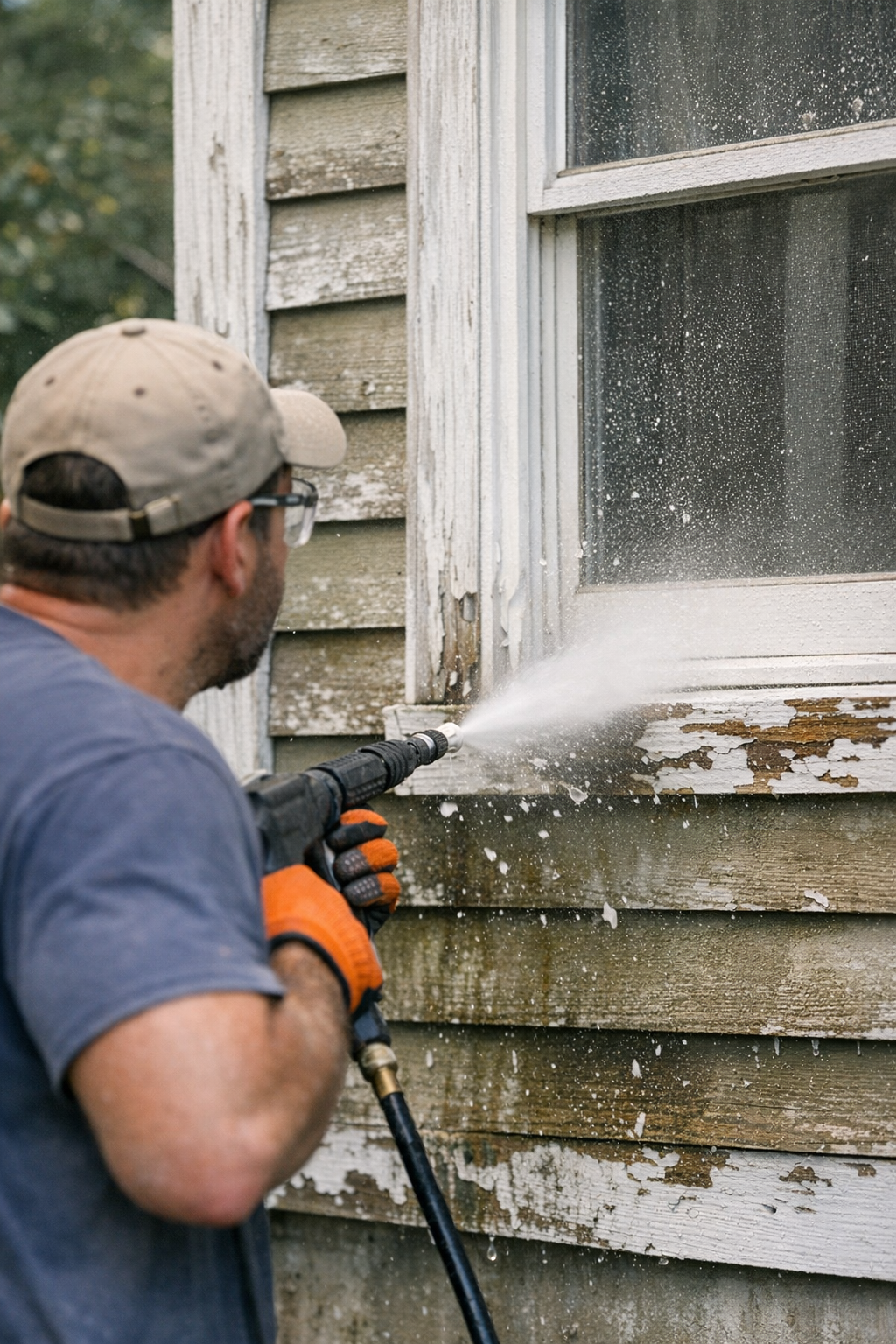
The warning signs rarely announce themselves until it’s too late: a waver in the spray pattern, the sudden buzz of vibration in your hand, the pitch of water shifting as it hits paint instead of siding. One careless pass with a pressure washer can turn a satisfying cleanup day into a fresh problem—scratched finishes, sodden wood, and headaches that you won’t spot until the next job, or the next rainstorm.
Pressure Washing: Where Routine Maintenance Goes Off the Rails
Pulled from the corner of the shop, a pressure washer offers that elusive promise—make the battered work site look new, without hours of scrubbing. But beneath that raw speed is a choice: every squeeze of the trigger is a split-second decision about how much you’re risking the surfaces you meant to protect. The urge to move fast, to cut through that grime and dust, is real. So is the creeping regret when you realize a dirty deck has become a fuzzed-out patchwork, or trim is left with missing flecks of paint you swear were solid an hour ago.
The fallout rarely appears as spray hits siding or rail. Instead, it sneaks up a day or week later—streaks across wood grain, warped boards, water ghosting underneath siding panels. There’s no dramatic blowout. There’s just that moment, standing with a sander or a caulk tube, wishing you’d run a different tip or eased off the trigger a few minutes sooner.
Why Tool and Surface Mismatch Always Finds You
Most pressure washers and their kits look near identical on the hardware aisle—plastic cases, curly hoses, nozzles impossible to keep sorted. That sameness hides crucial differences. Maybe you’re running a cleanup after a day of cutting new bench timbers, flying through dust and chips. The sprayer glides smooth across PVC or composite: quick, controlled, no resistance in the grip. But wheel around to a weathered back shed—the one with the paint already thinning from last winter—and suddenly that smoothness turns into a grating feedback through your wrist, spray marks blooming in the spots you can’t unsee.
The minute you pair a wrong tip or push the PSI too high, you’re no longer cleaning—you’re creating your next repair list. Fine fibers lift off old planks, paint edges curl, and anywhere the spray lingers at the wrong angle, you’re one pass away from patches you’ll need to resand and coat. Most jobs don’t show the issue while you’re still working. The real cost lands later, in uneven textures, peeling surfaces, and wasted materials.
On the Clock: A Scene from the Jobsite
It’s the start of the season. Tools are scattered everywhere—plunge saws cooling off, a stack of drill batteries still charging, and you just wrapped up a run with the pressure washer on a grimy slab. It should be a quick reset: blast mildew off lower siding, touch up the window trim, sweep pollen off upper sills. But you don’t re-check the tip—still set up for concrete grit—and you go at soft paint and old wood at full tilt.
The first loop feels efficient. The second? Paint flecks swirl in the runoff, the smooth grip buzzes oddly in your hand, and now you see you’ve overdone it. The real sting comes hours later, when dried streaks pop out or the surface fuzzes where you lingered too long. Now, instead of a finished job, you’re prepping boards for sanding and awkward touch-ups you didn’t budget for.
Adapt or Repeat: Lessons in Tool Adjustment
Too many callbacks and minor disasters—grain razed, smooth siding left pitted, edges of trim feathered out—finally pushed a change. I ditched the turbo nozzle and started every wood or painted job with a 40-degree tip and low pressure. The immediate effect? The sprayer ran smooth, no feedback jolting through the handle, and the water rolled off evenly instead of eating into the finish.
There’s no wizardry here. When the job meant washing close to vents or gaps, I widened the spray and doubled my distance. It wasn’t just about surface protection—it also meant less debris flung in the shop, fewer mystery drips behind trim, and, crucially, no surprise moisture showing up under window casings later that week. Cleanup sped up. The cycle of resanding, painting, and fixing faded. Surfaces actually lasted, so I wasn’t running the sander or paint tray every season just to hide last year’s mistakes.
Three Classic Pressure Washer Mistakes That Haunt Real Projects
Trusting the Default Setup
If you’re always using whatever tip or pressure setting the tool had last—especially in the scramble to knock out tasks—you’re asking for micro-damage. Even a half-step too much turns a maintenance wash into a subtle destroyer, roughening wood, piping water precisely where it shouldn’t go, and erasing finish in ways that don’t show up until you’re back on the ladder for repairs.
Bigger Isn’t Better: Overpowering Sensitive Surfaces
That urge to blitz through soft pine, trim, or painted wood with a tight jet? It feels effective until you catch yourself gently sanding out scars or hauling out tubs of filler for all the spots you “cleaned” a bit too hard. If you’re repainting after every wash, your setup is all wrong.
Spraying Blind around Edges and Gaps
Too much confidence near seams, vents, or window edges with the narrow spray? That’s an invitation for inside leaks, trapped grit, and late-season mold. Experience means noticing how water pools, how edges feel under spray, and stepping back—literally—when those clues add up.
Quick Shifts That Pay Off Down the Line
- Begin with the widest spray angle and only narrow if absolutely necessary. Wider coverage means less risk of instant damage.
- Lower the PSI until surfaces show zero color shift, fiber rise, or roughness. If the spray “sounds” different on contact, you’re too aggressive.
- Double your standoff distance near joints and openings. It’s a small slowdown for you, but caps off a parade of future repairs and pristine pawprints from debris that never gets a chance to scatter.
The Feel and Feedback: Knowing When to Change Course
Don’t just watch—listen and feel. If the grip vibrates oddly, if runoff leaves standing pools rather than sheets clean, or if the spray’s tone roughens mid-pass, those are all red lights. If you’re routinely sanding the same boards after each wash, that’s the tool talking back: you’re wasting time and creating work you don’t bill for.
Skilled users don’t wait for disaster. Mid-job, they tweak the angle, switch the tip, step back. Those quick pivots aren’t interruptions—they’re basic shop sense, and they’re what make efficient work actually last.
Keep the Cleanup off Your Punch List
Pressure washing should end work, not create it. Use a 25- to 40-degree tip for wood and painted surfaces; reserve the pinpoint jets for the spots that truly demand it—bare concrete, brick, or caked-on trouble. If a section feels off, stop. Change the setup before fixing another mess.
Every time you reach for the pressure washer, you’re deciding what gets cleaned—and what’s going back on the fix-it list. Make the right tweak, and the finish you want is the finish you get, not just until the next rain, but all season.