
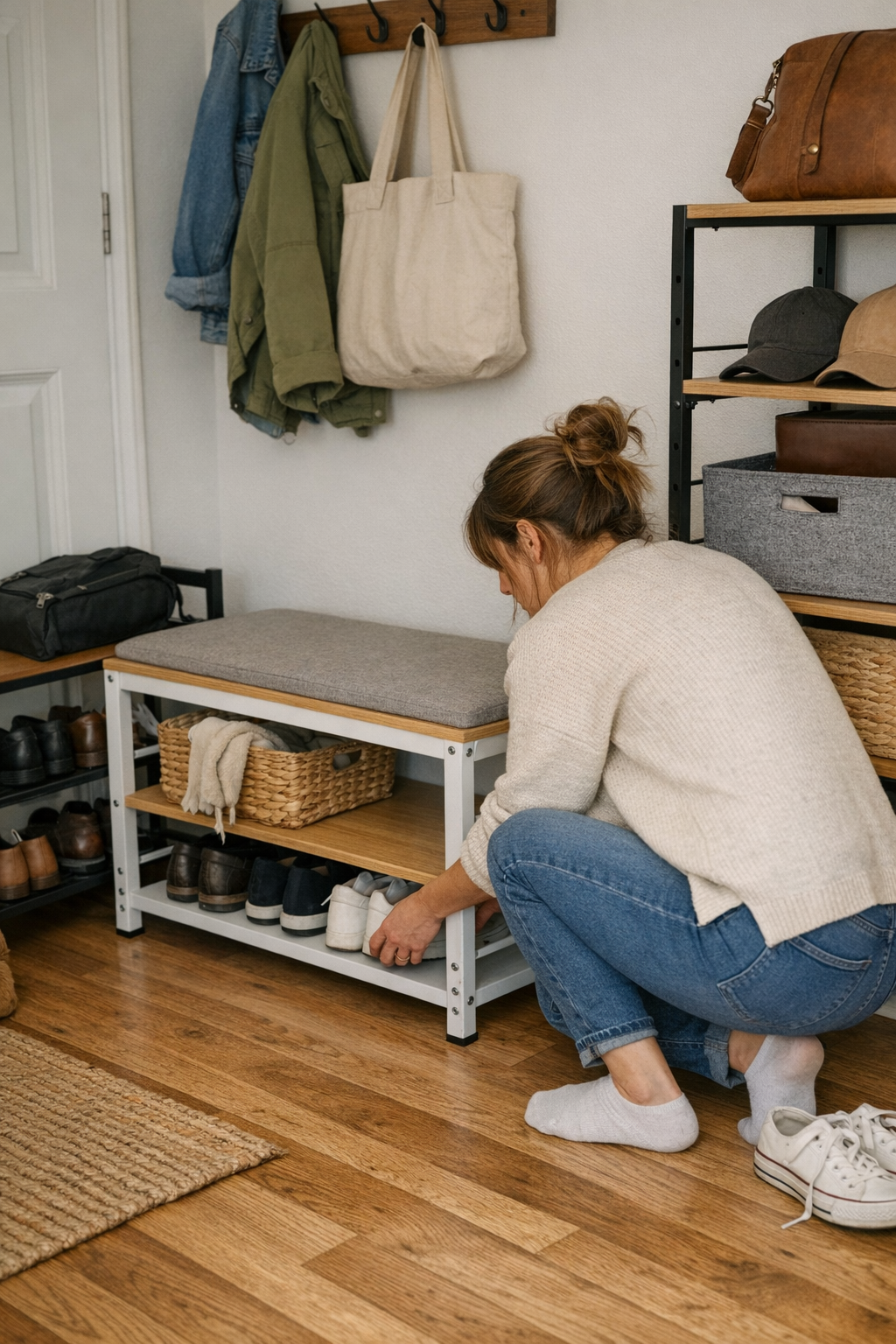
Thresholds expose the truth fast: That first week with a new bench or shoe rack, the entryway holds its promise—bags find their corner, shoes line up, nothing blocks the path. But real use breaks the illusion almost instantly. Within days, scuffs bloom where everyone pivots, shoes breach their lineup, and the edge of the setup turns into an overflow trap. One hurry into the house, one muddy drop, and the “clean edge” already starts eroding. The reality of moving through a transition zone—bag drops, shoe kicks, rushed resets—shows up right where every piece meets the floor. If the setup falters here, frustration multiplies fast.
Invisible Scuffs in Plain Sight: Where Standard Feet Fail
In a busy entry, nothing stays where it started. Benches shift to clear the path, racks get nudged by careless elbows or arms full of groceries. If these pieces rest on basic plastic or bare wood feet, every shift leaves its mark—fine scratches deepen along the traffic path, small scuffs turn into hazy streaks, and sooner than you expect, the floor’s toughest zone looks the weakest. The “just sweep it clean” approach fails when scrapes don’t disappear and that low dull haze creeps across the entryway, signaling the hidden cost of ordinary feet. By the time it’s obvious, your reset routine already takes twice as long, just to line things up again and keep the scraped zone under control.
Non-Marking Glides: Changing Daily Movement, Not Just Floor Wear
Non-marking glides—pads of soft rubber or pressure-absorbing felt—replace scraping with sliding. Instead of the jarring sound and grit-grinding of hard feet, you get a quieter shift: the whole bench can move for cleaning or a quick realignment without gouging the finish. The difference is immediate—push a bench on non-marking glides, and it glides in near silence, needing barely a tug. On hard feet, you brace and drag, leaving a visible trail every week.
This upgrade is a necessity in the setups where:
- Entry benches double as quick-change spots and get shifted nearly every day—sometimes hour by hour.
- Slim racks get backed into by bulky bags that push them progressively off-center, especially in narrow halls.
- Movement is constant and space tight, so every misplaced edge starts a ripple effect—delays, more crowding, a shoe pile bleeding into walkway space.
Living the Reset: Where Improvements Meet Drift
Smoother movement feels like relief—until you risk new problems. A setup that glides makes daily resets easier: bump the bench straight, correct a shoe row, restore a clear path in seconds. But the friction drops for clutter, too. After a dozen comings and goings, a bench that moves easily will slide out of alignment without anyone noticing. Shoe racks set up for fast realignment drift into the main walkway, especially as items stack unevenly or bags hook and pull. What started as a streamlined setup gets subtly messier by midweek—not in a dramatic fail, but in small, accumulating misalignments that slow every re-entry.
From “Looks Tidy” to “Actually Works by Wednesday”
The difference isn’t just about appearance. By midweek, original order gives way to daily drift: shoes sprawl beyond the rack, the bench edge collects clutter, and a few inches of migration at a time turns a clear way in into an obstacle course. Even if wall hooks help, floor-level storage still shifts—even a few inches off means the return flow blocks up, and the next person squeezing through bumps things further off track. Awkward angles, blocked closets, and the need to shuffle the setup just to close the door become routine by Thursday, not occasional headaches.
The Real Entryway: Pinch Points and Pressure Under Repeated Use
Smooth glide pads aren’t magic. They absorb the sharpest damage, but the entry stays a pressure zone: bags slam down, sneakers kick grit under corners, and too many things try to share too little walkway. Hard feet catch on every stray pebble—scraping the floor and halting resets mid-move. Glides let you slide a bench with much less resistance, clearing space for a guest or mopping up a wet track line. But in a setting where every sidestep matters, even the best pads require vigilance: drift adds up, and the thin line between open access and a blocked entry can vanish in two days of high-traffic sliding.
Unaddressed, this soft misalignment builds up: the bench now blocks storage behind the door, the shoe rack tips toward the walking path, and clutter reclaims what you fought to organize. Friction drops—but so does your margin for error.
Real-World Installation: When the Details Decide What Actually Lasts
Swapping standard feet for slim, 3mm-thick rubber glides, the first change is immediate—no more grinding marks, no rut buildup, and resets snap back to a one-handed push. Post-bag-drop, the bench moves without fuss, then straightens for the next rush without damaging the floor. Resetting after a sweeping or mop is now a gentle slide, not a wrestle that exposes fresh scratches or worn seams.
But it matters what you’re installing: wire racks may not give enough grip for stick-on glides, and thin pads collapse under heavier cabinets—fast losing their protection and inviting embedded grit to do worse. The “right” solution adjusts to both foot shape and zone intensity:
- Tip: Always size glides for the actual foot and load—expect to swap them out every 12 to 24 months if your entry is in daily rotation.
- Tip: Notice furniture drift week to week: if items keep wandering, try wider or textured pads to curb the slide, especially on slick tile or glossy hardwood.
Frequently Asked: Getting Entryway Storage to Behave
Will non-marking glides fit everything?
Most solid benches, low cabinets, and straight-leg racks can take glides easily—but narrow metal or wire legs may not hold adhesives reliably and could need a specialty solution.
How long before glides wear out in real-world entryways?
In high-shuffle zones, glides compress and gather grit fast. Inspect and clean at every deep reset; plan to switch them every year or two to keep the non-marking effect intact.
Too much sliding—is it possible?
If your storage is drifting out of position every few days, widen your pads, pick textured options, or tweak the floor plan so persistent pressure (like bag drops or shoe piles) isn’t always hitting the same edge.
Everyday Adjustment, Not Entryway Perfection
The switch to non-marking glides doesn’t erase the daily reset—wayward benches will still need nudging, compressed pads need checking, and busy weeks will test any routine. What changes is the cost of resetting—less friction, less damage, a recoverable shape even after a wild, muddy Monday. Instead of fighting with a deteriorating threshold, you get an entry that better endures the real churn of daily life. For threshold storage solutions that outlast quick-fix order and survive real movement, Betweenry keeps options practical and honest—letting your entryway recover faster from whatever the week brings.
See practical solutions for entryway storage and transition zones at Betweenry.