
When crowded wiring hides inside your ceiling light or wall sconce, failures don’t show on day one—they appear when you need dependable, clear light and get flicker, delay, or a warm fixture base instead. In a bathroom, the mirror glow you count on for shaving or makeup starts to flutter the week you’re running late. The hallway fixture snaps on half a second late as you rush past, but you notice it every single time. At first, all looks normal: the switch works, the surface is smooth, and the fixture sits flush. But hidden tight bends and forced wiring inside the box mean stress builds with each switch, each bulb change, and each stretch of damp weather. It’s not obvious clutter—it’s strain you only see when routine moments start snagging on unreliable light. Real indoor lighting issues are about what you don’t see compounding until the room becomes harder to use, even when the setup “looks finished.”
The Trouble Starts Where You Don’t See It
Pushing wires to fit a fixture box to get the cover on—especially in flush mounts or compact bathroom lights—seems harmless, but compressed wiring turns daily use into slow sabotage. That packed box under your hallway or stair landing light? Every switch and surge sends minuscule stress through bent wires and jammed connectors. In the places you rely on most, like above the mirror or along a narrow corridor, that shortcut begins to show up as flickers, as delayed starts, or as a fixture base that’s warmer than you ever expected. The “out of sight, out of mind” approach becomes a recurring interruption—right when you need safe, stable light for movement, grooming, or finding your footing at a stair turn. Each use quietly worsens a flaw hidden by what seemed like a tidy install.
Where It Shows Up Fastest: The Hardworking Corners
Crowded wiring gives itself away in rooms where lights cycle constantly: laundry counter, bathroom vanity, or that kitchen hallway where every person flips the switch dozens of times a day. These are friction points—not for show, but for practical movement. Dim dips and untrustworthy startup creep in fast, often signaled by a faint buzz, a shadow clinging to the far side of the work surface, or a light that takes just that one beat longer to blink on. In wet areas or busy utility spaces, you start noticing warmth under your palm when swapping a bulb or, worse, feel forced to pause mid-task just to get light to cooperate. It rarely begins with dramatic failure—it’s a slow bruise, felt in routines.
Appearance Can Be Deceiving: Finished Look vs. Function
Flush mount ceiling lights and wall sconces earn their spot by staying out of view—edges crisp, covers smooth, everything tucked away. But burying a crowded box under a flawless lid turns “looks done” into a trap. That surface-level beauty hides an internal mess: excessive wire, forced wire nuts, and connections under stress every time moisture, dust, or normal movement settles in. You’ll notice it not on install day, but months later—when a steamy shower provokes flicker from the vanity, or a muggy day triggers buzzing inside your utility-room ceiling light. The fixture still looks pristine, but small breakdowns accumulate underneath, from breaker trips to delayed warm-up, all tracing back to hidden crowding slowly degrading performance where you want it tightest and safest.
The practical cost? The room that seemed “bright enough” suddenly betrays you with spreading shadows across the counter, or a flicker in a hallway that unsettles your movement after dark. The gap between visual completion and true reliability grows with every shortcut in the box.
Everyday Scenes: The Routine Reveals the Flaw
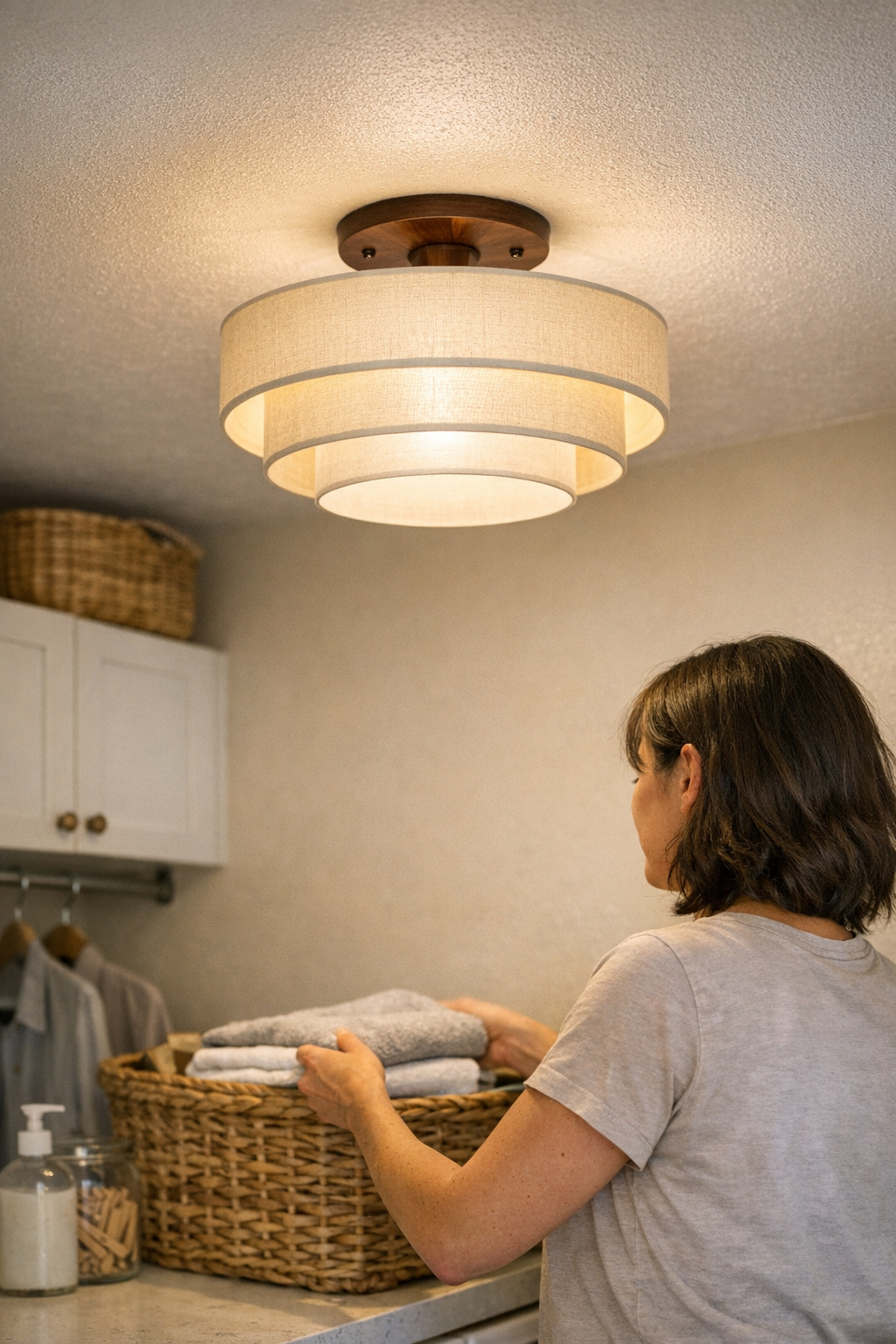
Picture a compact laundry room with a low ceiling: the fixture appears fine, tucked close above the folding zone, but a shortcut—cramped box, wires pressed hard for the cover to fit—shows up only after weeks of cycling the light through busy afternoons. The problem announces itself with a sharp click or flicker the instant humidity and repeated use combine. A subtle shadow “sticks” across the basket or counter edge, breaking your flow while sorting clothes. Similar quirks emerge in any high-touch area when wiring is tight: the light falters, routine movement stalls, and the room demands attention for all the wrong reasons. Flawless appearances wear thin when daily habits depend on problem-free, shadow-taming light.
The Simple Shift That Makes Lighting Invisible Again
The difference often comes from a single practical change. Upgrading a compressed junction box—even by just an inch in depth—gives every wire the slack to lie flat, untwisted, and clear of accidental contact. That one adjustment turns a moody fixture into a steady, cool performer, ending the chorus of flickers, buzz, and warmth. In the revived laundry setup, pale shadows vanished from the back counter, and the light ceased grabbing attention every time the switch flipped. The upgrade was invisible in appearance, but obvious in use: lighting faded into the background, routines restored to easy, uninterrupted flow.
Spotting the Hidden Signals
If you notice heat at the fixture base, persistent flickering, buzzes, or a light that hesitates after months of smooth use, look first for tight, crowded wiring inside the box. These signals point to trouble compacted with every forced fit—a risk that rises from nuisance into real hazard if left ignored. Even a perfect visual finish can hide slow wiring damage. Should random breaker trips or redundant troubleshooting start to define your lighting experience, opening up the box to check for stress points is a practical fix worth making before more costly issues surface.
The Low-Key Investment in Everyday Reliability
In practical zones—stair landings, vanity counters, under-cabinet work spots—the price of getting wiring right is paid invisibly in frictionless routines. You want to lean at the mirror without chasing shadows, cross a stair turn without the risk of late-onset darkness, and flip a hallway light knowing it’ll simply work. None of this is possible when boxes are crammed and wires knotted behind the finish. Space inside the box means connectors relax, heat dissipates, and the fixture’s “invisibility” returns with each reliable switch. The result isn’t just safety—it’s silent, stress-free movement, week after week, across every threshold and workspace where light quietly makes life work.
A Practical Tip: Don’t Force the Fit
When installing or updating a fixture, do not force wires into a box that resists the fit. Before fastening the cover, check that every connection sits loose—nothing pressed tight against metal or another wire. Use right-sized wire nuts, lay out connections flat within the available space, and, if the box runs out of room, upgrade to a deeper or larger option once. It’s a one-time adjustment that removes daily irritations and turns lighting from a source of tension into a background strength you no longer worry about.
Lighting That Works as Hard as Your Routines
No matter the space—a utility hallway, stairwell, or tucked-away work counter—wiring choices behind the surface decide whether your routines stay smooth or constantly trip over flickers, shadows, and small failures. A well-sized box keeps the fixture from turning the easy part of your day into a troubleshooting session. It doesn’t just protect during install—it pays off every time you pass through the zone, lean closer at the mirror, or count on reliable, steady light. The fixtures you choose, and the way you install them, transform from a sequence of minor irritations to an invisible part of making indoor space safe, usable, and comfortable, every single time.
Visit LightHelper for practical lighting that works where you do