
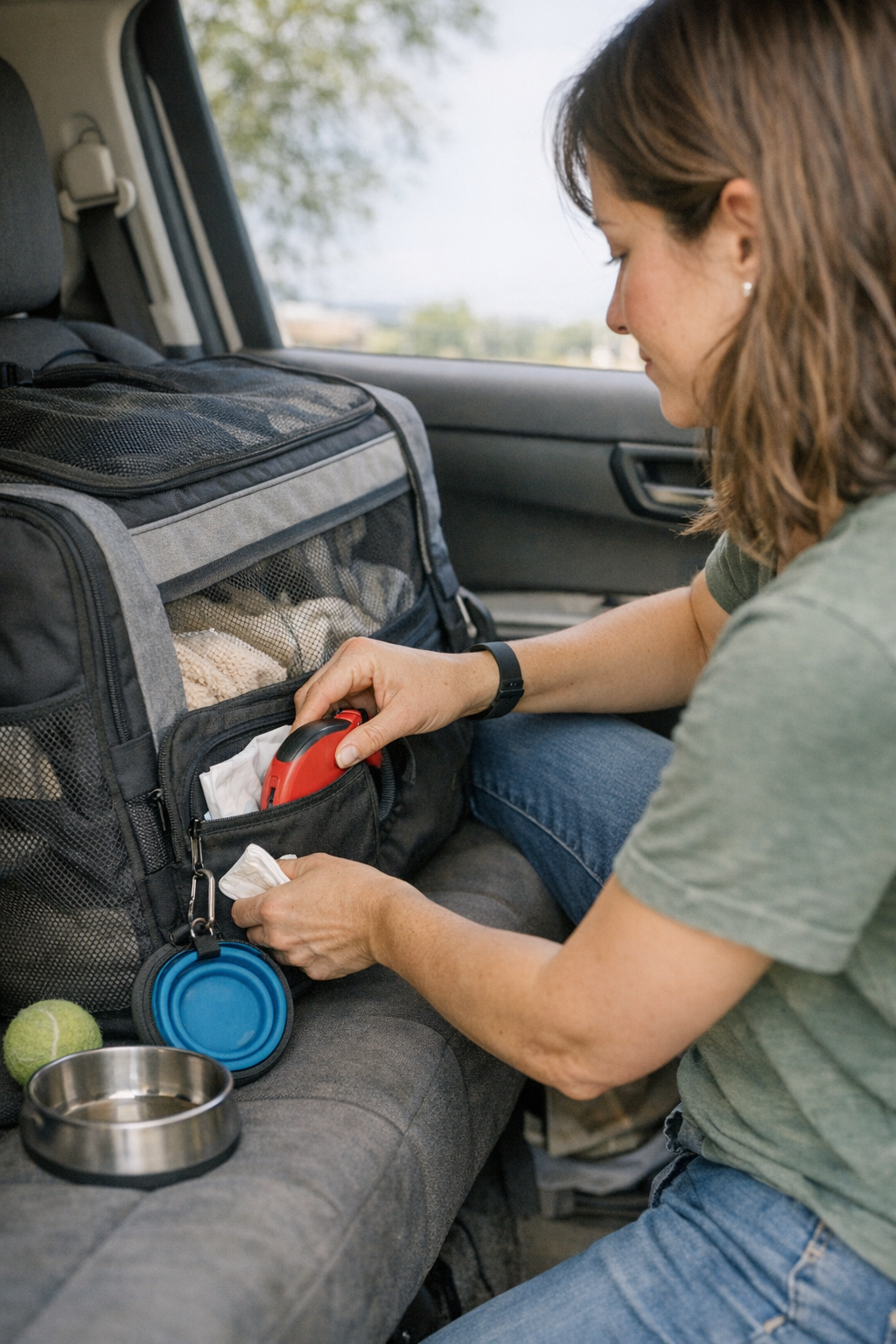
Every pet owner with a “ready” travel bag knows the letdown: by the second or third stop, what looked organized becomes a tangle of unreachable essentials and awkward searching. Even the best-packed setup breaks down mid-route—leash buried, wipes hiding under toppled bottles, bowl compacted under comfort gear. Each quick stop magnifies the gap between the look of preparedness and the reality of grabbing what you need. Struggling at the wrong moment means a restless pet, lost time in parking lots, and a nagging sense your so-called system is working against you—especially when pressure hits during a spill, sudden cleanup, or frantic leash grab.
When “Organized” Isn’t Usable: The First Signs of Setup Slowdown
The failure isn’t dramatic. It’s small but immediate: the leash, once in plain sight, sinks behind a backup collar. Wipes—folded for neatness—now buried beneath a lap blanket or pressed behind a bulky bowl. That clean, central compartment makes sense until your first roadside walk or messy water spill, when the high-frequency items are anything but quick to access. It starts with fumbling around at the next pit stop and ends with you abandoning the idea of tidy repacking entirely, leaving wipes tossed on the seat and leash hooked wherever it fits. When each restart means another round of digging, you know the setup’s not holding up in the real world.
Real-World Route Friction
Take a week’s worth of errands: early dog park detour, pharmacy run, vet waiting room. On paper, your system holds all the right pieces, but try grabbing the leash with your dog squirming after a pit stop—it’s wedged under a spare sweater. Next time, wipes you swore were handy end up pinned beneath a bottle. Before long, every attempt to exit means another shuffle: bowl and harness trade spots, treats spill out, leash tangles in a zipper, and cleanup gets slower every time. The repeated friction isn’t a failure of organization—it’s proof your bag doesn’t match the stop-and-go rhythm of real travel.
Why Structure Breaks Down in Repeated Movement
Most pet bags are engineered for picture-perfect packing, not seat-side reality. The flaw is structural: items needed often—leash, wipes, travel bowl—drop under less-used gear, hidden by the very neatness you started with. Each reset after a stop adds seconds—then minutes—as you rearrange, repack, and repeat the cycle. By mid-week, it’s the same routine: you fix the bag, but the next interruption buries the essentials all over again.
A Setup That Looks Ready But Stalls the Routine
The pain point never appears in staged photos—it hits when your dog whines and you’re rooting for wipes under a water bottle rolling across the seat. Suddenly, “well-organized” feels like a trap: every layer and pocket built for show, not for the moments you’re in motion and pressure is up. In that gap between ideal and actual use, tiny delays multiply, agitation builds, and the line between “organized” and “usable” gets sharp and visible—right when you can’t afford distraction.
Overlapping Organization: Order That Slows You Down
More compartments rarely solve this. Instead, they create a shuffle: collapsible bowl pressed flat (and invisible), leash coiled around the wrong pouch, wipes lost at the intersection of two zippered sections. Owners end up reaching into the wrong place half the time or interrupting their route to sort items yet again. By the third or fourth stop, quick fixes—wipes tossed in the cupholder, leash knotted on the headrest—start to clutter the entire car, not just the bag.
The Real Cost: Cumulative Delay and Agitation
Every shortcut—leaving bags unzipped, tossing items loose—signals that your gear is failing the real test of repeated movement. The cost isn’t only visual mess, it’s every extra minute spent searching and every restart hampered by slow access. It’s the cycle of things getting messier, faster, every time you stop, start, and need something on cue.
Practical Fix: Rethink Item Access, Not Just Item Placement
Appearance isn’t the target—flow is. Redesign your setup for mid-trip resets by anchoring the highest-use items (leash, wipes, bowl) to one side-mounted section—something accessible from your seat or as you step out. No more upending the main compartment or tracing through three zippers. Every return to the car becomes a true reset—less stress, less delay, less mental drag gathering up your pet’s travel basics when patience is already thin.
Reducing “Bag Lag” With Accessible Paths
Direct access wins over “neat” packing every single stop. When leash and wipes live in a purpose-built quick-reach pocket or side anchor, you stop losing rhythm. Clipped travel bowls or dedicated hydration slots mean nothing gets hunted, nothing rolls or vanishes. With each routine loop, seconds are saved, clutter is minimized, and your energy isn’t wasted resetting the same mess.
Recognizing the Early Warning Signs of Overload
Most only notice the slow unravel after shortcuts become habits: essentials left on the dashboard, cleanup skipped, leash looped wherever it lands. By then, the bag that solved one problem is causing another—repeated friction at every stop, mounting tension as resets fail. Setup overload creeps in not as a dramatic collapse but as a series of missed beats that drag down every pet travel outing you attempt.
The Look of Readiness vs. Usable Rhythm
It’s easy to be fooled by a post-staged bag, but actual routine exposes which setups survive repeated, real use. After a few stops, the system that recovers instantly—from seat to sidewalk and back again—feels vastly different than one that looks untouched but needs constant rearrangement. In practice, order that works under pressure always beats perfection that collapses on the go.
Building a Setup That Survives Real Repeated Use
If your travel days include multiple quick stops, cargo shuffling, or seat-side handling with a pet waiting, structure matters more than photo-ready order. Prioritize side pockets, snap loops, or add-ons for the basics you reach for every time—saving the main compartment for backup items that only get touched once or twice. When you start thinking “maybe I’ll just toss the leash in the front,” you’ve waited too long to switch. A setup that can be reset in seconds—no matter how often—means less drag, more control, and a travel flow that survives the full cycle, not just the first leg.
The difference is clear at every return to your seat: calm restarts, instant access, minimal reshuffling. That’s the real sign your pet travel bag fits real travel life—not the photo, but the restart-after-restart reality. For practical pet-travel gear that works the way you move, not just the way you pack, find practical pet-travel solutions at PawGoTravel.