
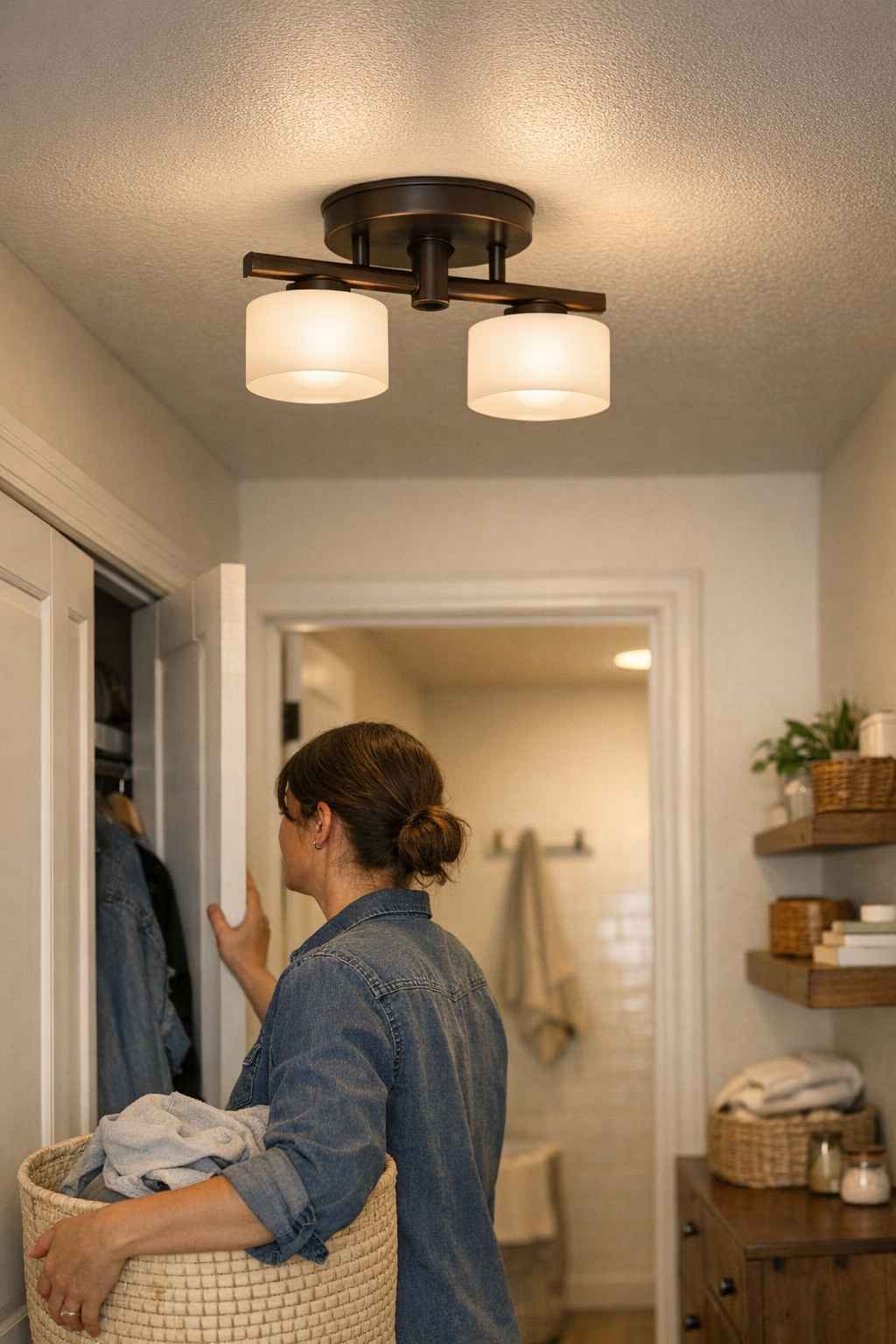
A cracked glass diffuser is rarely an accident—it’s a warning from the room. Where your ceiling light meets everyday movement, the first sign isn’t always a shatter. It’s a faint fissure at the rim, a patch of glare that’s grown sharper, or a subtle dull spot after a week of cleaning. Ignore these changes, and what started as minor damage becomes a chain of regular interruptions: glass chips near the closet, uneven shadows across the hallway, or light that seems bright but leaves work surfaces dim and awkward to use. The problem isn’t the glass itself—it’s a mounting, a placement, a choice that fails under the friction of real routines. And the wrong fixture in the wrong spot turns every pass-through, arm-reach, or bump into hidden stress. Most owners miss these signals until the fix becomes a scramble, not a choice.
Trouble Spots: Where Glass Diffuser Cracks Begin
Lighting durability is shaped by the room’s pressure points, not just ratings or catalog look. A flush mount ceiling light appears neat overhead, but in everyday pinch zones—narrow hallways, cramped laundry aisles, or humid corners near a shower—the risk multiplies. Glass installed directly in the path of baskets, swinging doors, or storage bins absorbs hit after hit: a closet opened too fast, steam collecting along the surface, or a hamper brushing the edge again and again. Each encounter is small—a brush from an elbow, a sway in airflow from the door, a forgotten swipe during cleaning—but together, this routine contact seeds stress lines and weakens the diffuser’s edge. The glass isn’t failing all at once; it’s being slowly worn down by movement the fixture was never placed to avoid.
Cracks don’t show up because of a single dramatic mistake. They build up invisibly. That thin line at the rim, that bit of glass that suddenly reflects more glare, or a patch that looks more clouded after wiping, all reveal that a fixture is absorbing the room’s habits. Ignore them, and you’re not just risking a break—you’re signing up for scattered shards underfoot, uneven lighting, and hours wasted on cleanup and replacement.
Matching Fixture Type to Real Room Flow
The right diffuser doesn’t just look flush or stylish—it survives the daily routine. Too often, though, ceiling fixtures go wherever there’s enough overhead space, not where they remain clear of crossing arms, bin lids, and laundry swings. That flush mount by the closet seems harmless until a supply run nudges the diffuser every time. Chores tap, jostle, and unsettle glass that should be out of reach. The result is a creeping web of stress that isn’t visible day one but spells early failure, extra spend, and uneven spreads of glare or shadow just where you most need clarity.
Contrast this with semi-flush mounts or wall sconces: raising the fixture by even a few inches, or shifting it off the main path, means every loading, crossing, and cleaning motion clears the glass. The change is easy to overlook at installation but blindingly obvious the first time a supply basket passes by with nothing to catch, or when a damp-rated fixture outlasts steamy cleanup without spider-web cracks spreading from the edge. What looks like a minor shift—three inches off the usual arc—quickly becomes the thing that saves you from the next splintered clean-up or lopsided light cast over the hallway floor.
Routine Scenes: Signs You’re Headed for a Crack
Crossing the Hallway—One Subtle Bump at a Time
A flush mount centered just a foot from a closet door is set up for slow motion trouble. First week: smooth glass, sharp light. By week three, the edge of every laundry basket nudges the diffuser. It’s nothing forceful—a swipe rather than a thud—but after a few cycles the rim grows dull, a faint fissure appears, and shadows start scattering unevenly across the floor. Every open closet door gives the glass another small rattle. That micro-crack, invisible at first, becomes the reason for a sudden break right as you’re restocking the closet or grabbing towels in a rush.
Bathroom Corners and Laundry Tangles
Utility rooms and small bathrooms punish poorly placed glass twice as hard. A flush mount near a mirror or above cabinet runs endures temperature swings, humidity from repeated showers, and stray hits from stacking and unstacking supplies. Even careful use wears at the edge: damp air seeps in, fine stress lines multiply, and residue sticks where you can’t quite reach or clean. That gleaming fixture from the spec sheet quickly dulls and starts scattering both light and frustration—leaving you with more cleaning, less usable light, and, eventually, a cracked glass replacement schedule.
The Difference a Small Adjustment Can Make
Replace a cracked glass diffuser once and it feels unlucky. Replace it twice, and the cause isn’t hidden—placement matters more than the fixture’s polish. Push a semi-flush three inches out of a swinging arc, or mount a wall sconce just above bin-height, and the everyday friction stops. Now, you walk under the light, reach for the closet, mop, move baskets—without causing a hairline split by accident. Even if the fixture drops slightly lower, there’s no jagged edge waiting overhead. Glare softens. That background worry—the constant “Will it break again?”—starts to fade from your routine.
Especially in spaces people actually use, this small structural move is the difference between dependable lighting and a maintenance headache. Clean-up loses its risk. The diffuser stays clean, the light spreads evenly, and your focus returns to the room—not the next round of repairs.
The Value of Chosen Placement in Real Use
Lighting placement isn’t just a nice-to-have—it’s the line between invisible reliability and constant friction. Move the diffuser clear of door arcs, bin sweeps, and main circulation paths, and the rate of cracks and unexpected failures plummets. Watch for these stress points during installation, not after the second glass swap.
Critical signals include:
- Glass aligned with swinging doors or covers—prime crash spots.
- Fixtures exposed to repeated humidity, steam, or surges in airflow.
- A need to clean, reach, or maneuver close to the glass after every use.
If any are true, cracks aren’t a matter of “if”—they’re queued up for “when.” Spot these now and you sidestep a cycle of repairs, lost visibility, and daily inconvenience.
Fixture Choices That Hold Up to Repeated Use
Semi-flush, wall-mounted, and task-oriented lights outperform flush mounts in real-world traffic zones. Set above head reach or moved along the wall just out of circulation, they avoid the worst of everyday impact. Even if you opt for a damp-rated fixture to handle humidity, it won’t withstand repeated brushes or bumps if installed in the routine’s line of fire. Reliable lighting means matching fixture type and placement to what your room actually demands—not just what fills the space cleanly on paper.
Real-World Tip: Stay Ahead of the Weak Spots
If you’ve replaced a glass diffuser more than once, that’s your room asking for a fix. Figure out what in your routine keeps colliding with it—door swings, mopping patterns, basket handling. A two-inch move outside a pathway, or mounting above cabinet height, makes all the difference. Notice new lines, a loosening rim, or dullness after each bump: these are early warnings, not background wear. Act before a visible crack forms. When uncertain, mount the light just above hand level or outside the reach of daily traffic—not directly overhead in a high-use corridor or utility zone.
The change might not feel dramatic on day one. But over months of closet crossings, laundry cycles, and late-night cleaning, the right placement delivers—glass intact, lighting steady, and no more apartment-pausing repairs. That’s the gap between light that just happens to be there, and light you don’t have to think about at all.
Browse practical indoor lighting options at LightHelper.