
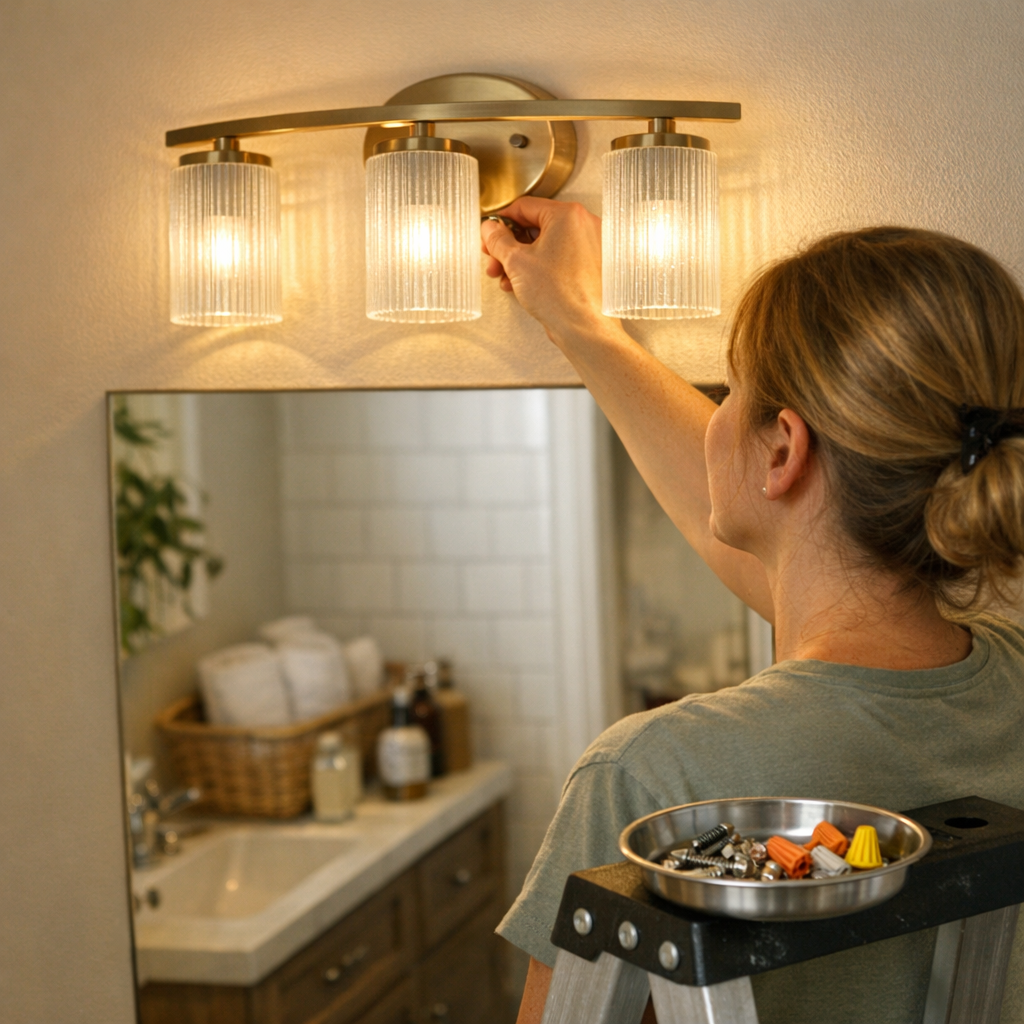
Most lighting installations don’t fail with sparks or shattered glass—they fail by degrees, in the small, invisible ways that keep showing up every time you cross the room. Miss one screw or drop a vital clip during a ceiling or wall fixture swap, and what feels like minor lost time on the ladder turns into a chain of daily annoyances. Anyone balancing awkwardly on a ladder, wedged beside the washer or squeezed between hallway walls, knows the friction: reach for the next fastener, realize it’s vanished, and now you’re juggling brackets, shuffling hardware on top of an unsteady light, improvising a fix that never quite sits right. The job looks finished from below—but the minute someone slams a door or you grab the stair railing, the fixture wobbles just enough to make the whole upgrade feel questionable.
The Real Cost of Lost Parts in Lighting Installs
The hidden enemy of reliable lighting isn’t slow work—it’s the shortcuts and compromises forced by missing parts. Screw up a flush-mount install in a narrow hallway or a wall sconce beside the bathroom mirror by losing just one small connector, and you’re left with more than lost time. That fixture sways after every closing door, its mount loosens with regular vibration, or it flickers unpredictably. The light looks okay at first, but days later, shadows creep across the stairs, mirror edges show uneven glare, and you find yourself re-torquing screws that should never need another turn. All from one dropped washer or mislaid clip.
Every shortcut here ripples outward—turning “good enough” light into new blind spots, unreliable movement on stairs, or the sense you should keep tools handy for another round of fixing. A bright hallway becomes a nothing-special zone. Uneven glare at the bathroom mirror reduces usable space. That feeling of trust in a room’s light begins to fade, replaced by small doubts: when will this fixture need to be patched up again?
Practical Setup: The Small Parts Cup That Changes Everything
Veteran installers don’t trust luck—they keep a small parts cup fixed to the ladder before even unpacking the fixture. It isn’t elegant, but it prevents nearly every “vanished fastener” scenario that derails the job. On a metal ladder, a magnetic cup locks in. For fiberglass, a clipped or hooked tool cup does the same work—keeps nuts, screws, and clips in grabbing range no matter how much you’re twisting over a stair turn or tight laundry alcove.
Why is this non-negotiable in lived-in rooms? Areas like stair landings, behind stacked units, or tight hallway corners multiply the odds of dropped parts. One lost screw can turn a routine install into a half-hour of searching crevices, or worse, an unfinished fixture you have to work around for days. A parts cup—magnetic, clipped, or even just zip-tied to a rung—locks down routine chaos. It means each step from prep to finish goes without the awkward slowdowns that allow subtle failures to creep in.
Fewer Interruptions, Fewer Quiet Failures
Consider the flush-mount ceiling light in a corridor: with every piece at your fingertips, there’s no shuffling down and up, no lost energy hunting for a screw that’s wedged by the baseboard. The install clicks along—and so does the long-term stability. Skip the parts cup, and you invite the silent kind of breakdown: a bracket left loose so the fixture drifts, subtle shadows that creep along the wall, a mounting screw missing that lets the whole light vibrate itself loose after a week of foot traffic.
- No half-attached brackets: Fixtures hold tight, avoiding slow sags and sideways drift after daily use.
- Shadow stays controlled: Proper mounting keeps light spreads even, so you’re not shifting at the mirror to dodge a glare line or dark edge.
- Vibration becomes irrelevant: All fasteners in place means regular door slams or hurrying feet won’t knock the fixture off level.
Recognizable Fixes in Everyday Spaces
Walk through your actual routine—mirror at the sink, edge of the laundry counter, tread at the stair turn. Miss a spacer or bracket in these setups and the flaw turns up fast. That vanity light looks fine first night, but shifting screw tension twists the spread after a few days, misdirecting light or casting new, unflattering shadows across your face.
Hallways reveal the difference clearest: a properly finished ceiling mount feels stable long after install, but shortcut the process and every set of footsteps risks a rattle or a tick—a constant reminder of what didn’t get done right overhead. On a stair landing, unfinished work shows itself with every grab at the rail—small fixture flex means the nagging fear that something’s always a little loose, a little uncertain. Tight laundry rooms expose any missed step; a missing clip forces you to patch, prop, or live with skewed light on the folding surface until you can try again.
Real-World Repeats: Where Friction Builds, Not Fades
Unlike a decorative fixture in a guest room, core lighting gets tested in cycles: morning movement, after-dark trips, every quick mirror check. Repeat use in these key spots amplifies any install oversight. A hallway sconce that loosens means more interruptions—and, sometimes, more real risk. Shadows nudge into the wrong place, routine movement slows to avoid a dark step or glare patch, and what started as a 30-second stumble for a dropped screw now disrupts your schedule week after week.
One Simple Habit: Reducing Lighting Frustration for Good
Regularly fixing a small parts cup to the ladder before every lighting change cuts straight through these minor disasters. The difference gets sharpest at mirror wall lights: no more lost fasteners behind the sink, no more off-center drift or glare pattern you have to “live with” because the hardware’s now inaccessible. You don’t win by perfection—you win by default, with every fastener exactly where it belongs and no need to second-guess a shaky fixture during daily routines.
If you use a non-magnetic ladder: Grab a fabric or silicone tool cup with a stout clip and clamp it to the top tray or side rail—just keep it within reach. Even the most basic zip-tied dish beats crawling for a runaway part behind appliances or inside cabinet runs.
Better Lighting Begins With Strong Structure—Not Just More Bulbs
Consistent indoor lighting isn’t about maxing out lumens or spending on fancy fixtures. The real payoff—stability, safety, light where it’s truly needed—lives in the install details you don’t see from the floor: how tight the base sits, whether every screw holds, if the mount will stay level after a month of commotion. Secure structure stops glare lines, blocks random shadow streaks, keeps the room usable for movement and routine tasks long after the “new fixture” effect fades.
A lighting job that starts with every part accounted for and every connection solid becomes a room you barely think about: no more last-minute tightening, sidestepping dark patches, or bracing for a rattle each time someone rushes past. That’s the line between a space that simply “looks new” and one that actually works right for all your lived-in routines.
Visit LightHelper for practical indoor lighting solutions.