
You know an entryway’s real limits the instant things start going wrong: one muddy dog loop, a rain-soaked backpack, or the first cascade of grit after soccer practice—suddenly the “clean zone” collapses. Not because of lack of storage, but because the one tool that could erase the mess is out of reach. A vacuum or broom stored even just a room away turns every small cleanup into a delay, and that delay—day after day—means shoes grind sand deeper, benches hide pet hair, and a so-called landing zone fills up with debris waiting to be dealt with “some other time.”
The Entryway Battle: Mess Arrives Sooner Than You Think
Most of your home’s dirt and clutter doesn’t sneak in—it gets dropped the moment someone walks through the door. Shoes leave a chalky trail while bags and wet jackets collect on whatever bench stands closest. That “reset” feeling after cleaning fades fast; within hours, you’re back to stepping over sand, tracking grit, and nudging a bent row of shoes out of the traffic lane. The issue isn’t the quantity of storage, but the practical distance between dirt and the tool that reverses it. Stash the vacuum behind a closet, and even small reset moments vanish. You feel the friction each time: pause to fetch the broom, or let the debris linger and grow. The entryway is never still long enough for one good clean to last.
One Room Too Far: When Access Delays Action
If a cleaning tool isn’t within reach of the drop zone, it might as well be off-limits. Shoes don’t get a quick brush-off; wet leaves get ignored rather than swept away; that easy, “just a minute” vacuum pass becomes something you put off until the buildup is visible. The routine argues against interruption—nobody, in the middle of returning home or heading out, wants to detour to a back cabinet just for a spot fix. By the time you do, debris has found all the seams: under the bench, behind the cabinet, right at the edge of the mats. Entryways don’t reward good intentions. They only respond to what’s actually within arm’s reach during the rush in and out.
Clutter Drift: When Clean Zones Slip to Chaos
Even the best storage setups—custom benches, nested cabinets, carefully measured cubbies—lose against daily drift if they don’t keep a cleanup tool in play. Here’s what happens in real homes:
- Shoes line up tight, but as crumbs and sand collect, the row spreads and loses its order. The mess underneath quietly expands the zone.
- Bags and gear land neatly on a bench, but edges collect pet hair, dried leaves, and loose grit. The once-clear surface turns into overflow storage and sheds debris onto the floor below.
- The narrow gap between wall and cabinet becomes an unintentional holding area for every bit of dirt that goes unaddressed because no one wants to fetch the vacuum for “just a little pile.”
Once the cleaning tool is out of sight, the drift accelerates. Delay becomes habit. Shoes, bags, and daily clutter push further into living space, all because the reset isn’t immediate.
Back-to-Back Arrivals: Entryways Under Pressure
Entryway order isn’t a single event—it’s tested every time someone walks through, especially in homes with overlapping routines. One person dumps muddy boots as the next piles in with a dripping backpack. Protective mats reach their limit fast, and anything left, like sand or wet grit, migrates under benches or into tight corners. If instant cleanup isn’t an option, the next arrival just steps around yesterday’s mess, compounding it. Over a weekend or even a single rainy day, that line between “organized” and “overrun” gets razor-thin.
The Docking Difference: Moving Cleanup into Reach
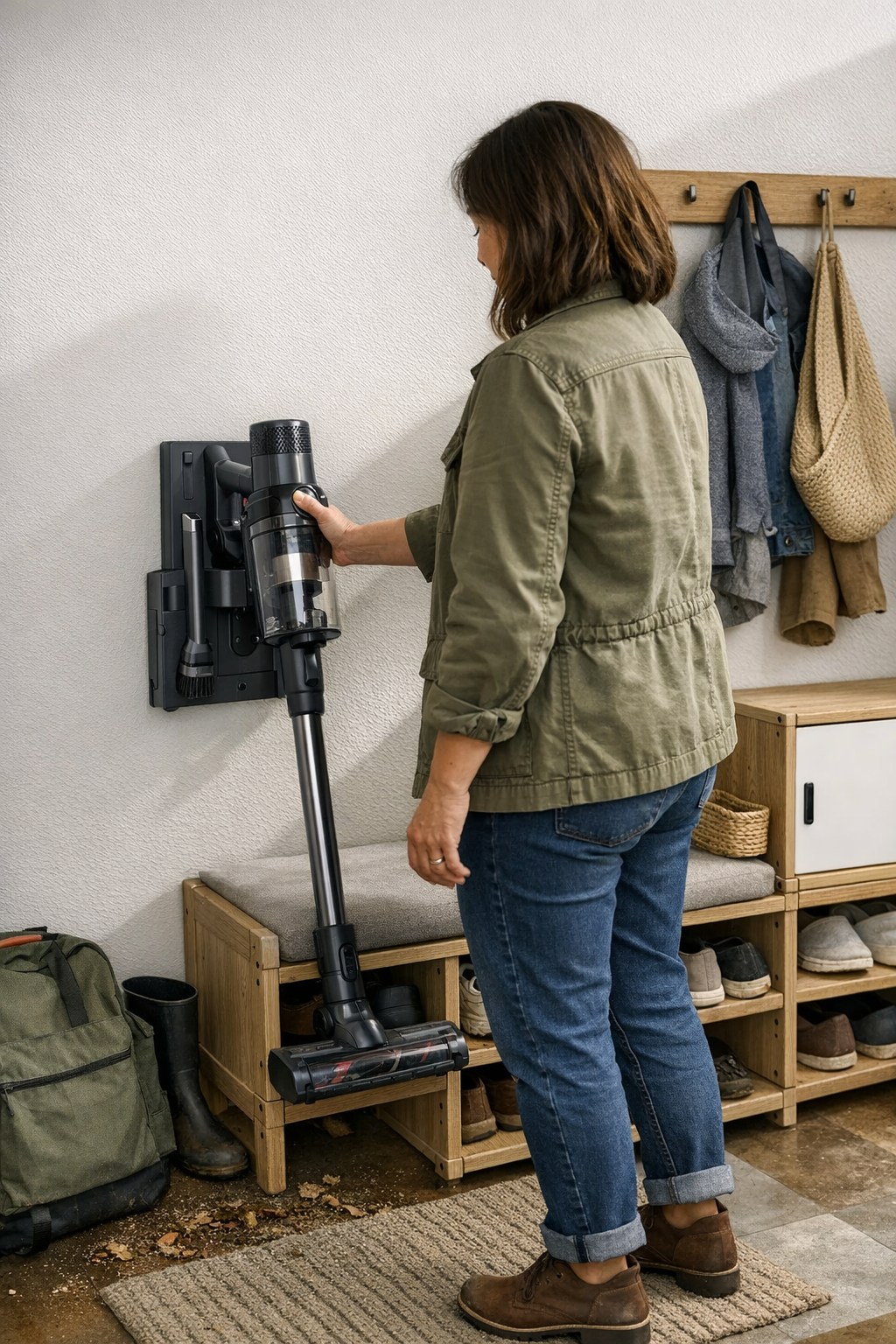
Wall-mounting the vacuum dock right by the entry zone—no doors to open, no closets to dig through—changes the reset from project to habit. It isn’t about storage volume, but about proximity. Drop your bag, slip off your shoes, and in the same movement, a quick 90-second sweep catches what would have stayed hidden for a week. New messes don’t get time to settle and multiply. Instead, you catch sand, grit, and leaves before they become part of your daily scenery—and before “cleaning day” feels inevitable.
Real-World Placement: Offsetting for Utility and Movement
Placement shifts the whole dynamic. Mount a compact vacuum on the wall adjacent to the bench or main drop zone—not dead in the path, but not hidden around a corner. The goal: close enough for true convenience, far enough to avoid blocking the flow. This solves two real frictions at once:
- Resets happen in stride, without making you re-route or reach awkwardly.
- Paths stay open, eliminating the cluttered feeling of a storage “stage” that’s been overfilled or misplaced.
The space stops being a showroom and starts working as a utility zone tuned to your actual exit-and-return pattern. Not always prettier, but less frustrating—the difference between starting the day organized and playing catch-up with clutter every evening.
How Immediate Cleanups Change the Entire Routine
With a docked vacuum visible and ready, spot cleaning becomes instinctive. You sweep before problems pile up, not as a rescue mission days later. Each micro-reset as people switch shoes, drop keys, or switch bags means dirt barely gets a chance to settle. As a result:
- Shoe cubbies stay cleaner, not instantly filled with sand or pebbles after a single walk.
- Benches stop becoming backlogs for crumbs, leaf fragments, and pet hair that used to spread via stray bags and gear.
- Flow stays workable—there are fewer days where everything needs to be dumped and reset from scratch and fewer awkward bottlenecks trying to get out the door.
The improvement isn’t about perfection, but about shrinking mess before it becomes a cycle.
Tip: Use a Compact, Rechargeable Dock
Only a slim, cord-free vacuum dock survives the real test: daily demand in tight, high-traffic entryways. Mount it at standing height, just next to but never blocking the bench. The best setup is always “in reach, out of the way”—present enough to become part of your return and departure routine, but never so prominent that movement gets pinched or pathways tighten and clog after a few arrivals.
The Line Between Looking Organized and Staying Organized
Style or storage alone cannot hold the line if resets require effort or detours. Entryways that only look neat on the first day slip quickly once real use resumes. Storage and gear that join the natural traffic pattern—visible, reachable, and offset for movement—eliminate the silent drift toward chaos. When the vacuum dock lives in the zone, resets shrink to seconds and mess never has a chance to become structural.
Those tiny, repeated frictions—one extra step, one more thing to move, a single delay between seeing dirt and lifting it—add up to whether your entryway works for you or quietly works against you every single day. The right transition-space setup turns the difference into daily routine, not wishful “later.”
Practical transition-space storage for entryways and daily drop zones is at Betweenry.