Some mornings, the house seems to wake in gentle layers—a low, persistent hum of the refrigerator, soft natural light filtering through the kitchen window, and the kettle quietly ticking as it heats water. At my feet, the dog circles sleepily, hopeful but not quite awake. My hand reaches into the familiar brown jar of coffee beans as the drawer nearby groans softly when opened, cutlery rattling as spoons jostle for space. There’s a rhythm in these small routines, until an errant chip clip or an unruly tea strainer wedges itself sideways, reminding me that the kitchen drawer is less a model of perfect order and more a lively, chaotic borderland.
I’m not naturally a messy person; rather, the clutter represents a running negotiation with daily life. Early in the morning, the slight disarray feels easy to overlook. There is something quietly pleasant in a drawer that shuts gently, pretending at tidiness. But it’s during moments when I require a working pen or try to retrieve socks—often in singles rather than pairs—that I recall the curious law of confined chaos. What we often call “junk” is really a gathering of well-meaning objects that refuse to stay put or play by the rules.
Living with Everyday Disarray
Mid-morning brings its familiar buzz: the laundry machine spinning, the click of my coffee mug on the countertop, and from another room, curious murmurs of “What’s for lunch?” Somewhere in the kitchen, the “good” scissors start the day where they belong but soon migrate into the mail basket, eventually hiding among masking tape and batteries. This impromptu hide-and-seek often ends with me shifting half the drawer’s contents in a search that uncovers a rubber band ball—always mysteriously growing when I’m not watching.
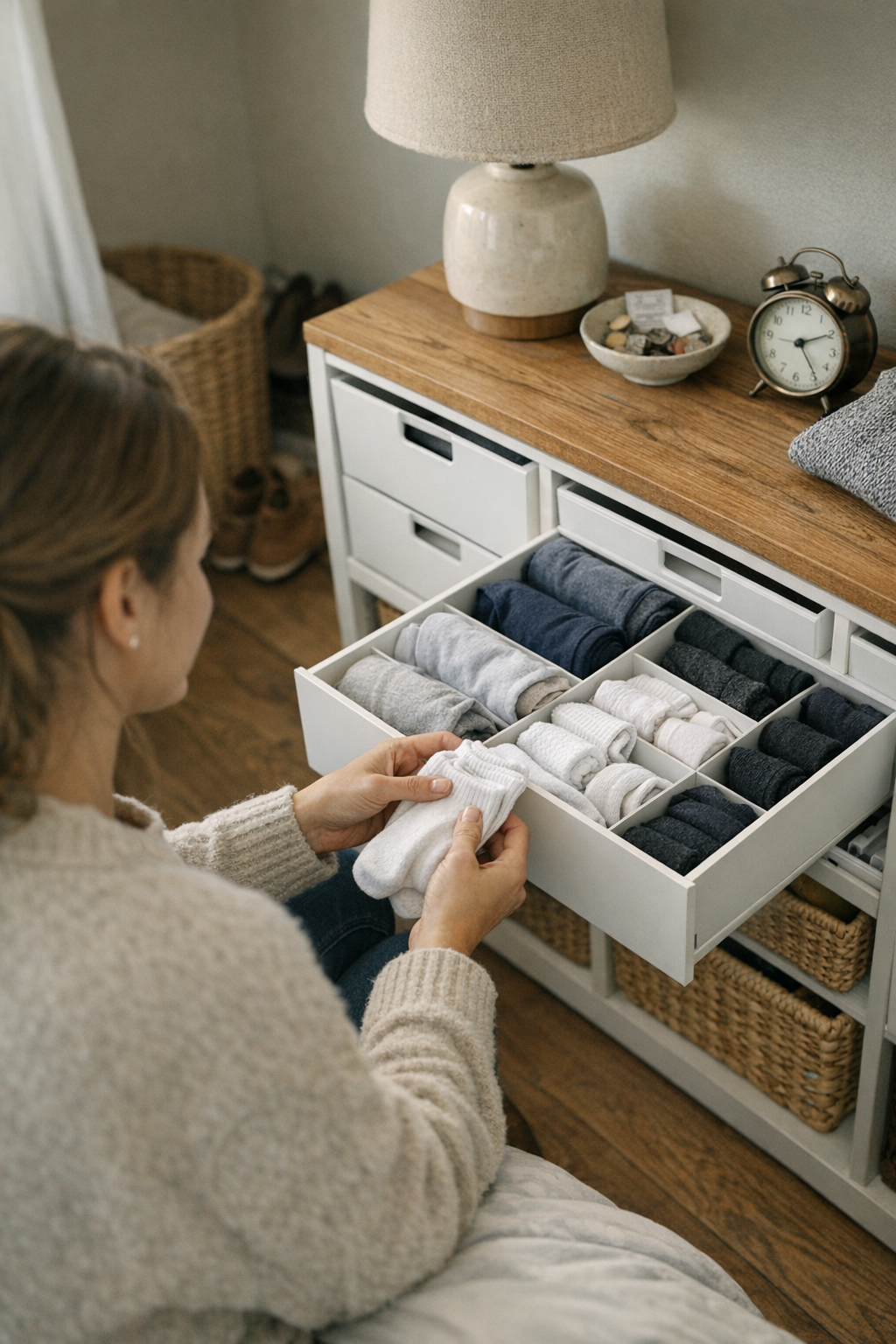
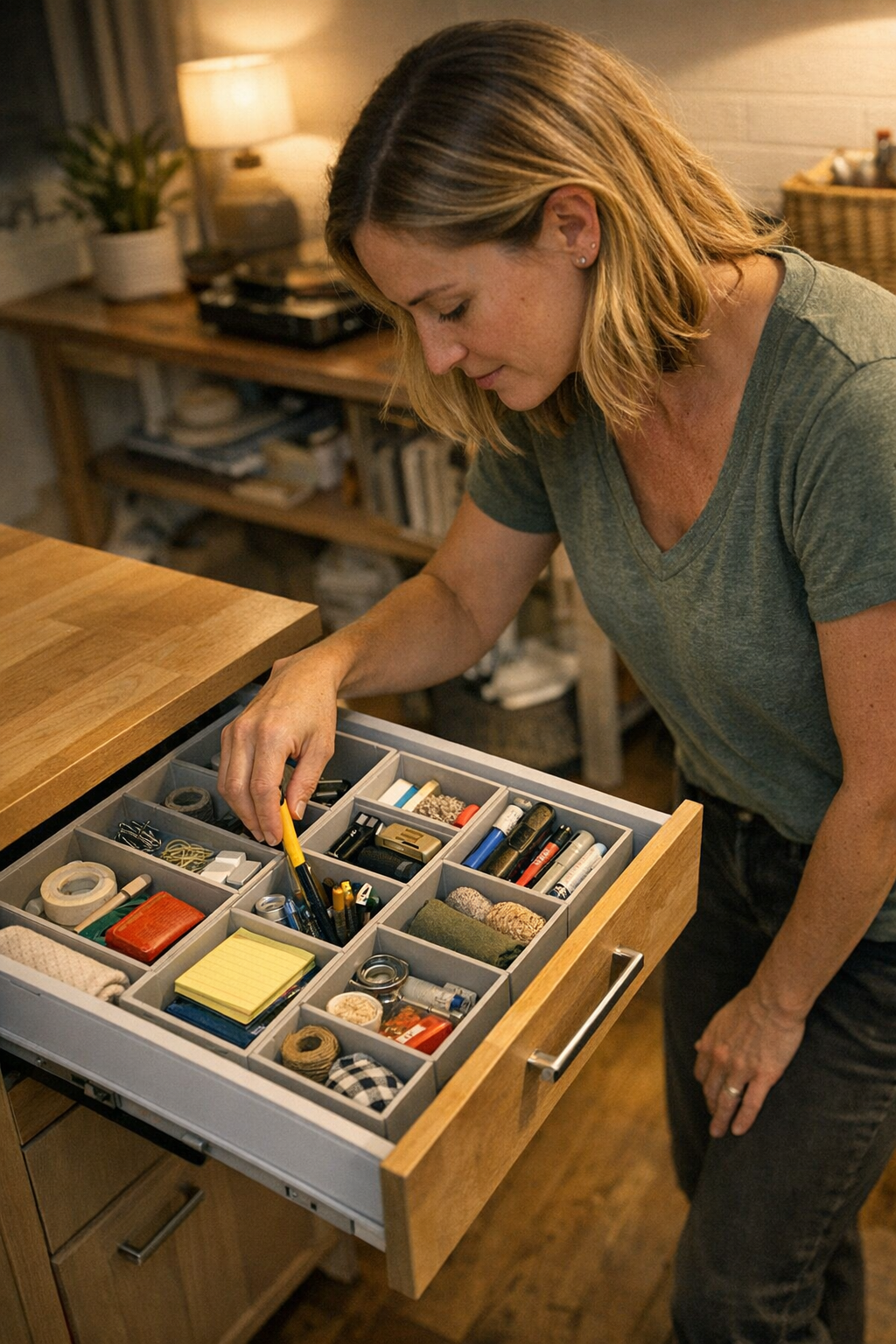
Objects tend to rebel without firm boundaries. Measuring spoons wander aimlessly without a designated spot. Left unchecked, pencils multiply quietly, Inkless pens find new hiding places. The disorder is less about neglect and more about a lack of containment. On weekends, with mellow music filling the background, I often choose to intervene—using empty gift boxes to corral the chaos. Grouping receipts, nesting rubber bands beside paperclips, and pairing socks that survived the wash create a small truce amongst items. Even a partially ordered drawer feels like a calm harbor amid daily noise.
Creating Effective Boundaries
The key to managing drawer clutter lies in establishing practical boundaries. Utilize boxes, dividers, or small containers as designated homes for categories of objects. This prevents random migration, helping each item remember where it belongs. For example, a simple tray for keys and wallets at the entryway reduces the frantic search for essentials before heading out the door. Keeping scissors dedicated to a craft basket or kitchen drawer helps avoid multiple hideouts and lost time. You don’t need perfect organization—embracing slightly imperfect but consistent zones goes a long way.
Refreshing Your Approach to Everyday Clutter
Sometimes, all it takes is a subtle shift in perspective. Instead of fighting the mess or striving for a flawless system, try thinking of your drawer or basket as a “buffer zone.” This buffer gathers items that haven’t yet found a permanent spot, acting as a temporary resting place without judgment. Acknowledging this reduces the pressure to fully conquer clutter in one go, making tidying more manageable and less overwhelming.
A simple refresh tip: schedule a short, timed declutter session once a week. Even just ten minutes to sort through a junk drawer, straighten out the mail basket, or pair socks can maintain order steadily. Setting a timer transforms the task from a daunting chore into a manageable routine, with a clear start and finish.
Finding Satisfaction in Small Victories
Throughout the day, the house’s surfaces accumulate a satisfying assembly of keys, crumpled receipts, gloves, and other companions in their temporary baskets or trays. It becomes a subtle game guiding stray items back into their corners, like steering a ship through calm waters. There’s no need for applause—just the quiet satisfaction as everything settles into place.
Evenings bring another chance to reset. I pass the hall mirror, nudging the boot tray back under control—away from dog hair and mud—and notice the living room shelves bearing a dignified quiet. Books line up neatly, a candle stands sentinel, and baskets rest calmly on their racks. The gentle thud of a drawer closing is a secret bedtime handshake signaling peace, while leashes amble into the “wrong” bin and sweaters drape lazily from baskets. Yet, despite minor imperfections, there’s a feeling of accord—objects agreeing on their places at least for the night.
Embracing Order and Flexibility
There’s a quiet joy in recognizing the successes: socks staying paired, Tupperware lids aligning, and the flashlight appearing exactly where I expect it. The mess doesn’t disappear, but it feels less overwhelming. The buffer bins and slow gains in organization reduce the frequent muttered frustrations and frantic searches, especially on those evenings when only one thing matters—wrapping up the day.
Preparing for Tomorrow’s Chaos
Nighttime quiet allows me to put wandering items to rest, knowing that tomorrow will most certainly bring a fresh scatter of notes, lost keys, and socks plotting their next escape. But by establishing even loose, practical homes for items—and periodically refreshing the organization—the daily battle with disorder becomes less daunting. When chaos threatens, I have a clear place to start restoring calm.
In the end, organizing is an ongoing process, one that feels most reachable when approached with patience and small actions. A single drawer may never be perfectly neat, but with gentle boundaries and moments of intervention, its contents can behave—if only until the next day’s dance begins.