Blog

  • Streamline Your Carry-On Setup for Faster Post-Arrival Movement

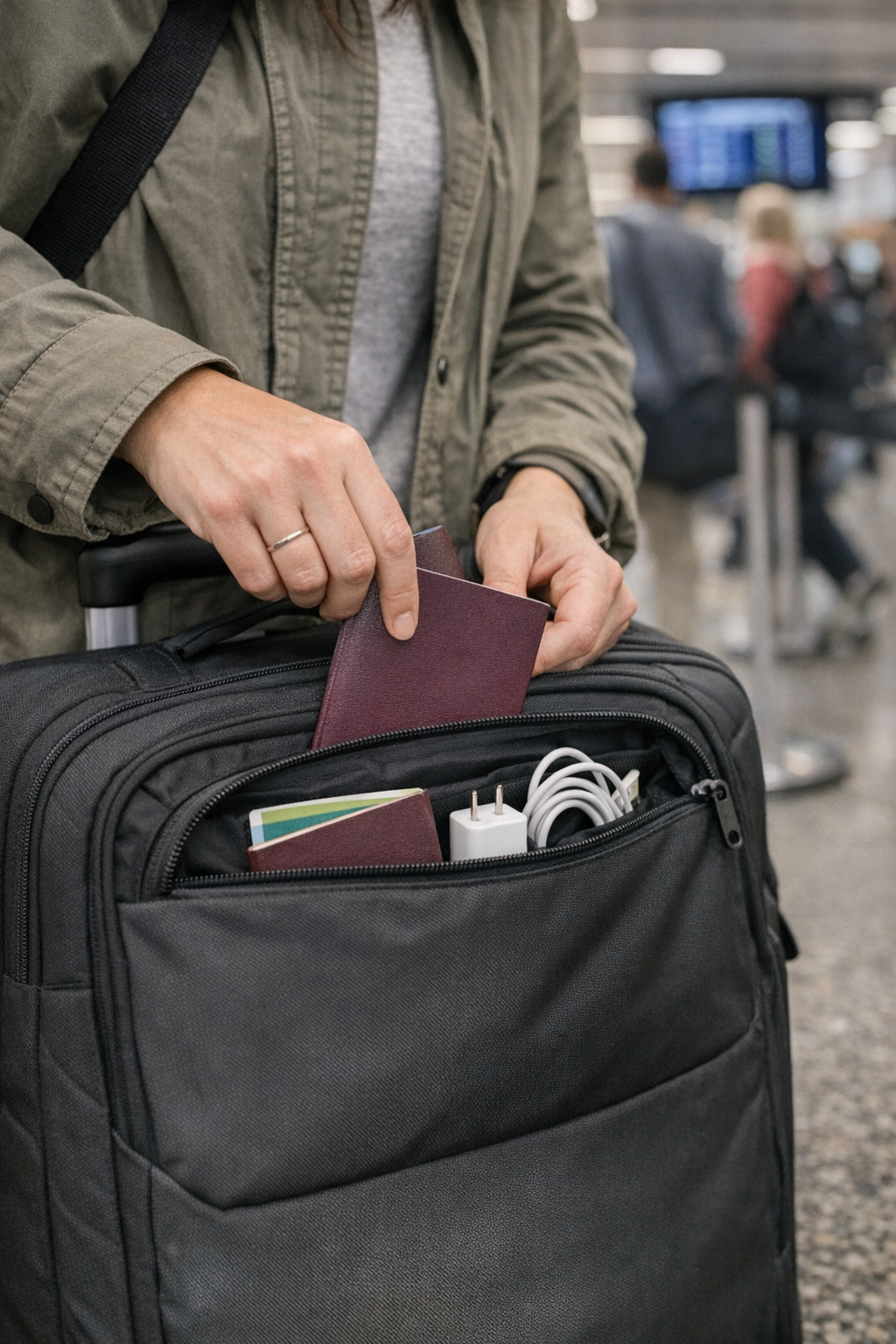
    Plenty of carry-ons look organized when you first pack them. But the real test hits after landing—when you’re moving fast, squeezed in the jet bridge, and every second matters. The zipped-layer order that seemed like an upgrade quickly morphs into fumbling and blocked reach the moment you need your passport or transit card on short notice. In those minutes between seat and city, structure overtakes style: the bag that looked efficient now shows its blind spots when you have to dig, pause, or grip three pouches just to produce an ID. If you travel more than occasionally, you know the discomfort—slowed lines, missed beats, and a setup that seemed “neat” but now holds you back. This is where most carry-ons reveal what really works—and what repeatedly fails.

    When Organized Isn’t Effortless: Where Carry-On Setups Fall Short

    Mesh dividers and sleek little pouches only go so far. While your bag might “present well” on the hotel bed or in the overhead, travel exposes any system that trades quick access for visual order. Land, walk, and try to grab just one thing—too often your passport is trapped under headphones you wore halfway, or your charger’s behind a snack pouch you never even needed. Every time you unzip an extra layer or reach through the wrong pocket, you’re not just losing seconds, you’re losing your place in the flow of arrivals. This kind of slowdown rarely happens once—it repeats itself, checkpoint after checkpoint.

    What really grates is how these small missteps multiply. Watch a business traveler forced to dump out overlapping pouches just to reach a laptop cable, or a family stuck shuffling bags while the crowd flows on. Your “order” never really moves with you—it waits for a flat surface, slows at every squeeze point, and demands a reset every few stops. The friction isn’t messiness; it’s the gap between design and actual use in motion.

    The Real Retrieval Test: Fast Access vs. Packed Neatness

    First reach after landing is where neat setups unravel. Airports amplify this. In Amsterdam or Chicago, you’ll see some travelers glide right through with a pass or card in hand. Others stall, stepping aside to fumble through inner pouches, double-unzipping, and blocking lines. The perfect roll of cables, or a nest of snacks in a side sleeve, all get in the way when your rhythm depends on quick, reliable grabs.

    • A passport slotted in a middle sleeve—just deep enough to miss your first reach.
    • Tech pouch buried behind toiletries, forcing an awkward juggle at the edge of a crowded corridor.
    • Loose SIM cards, receipts, or emergency cash wedged so tight with snacks or chargers you have to dump two pouches to get at anything small.

    Every extra motion—wrong zipper, dragged-out sleeve, repacking on foot—builds unnecessary tension. Miss it once and it’s a pain. Repeat it every trip and your “system” becomes the thing slowing you down, not supporting you.

    From Boarding to Baggage Claim: Where Flow Breaks Down

    Boarding and deplaning push neatness to its limits. While a perfectly packed bag inspires confidence, the real check comes in the aisle or at your seat. You’re in motion—people behind you, elbow room tight, and half your essentials still need to be re-sorted. Wrong pouch, misaligned Zip, or that single-compartment “solution” you once praised—each now slows your exit as you hunt for passes or repack headphones with one hand.

    Getting your carry-on down from overhead is just a small win. The problem sets in when, balancing bag and jacket, you only have a few moments to reach key documents or a transit card. Too many compartments or a single deep pouch means you’ll open the wrong section and scramble. Watch this pattern repeat trip after trip: that neat overhead-ready setup repeatedly trips you up at precisely the moments when pace matters most.

    The Arrival Reset: Repacking in Real Time

    Past customs, after the baggage carousel, or outside the terminal, most travelers wind up wedged somewhere, clumsily repacking or searching for a cable or card that’s nowhere near the outer layer. The clever “pouch within pouch” thinking that seemed so clean at home betrays you in the field. Reach in, tangle with small electronics or paperwork, and discover that to reset your setup requires opening half the bag—all while taxis line up and others shift past you.

    This isn’t just about time lost. Miss a document, drop a pass, or forget a charger after a reset, and suddenly “order” becomes a source of mistakes. What fixes one kind of mess introduces a new hassle under actual travel pressure. Real improvement is measured not by the fresh look of your bag each morning, but by fewer repacks, faster retrieval, and less standing still at critical handoff points.

    The Shift to Immediate-Access: Small Change, Big Relief

    Travel long enough and you stop tolerating these slowdowns. Essentials—passport, transit card, cable, keys—get a fixed spot, outboard and reachable with a single zip. No more nested sleeves or layered pouches for anything you’ll need more than once per arrival. That change alone, trimming one or two barriers to access, radically reduces the odds of getting blocked at the worst moment.

    • No more flipping through two inner bags just to show a pass.
    • No more unpacking half your main compartment just for a phone cable.
    • No more rushed stuffing, then reshuffling everything minutes later as you transit again.

    The win isn’t hypothetical: the setup works every time pressure rises. Open, grab, done. That’s real stress removed—no matter how rough the travel day, your system scales to the rush, not just to the tidy photo before leaving home.

    Routines that Survive the Travel Cycle

    Repeatable access is what holds up—trip after trip. Fixing your keys, ID cards, and key cables to a dedicated, never-moved pocket cuts out the shuffle. Constantly moving these essentials, or hiding them deep to “look neat,” only creates new search routines on every leg. Minimize shifting zones—what works on the kitchen counter gets torn apart the minute you’re moving with a crowd, forced to produce documents or cables quickly.

    Save dividers and pouches for items you truly only access once or twice: toiletries, backup batteries, extra snacks—fine for internal organization. But for any item showing up at multiple pressure points—documents, phones, or passes—outer, direct access wins every time. Small repeatable moves beat big organizational resets, easing not just comfort but overall command as airport pressure builds.

    Layered vs. Direct: The Practical Difference Across the Trip

    If your carry-on is easy to close but slow to reach into, it’s only half-useful. When retrieval means repacking everything else just to get a single item, all the aesthetic points vanish. Trip after trip, the most effective setups always feature:

    • One predictable grab for high-frequency essentials
    • Zero overlap—no hunting between three pockets for the same card
    • Pouches as separation, not as an obstacle course you run each time the rhythm shifts

    Neatness at packing is not the same as flow in transit. The difference shows immediately: does each movement—boarding, clearing security, exiting to curb—add friction or remove it? Setups that look sleek but require regular unpacking for basics become an anchor, not a tool, repeating the same minor failures every leg of the trip.

    Carry-On Structure that Moves with You

    Carry-ons get judged not when they’re fresh, but when used in real pressure loops: overhead to aisle, gate to curb, lounge to train. The carry-on that gives a direct, reliable reach for repeated-use items rarely lets you down even on the messiest trips. Minimizing the same handful of slowdowns—awkward pouch repack, blocked outer pocket, repeated digging—is what genuinely keeps the journey moving. The goal isn’t a bag with zero problems, but a structure that absorbs the annoyance for you, rather than handing it back every time speed matters.

    Find practical tools for better carry-on setups at CarryOnSupply.
  • Achieving Balanced Ceiling Lighting for Comfortable Everyday Spaces

    Your lighting setup looks finished—until your routine proves otherwise. Ceiling fixtures lined up, cords hidden, surfaces swept: it feels resolved for a day or two. But sit down at a shared desk or pace past the far edge, and the cracks appear fast—a shadow always hugging one seat, cables that start escaping their “tidy” routes, or a persistent dim zone where you actually work. These aren’t rare misses; they’re the points where “looking done” fails under daily use, forcing repeated, annoying adjustments.

    Where “Looking Done” Falls Short: The Hidden Gaps in Ceiling Lighting

    Symmetry from above doesn’t guarantee usable, shadow-free surfaces below. The reality: one seat stays in the dark regardless of where the fixtures land. The furthest spot on a dining table or worktop—prime territory for spreading out—remains weirdly underlit, while the rest falls into patches of uneven light. Even with careful downlight planning, the corners or edge-seats become the weak links, introducing friction every time you reach for papers or shift your chair.

    Most flaws stay masked during a quick tour, but the moment you use the space—leaning in to work, reading into the night—your attention snaps to these shadow traps. Cords meant to be hidden brush against shoes, mounting points that seemed subtle before now get snagged on a jacket or catch your eye every pass through the room. Visual “neatness” dissolves with every inconvenience.

    Micro-Adjustments: A Routine Interrupted

    That “resolved” look gets tested and undone with every routine. You’re always reaching—pulling a lamp closer so you can see, shifting your laptop to dodge the glare from a fixture placed just off-center. One cable detaches from its clips after a desk shuffle for a call; a discreet bracket turns into a knuckle-bumper or a visual sore point with every lap around the room. What started as a lean setup spirals into a series of micro-fixes—lamps repositioned, chairs inched away from bright spots, tabletop clutter by necessity instead of choice.

    Task Corners: Where Frustration Builds Fastest

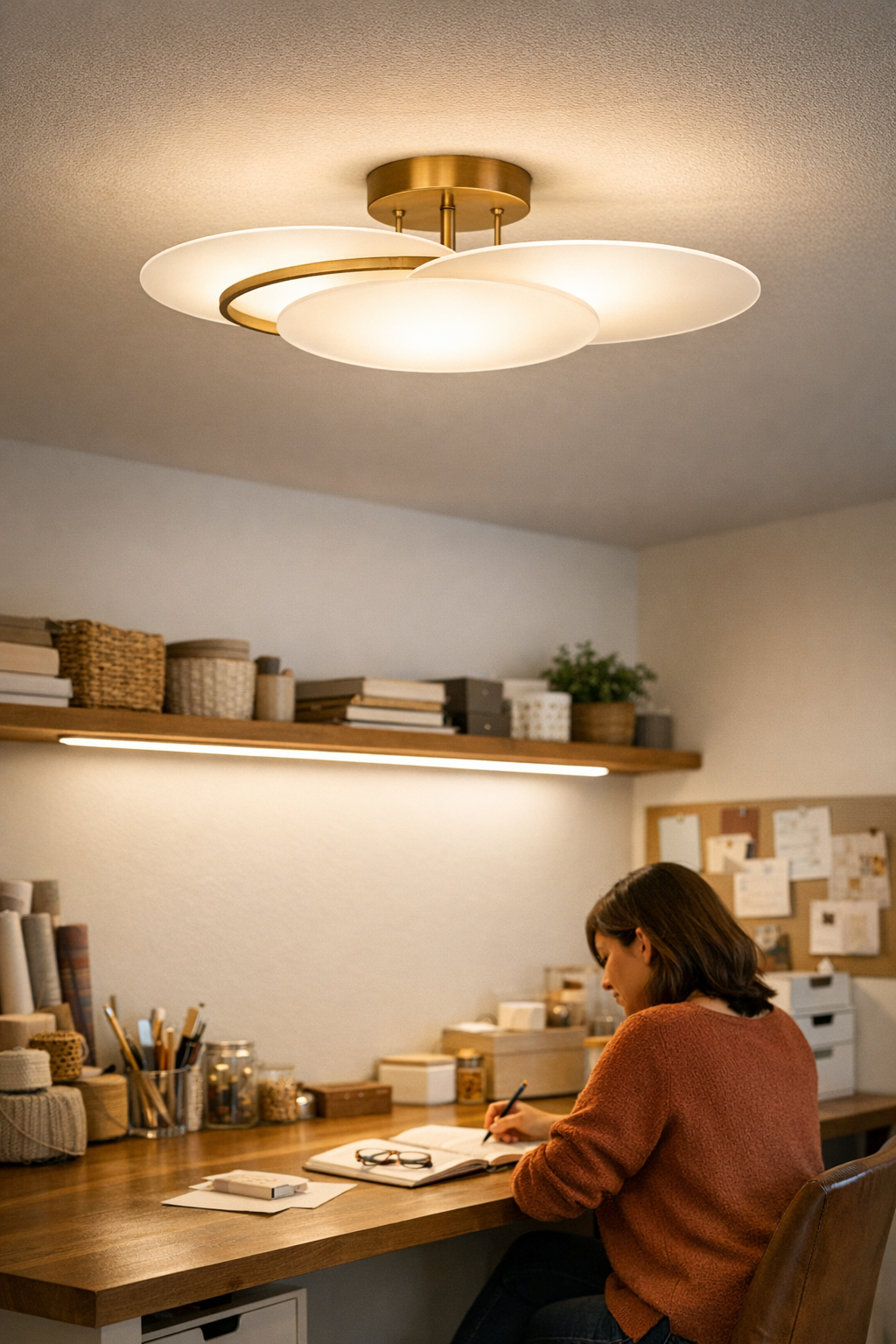
    Desks and work surfaces—especially in multi-use rooms—reveal these design gaps right away. Take a compact office with a dual-purpose craft table: overheads flood the main section, but the perimeter—where most tasks creep—stays persistently dark. By evening, someone’s fetched a spare lamp, its wire looping unpredictably across busy paths, creating trip risks or crowded outlets. Each workaround stacks more stress, and reaching for a plug or shifting tools mid-task becomes part of the expected struggle.

    Every new device, rearrangement, or shift in the day’s use exposes fresh limits. The sense of a “clean plan” turns brittle—now it’s just a shell over constant patching and cord wrangling, with small physical irritations compounding into real drag on comfort and flow.

    Lighting the Edges: Subtle Fixes with Lasting Impact

    Flooding a room with more overhead light rarely solves these edge failures. The improvement comes from pushing light—not just out—but right to the places your routine breaks down. A slim LED bar along the desk edge flips the script: previously murky corners become plainly usable, with no more angling a lamp or blocking your own shadow. Instead of chasing visibility, the brightness lands where your hands, papers, or tools actually sit. You no longer need to reshuffle light sources after every meeting, craft session, or late-night read.

    Cable discipline shifts from “temporary tidy” to a quietly stable baseline: integrated routes and brackets mean wires retreat from your daily field of vision and physical path. No dangling reminders; no subtle daily re-cluttering. Tiny hardware choices here directly reduce distraction and pre-empt rework as the ways you use the room flex.

    Not Just Overhead: Bringing Light Down to Usable Level

    Most failed setups rely too heavily on centralized, ceiling-mounted lights. These setups produce a glare zone directly under each fixture and under-serve shelves, desk perimeters, or display edges. Move your laptop three inches, and you’re back in shadow. Place a notebook along the outer quarter of the table—a real-life behavior—and it falls into the half-lit gray. Even a well-placed fixture, if not paired with low-profile, targeted light (under-shelf strips, panel LEDs, plug-in runs), can leave users trading off between too-bright central spots and dim, frustrating gaps at the margins.

    It isn’t only about prettier light—it’s about breaking the rhythm of interruption: surprise glare when standing up, stumbling over a pop-up extension cord that wasn’t meant for daily visibility, or juggling too many support brackets just to keep things in reach but out of the way. Each missed cue is a minor drain on flow.

    Practical Setup Observations

    • Frequent Lamp Relocation: If a lamp gets pulled and pushed constantly, your ceiling coverage skips the zones you actually use—especially surface edges and work corners.
    • Cable Sightlines: When the first thing you notice is wire—not workspace—your support plan has failed quietness. Bracket and route decisions up front erase daily visual and physical obstacles.
    • Shadowed Corners: Rooms that seem evenly bright under direct daylight reveal surprise shadow pockets at night or under bad weather. Test each area against your real schedule, not a perfect daylight walkthrough.

    Reducing Routine Hassle: Small Adjustments, Big Difference

    Lighting setups that truly support daily life earn their keep with a handful of low-drama, high-payoff tweaks. A targeted under-cabinet LED eliminates the nightly search for a flashlight or stray desk lamp. Cables fixed along support lines—not swinging loose—mean less visual noise and fewer stumbles. A secondary plug-in light at the far edge of a surface lets you stop moving your chair just to get clear, shadow-free visibility. The fixes aren’t flashy; they’re friction-stoppers.

    The acid test: when lighting stops dominating your awareness, and your attention sticks to work, crafts, or conversation, you’ve landed closer to the right setup. It’s not about being impressed by your own lighting, but about using a space that just gets out of your way.

    What “Evenness” Really Delivers: Quiet Comfort Over Time

    Perfect grids on the ceiling mean little if your routine still catches on surprises. Lighting evenness isn’t symmetry—it’s whether every used surface matches your actual habits: clear, consistent, no rerouting, no visual static. The test comes weeks later: are the cables still discreet, are brackets only visible if you look for them, do shadows creep in when schedules or seasons change? The best setups quietly track what you do, adjusting once, then holding steady—so you spend zero time second-guessing the light or moving things out of the way.

    Tips to Keep Everyday Use Smooth

    • Supplement close to routine points. Mount a narrow LED along the edge you use most, not just around the room, for practical, lived-in coverage.
    • Choose bracket and cable solutions that reinforce your lines of movement. Route wires off worktop edges and out of footpaths; integrated support hardware is often quieter than decorative.
    • Audit for reality, not ideal images. Meet your space in the evening, test your real patterns, and watch for any surface that sends you hunting for more light or hiding from cables and glare.

    A room that stops forcing you to tweak, shuffle, or tolerate small annoyances is what holds up in real use. Setups that still demand intervention after move-in weren’t actually finished; setups that need nothing more than being used are the ones that last.

    Shop LightSupport for smarter indoor lighting and cable support solutions

  • Why Your Dog’s Favorite Blanket Corner Shapes Daily Rest Habits

    The weak spot appears right after every walk or meal: your dog heads straight for their usual blanket corner—only to stall if it’s folded, shifted, or tangled. A few seconds pass. Circling, nose-prodding, that expectant glance—they’re all signals you’ve seen before. It’s subtle at first, just a pause where quick settling should be automatic. But as you move the blanket for laundry, tuck it aside for vacuuming, or accidentally flip it the wrong way, those disruptions pile up. Suddenly, your daily routine is haunted by split-second delays: a leash draped over a half-folded blanket, a water bowl in the wrong position, a comfort item blocking your path as you hurry to reset the room. The day keeps moving, but with drag you can’t see until it’s built into habit. What looked like harmless comfort now becomes a repeated snag during transitions—the kind you only notice because you keep having to reach, straighten, or explain why your dog just won’t settle on cue. This is where DogPile’s world of repeated-use setup comes into focus: not with show-dog neatness, but with corners, access, and rhythms that actually fit real daily flow.

    Why Dogs Anchor to the Same Blanket Corner

    This isn’t just “my dog likes soft things.” Dogs build patterns around anchors—predictable, repeated, always-in-the-same-place comfort points. After walks or feeding, that blanket corner isn’t just fluff: it’s the permission slip for downtime. When that precise zone shifts—folded differently, moved to mop the floor, overlapped by a toy or crate—the effect is visible. Your dog’s routine trips, not because of the blanket’s softness, but because the anchor cue vanished. Suddenly you see the results: sniffs, circling, nudges, waiting. It’s a negotiation, not an automatic return to routine.

    The Overlooked Source of Routine Friction

    Most owners miss that the real trouble isn’t the blanket’s material or the size—it’s that physical anchor. Lose it by cleaning, tidying, or folding absentmindedly, and you create a tiny but persistent break in the post-walk handoff. Each time you move or rotate that favored spot, rest needs to be re-negotiated. Now, instead of a smooth transition, your dog hesitates, and you’re forced to untangle, adjust, or guide. These micro-stalls are easy to disregard—until you’ve lost five minutes finding every missing cue in a week of routines.

    How Small Disruptions Become Repeated Stalls

    It seems minor: a slightly misplaced blanket, a towel blocking the leash hook, a food bowl nudged out of line. But after each walk or meal, these small misalignments trigger a growing pattern. You’re juggling bags or groceries, maybe wiping paws, reaching for that one tool you always need—only to realize it’s behind a comfort item, folded with the wrong edge up, or simply missing from its default spot. Instead of a fast reset, you get a stop-start rhythm—one more loop around the room, one more dog circling longer than usual, one more pause layered onto an already busy window.

    It stacks up fast. The setup you thought was “organized” asks for constant small interventions: straightening, shifting, refolding, or even calling your dog back over because they refused the new placement. Your own movements slow down every time their anchor isn’t where expected. Functional order gets quietly undermined, not by chaos, but by details just off enough to break the flow.

    When Comfort Becomes a Setup Weak Point

    The visible comfort zone can hide invisible friction. A neat blanket might look organized, but if it means you’re always unboxing, smoothing, or adjusting to get your dog to settle, you’re paying for “tidy” with time. You’re not just resetting the fabric—you’re resetting your patience. That repeated pause, those expectant looks or sighs, serve as reminders that every convenience for the eye can turn into a setup weak point as soon as real-world repetition returns.

    The Cumulative Drag of Routine Pauses

    Tiny interruptions start to echo louder by week’s end. You notice this after dinner, after late-night walks, or any time a rushed transition drags. Patterns emerge:

    • Blanket in the laundry: Dog stands, stares at empty space, paces until you grab a stand-in. Now you’re hunting for a backup right when you’d rather move on.
    • Spot is there, but misfolded: Dog noses, circles, waits—refusing the offer until you get down to tweak the setup. Dinner waits too.
    • A visiting dog mixed the edges: Your own dog hesitates, checks ownership, then waits for you to intervene before settling. Another lost minute as you play referee.

    The routines “work”—but slow. The underlying drag isn’t chaos; it’s a tangle of small, recurring corrections that build up, especially during transitions you rely on to keep your day moving.

    Reset Friction—Seeing the Real Signs

    Most people only catch routine friction when it becomes impossible to ignore: the dog double-circles, sighs audibly, or pauses at rest as if something’s missing. Each little fix—unfolding the blanket just so, moving the toy out of the way, explaining to your dog (again) that the corner is coming back—turns routine management into a series of micro-explanations. It’s not stubbornness. It’s setup resistance: the difference between a functional cue and a daily stall.

    Background Stress from Repeated Tweaks

    Every time you stop to adjust the resting place, guide your dog, or free the bowl blocked by a loose comfort item, it costs attention you didn’t plan to spend. By the third or fourth reset, you’re not just fixing a blanket—you’re feeling the drag in your own routine. The real impact is cumulative: transitions meant to be smooth become peppered with minor but insistent interruptions, steadily eroding post-walk calm, post-feeding downtime, and sleep prep flow.

    Designing a Reliable Dog Rest Setup

    Swapping in a plusher blanket or a bigger bed isn’t enough if its anchor keeps shifting. What matters is choosing a rest spot that maintains its orientation, familiarity, and access through daily traffic. Keep the anchor consistent: same location, same direction, same way of unfolding. Resist the urge to “tidy” by shifting or folding something that’s already working. Make sure other essentials—leash, towel, wipes—aren’t hidden behind comfort items. Position food and water bowls within direct sightlines of the rest spot, so after every meal, your dog turns and lands, not searches and negotiates. At scale, one less circling moment equals one less strain on your own next step.

    Observing and Adjusting, Not Forcing

    When you’re sharing space—visiting dogs, moved chair, vacuuming marathon—don’t chase symmetry or tidiness for its own sake. Offer a second soft spot nearby and see which one earns true repeat loyalty. Space comfort corners farther apart if you notice dogs crowding or negotiating the same edge. Use the pattern of their choices as your guide: true consistency is measured by which setup they return to, week after week, without your prompting.

    The real goal isn’t picture-perfect order but a backdrop that disappears from your attention—because neither you nor your dog needs to “fix” it in the middle of a normal day.

    When Setup Looks Right but Still Fails Routine

    Plenty of setups read as organized—blanket folded cleanly, bowls lined up, toys in a corner. But if routines keep breaking down—circling instead of settling, repeated nudges for help, migration of items into the wrong space—that’s the true report card. The dog cares less about aesthetics and more about frictionless permission to rest. If every settle feels like a negotiation, your “neat” layout is still failing real-world rhythm. The right setup doesn’t demand reminders; it lets everyone move past it without extra work.

    Spotting Early Warnings—Routine Drag Signals

    The pattern is clear when you look for it. If every leash grab sends you rerouting around a bowl, if every walk-in finds a blanket blocking the doorway or bedding migrating into cleanup space, the cost is visible. These aren’t just stray items—they’re repeated setups that keep interrupting the next step, especially during ordinary, high-traffic moments. Pay attention after each routine transition: when your dog expects their anchor spot and hesitates if it’s not available, that’s your adjustment point. Don’t just tidy or rearrange: make the access, anchor, and pathway work repeatedly in your actual schedule.

    The Usability Difference—Not Just Cleaner, but Smoother

    The target isn’t a prettier room or a blanket that never moves. It’s less interruption, fewer silent negotiations, and quicker returns to baseline—so real routines can stay on track even after the third walk or a muddy afternoon. When setups serve their anchor purpose—visible, accessible, unfussy—both comfort and flow return. For setups, tools, and practical solutions that fit the real pressure points of daily dog life, visit DogPile’s

  • Hidden Desk Clutter That Slows Your Workflow and How to Fix It

    The trouble starts when your desk looks controlled, but your feet, knees, and chair never get a clear path. A surface wiped clean of pens and cables doesn’t mean your workflow is smooth. Under the desk, cable piles slow the chair, power bricks drift, and that storage bin you introduced for “order” quietly eats into legroom—until every entry to your workstation turns into a nudge or a workaround. You roll forward and scrape your shin against something you meant to contain clutter. By day’s end, you’ve paused three times to untangle a wheel, clear a path for your bag, or reach behind a drawer that’s never quite out of the way. The surface looks ready, but every transition is slower, and the routine stalls start collecting—unseen, but constant.

    The mistake is easy to make: under-desk headaches blend into the everyday shuffle until each session starts with minor course corrections. In most real-world setups—especially tight home offices—it’s the spaces below that test the logic of the layout. That zone is where the system either supports your natural movement, or it quietly fights you. Early signs barely register: a cord that snags a shoe, a knee nudged off-center, a bin that feels “temporary” but sticks around for months. After a week, friction shifts from barely-there to a foundation of your routine:

    • Chair wheels trapping themselves around stray power cables, breaking concentration mid-reach.
    • Knees squeezed by a misaligned storage unit, making every stretch or posture shift a negotiation.
    • Cable clusters that pass a visual scan but drag along every time you switch devices or shift a bag.
    • Bins ending desktop pile-up—only to swallow the walkway needed for an easy reset between tasks.

    The Illusion of Surface Clarity: What Hides Beneath a Tidy Desk?

    The common trap: polish the top of the desk, then offload everything else underneath, trusting that out of sight equals out of mind. It works for about a day. Cable trays deliver instant visual relief—until you try charging a second device or trade adapters and wind up wrestling cords through a cramped tangle. The neater it looks, the slower it responds to real-life adjustments.

    Rolling drawer units promise control, too. Everything gets a slot, but now the drawer box inches into your path. By mid-morning, you’re rolling your chair away to grab a notebook and the bin wedges your foot, or sticks out just enough to angle your whole position off-center. The organized desktop quietly builds new interruptions underneath: you exchange clutter above for hidden obstacles below, trading visible mess for compressed movement and slower transitions.

    Where Daily Friction Begins: The Moments That Break The Flow

    A workstation passes or fails not when you first sit down, but in the details of every return, stretch, or device switch. Most friction isn’t dramatic—it’s constant:

    • Your bag knocks a power brick from its spot, unplugging something essential mid-call.
    • Extending your leg bumps a bin that’s migrated into your main path for the fourth or fifth time.
    • Plugging in a headset means ducking under the desk, prying apart a cable cluster, and re-emerging with your focus dinged.

    These are not outlier moments. Add a monitor arm, introduce a tablet, or file desk supplies into a rolling cart, and each “solution” can shift friction from one place to another. Hiding gear below is efficient—until every added object becomes a new minor obstacle. Over a standard week, these detours slow resets, crowd movement, and quietly steal more time than any surface clutter ever did.

    Clearing a Path: Small Shifts That Made The Space Work (Not Just Look Tidy)

    Order below the desk rarely comes from adding another box or bin—it comes from removing the quiet friction points. When one rolling bin was pulled entirely, the result wasn’t just visible space: for the first time, chair movement from desk to wall happened in a single glide, not a sideways “s” around low obstacles. Adjustments got faster. The route to stand, switch notebooks, or come back during a break required almost no correction.

    Power cables used to snake along the floor, waiting to catch ankles or block chair wheels. By mounting a power strip to the back edge of the desk with a clamp, all cord slack left shoe and wheel space, instantly killing off cable drag and reducing daily resets. One clear 12-inch corridor—bare, straight to the wall—meant every return felt lighter and nothing needed to be pushed or rewound. Even under a heavy workweek, the setup re-centered in seconds, not minutes.

    Functional Tweaks You Actually Notice

    • Mount power strips off the ground: Secure them to the desk’s rear edge or into an elevated tray; outlets are accessible, and all the plugs stay outside the chair’s wheel-path.
    • Anchor cables above leg level: Use clips or a cable sleeve under the desk—cables stay parallel to the back, not trailing under knees or shoes.
    • Designate one-sided storage only: Anchor any under-desk unit fully to a lesser-used edge, keeping the main entry and leg zone unobstructed. Any storage you roll in and out is likely to end up in the way.
    • Edit, don’t accumulate: Each extra bin or cable box multiplies interference. The less you have to alter your line of movement, the more fluid every reset and shift becomes.

    Everyday Questions: Getting Under-Desk Setup Right

    Where should cables and power strips go to minimize under-desk friction?

    Clamp power strips to the back edge of the desk instead of letting them rest loose on the floor. Route all primary cables directly along the underside, behind and above where knees travel—leg and chair movement should never have to dodge stray wires. For frequent swaps, cable clips let you pull or add cords without dislodging the entire setup or reaching into a mess.

    Rolling drawers vs. fixed storage—what’s actually less disruptive?

    Rolling drawers rarely behave as intended in limited spaces—after a week, they end up floating into high-traffic zones, blocking the natural approach for legs and chair. Fixed storage, anchored far to one side (the non-dominant leg), always keeps the main movement lane free. For repeated resets, immobile storage is clearer, while anything rolling quickly becomes friction you have to manage.

    What’s the most common under-desk mistake that kills flow?

    The pattern is always overcrowding: too many things vying for the same inches of movement path or plug access. If cables or boxes are anywhere in the main chair glide or leg extension zone, every transition gets harder. If sitting down or shifting out feels like a tactical puzzle instead of a single move, the under-desk plan needs a reset.

    Predictable Pathways, Not Just Cleared Floors

    Workstations that actually perform—especially over high-repeat sessions—rely on predictability below the desk, not just looks above. The only success test is whether you can slide in, shift leg position, and get up for a break without noticing the storage or the cables at all—every single time. After a day of interrupted resets, or a week of nudging bins to reach the screen, the “neat” desk shows its gaps.

    Often, fewer under-desk features mean better daily function. Instead of more organizers, start subtracting or sharply limiting anything that overlaps main movement or power routes. When cable paths, plug points, and storage units are set and clear, the gain isn’t surface order, but the vanishing of small distractions: you stop thinking about barriers altogether.

    If every workday starts with minor corrections, try removing one storage piece, lifting the cable cluster, and carving out a single clear chair lane. Most setups feel instantly lighter, and that fast, brainless re-entry is the whole point of an effective under-desk design.

    Explore the full WorkBasic collection

  • Why Wall-Mounted Storage Outperforms Floor Units in Busy Workspaces

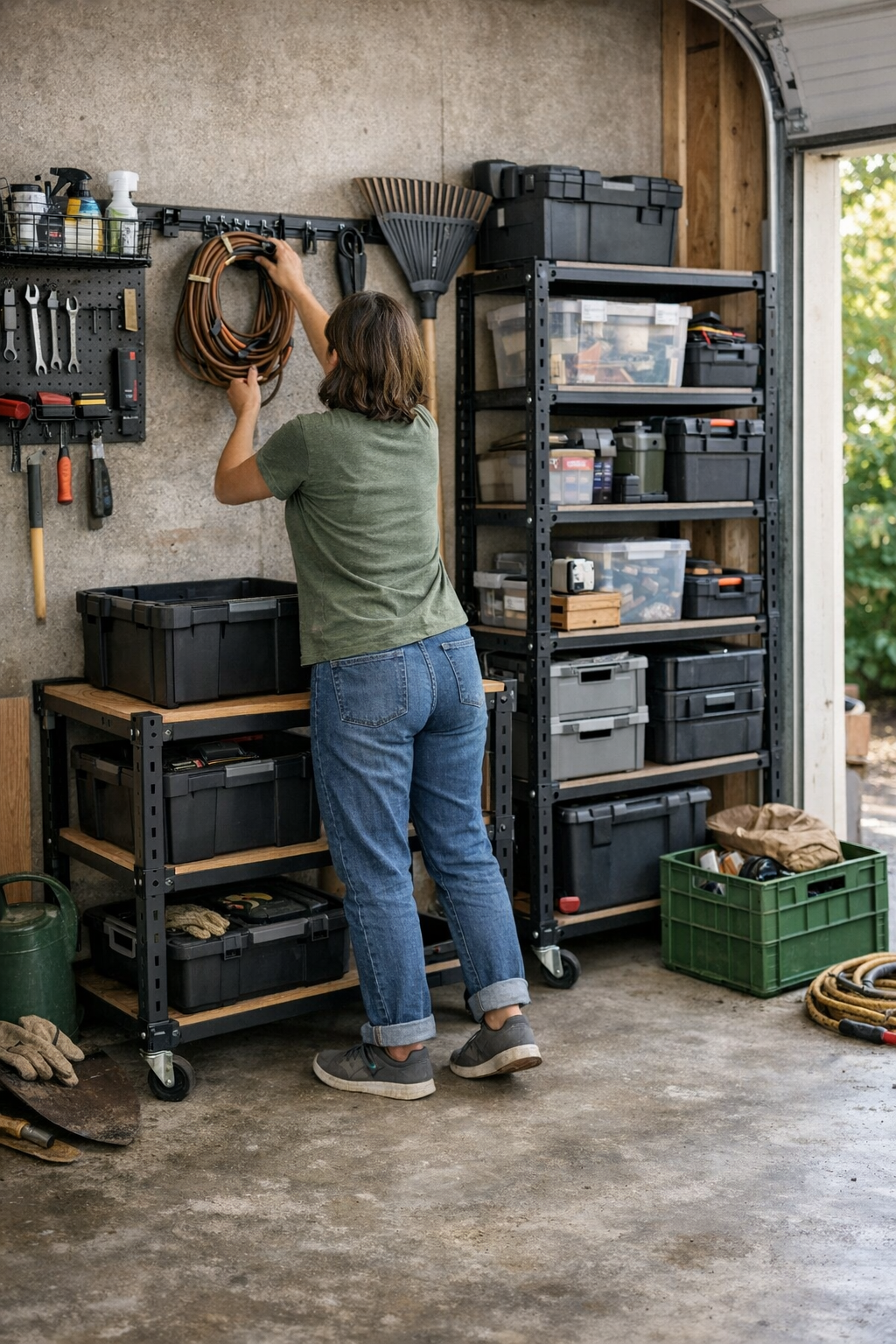
    The real mark of an organized garage or workshop isn’t how it looks after a deep clean—it’s whether you can move, grab, and reset gear easily, day after day. The frustration comes not from a pile of clutter, but from a setup that turns every reset into a minor obstacle course. For all the talk of order, a space that seems “organized” on Saturday morning can quietly unravel by Wednesday, especially when floor units trap movement and collect overflow. In contrast, wall-mounted storage supports your routines—keeping paths clear and resets near effortless, no matter how many projects run back-to-back.

    Beyond the First Clean-Up: Where Friction Actually Starts

    That first hour after a big reorganization—rows of floor bins lined up, racks standing tall—feels like a transformation. Tools are sorted, everything visible, the floor reclaimed. But the testing ground isn’t the “after” photo. It’s what happens when you’re coming in with muddy boots one day and switching out garden gear the next. Racks inch into walkways. Bins scoot closer to doorframes. Suddenly, the space that felt wide open becomes a series of small detours and awkward hesitations.

    By the second or third reset, the cracks really show. Shoes pause at the edge of a shelving unit that’s crept forward, or you hesitate before rolling a cart that’s blocking the main lane—again. Resets go from a sweep of the hand to a multi-step dance: move this, shift that, just to reclaim the movement you thought you’d built in.

    The Hidden Problem with Floor-Based Storage: Movement Interruptions

    Floor units organize your gear—but claim your space in the process. There’s an initial calm: modular bins, racks, and carts suggest flexibility. Then daily reality intrudes. You haul out a lawn mower, return with a half-used tool bag, or grab a cleaning bucket in a hurry. A bin doesn’t make it back perfectly flush. A cart is left halfway between bench and exit, subtly wedged where you need to walk.

    Soon, what once held overflow becomes a magnet for it. A shovel is nudged to the wrong side of a freestanding shelf and stays there all week. Gear piles up against the “front row.” High-use zones morph into clutter traps, while corners sit empty or awkwardly unused, since floor storage is hard to move once overflow collects.

    Real Example: When Floor Overflow Slows Everything

    Picture the typical weekend reset. Hoses dry out by the wall, boots come off in a hurry, an overstuffed bin lands where you normally turn the cart. By Wednesday, you need to slide that bin aside just to carry groceries through, then shove a project crate back in line. The five-minute tidy becomes a multi-step routine: move-bin, pick-up, restore-path, repeat. The result isn’t chaos, but a slowing drag—more shuffling, less progress, every single week.

    Wall-Mounted Rails: Preserving the Flow of a Working Space

    A simple rail along the studs, a tidy bank of wall hooks, or a mounted rack seems almost insignificant at setup. But the shift in daily use is profound. No more stepping around bins or finding the cart’s in your way again. The floor stays open, with clear lanes through every high-traffic area—even on the busiest days.

    Returning a broom or tote is a direct movement, not a puzzle. The “return path” never gets choked with overflow, because everything parks above ground zero. The result: access stays quick, resets shrink back to seconds, and the garage feels ready for actual work—not just for show.

    Resetting Doesn’t Have to Get Harder—If the Floor Isn’t in Play

    Take away just two freestanding bins and you feel it instantly: straight-line movement between entry and workbench, no more weave-and-dodge through awkward footprints. Overflow tucks onto the wall or hangs in dead vertical space that never got used before. Resetting stops being a chore because there’s nothing left to drag, stack, or shuffle first. The area simply works, over and over, without a hitch.

    The True Cost of “Making Room” Again and Again

    Any floor footprint—no matter how efficient on paper—becomes a bottleneck with regular use. Quiet Tuesday? No problem. Three weekends in? The rack near the workbench now demands a sidestep every time you cross the room. Routine movement slows to a shuffle. Tools get left out, not from laziness, but because the path back is cluttered.

    This slow build-up—the quiet reshuffling, the subtle blockades—creates a hidden tax on your time and willingness to put things back. Before you know it, tasks get put off, not because you don’t want to do them, but because you’ve learned to expect a micro-hassle just to find a clear route.

    Designing for Routine: Why Floor Space Matters Most

    Order should support movement—not interrupt it. The setups that actually last aren’t just about maximizing storage, but about minimizing interference with the everyday flow. Wall-mounted racks don’t fight with carts, tubs, or boots—they slip seamlessly into the backdrop. There’s rarely a need to “make room,” and resets keep their original speed even as the area gets busy.

    Practical Tip: Protect Your Return Path First

    When rethinking your space, don’t just count storage slots—walk the actual route from entry to bench to door. Any item that repeatedly needs shifting—a cart, a bin, that “temporary” rack—is a candidate for the wall or for removal. Sometimes eliminating a single floor piece opens up an entire workflow and stops overflow before it ever starts.

    How Wall vs. Floor Storage Really Performs

    Why do wall-mounted rails keep things simple? It’s all about keeping the reset direct: grab, use, return—in one motion, with nothing to step around. The floor stays clear for work, and overflow never gathers in the main lane, so daily order is easy to maintain.

    Where do floor systems fall short? Anything that sits where you walk will become a landing spot for stray gear, stray bags, and the unfinished business of daily projects. More steps, more shifting—and more frustration with every round of cleanup.

    What are the pitfalls of wall setups? Overcrowd a wall or misplace the hooks, and you end up with dead corners or a jumble of tools that don’t really see use. However, unlike floor clutter, these issues don’t block movement—they just waste potential, which is a much easier fix.

    Reset Routines That Make Sense After Real Use

    The best setups don’t just look good on reset day—they stay easy for months of actual, messy use. Wall-mounted storage keeps lanes open and routines intact, so you spend less time reshuffling and more time actually working. Clutter has nowhere to collect and it’s clear what belongs where—so there’s never a question of “where to put this” when you’re done.

    If you want storage that works with your movement, not against it, start with the return path and keep your floor as free as possible. See storage options built for real-world resets at StackNest.

  • How Vertical Storage Solutions Keep Utility Rooms Organized Under Pressure

    An entryway doesn’t fail because it looks messy—it fails the moment it can’t bounce back from your real, repeated comings and goings. You set up shelves, a bench, maybe a few baskets. At first, everything holds. By midweek, though, shoe rows sprawl past their bounds, bags edge toward the door, and the bench—meant for a quick sit—gets buried. What started as “just for now” becomes the default: gym bag on the bench edge, umbrella halfway off, out-of-season boots waiting for a spot but never quite making it back. The problem isn’t a lack of storage. It’s the way the system starts dragging—resetting takes too long, categories blur, and the pressure to maneuver through the threshold grows every day. The entry space you wanted to smooth your routines now slows every exit and return.

    Where Well-Intentioned Setups Break Down

    On paper, a couple of shoe shelves, a low bench, and a few baskets tick all the boxes. In actual use, their limits show up fast. Shoes stray and multiply, forming new lines along the tight walkway, forcing you to zigzag instead of stride. The bench? It hosts one bag, then two, then a scarf, then the mail—a seat turning into an obstacle course. Temporary piles go ignored, then harden into permanent clutter, as each rushed day lets the overflow stay put. Five days later, the “system” looks intact but works against you every time you need to move quickly or share the space.

    Blocked movement is the early warning sign. If grabbing a coat requires unstacking a pile or shifting three bags, your storage isn’t keeping up with your pace. Instead, it piles on friction—forcing micro-decisions and repeat work each time you step in or out.

    After the Initial Calm: Signs of Creep and Drift

    Organized storage holds just long enough to deceive you: it looks fine day one, even day two. But watch the space after back-to-back school runs or two wet days in a row:

    • Shoes overflow, forming a second, unofficial row at the entry to the hall.
    • Bags and spare gear huddle in corners, squeezing out space for daily grabs.
    • The “just for a minute” bench pile becomes a layer you have to move before sitting.
    • Mail, bottles, and odd objects wedge their way onto any flat edge, crowding out the gear that should be easiest to reach.

    Category drift takes over: Items blend zones, half-in, half-out. Suddenly, there are boots in the mail tray and keys tangled with hats. The more surfaces get used, the more you improvise—and the more time and energy every reset demands.

    Real Rush, Real Friction: Everyday Use Scenes

    The Drop and the Backslide

    Picture the morning rush: someone searching for shoes among the pile, backpack half-zipped on the edge of the bench, keys missing under yesterday’s scarf. Cubbies and bins exist, but full or wet hands make shortcuts tempting—so items settle on the closest open spot, even if it blocks the path. One stray bag turns three shoe spots into trip hazards. Instead of grab-and-go, you get bottlenecks, sidesteps, and forced apologies just crossing the threshold.

    The Spread of “Just for Now”

    Deep bins and big baskets hide the mess at first, but by Wednesday, you’re fishing for a glove under last week’s mail or shifting art projects to reach today’s essentials. Every temporary dropzone raises the barrier to a true reset. Give it a few days, and it’s no longer a quick pick-up—now it’s an hour-long dig, or nothing at all. By Thursday, the “cleanup” isn’t a routine, but a postponed project.

    Vertical Versus Horizontal: Why Shape Wins Under Pressure

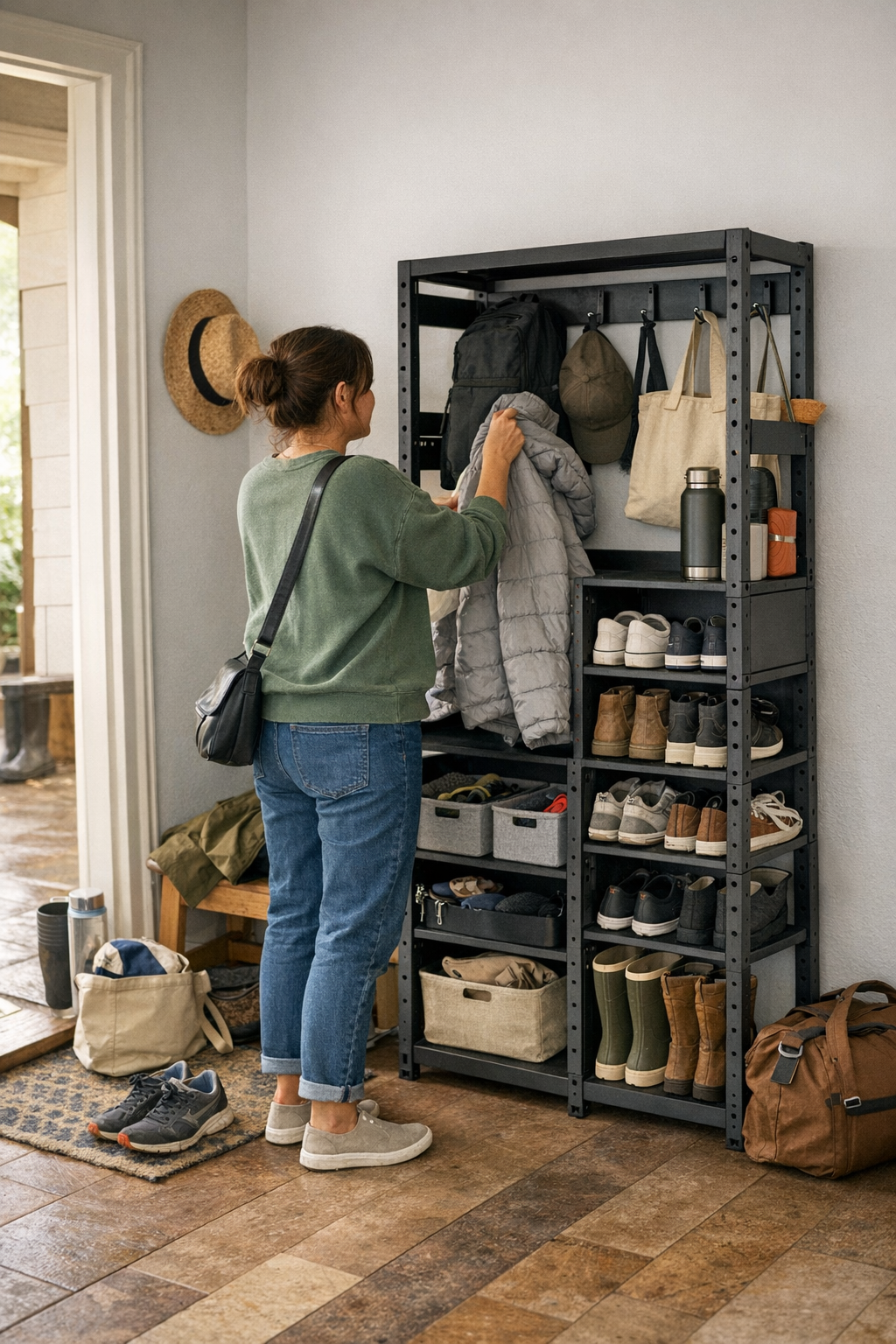
    The orientation of your storage controls your entry flow. Wall-mounted racks and slim, segmented vertical units force each item type—shoes, bags, hats—into a visible, easy-access zone. There’s nowhere to let clutter hide. Vertical shapes preserve walkways, so overflow can’t sprawl across your only path out. Category boundaries stay obvious, making it clear what’s out of place and where the reset should happen.

    By contrast, benches and deep horizontal bins invite trouble. The broader the surface, the wider the slow spread: shoes crawl out, stray mail stacks up, and the “quick grab” zone clogs up by midweek. Heading out means shifting things just to make space—which quietly lengthens every re-entry and exit.

    Making Returns Effortless: What Actually Holds Up

    The best setups that last through real-life pressure all do the same things:

    • Shallow, divided landing spots: Each item group has a clear zone. Returning it is direct and visual. Deep bins disguise the mess but never make routines easier.
    • True open access: Shoes or bags drop back into place with one hand. No stacking or re-arranging to find a spot—meaning less excuse for “just for now” piles.
    • Pathways stay open: Walkways never narrow around collected gear, because vertical setups fence in drift. You pass through, not around, your storage.
    • No awkward steps: If the return takes too much effort—moving other items, opening lids—the routine breaks. Survival setups make returning a habit, not a task.

    The difference is measurable each time you reset: a clear, segmented structure shrinks “reset” from minutes to seconds. The urge to just drop things disappears when the return spot is unavoidable and easy. By the end of a wild week, a quick pass is all that’s needed—not a drain of your Sunday energy.

    Signs Your Setup Is Quietly Failing

    • Are you always shifting something just to reach the door?
    • Do shoes and bags disperse further by Friday than they began on Monday?
    • Does restoring order mean committing half an hour, not half a minute?
    • Are deep bins and closed cabinets used for offloading, not daily routines?

    If any sound familiar, your entryway isn’t disorganized—it’s working against you. It looks passable, but eats up extra effort with every threshold crossing. Until each category gets a fast, reliable home—visible, ready, easy—you’ll keep battling the same cycle: drift, delay, and rework.

    How Better Structure Cuts Down on Reset

    The only setups that survive repeated, real-world use are those that match the way you (and other people) move through the threshold—hurried, unplanned, loaded down. A segmented vertical rack, clearly split for shoes and bags, redirects every item back to its corner. Shoes don’t flare into walkways. Bags don’t seed new drop zones by the door. Everything returns with less effort, so the reset is a minute, not a mood.

    The gain isn’t in showroom looks or first-day perfection. It’s day-five function: smooth entries, clear paths, friction cut down to size. The entry zone won’t ever be spotless, but it won’t slow you down. In a space built for real-life churn, you notice: the biggest change is how little you have to think about it after the setup actually fits your routine.

    For practical storage setups that actually stand up to rushes, weather, and the routine drift of real life—not just the first day’s organization—visit Betweenry.

  • Why Weekly Litter Box Edge Cleaning Prevents Hidden Cat Messes

    Most indoor cat homes look clean after a quick sweep, but under the surface, the real mess keeps returning—and keeps interrupting your day. You wipe the visible rim, vacuum a few scattered grains, call it handled. But by the time you’re resetting a feeding area, topping up water, or moving a mat to reach the edge, the friction comes back: persistent litter in the same thin strip where box, mat, and floor meet. Each “clean” reset buys hours, not days. The routine repeats—a little slower, a little less comfortable, one more unseen patch spreading into the paths you actually use.

    The Problem Line: Where the Litter Box Looks Clean but Feels Wrong

    Setups often start with a covered box on a mat, bowls nearby, a towel or cushion for comfort. On day one, this all feels in control. But a silent weak point emerges fast: the narrow margin at the rim where plastic meets floor and mat. Tracked litter sneaks out every time a cat jumps in, digs, or you do a late-evening scoop. It builds invisibly in those thin bands, just past the mat’s edge or under its curled lip.

    No matter how expensive the box or how plush the mat, grains cluster in the border that escapes daily cleaning. You notice it when kitchen socks crunch, or dinner prep means rescuing crumbs from under a baseboard. Each refill, scoop, and bowl reset pushes more grit where it’s least expected. Even a swept surface doesn’t hold up: comfort for the cat becomes inconvenience for you, as mess spreads on repeat through your regular paths—right where you prepare a meal or walk barefoot in the morning.

    Why Most Quick Cleans Don’t Stop the Mess

    Broom or vacuum runs clear the obvious, but ignore the thin, resistant band along the box’s rim and mat border. If your litter setup sits near a main walk-through, every daily overlap—from topping up cat food, to reaching for the vacuum, to stepping out of the bedroom—nudges more grains into circulation. Freshly swept looks mislead: new hard crumbs show up in the bathroom, or you stop mid-task to wipe the kitchen before breakfast.

    You end up spot-clearing more than planned. A brush for baseboards. A hand-wipe under the water station. Crumbs that evade every pick-up tool. The main problem isn’t neglect—it’s that surface-level cleaning can’t block mess that tucks itself just out of reach, only to emerge hours later in a smoother, once-clean room.

    The Weekly Edge Clean: Small Adjustment, Big Difference

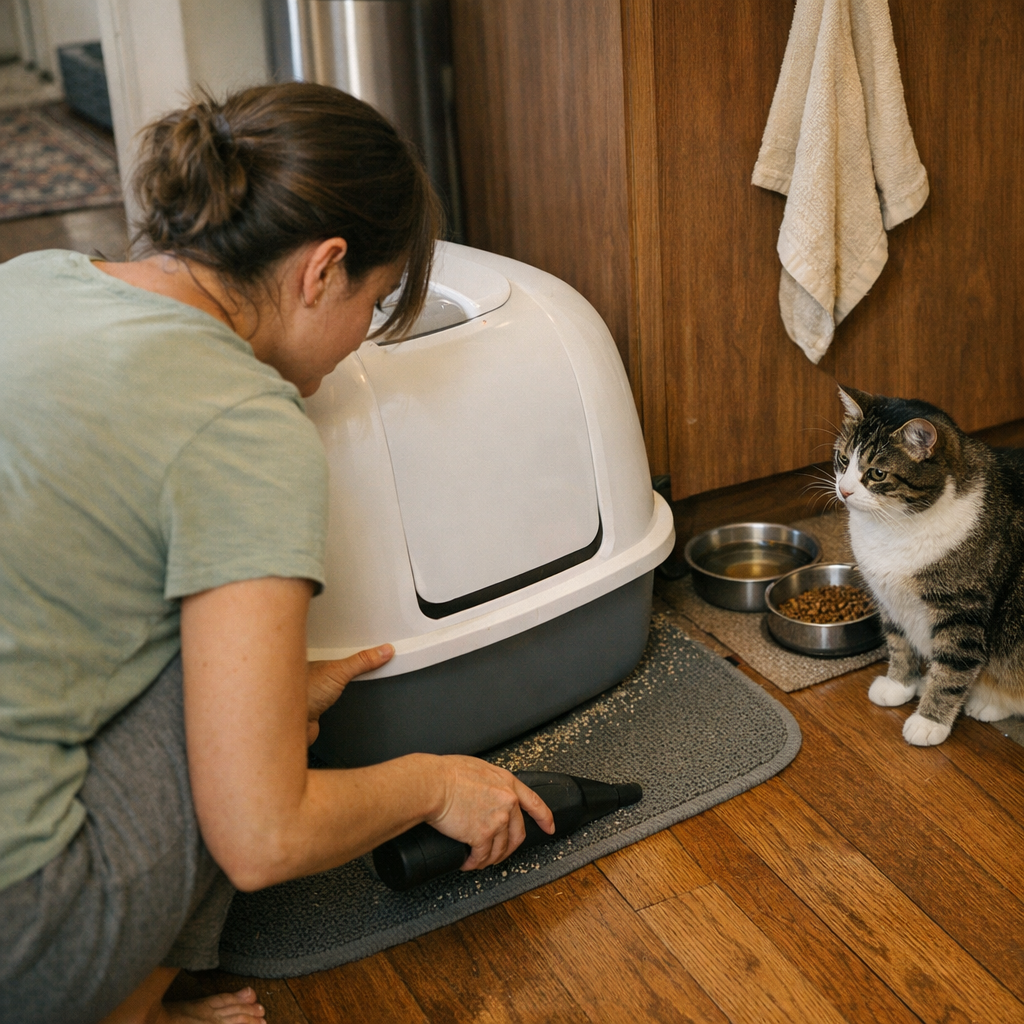
    There’s one shift that cuts the cycle: moving the litter box every week—just enough to reach behind and under the rim. This isn’t a full reset or deep overhaul; it’s about breaking the chain at its quietest link. Pick up or nudge the box a few inches. Run a handheld vacuum, brush, or damp cloth right along the edge. Peel back the mat, shake out the grains, and collect the litter that never appears on a daily walkthrough.

    This little reset prevents the “invisible spillway” from seeding your home with new grit. You don’t need to revamp your routine—just intercept the edge before it turns into a bigger problem. Within days, you see the pressure points fade:

    • Less litter stuck in mat corners or pressed into floor seams
    • Cleaner zones around food and water stations, so you don’t have to reach for a wipe between breakfast and litter scooping
    • Fewer surprise crunches underfoot on main walkways and kitchen entries
    • A cutoff in the chain-transfer of mess from the “litter zone” to every shared corner of your living space

    More than anything, your reset routine shrinks—and the cycle of endless touch-ups starts to taper off.

    What Real Use Looks Like: The Slow Spread vs. The Quick Reset

    Picture the test: a litter box pressed against a wall, mat underneath, food and water bowls a foot away. It looks tidy after a sweep, but by day two, there’s a tactile reminder—a grainy edge under your hand when you reach for a bowl, or stray litter showing up when you drag over a chair. Topping up water? You’re pausing to swipe a finger between mat and floor. Shifting toys? There’s a pocket of grit pooling in the crease. In the hallway or by shared space, edge buildup multiplies faster—cat routines and human routines keep dragging more litter further afield.

    The real-world sign: When your hand reaches for the refill scoop and you feel edge grit you missed. When supplies are in place but shielded by persistent crumbs. When a mat that looked settled turns out to be hiding a full new cleanup job underneath. That’s the signal: the setup is working against you, spreading out slow inconveniences until resets and walkways both start to drag and routines that initially felt “good enough” now require triple the attention just to stay under control.

    Making the Edge Part of the Routine: How and When It Matters

    The true test isn’t surface appearance, but how a full-use cycle exposes the edge buildup. Weekly edge cleaning isn’t glamorous or complicated, but it flips the long-term upkeep equation. How to work it in, so you stop trailing the problem:

    • Time it with your routine. Reset the edge during refill or scoop days—when the box already moves and the surface is open for a quick pass.
    • Shift, don’t just wipe. Even nudging the box a few inches reveals pockets of hidden grains along the rim.
    • Pull and check the mat. Fold or lift one side, and run a hand or vacuum along the border, especially if the mat sits up against a wall or cabinet base.
    • Target the margin—not just what you see. Where mat, box, and floor overlap, debris collects at double the usual rate and hides from typical sweeps.
    • Use a vacuum for tight edges. Cordless or handheld vacuums pull up embedded litter without recirculating the scatter that a broom just redistributes.

    The next day, you’ll experience the difference—fewer grains migrating past food bowls, less unplanned spot cleaning around high-traffic zones, and quicker resets that don’t turn into mini-projects.

    Compact Homes, Bigger Impact—Why Small Spaces Can’t Ignore the Edge

    In smaller apartments or multi-use rooms, tiny missed piles become instant interruptions. A forgotten margin spills into the kitchen, across the hallway, or under the only clear workspace. If you’ve ever switched steps to avoid a gritty patch or paused in the middle of breakfast to pick up litter stuck to a mat, you’ve seen how fast a small overlooked area can hijack flow in a compact space.

    Edge cleaning becomes a high-value routine in these places. That two-minute weekly swipe means fewer loops across the entire room. Instead of always seeming one cycle behind, your litter corner, mat, and shared paths start working together—less sidetracking, less reshuffling, fewer last-minute pauses to rescue the rest of your day from scatter overload.

    Mats Slow Tracking—But Only If the Hidden Zones Get Their Turn

    No mat stops grain migration entirely—especially not at the box/mat/floor border. Textured surfaces help, but most litter follows the path with the easiest escape: under mat edges, against baseboards, and deep along rim lines. Choosing a better mat is only half the fix. The true pain point is what gets shielded by a box pressed tightly into place, where you rarely check except during a full reset.

    Solution: weekly, lift or fold the mat, shake out trapped grains, check the border strip, and use a quick vacuum pass. These few seconds matter more than adding new surfaces or deeper grooves—this is how you actually keep litter from drifting into high-traffic areas before it becomes a pattern.

    The Takeaway: Why Edge Cleanups Matter More than Cosmetic Fixes

    Edge care isn’t a finishing touch. It’s the lever that keeps resets short and your rooms truly walkable. If you ignore the spot where rim, mat, and floor merge, you’ll always be caught by surprise crumbs and repeat cleanups. Put friction where it belongs—pick up the edge mess before it cycles out into every living area. The result: less backtracking, more usable space, and a setup that doesn’t steal time on each pass. Suddenly, even chaotic days don’t push your home into another mess spiral.

    See more practical indoor-cat-life ideas at StillWhisker.

  • Why Rigid Underbed Storage Bins Outperform Flexible Options Every Time

    The first morning with a new underbed storage bin always looks promising: every shoe, extra blanket, and batch of cables has a home. But two days into real use—reaching for gym clothes without waking anyone, or tossing shoes back after a late night—the cracks start to show. Flexible bins sag and skew; a neat pile at sunrise turns into a jumble by dinner. Instead of providing an easy out-of-sight stash, a flimsy underbed bin adds one more cycle of sorting, digging, and shoving—until the supposed organization is just hidden mess with a sliding lid.

    When Storage Structure Fails: Small Issues, Fast Friction

    Routine exposes what doesn’t work. Reach under the bed and feel a bin catch on a stray carpet edge; pull too hard and one corner collapses, sending a finished load shifting into a new confusion. Shoes wedge against the side, socks slip under books, and a tech charger presses into cardigan sleeves. Even if it looks fine once, the contents wander with every push and pull. One silent snag leads to a messier, less trustworthy zone. The cost isn’t all-at-once chaos—it’s the daily background friction: a return pile that starts blending categories, a mental note to “fix the bin” that never fits the week.

    Day after day, the setup slows you down. Each retrieval means resettling what shifted last time. Return flow breaks: you stop tossing things back in, or just shove them by habit, because keeping order isn’t practical. Underbed storage that can’t handle repeat movement becomes more avoided than used.

    Why Most Underbed Bins Collapse Under Real Pressure

    At first glance, a set of matching storage bins looks like an instant upgrade from piles creeping into floor space. But most soft-sided bins and flexy plastic boxes only win on Day One. Stack something heavier—a set of board games, winter boots, last year’s yearbooks—and the design falls short. Walls bow out, lids won’t sit straight, and every hurried return grinds the situation down. Bins catch on the frame, corners warp, and the floor under the bed starts collecting what should’ve stayed sorted inside.

    A flexible bin seems contained, but gives way just enough to scramble the inside. With every move, the categories blur. Cables tangle with shoes. Seasonal clothing seeps into last week’s tech. Retrieving one thing by feel means knocking other items loose. Bits that stuck to the edge yesterday have slid out of arm’s reach by tonight. You start fishing around—less organization, more low-key scavenger hunt.

    Rigid Bins: Holding Up When Everything Else Sags

    Rigid underbed bins shift the equation. Their structure absorbs the repeated pressure of real, unpredictable use: pull hard, push quick, or load them heavy—boxes keep their square shape and flat bottom. An early-morning grab or a one-handed toss doesn’t start the collapse. The lid always fits; the contents rarely migrate. Instead of dreading the shuffle, you learn to trust that what you put back will still be where you left it. Even when you’re moving fast, the setup keeps its form.

    Recurring Use Reveals the Difference Fast

    Picture a small bedroom with two people—shared space, rushed mornings, competing routines. Two bins need to open daily (clothes, chargers, shoes); other bins store off-season bedding or overflow. Soft bins mean corners sag, little things slide or get pinned underneath, and by Thursday, last week’s system is gone. One person’s hasty return undoes another’s precision—category order dissolves. Fast swaps and resets just speed up the drift from organized to chaotic.

    With rigid options, especially those built with interior dividers, there’s no daily reset tax. Shoes tossed in late stay in their section. Cables don’t entangle with clothing after three cycles of pull and return. Routine use—multiple times per week—leaves the setup basically unchanged. That’s the real metric: if your storage works when you’re hurrying, distracted, or sharing access, it’s actually fitting your life, not just your layout dreams.

    The Quiet Advantage of Internal Dividers

    Stiff walls alone aren’t enough if your bin is still just a big undefined box. Rigid bins with internal dividers segment the chaos. Each zone blocks drift: sneakers stay in their lane, chargers aren’t buried, out-of-season sweaters don’t obscure the daily rotation. Suddenly there’s no avalanche of cables when reaching for socks. On a rushed morning, you actually see what you need—no digging, no hesitation, no windfall of loose odds and ends.

    Years of small failures make it clear: if you’re loading up, invest in bins with solid panels and clearly partitioned interior sections. Anything that flexes, folds, or lacks defined compartments quickly turns return flow into more sorting—even for the tidiest person. Mixing heavy boots with delicate tech, or tools alongside linens, will always show stress at the seams when the structure isn’t firm. The cost? More time spent unsnarling instead of using your space.

    Movement Should Be Quick—Not One More Annoyance

    Most people underestimate how awkward it is when bins don’t move cleanly. At 6 a.m., a flexible bin’s sagging side is all it takes to wake up someone else—or yourself. Snagging on the frame, dragging on a rug, or warping as it’s pulled can sour a whole morning. Rigid bins, on the other hand, stay anchored and quiet, sliding in and out without drama. That’s not just aesthetics; it’s whether your storage adds minutes and frustration to a routine, or works so frictionlessly you forget the last time you sorted anything inside.

    Looks Sorted—But Will It Survive a Real Week?

    There’s a difference between bins that look organized when fresh and those that stay functional after repeat jolts, rushes, and returns. Storage can hide clutter as easily as it contains it. If it takes five minutes to rescue your system after three days of ordinary use, the solution is already eroding. True order isn’t just a clean lid—it’s finding what you need without redoing yesterday’s work. Systems that keep zones defined and returns simple hold up in real conditions: after guests, after a busy workweek, after storage needs scramble again.

    Rigid, pre-divided solutions catch small shifts before they escalate into invisible disorder. Less micro-managing, less tip-toeing around bins that erupt every time, less background annoyance—just functional space ready for whatever the week throws at it.

    Which Bin When Storage Pressure Builds?

    If your underbed area sees mixed traffic—shared bedrooms, kids swapping bins, crowded overflow—flimsy bins fall short. Flexible storage might keep lightweight blankets controlled for a month but buckles the first time you add manual weights, sports kits, or dense winter layers. Most households eventually test the limits. When bins open daily, serve more than one person, or have to absorb mixed loads, there’s no substitute for structural resilience.

    Shared zones and unpredictable routines break anything not built for repeat, rough, or uneven use. A strong underbed bin preserves category order with less hands-on rescue, absorbs chaos instead of multiplying it, and keeps the daily flow moving—no organizing streak required. Over time, that’s what keeps frustration low and living space easy, even as the demands on your storage system keep shifting.

    Browse more inside-storage solutions at Gridry.

  • How Small Changes in Pet Travel Gear Improve Every Stop and Start

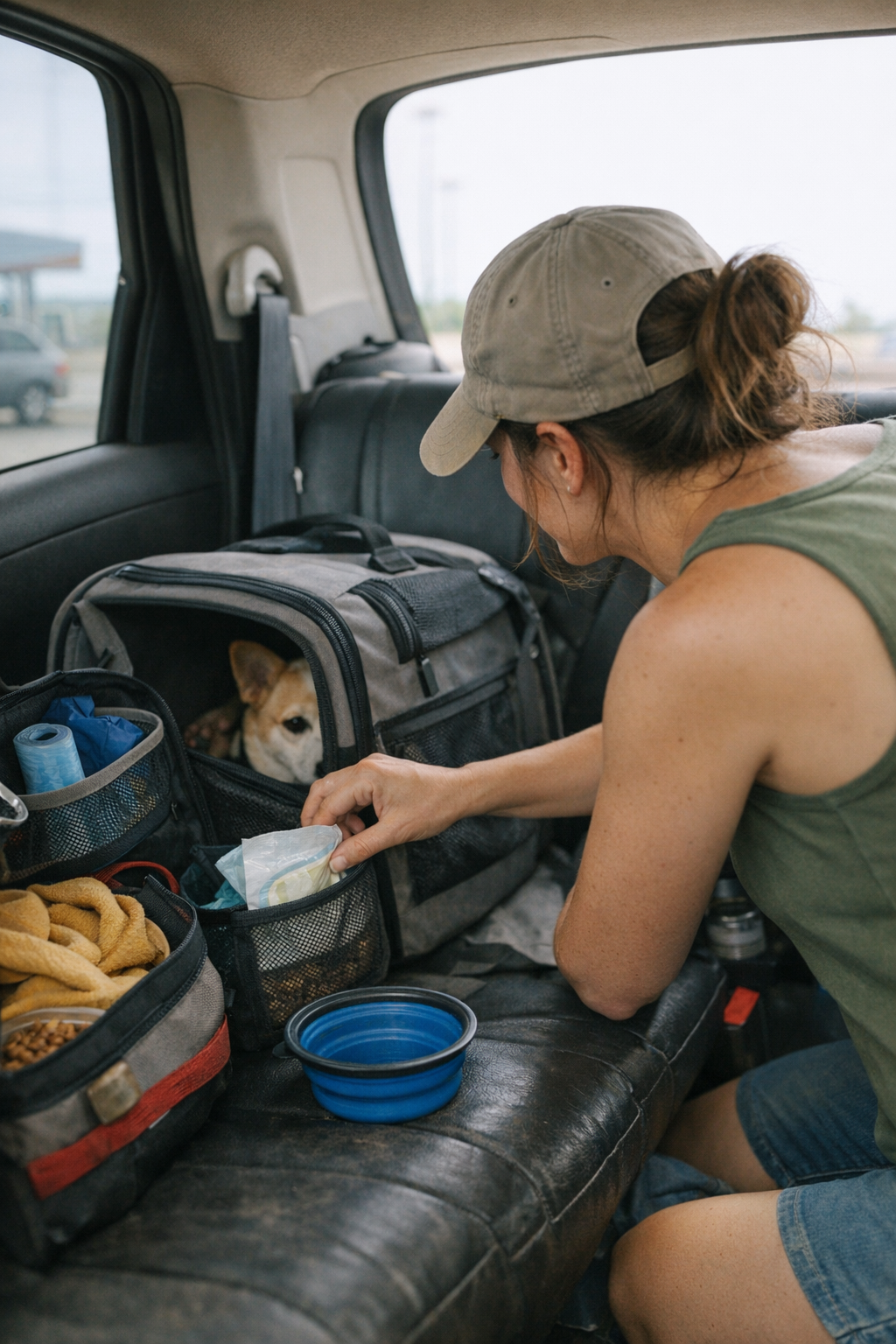
    Your pet hears the “ready to go?” signal and bounces up, but you reach for that travel bag—the one that looked perfect on the hook—and the friction starts faster than you’d admit. The zipper tugs, your keys snag on a side handle, or the wipes are packed just deep enough to slow you down when you stop. It’s the curse of a travel setup that looks ready and polished at home—but unravels the moment real movement interrupts the plan. By the first pit stop, what passed for “organized” keeps stealing seconds, blocking that quick leash grab, or turning a cleanup into a clumsy search. Pet calm fades while your hands sort, shuffle, and quietly lose the flow. This is where most so-called “organized” setups get exposed—and where the difference between neat looks and actual travel function really shows up.

    When “Packed and Ready” Turns Into a Slow-Down

    Most travel carriers and organizers look efficient when zipped and packed, every pocket filled for the road. But tidy exteriors don’t mean friction-free movement. You notice it at the first unscheduled stop: your hand goes to a side compartment only to find the leash stuck under bulkier gear. Or you open a pouch for treats and everything else threatens to spill. Each new stop adds another layer of reshuffling—digging for wipes under chew toys, hunting down a harness clip while your pet tugs in the other direction. On paper it’s all there, but in practice, the access you need is buried two pockets too deep.

    What held tight in your entryway gives way to reality on the road. Small slowdowns compound: a leashed tangle around a comfort blanket, food containers angled out of reach, a water bowl sliding into a dark corner of the bag. The “meticulously ordered” setup starts feeling like a puzzle that only resets harder with each pause. These aren’t showstopping failures—just an ongoing sequence of minor obstacles that grind away at the promise of easy travel.

    Moving Exposes the Friction Your Setup Hides

    Every time your trip gets broken up by stops, hidden design flaws multiply. Standing next to the car, cracking open the back seat, then awkwardly rooting through your bag for wipes or a leash—these are the moments that reveal what your gear really does (or doesn’t) solve.

    The more you repeat the routine, the clearer the weaknesses. You want a wipe after a quick walk, but it’s trapped below pet snacks you keep moving aside. The leash you reached for on autopilot is suddenly knotted around a toy or owner-side items. Every “grab-and-go” becomes a little search party in a bag that was supposed to keep things simple. Every pause means another mini-repack, another moment your pet is left waiting. What worked in your living room order falls short under backseat pressure.

    A Few Seconds Lost at Every Stop—And That Adds Up

    Every delay compounds: searching for your keys among pet supplies, steering bowls back to the edge, or wrangling an overstuffed closure while your pet pulls for the next adventure. What looked like a convenience turns, slowly, into an annoyance. These fragments of lost time collect—prolonging every break, sharpening your pet’s impatience, and stacking stress with every fetch for “just one more item.” If the setup slows your access just enough to break your stride, you’ll feel the drag after just a few ordinary stretches between stops.

    What Makes Pet Travel Actually Easier—Not Just Neater?

    The setups that make a difference aren’t the ones with the most sections—they’re the ones where the essentials actually fall into your hand in the middle of real movement. Spotting your own friction points matters more than features: where do you slow down? Why do you keep reaching for the same sleeve, muttering over the same pouch, or losing speed at the same type of stop?

    Cleanup tells the story: if wipes and sanitizers are tucked below layers you never use, every roadside reset becomes a two-handed, two-minute hassle. Shift those to a seat-side mesh slot or outer sleeve, and the whole cycle breaks: one reach, one wipe, done—no digging, no double-check, no repack. Leashes and treats, if positioned right, come out on the fly rather than after another dive past comfort items. Fewer hand-offs. Shorter pauses. Your attention back on the trip, not on sorting out your own gear halfway through.

    The Tipping Point: When Setup Structure Fails (And How You Know)

    Most pet-travel frustration isn’t dramatic—it’s the repeat infractions. If you keep searching for that one leash clip or get forced into awkward, two-handed unzipping just to find wipes, your structure is working against you. Watch for these pattern failures:

    • Pockets that routinely bury quick-grab items under gear you only use at home.
    • Compartments deep enough that everything shifts and stacks by stop two.
    • Clumsy closures that block you when one hand has to keep your pet safe.
    • Personal must-haves (keys, phone) mingled with pet emergencies, forcing you to dig for both and risk drops or tangles every trip.

    Small Adjustments—Big Payoff: How Structure Makes the Difference

    Sometimes a single move changes your whole travel rhythm. Swapping a hidden interior pocket for a mesh, seat-edge slot for wipes can turn a fumble into muscle memory—a quick grab that doesn’t interrupt either you or your pet. One small fix means fewer mid-trip resets, less cluttered time at every stop, and a pet who waits less and settles faster when you’re back on the move.

    No bag is ever perfect, and repeated travel exposes weak points that looked fine in your hallway. Real improvement comes from noticing those sticking points—the spots you keep grumbling about—and making structure changes so your kit flows at stop five just as smoothly as at stop one. If your organizer lets you find, grab, and stow without thinking, it’s doing its job. Anything less just slows down the whole journey, one small hassle at a time.

    Does Your Setup Really Help You Move—Or Just Look Organized?

    If grabbing wipes always means digging through toys, or you keep dragging comfort items just to reach the leash, your setup is quietly sabotaging your flow. “Looking neat” isn’t the same as moving smoothly: the real cost is every restart you slow down, every access you have to rethink, every time your pet’s patience thins as you hesitate beside the car. How your setup actually performs is lived out in those quick, repeat stops—not in a perfect snapshot when you leave your door.

    Notice what you keep reshuffling, which access points force you to pause, and which items always seem to block the hand-off back into travel. Setup structure isn’t about just being neat; it’s about giving you the right grab at the right second—no buried wipes, no blocked leash, no owner gear tangled with dog gear. That’s the difference between a trip that just looks calm and one that actually runs calm, right through the next stop.

    Visit PawGoTravel for truly practical pet-travel setups made for real movement.

  • Why Setting Boundaries Transforms Closet Stacking Into Lasting Order

    The illusion of a tamed closet shelf rarely survives the first few busy days. Stacks of folded shirts line up neatly and bins squeeze edge-to-edge, promising order. But fast-forward to Wednesday morning: you’re digging through piles, steadying a collapsing stack with your elbow, bracing a bin that’s wandered halfway across the shelf. The surface still looks “organized,” but the friction is building—and not just because you have too many clothes.

    Why “Stacked and Sorted” Fails by Midweek

    The first setup always feels promising: folded items arranged like a display, containers right to the border, everything giving off that ‘after’ photo energy. Reality arrives the moment you need your favorite sweater from three layers down—or when you try to return a t-shirt to a category that’s already started to blur. Each attempt to grab, return, or reshuffle sends corners drooping and stacks slumping. What started as order quickly dissolves into a juggling act: pull one thing, hold up another, watch the overflow spill into whatever space is open. Categories you swore you’d keep separate slide together, and a shelf intended for “sweaters” becomes part accessory graveyard.

    How Boundaries Break Down (and Clutter Creeps In)

    Deep shelves almost invite trouble. The more surface area you have, the more likely stacks and bins are to lose form after a few real-life uses. By day three, those once-crisp edges get fuzzy. A hurried morning leaves shirts nudged into the scarf zone. By the second laundry cycle, you’re barely able to tell where one type of clothing ends and the next begins. Maybe you wedge a basket between half-crushed piles just to keep things from sliding completely out of place.

    None of it feels catastrophic in the moment. Instead, it drags at you—a slow, steady loss of clarity, until grabbing a single item means rearranging everything around it. The problem isn’t just “stuff overflow.” It’s the absence of a real stopping point—something that holds the line when you’re not looking.

    Boundaries: The Real Secret to Closet Calm

    What keeps a closet feeling orderly isn’t perfection—it’s the presence of a real, unmoving limit. Shelf dividers, solid-sided bins, or even strict rules about stack size act as brakes against the natural spread of clutter. Their effect is easiest to see after you’ve gone without them. With a clear boundary, your “shirts” section stops at the divider—every time. Reach, retrieve, replace: the rest of the closet holds its form.

    In contrast, a bare shelf without boundaries mutates over days. The first shift is barely noticeable, but soon you’re double-handedly controlling piles, or re-folding shirts just to make space for one more. The shelf’s edge ceases to mean anything—the drift wins, and every section bleeds into the next until only the top layer looks intentional.

    One Closet, Two Outcomes

    Picture this: a closet with two shelves. Both start organized, but only one has fixed dividers every foot. By the end of a week, the divided shelf still lets you grab a hoodie or return a scarf without pushing two stacks together or holding up a toppling pile. The undivided shelf? Categories blur, and you catch yourself propping up one side just to slide something back—from visible order to visible frustration, in less than a workweek.

    Boundaries That Actually Hold Up

    So what works? Rigid boundaries—physical ones you can’t ignore or accidentally shift. Install vertical shelf dividers every 10–12 inches, or use bins with upright, sturdy sides. Even a tough shoebox can stand in as a makeshift border until a better solution comes along.

    The reliability comes down to this: when a stack has a set limit, every grab, return, or hurried reach is absorbed by the boundary, not by your hand or hope. You get one-handed access without needing to restack leftovers or worry about the pile slowly slithering sideways. After laundry day, items return right where they belong, instead of starting the next slow slide toward chaos. Resets are short; lines hold.

    Self-Check: Signs You’ve Outgrown Open Stacks

    If these feel familiar, your closet needs real boundaries:

    • You support one pile just to access another
    • You spend more time restacking than actually using the items
    • Sections that used to make sense (“shirts here, scarves there”) are now hopelessly blended

    Smarter Stacking for Everyday Closets

    Keep go-to items in a single-height stack wherever possible. Doubling up works for out-of-season or less-used things, but daily essentials topple plenty fast. Jeans and chunky sweaters can withstand taller piles; t-shirts and delicate linens cannot.

    Choose dividers that are firm but flexible. Clip-in shelf dividers or slotted organizers stay put through daily use, so your closet doesn’t drift out of order at the first grab. Temporary solutions are better than none—shoeboxes, shallow totes, even repurposed bookends—all create edges that buy you time and clarity.

    The True Difference: One Clear Edge

    A closet isn’t “good” because the shelves are deep or the containers pretty. The turning point is always a real physical edge— one that absorbs daily motion so you don’t. That edge means every shirt returns to its spot, resets don’t drag out, and you know at a glance what category belongs where, even at the end of a hectic week. Without boundaries, even the most beautiful setup backslides into hassle. With the right edge, the chaos is contained—and your morning routine (and mood) improves by more than a little.

    If your closet feels crowded, slow, or in need of constant policing, stop stacking for height and start creating boundaries that last. Order isn’t about how much you can fit—it’s about how easily everything finds (and keeps) its place.

    Shop practical closet solutions at ClosetWorks