Blog

  • Why Choosing the Right Screws Matters for Stable Indoor Lighting Fixtures

    The weakest link in your lighting isn’t the bulb—it’s the screws and anchors you barely look at. Fast-forward two weeks after installing that flush mount, semi-flush, or wall sconce with whatever hardware was lying around. You flip the light on as you cut through a narrow hallway. The base wobbles every time you brush past with laundry. The fixture, which looked level on day one, now sags just enough to throw an odd shadow onto the stair tread—right where you expect clear footing. This isn’t just a crooked look: weak, mismatched hardware quietly unbalances the whole room’s lighting flow, turning safe movement into a second-guess and adding friction to basic routines like cleaning or grooming.

    Where the issue shows up first: the spaces we actually use

    Problem lighting rarely fails in a calmly lit, empty room—it surfaces in hallways at rush hour, bathrooms mid-routine, or stairwells during dusk. The strain isn’t theoretical: one wrong screw and every hallway crossing, quick hand wipe near a sconce, or laundry pass jars the mounting, shifting shadows onto mirror edges or blurring the outline of each stair. The passage looks fine on paper, but your routine tells the real story. Shadows pool at the landing, a sconce tilts a few degrees, and what should be a quick walk turns into an exercise in sidestepping dim spots or readjusting a spinning plate.

    Carrying a full basket down the hall? The brush of your elbow and suddenly the ceiling light, once central, pushes a slant of light across your feet. Or, pause halfway down the stairs—one darkened tread appears as a screw slips; now, the boundary between safe step and shadow is a guessing game. These aren’t rare mishaps. In any space where light serves as your pathfinder, poor hardware multiplies minor annoyances into daily hazards.

    The subtle warning signs: “bright enough” but never settled

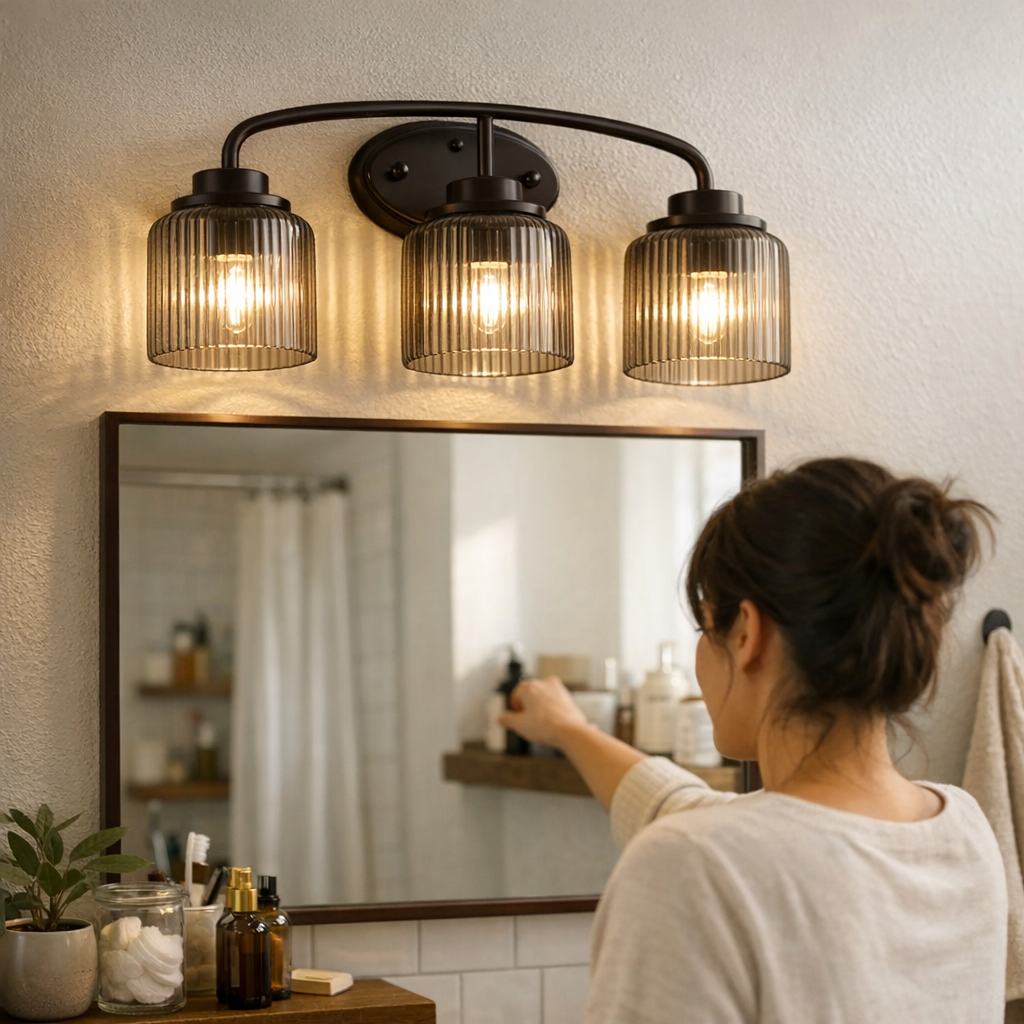
    Failure starts small. A vanity bar wobbles as you clean near the mirror. The fixture at the end sags just enough to put half your reflection in a dim strip while the other side glows. Corner-mounted lights flicker at the slightest movement, glare spikes along a hallway wall, and faded shadow lines creep over the bathroom counter no matter how many times you adjust your routine. The room isn’t dark—but the lighting is always off-balance, forcing you to lean for better coverage or avoid glare that shouldn’t be there in the first place.

    The story behind the fixture: why “random screws” come up short

    Not every screw anchors like a factory-matched set. “Fits the hole” doesn’t guarantee it stays flush in drywall or grips through tile. Too-short screws mean the fixture plate never sits tight; thick, coarse threads split old plaster, and the anchorless install pulls free with each routine nudge. Every flip of the switch or quick swerve with a mop moves the fixture off-axis. Soon, lighting that started square throws uneven beams, loses cross-room reach, and fails at the one job hardware is supposed to solve—quiet, lasting stability.

    The damage compounds in places that see action: bathrooms with constant dampness work screws loose faster; entryways absorb bumps and pushes from bags or coats; under-cabinet strips get wiped and tapped daily. Ignore the right hardware and install turns into maintenance: retighten this week, realign the next, and invent ways to conceal the persistent lean or wobble that never totally vanishes.

    Recognizing the consequences: what uneven installation actually changes

    • Mirror zones where half your face is in shadow and the rest overexposed
    • Stair treads that look uneven because the light leaks sideways, leaving bare spots on steps
    • Fixtures that rotate or droop after a quick clean, turning glare into a moving target
    • Mounting plates that separate from drywall, leaving gaps that draw dust and complicate touch-ups
    • A fixture inches from coming loose in the hallway right where traffic is highest

    The “almost right” install doesn’t just look crooked—it changes the way you move and see. Instead of flowing through the room, you dodge gaps in light, squint at odd patches, or avoid brushing against that misaligned wall light because you know it’ll spin loose. The rhythm of your routine gets bent around bad mounting.

    What works: matching fixture hardware to real-world routines

    You spot the difference on day 20—not day 1. Lighting that holds steady week after week always roots back to hardware picked for surface, fixture, and repeated movement. A flush mount anchored to drywall with the right-length plate screws doesn’t budge from ceiling sweepers or hallway bumps. Vanity bars fixed with moisture-rated anchors stay level even when the mirror is wiped down and the counter is splashed. When hardware matches real use, light flows cleanly—no more shadow-banding across the face, no drifting glare, no patchy coverage at the most-used paths or corners. The best proof you did it right: you forget about the install entirely because nothing shifts or unbalances when life speeds up.

    Bathroom example: Updating to proper anchors and matching hardware stopped the vanity light from drifting, ended the need for constant realignment, and kept mirror lighting balanced for back-to-back mornings—no more split shadows or tilted reflections after a week’s worth of cleaning and steam.

    Hallway example: Swapping out catchall screws for surface-matched anchors left ceiling sconces straightforward—staying centered and upright after hundreds of passes, even as cleaning and daily traffic put them to the test. The corridor finally gets covered top to bottom instead of shading out at one edge or drooping over time.

    Finding the right hardware: small habits, major simplicity

    The shortcut is always the long way. Scan the fixture’s instructions. Check for required screw type, length, and whether anchors are needed for your surface—wood, drywall, tile, or plaster. If faces aren’t solid, anchors aren’t optional. Even two extra minutes matching thread type or test-fitting on a spare scrap saves hours of fixing and hiding flaws later. Use what fits best, not just what’s handy—because the next brush or jostle will reveal any mismatch, but rarely on your schedule.

    Tip: Don’t settle for “almost there.” Try the selected hardware on practice material, confirm grip and alignment, and only commit when the connection holds under actual wiggling—just like it will in real daily use. The payoff: light you don’t have to babysit.

    Why consistent lighting hardware matters for daily clarity

    The right hardware isn’t about what looks perfect during the install—it’s what you never have to adjust again. When you don’t pause to readjust a drooped sconce, fight glare at the stair, or cushion your motion to avoid spinning a loose plate, the lighting finally serves the routine, not the other way around. No new shadows creep over the counter with every cleaning. No stair edge vanishes before your foot lands. Less thinking, less fixing, less dodging. You’re not just avoiding hassle; you’re restoring the quiet expectation that light works every time, in every routine, all through the week.

    Explore reliable lighting solutions and hardware at LightHelper.
  • Why Perfect Pantry Designs Fail During Everyday Family Use

    That first day, the pantry is lined up—labels showing, bins matching, the kind of surface order that feels finished. But as soon as regular life returns, the setup starts to crack. By midweek, anyone sharing shelves notices the shift: a snack restock shoves pasta behind baking jars; a grocery run means new boxes get squeezed wherever there’s a gap; one run for breakfast oats turns into two moves just to get to the right jar. A system that looked controlled for a photo becomes a maze within three busy routines. What actually matters is how a storage structure stands up to repeated grabs, rushed returns, and the churn of shared use—where the “perfect arrangement” becomes hidden friction and small stalls multiply.

    Why Perfect Order Disintegrates in Real Routines

    Sleek containers and identical bins sell the idea of control. But real-world friction starts instantly: making breakfast with a hungry kid at your elbow, loading groceries when the new bag just won’t fit the planned zone, or scrambling for a missing ingredient after work. Each cycle puts pushback on the layout, and signs of strain show fast.

    Visible order gives way to behavior friction. An ingredient you used yesterday is now boxed in by a stack meant for something else. A quick snack is slowed by a parade of bins blocking the “easy” shelf. The shelf route you planned is crowding; you’re shuffling containers sideways just to get a routine task done. The cracks aren’t subtle—they’re the seconds lost and the clutter that piles up so quickly you barely notice.

    The Hidden Costs of a Pretty Pantry

    Category grids and tight labeling promise efficiency—until the first restock undoes it. What actually piles on in daily use:

    • Access bottlenecks. That stack of labeled bins sits right where you need to reach for flour or cereal, forcing you to unstack before you can open, then remember to restack after (if you bother).
    • Category drift. The “snacks” bin slides from Goldfish to a crammed mass of chips, bars, and loose packs. New items crowd out the original plan. Smaller packets disappear to the bottom, and nobody follows the original labels for long.
    • Reset stalls. Restocking groceries means re-stacking or rearranging—often just to make one thing fit. The extra step turns a quick drop-off into a low-key puzzle, inviting temporary piles and counter overflow instead of clean returns.

    The reality: rigid setups work against the actual rhythm of the room. They hold their shape only until real habits overwhelm them. Shelf lines become dead zones, bins interrupt movement, and the design you set up last Sunday becomes an obstacle course by Thursday.

    Where Setup Breaks: Real Scenes from the Pantry Zone

    Pasta Buried, Cereal Exiled, Reset Shrinking

    Midweek, the planned order is flickering. Pasta gets wedged behind decorative jars as new bulk buys push other categories off-plan. Cereal, bought in a rush, lands wherever there’s room—sometimes in the wrong zone, always threatening to topple the neat look. You stop expecting to find things where they belong, and the top layer becomes a shifting array of what’s new, not what’s needed.

    Overflow Piling—From Shelf to Countertop

    Quick-access shelves stop being quick. Lunch snacks, loose apples, and bags start to collect low down, then clump near the front edge, creating a pile that dares you to grab from underneath. Once high-use items run out of zone, they migrate—first to a catch-all spot, then to the nearest open counter. Shelf order becomes shelf pressure: the edge is where the mess is most visible, but the spillover hides what’s really lost behind.

    Blocked Movement, Fragmented Routine

    A neat shelf footprint doesn’t mean a usable flow. Tall bins block reach. Deeper drawers require shifts and shuffles to access the back. One return means two or three moves, and every extra step invites off-path storage—leaving items out or half-rehung. In a shared kitchen, this spirals: one person’s workaround creates a fresh tangle for the next.

    Modular, Open Storage: For Mess and Motion, Not Just Looks

    After enough resets get undone, rigid bins lose their charm. What makes more sense: modular, open setups that flex with use instead of against it. Consider these practical shifts:

    • Most-used items always in the front zone. The lead edge of each shelf is cleared for go-to staples—a “park and grab” area, no stacking or sorting needed.
    • No lids, open bins for true one-step access. Grabbing or replacing an item is just a reach, not a lift-and-reshuffle. The time saved keeps return flow from stalling.
    • Adjustable and movable zones. You can split or collapse categories as habits shift—a snack phase ends, a new bulk buy arrives—without needing to relabel or force-fit the old system.

    The question is whether daily moves are helped or interrupted. Can you return an item as easily as you grabbed it? Or do you have to sidestep your own design? When structure adapts, even small messes get absorbed by a usable routine, instead of resulting in overflow.

    Reset Speed: The Real Test

    If it takes more than a couple seconds to return an item, the system is probably slowing you down—not keeping you organized. Open modular storage, well-placed bins, and frictionless access lanes make maintenance part of the everyday routine instead of a special Sunday chore. The pantry survives the third shop, the late-night snack, the lunch rush, and the surprise grocery drop—all by design, not by accident.

    Concrete cues help: a shelf that stays half-open for overflow, a bin with wiggle room for last-minute extras, or a visible “use-soon” spot that clears itself without turning into tomorrow’s pile. These prevent silent backup at the edges and curb the formation of ‘temporary’ stashes—so the whole structure stays workable.

    Spotting a Setup that Works (or Doesn’t)

    Signs a storage setup is really holding up: the main grab zone stays open, categories expand or shrink without redoing the whole plan, and there’s almost never a moment when putting something away feels like a hassle. You can reach for breakfast without moving bins, overflow lands where it makes sense (not on the counter), and fixing drift is a quick adjustment, not a full reset.

    • Retrieval and replacement each stay fast, even as shelves fill or empty out.
    • Overflow doesn’t relocate to counters, sinks, or another room—what needs returning is returned.
    • Reset is a background action, not a weekly event or source of dread.

    Breakdown shows up just as simply: If you have to move storage blocks just to make breakfast, if “snack” or “baking” means opening three bins, or if every restock is a miniature reorg, something’s wrong. Surface order is masking daily slowdowns—real friction that piles up where you don’t see it but always feel it.

    Structure That Helps You Move, Not Just Store

    The best inside-storage shifts are visible in motion: easier routes, less re-sorting, and less mental overhead. Wall systems and adjustable shelves beat fixed bins because they let the layout flex instead of bottleneck. Floor units and well-placed hidden storage only help if they speed up retrieval and return, not just stack things deeper. The setups that last aren’t the prettiest—they’re the easiest to maintain when routines get busy and the original order slips.

    A storage system that keeps pace frees up your headspace and floor space, absorbing the churn, not hiding it. When storage works, you stop fighting your own layout and reclaim time with every repeat use. If you’re ready for inside-storage that outlasts the reset cycle, visit Gridry.

  • Choosing the Right Gloves to Prevent Bit Walking on Metal Surfaces

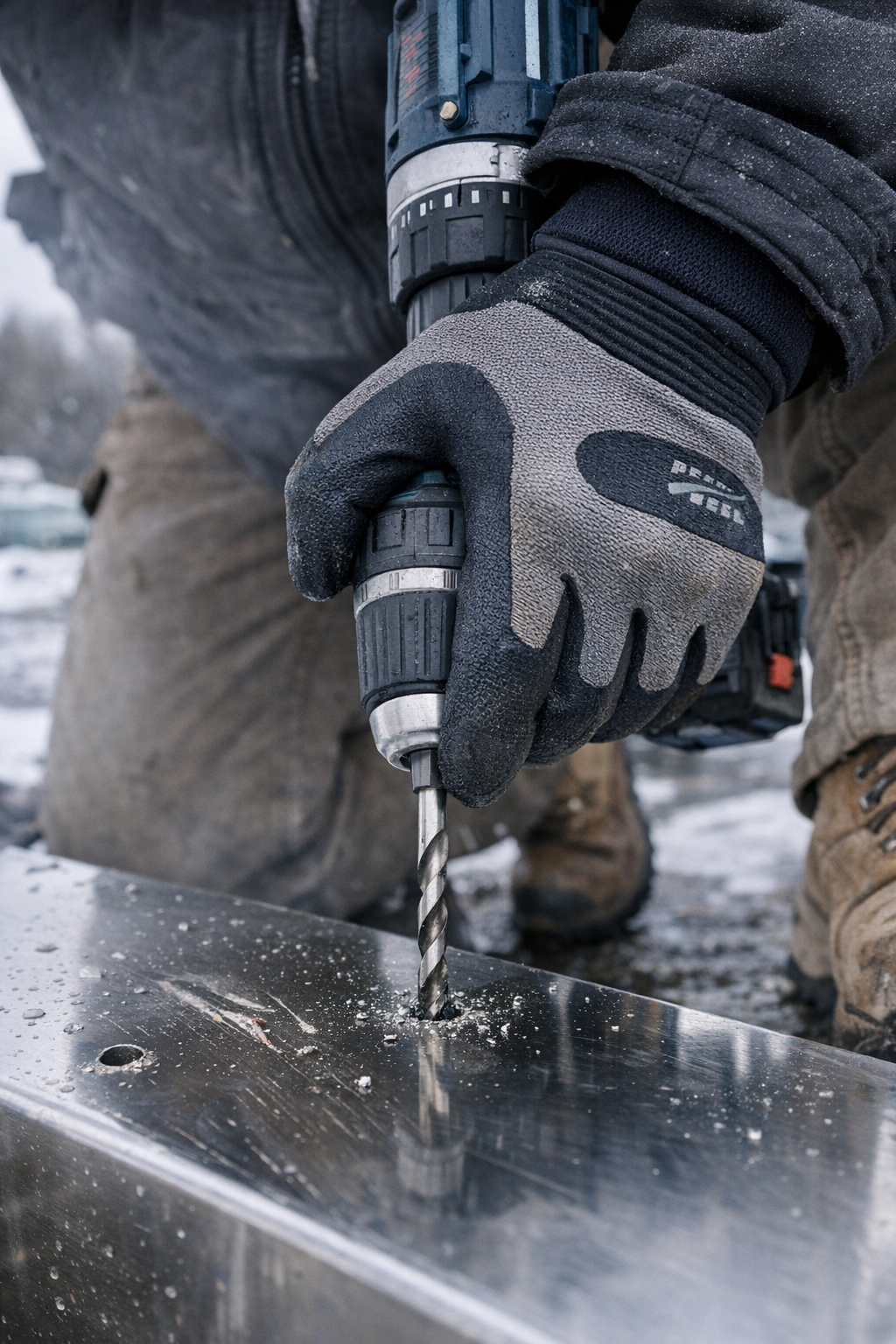
    You line up your bit, brace your shoulder, pull the trigger—and in an instant, it slides. Bit walk. The metal fights back, the drill rattles, and there’s your mark gone sideways: scuffed paint, a crooked gouge, the start of a long, frustrating repair job. If you work with portable drills on-site—punching through angle iron, strut, painted panels, or any spot where you only get one shot at a clean hole—this scene isn’t new. Bit walking can feel inevitable, especially mid-project, but what throws you off isn’t always cheap bits or rushed pilot marks. Sometimes, the real culprit is the gear that’s meant to help you—especially your gloves.

    The True Cost of Bit Walk: Fatigue and Frustration Add Up

    At first, you might get away with it. The first few holes punch clean. But by lunchtime—or on ladder work and over your head—the drill bit stops tracking straight. Each time the bit slips off mark, you wrestle it back, leaning harder, burning through energy and patience. This isn’t just about ugly holes. Sloppy edges and deflected bits lead to burrs, weak fastenings, even micro-cracks you won’t spot until weeks later. Worse, every correction costs time: you slow down, fight the tool, and finish sore, always filing or reaming the damage. All the while, you start to wonder: what keeps tripping you up?

    Not All Gloves Are Created Equal: Where Grip Fails the Test

    Gloves are supposed to protect, but some actively work against you. They promise dexterity by the box, but when drilling into cold steel—especially after sweat, dust, or a slick of oil from earlier—the differences show up fast. One pair locks in your palm, giving you confident pressure as the motor rattles. Another offers only a thin promise; the moment you apply force, the synthetic lining squawks and your knuckles strain as the bit skates off course.

    This isn’t the kind of thing you catch in the aisle at the hardware store. It shows itself three hours deep, surrounded by shavings, when you’re tired and the angle isn’t friendly. If you’ve ever drilled a pilot hole with wet gloves in a freezing subpanel, you’ve felt it: you squeeze for control, the bit wanders, and suddenly you’re compensating with muscle instead of grip. That’s not just inefficient—it’s how routine jobs slow to a crawl and injuries creep up unnoticed.

    The Nitrile-Dipped Difference: Subtle, But You’ll Feel It

    A glove upgrade rarely feels revolutionary during a test-fit. But swap in a nitrile-dipped palm—thin but tacky, with just enough flex—and suddenly, that tiny 0.2 mm layer changes everything under workplace vibration. The drill stays planted when you line up, whether the bracket is oily or bone-dry. After a full job day, the marks tell the story: the ragged 2 mm run-off edging becomes crisp, the fixes at the grinder disappear, and you notice your elbows aren’t screaming from bracing so hard.

    The shift is subtle but real. Your workflow becomes less about fighting the tool and more about getting actual work done—less fatigue, less wasted effort, more holes on target. And on longer installs or punch lists, that steadiness is the edge that keeps you running till the last screw gets set.

    Finding the Weak Link: Your Technique or Your Gear?

    Bit walking often gets pinned on dull tips, sloppy layout, or the wrong speed settings. But if you’ve retraced your steps—checked your marks, swapped bits, managed RPMs—and you’re still struggling to keep your line, start with your hands. Ask yourself:

    • Are your gloves letting your grip flex or slip under load?
    • Do they get slick when exposed to oil, metal filings, or even just sweat?
    • Is the surface glazing over after a few sessions, robbing you of purchase?
    • Are you constantly shifting how you hold the drill, chasing precision instead of relying on it?

    These are field cues, not just product specs. The right glove doesn’t just cushion; it holds sharp, dry, and tacky through mess and repetition. Upgrading might sound minor—but in a patch of thirty holes overhead or a batch of bracket mounts in an unheated warehouse, your hands notice fast if the PPE helps or hinders.

    Real Jobsite Scenarios: When Gear Makes or Breaks the Outcome

    The difference never appears in tidy spreadsheets. You see it in cramped corners, where the shop vac missed metal shavings and oil is floating on the surface. That third or fourth fastener—jagged, off-center—signals your glove’s lost its bite and your drill is wandering, even when your eyes and knees are locked in position. Instead of powering through, you tense up, the work slows, and the weight transfers to your wrist and shoulder. By the end of the shift, the accumulated strain is real—one more job that took longer than it should have, and didn’t look as clean as you’d hoped.

    Sometimes it’s the boots: swap a flexible sole for a stiffer one and realize your stance isn’t solid on a ladder or while pressing against awkward ducting. Small differences in gear ripple out over days and weeks, quietly stealing efficiency and increasing fatigue—nothing that jumps off a label, but everything that matters in practice.

    Keep Gear Honest: Clean, Replace, and Stay Sharp

    Even premium gloves wear out quickly in the dust and grime. If your palm looks shiny, feels slick, or flexes easier than it used to, don’t wait—swap them out. Wash off oil and filings between jobs to keep friction up and grip reliable, not just “adequate.” What seems like a small task can mean the difference between a smooth hour of drilling and a long, aggravating slog through fixes.

    The Real Fix: Habits Matter, But Gear Sets the Ceiling

    Technique is half the battle. Pilot marks, tool control, pressure—you refine those with practice. But your gear defines your ceiling. The right gloves mean the bit stays put, wrists last longer, and your work actually lines up the way you planned. When you don’t have to fight your own equipment, you move faster, make fewer errors, and end the day with something closer to satisfaction than exhaustion.

    Perfection’s a myth, but progress is real: less chasing run-out, less cleanup, more predictable results. In this world, what you wear on your hands matters more than brochures suggest—and the right upgrade means more jobs done right, the first time.

    Get the gear that actually stays put—see what works at Gumboll.

  • How Small Storage Fixes Can Simplify Your Daily Pet Cleanup Routine

    The Real Difference Between Smooth and Stalled Pet Care Routines

    The resetting of pet bowls, quick wipedowns after muddy walks, and late-night accident cleanups don’t become tedious because of the mess itself—they drag out because what you need isn’t right where you need it, when you reach for it. Grab for the daily cleaning towel and find it missing, buried, or still damp from earlier? Instantly, the momentum breaks. One interrupted cleanup might seem minor, but let it happen a few days in a row and every pet-care step starts to take longer, pile up, or get deferred. A care area might look ready—bowls arranged, wipes stacked—but the setup only works until that one item drifts or goes missing. Suddenly, the friction is back.

    Friction Adds Up: How a Single Missing Tool Slows Every Step

    Picture the after-walk routine: dog waiting at the door, towel supposedly by the entrance—but it’s balled up under yesterday’s mail or now in the laundry. The stop-and-search begins. What should take seconds stretches into a repeat loop of hunting down basics, trailing drips, and maybe giving up mid-reset. When your flow gets broken by an absent brush or wipes tucked behind the wrong basket, regular cleanup slips, and “later” becomes the default. This is not a matter of planning or effort—it’s about the way tiny supply gaps multiply, especially during basic, repeated routines. Even if supplies are nearby, but not actually at hand, every extra reach can stall the next step or tempt you to skip the entire process.

    Common Scenarios: When Access Is Blocked at Exactly the Wrong Time

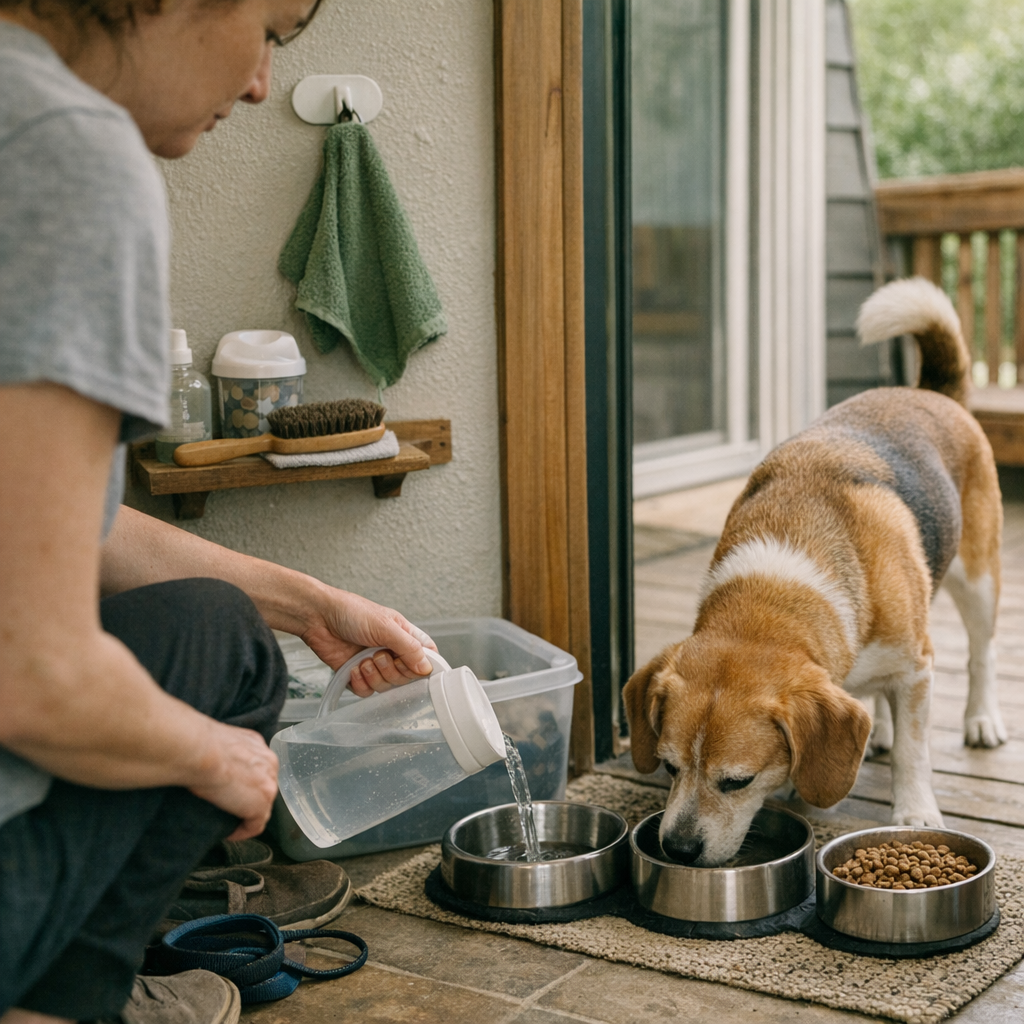
    • Blocked Bowl Refill: Try topping up your pet’s water and you hit an obstacle—yesterday’s food tub wedged beside the bowl, a leash tangled on top, or stray toys crowding the floor. Instead of a simple refill, you’re shifting items and wiping up a new spill caused by last round’s clutter.
    • Wiping Up Late: Food debris is stuck to the mat post-meal, but the spray is stashed behind a heavy bin or in the garage. “I’ll get that later” turns a quick swipe into a two-step mess that builds up by evening.
    • Grooming Detours: Dirt or fur is obvious after a walk, but the brush is nowhere in sight—left upstairs or out of rotation. You settle for a towel instead, which only half-works, leaving both pet and owner half-finished and out of sync.
    • Supplies Spilling Across Home Spaces: Pet wipes drift onto kitchen counters, towels mix into laundry piles—now every reset demands more reshuffling, and every supply ends up just out of reach at cleanup time.

    Visible Tidiness Is Not the Same as Daily Function

    An area can be staged perfectly: bowls, sprays, and cloths arranged at the day’s start. But repeated use tells the real story. By midweek, the bin lid is askew, a towel has wandered, wipes are buried behind yesterday’s paperwork. The appearance of order collapses once routines hit a snag. Pets don’t wait for you to find the right tool, and neither does a basic routine. Looks might last a morning—function holds up or breaks down over repeated resets, evening checks, or unexpected spills when you need speed most.

    Why a Single Weak Spot Repeats—And How to Fix It

    Clunky care patterns trace back to the same failing point: the one supply that’s never in place, a lid that never fits, a brush that disappears into the laundry. This single weakness grows, forcing double-work—redoing last cleanup, retracing for missing gear, or rushing through an incomplete reset. Neat corners mask the routine drag until everything slows down. The real fix isn’t adding storage or fancy organizers; it’s creating fixed, open spots for the key tools you grab every day. Hang that one cleaning cloth from a hook right above the feeding area—never buried, never balled up. Set the brush in an uncovered bin by the door: grab, use, return. No zippers, no digging, no “where did I leave it?” Surface neatness means less than reliable daily placement.

    Keeping the Routine Reliable: Practical Adjustments

    • Give every essential item—towel, brush, wipes—a permanent spot exactly where you use it, visible and grab-ready.
    • Reset after each use—don’t bank on one big “evening tidy.” Pushing resets leads to missing tools and longer, fussier cleanups later.
    • Spot the thing most often missing or causing a hiccup. Fix that one friction point before fussing with everything else—one solid change often clears the biggest slowdown.

    When each tool is always at hand, daily tempo smooths out. Even saving a couple seconds per cleanup can keep every routine light, fitting around a busy day instead of dragging it out. Let basics scatter or become hard to spot, and each small mess becomes a bigger interruption, turning “quick care” into just another hassle.

    The Everyday Win: Ease Matters More Than Perfect Appearance

    Whether pet care gear lines a wall or sits in a covered basket, what really keeps the routine light is making sure those basics—cloth, brush, water bowl—never skip a beat. The space doesn’t have to look perfect, but it can’t slow you down. A setup that only looks orderly can still bog down, forcing workarounds and repeats, while a setup with each key item locked into a visible, permanent slot will actually keep the whole care cycle reliably smooth.

    Find ready-to-use, routine-friendly pet care basics at CalmPetSupply

  • How a Ten Second Start Rule Transforms Daily Yard Storage Efficiency

    Step into any backyard or side-yard strip at the end of a busy week and you’ll spot it instantly: spades slumped on the path, gloves curled beside the fence, and a walkway you now have to squeeze through sideways. These are the trademarks of “organized” outdoor storage that only holds the illusion of order. The true test isn’t how crisp things look on install day—it’s whether grabbing and returning a tool is so easy you do it every single time, even when you’re tired and in a rush. Too often, the setup promises clarity but quietly stacks up new roadblocks, one shortcut and delay at a time.

    Where Setup Friction Starts: The Ten Second Rule in Practice

    Delay kills momentum outside, and if it takes more than ten seconds to grab or put away a tool, your system is already working against you. Here’s the friction: the moment storage feels like a chore, return flow drops. You reach for the trowel but the handle jams under two other tools, so it gets abandoned wherever you last used it. Next, a bin lid is sticky so gloves land on top—then the watering can clutters the path because no one wants to untangle the hose just to reach the rack. Each skipped clean return quietly stacks up another obstacle, and just moving through your own yard starts to feel like crossing a minor minefield.

    Now multiply the problem: add a second person, or a shifting weekend project. Suddenly, what started as a nominally “organized” space drifts into full reset territory every few days. The floor fills with spillover items. “Just for now” becomes “stuck for the week.” That five-minute task? It now starts with shuffling through clutter from the last four hurried drop-offs.

    The Real Divide: Wall Systems vs. Floor Storage

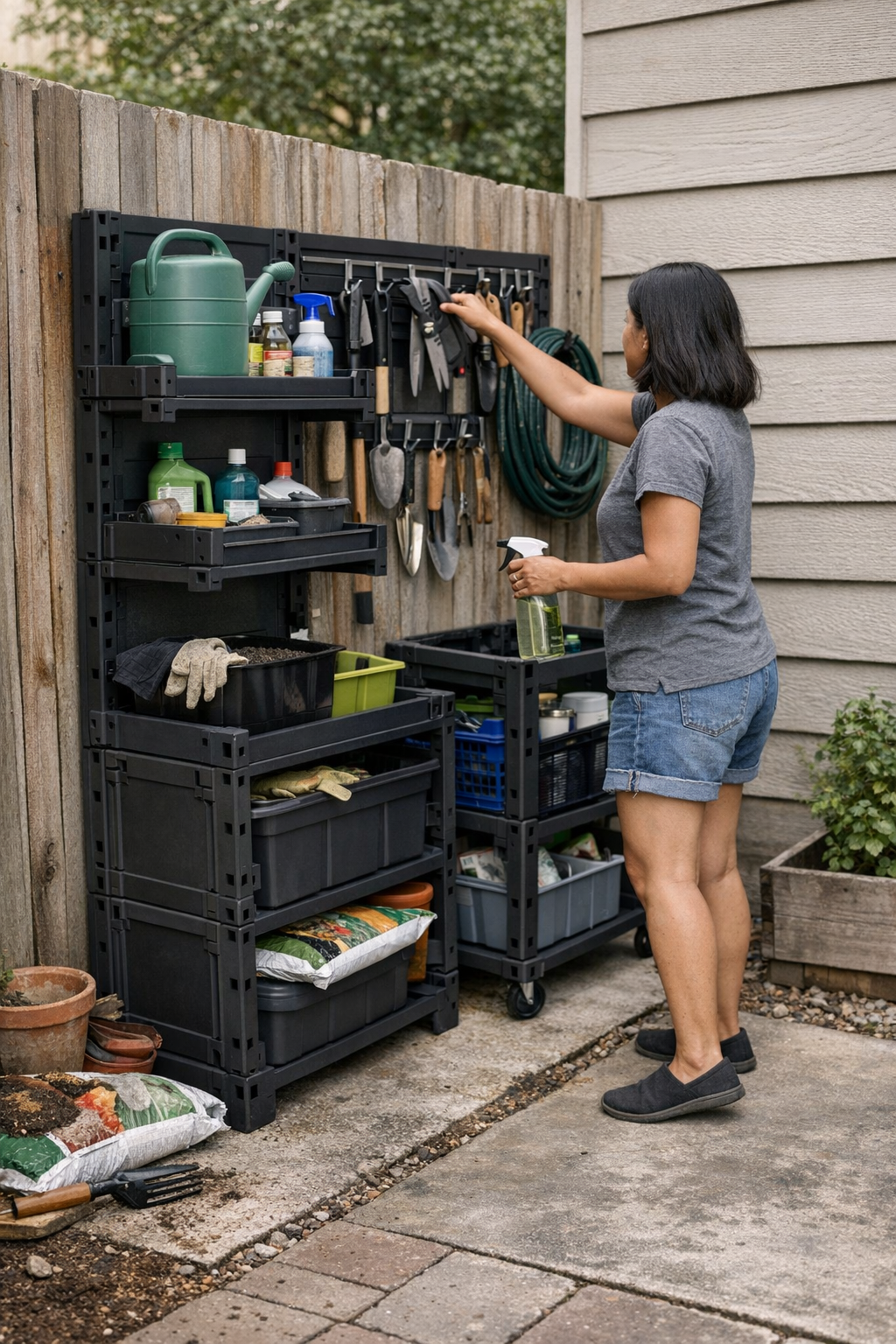
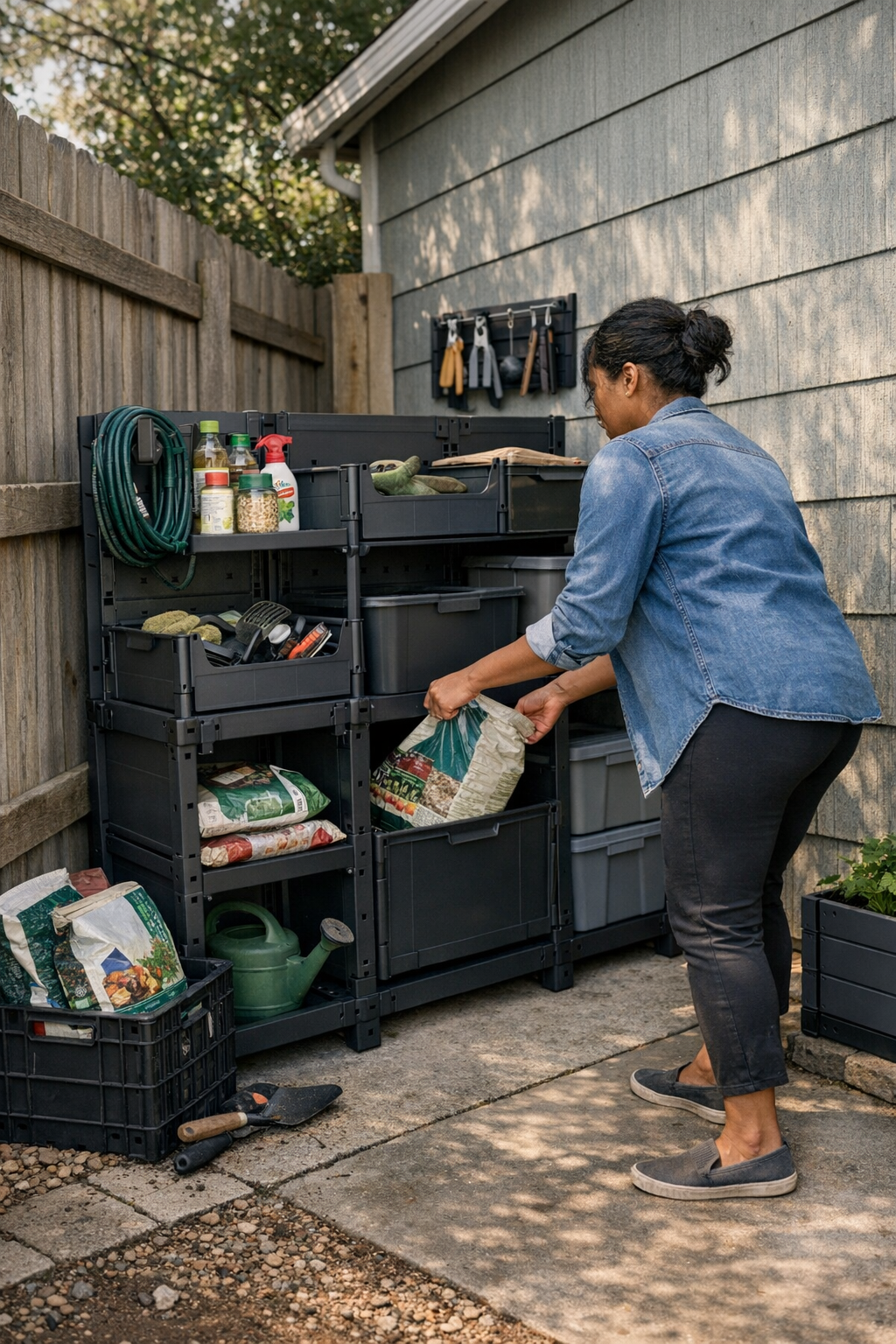
    On a checklist, a storage bin and a wall rack sound equally useful—but in daily use, the split is sharp and immediate. Wall racks take things out of your way, giving every handled tool a visible parking spot. When installed near the action—garage edge, fence line, patio wall—they let you grab or return in a single, fluid movement. Bins and ground boxes, on the other hand, attract overflow. What starts as “temporary storage” quietly morphs into a jumble: gloves slip down the sides, small tools disappear below a layer of tangled hose, and the lid becomes just another thing to navigate around rather than through.

    At first, the lines blur—everything starts tidy. But after a couple cycles of real use, wall systems show their limit quickly and honestly: when every hook fills, the wall says stop. Ground units don’t. They simply absorb more, until the footprint swells and daily returns devolve into stuffing things wherever there’s a gap. The surface still looks “organized,” but the actual movement and access tell another story—a constant, creeping need to reshuffle, hunt, or detour.

    Scene Snapshot: The Clutter Loop in a Mixed Setup

    Picture this: a side yard barely wide enough for a wheelbarrow, with a heavy ground box by the gate, hooks lined along the garage, and a rack tucked behind the fence. Early on, everything has a place. But after a stretch of wet weather, muddy boots collect by the box; a rake balances awkwardly on top because opening the lid requires clearing off last week’s pile. Gloves hang from a crowded line of hooks, doubled up and slipping. The path narrows. Every “quick drop” scores another point for chaos, and now just reaching the faucet means negotiating an obstacle course of your own making. You return one item and block access to another—resetting becomes its own project.

    When wall and bin compete for the same patch of space, they reveal tiny battles: to hang a shovel, you have to move a coil of hose; to close the box, you have to force the lid shut over stray tools. The layout looks good in a photo, but you’re spending more time shifting items just to get moving. That’s the mark of organization that can’t keep pace with routine.

    Getting Off the Ground: Where Wall Systems Change the Routine

    The value of a wall system isn’t immediate—it’s proven after a month, when most bins have already gone sideways. Hooks, modular racks, and rails enforce separation. Each place is fixed, so tools don’t migrate or vanish. Once a wall fills, you see the space itself run out—there’s nowhere for overflow to hide. Bins let you stack, wall systems force a decision: keep only what you use, and spot a missing or misplaced item quickly. It’s not flawless, but it’s honest.

    A small change—like leaving buffer room between hooks or matching each tool to its own labeled spot—prevents “cramming.” You feel the friction instantly if the system gets overstuffed, versus discovering a black hole at the bottom of a box three weeks later when you can’t find your best snips. Miss one hanging return and it’s obvious; miss a bin return and the problem quietly expands until you’re in reset mode again.

    Real-World Trick: Keep Inventory in Sight, Not in Storage

    What you see, you use—and what you see missing, you fix. Wall setups makes it obvious: pruners don’t return, the empty slot stands out. This cuts down on silent overflow and makes end-of-day resets a 30-second loop, not an hour-long dig. Even guests or less-organized family members know where things go—no complicated memory or signup sheet required. The setup works with you, not against you, especially on days when patience is in short supply.

    Why Floor Storage Trips Up: Overflow, Blocked Routes, and Awkward Corners

    Even well-meant floor bins eventually become bottlenecks. A couple rushed returns and you’re staring at a holding tank: gloves lost under a knee pad, small tools hiding under a tarp, hose piles swallowing up anything small enough to bury. If your routine ever slips—because you’re tired, because it’s raining, because life—these bins shift from storage solution to friction generator. Most people won’t dig at the bottom to do a proper reset. Overflow just finds the nearest path and sprawls outward, blocking gates, crowding corners, and slowing every future step.

    The secondary effect is movement loss: a spade jams the gate; the swing of a box cuts the walkway in half; each retrieval turns into an argument with a pile. Micro-delays pile up, every five-minute job drags, and the promise of “easy access” dissolves beneath layers of gear that barely fits. If the setup forces you into routine reshuffling—moving three things to use the fourth—it doesn’t matter how neat it once looked. It failed the return test.

    Spotting Dead Corners: When “Extra Space” Collects Extra Mess

    Every outdoor area has a dead corner—the spot meant to solve problems, but actually hiding overflow. Maybe it’s behind the utility rack, wedged between the house and the fence, or a low bin at patio edge. These zones trap what doesn’t fit the main plan. Over time, they demand full resets: you drag everything out just to reach the one thing you use most, and then the cycle starts again. If you’re shifting stacks just to get to a regular tool, or resetting a path before you can start actual work, your setup is locked in a permanent losing battle against real use patterns.

    This isn’t usually solved with more storage—it’s solved by giving each piece a visible, friction-free home that matches how you actually move in the space. Wall-based setups force that recognition; bins let you avoid it—until the pile wins.

    Building a Setup That Actually Lasts: Flexible, Forgiving, Real

    Perfection isn’t the goal. Staying ahead of friction is. The best setups aren’t museum-grade displays—they’re the ones you reset in a minute, not an afternoon. The ten second rule exposes weak points fast: if your process stalls or your patience wears out, you skip good habits and chaos takes over. Wall rails and modular racks let you adjust as your routine does—tightening in summer, spreading out in the off-season, or shifting as new tools and habits appear. Static bins can’t adapt; living wall setups can.

    The real win? Not an immaculate look, but a space that works through the mess. If last weekend’s project muddies everything, a modular wall lets you restore order in seconds. If gear piles still creep up, at least you can see where reset is failing—not just guess what’s buried where. Even if there are scuffs on the handle or bits of gravel by the wall, the result is clear: more movement, less managing, and a setup that finally keeps pace with how you use your yard, week in and week out.

    For outdoor organization that works with your reality—not against it—see real-world storage solutions at TidyYard.

  • Why Pet Travel Calm Depends on Smart, Accessible Bag Design

    Your bag leaves the house looking calm and prepped—every zipper closed, every bowl and leash in its “perfect” slot. But by that second or third stop, the cracks show. You’re reaching past a tangle of straps, wipes buried at the bottom, the leash sliding under treats—each urgent grab turns into a fumble, and you’re forced to dig, reshuffle, or unzip with one hand while your impatient pet strains the lead. This isn’t bad packing. It’s friction built into the design: most pet travel bags hold a pose for photos, but lose their advantage the moment repeated use begins.

    The Difference Between Looking Ready and Being Ready

    Order collapses fast in practice. On a normal morning—errands, park, vet—you might feel set. But as soon as the route involves multiple stops, the “organized” vertical pockets and deep pouches turn into traps. Your hand closes around a wall of stacked toys before finding the wipes. A slightly off-placed leash clip blocks the only zipper you actually need. Even if you start early and zipped-up, the structure starts working against you once the day begins moving.

    Looks deceive; depth hides the chaos. Bags built for that crisp, initial impression end up hiding the vital items under layers. It’s not setup style that matters, but seat-side, quick-hand access—especially when your dog or cat adds lively interruption. The split second it takes to reach a bowl shouldn’t depend on interrupting the whole system, but deep, vertical designs force you to disassemble just to grab what always goes first.

    Real Pet-Travel Friction: Reaching, Waiting, and Resetting

    The stress reveals itself fast. Use any traditional pet travel layout for four or five outings, and a pattern forms: wipes slide beneath pouches, water bowls jam in tight corners, leashes caught under chews. When you’re handling a wriggling animal and trying not to spill treats in the car, the “order” of your bag stops helping. Each small delay—feeling in the wrong pocket, pulling out half the kit for a single item—adds up to practical strain and stops your trip from getting back on track.

    Scenes From a Typical Week

    Watch any real series of pet stops: midweek, the supposed organization frays. Drive-through lunch after the park? The bowl that sat neatly this morning now tumbles out, wipes wedged out of reach. At the vet, instead of a quick check-in, you’re untangling the leash tip from a snug, narrow pocket while your pet squirms. No single event is catastrophic, but the flow of slowdowns, fumbles, and misplaced essentials repeats—especially wherever different items overlap or settle into awkward blind spots.

    Item Overlap: The Silent Trip Wrecker

    A bag may look split into neat compartments. But overlap sneaks in, and by the third or fourth movement, it’s your main obstacle—not “disorganization,” but design stacking basics sabotaging speed. No matter how carefully you reset every night, even a minor shuffle jostles essentials into new hiding spots. That perfect exterior means nothing the first time you need wipes now, but your hand sticks to a misplaced leash pouch, or a treat bag bulges in the way. Car seat grab-and-go turns into a clumsy two-handed search, and a single unexpected mess at a rest stop is suddenly much harder to contain.

    The main offenders? Multipocket, zipped, and stacked designs, which sound logical but always seem to trap the most-used items behind unused weight. Their promise of “separation” and “organization” barely survives three real stops—after that, it’s all searching, reshuffling, and the sharp divide between how organized your bag looked and how unreliable it now feels.

    The Setup Shift: Why Shallow, Seat-Side Pockets Work

    What fixes the pattern isn’t a prettier layout, but a total shift to in-motion structure. Shallow, open, seat-facing pockets let you break the cycle:

    • Every core item—leash, bowl, wipes—lands within a simple, four-inch hand reach right from the car seat. No unzipping, no stacking battles.
    • One-hand access becomes automatic; your free hand stays with your pet, not buried in your bag.
    • Cleanup for spills, drool, or muddy paws turns into a quick grab, so you’re back on the move without dumping your whole bag out every time.
    • No deep overlap, no buried items—so repeated-use drag and reshuffling simply stop before they start.

    A shallow pocket system won’t win a “tidiness” contest on looks—but after two or three days of real use, you’ll see the weight of handling vanish. No more sighing at stubborn gear, no more awkward wrestling for wipes while your dog gets restless. The system trades neatness for function, and the improvement kicks in faster than any initial reveal.

    Testing for Real-World Flow—Not Just Appearance

    Before trusting a new carrier or organizer, run a real test: while seated, try to extract bowls, wipes, and leash with one hand, in any order, without standing or stacking items outside the bag. If you find yourself shifting gear, catching a clip, or losing time to zipper maze, expect that friction on every outing. It multiplies, not fades, in day-to-day use.

    End-of-Day Reset Habits That Actually Work

    Full repacks waste time and re-create the same flaws. Instead, empty just the seat-facing, shallow pocket at the end of each day, reset the main-use items to face the seat, and tomorrow’s awkward buildup never even starts. This small reset tackles “item drift” directly, blocking the slow creep of mess and lost reach that most bags never solve.

    How Genuine Calm Carries Over—Even After a Messy Day

    The real comfort isn’t a photo-ready pack, but one that shrugs off the long day—through traffic, parks, waits, and sudden messes—by keeping every essential instantly at hand. Each stop can be reset with no drama. Interruptions stay contained, the trip doesn’t snowball into frustration, and you don’t face that slow dread before the next outing. True travel calm isn’t “being packed” but knowing you won’t face the same weak spot or tangled overlap tomorrow, no matter how many times the routine repeats.

    Browse travel-tested pet carriers and essentials at PawGoTravel.

  • Why Honest Storage Solutions Transform Daily Organization Success

    Everyone recognizes the moment: after hours of sorting, your closet looks crisp and orderly—rows of matching bins, folded stacks, everything in its “place.” By midweek, reality intervenes. Categories bleed together. Shoes creep into scarf bins. Gloves hide beneath bags. What started as logical now demands extra time and double-handling just to keep pace with daily shifts. And if your closet only looks organized—without reflecting your real habits—the signs pile up fast: the lost glove, the slow hunt for keys, crowded stacks, and the steady creep of new clutter, even in a space you thought was finally under control.

    When Closet Systems Fall Apart—Midweek, Every Week

    The first few days after a reorg always feel like victory. Labels face forward, bins slide perfectly into cubbies, and there’s space—briefly—between each category. By Wednesday, stress leaks in. Folded shirts collapse as people rummage underneath. That bin for winter hats has swallowed everything from spare bags to rogue socks. Instead of quick access, you’re cautiously extracting items so nothing spills—undoing order with every rushed morning.

    Beneath the Surface: Hidden Friction of “Order”

    High-shelf bins and opaque baskets look efficient, but real life exposes the mismatch. Try snatching a scarf during the morning scramble: suddenly, you’re pulling down an entire bin, shifting half its tangled contents just to find the one thing you need. Each minor pause adds up—moving stacks that won’t stay up, searching behind baskets, rebalancing piles that keep slipping. By Friday, detritus spreads across the floor because the system’s logic can’t withstand real routines.

    Category Drift: When Lines Blur and Clutter Returns

    Most clutter sneaks back in quietly. One shelf meant for linen supplies ends up harboring stray shopping bags and forgotten socks. Entryway baskets absorb hats one day and dog leashes the next. The result? A single misplaced item snowballs into confusion: one deep bin holds five unrelated things, and getting to any of them means disturbing the stack. It’s not failure—it’s proof that the setup doesn’t fit the actual flow of your days.

    The Trap of Hidden Storage

    Deep bins and solid baskets promise a quick fix—stash everything out of sight. But the minute categories aren’t clearly divided, the system unravels. Busy mornings force you into rapid-fire searches: rummaging for keys, upending one container after another, resigning yourself to “junk bins.” The organization isn’t broken—just camouflaged until the next avalanche of clutter.

    Reality Check: Is Your Storage Helping or Hindering?

    Everyday friction reveals the real effectiveness of your storage. Think about your last week—have you:

    • Had to move two or three things just to grab something small in the back?
    • Watched a folded stack topple after plucking one shirt?
    • Fished through a chaotic basket near the door for keys or wool hats?
    • Watched one supposed “overflow” shelf quietly swallow items from other sections?
    • Spent time re-tidying because yesterday’s “system” broke down after a normal day’s use?

    If so, it’s a sign your storage is working against—rather than with—the true flow of your family or your routines. Outward order is only part of the story; reliable access and easy resets matter just as much.

    Storage That “Tells the Truth” About Your Household

    Effective organization isn’t measured by how your closet looks on day one, but by how quickly you can find what you need in the middle of a hectic Tuesday. Closets and shelves that surface every item, keep like with like, and clearly separate categories make resets faster and mornings less frantic. For example:

    When we swapped deep bins for open, divided trays, morning routines changed instantly. Instead of hunting through piles, every set of gloves and each hat was visible and easy to grab. No more upending stacks or creeping overflow. Instead of collapsing under the weight of hidden clutter, shelves kept their purpose: gloves in one divider, hats in another. It wasn’t extra space—it was smarter, more honest separation and visibility. Suddenly, a midweek reset took two minutes, not twenty.

    Small Adjustments, Real Results

    You don’t have to gut your storage to get clarity. Little shifts go a long way. Replace one deep hallway bin with a shallow, sectioned tray, and gloves stop knotting with scarves. Sub in clear bins, and even hurried hands can see what’s missing. Try an inexpensive drawer insert or divider—now socks stop wandering and categories stay distinct. Everyday friction fades: no more double-handling, no more mystery piles, less stalling out mid-tidy.

    Five Tweaks That Make Categories Stick

    • Break up the big bins: Insert smaller dividers for things that scatter—accessories, socks, kids’ mittens—so nothing drowns or merges.
    • Label with backup: Don’t just trust a tag—give sections physical dividers or trays, so the system holds up to real reach-ins.
    • Lift what you need: Reserve eye-level space for daily-grab items; keep lesser-used stuff below or above, where it disrupts less.
    • Show what you store: Opaque bins fuel out-of-sight, out-of-mind problems. Opt for clear, open, or mesh where practical.
    • Flatten the stacks: If piles topple, downsize—use shallow bins or single-depth shelves that force order and cut collapse.

    These aren’t massive investments—most are swaps or adds you can try today. The result: each category stays visible, separated, and ready to handle a real week’s wear and tear.

    More Storage Space Isn’t Always the Answer

    It’s easy to believe the problem is “not enough storage.” But anyone who’s tried adding just one more bin knows: more containers can mean more hiding spots—more mingling, more searching. What actually matters is whether your setup stands up to everyday mess, not just the afterglow of a Sunday sort. A closet that holds its shape through changing seasons, busy mornings, and everyday reshuffling doesn’t come from adding bins. It comes from systems that keep things sorted and visible—no matter how hectic the day gets. When storage tells the truth, even a small closet can feel easy to use. And clutter stops sneaking back in.

    See practical storage options at ClosetWorks.

  • Why Proper Under-Cabinet Lighting Transforms Shelf Usability and Organization

    The moment you actually use a so-called “tidy” shelf, the illusion cracks. That under-cabinet or shelf light everyone admires? It hides cables, uses low-profile fixtures, and the whole setup looks settled—right until morning when you’re squinting to read labels, chargers and paper piles migrate into shadow, and the most reachable edge stays oddly dim. After a week, the organized look barely matters. Frustration builds as everyday routines stall: things blend into shadow, containers pile up in the brightest spots, and what seemed calm now slows you down. Setup that photographs well keeps showing up as a practical pain point: the real work surface never feels right.

    Lighting Setup: Where Clean Looks Hide Everyday Friction

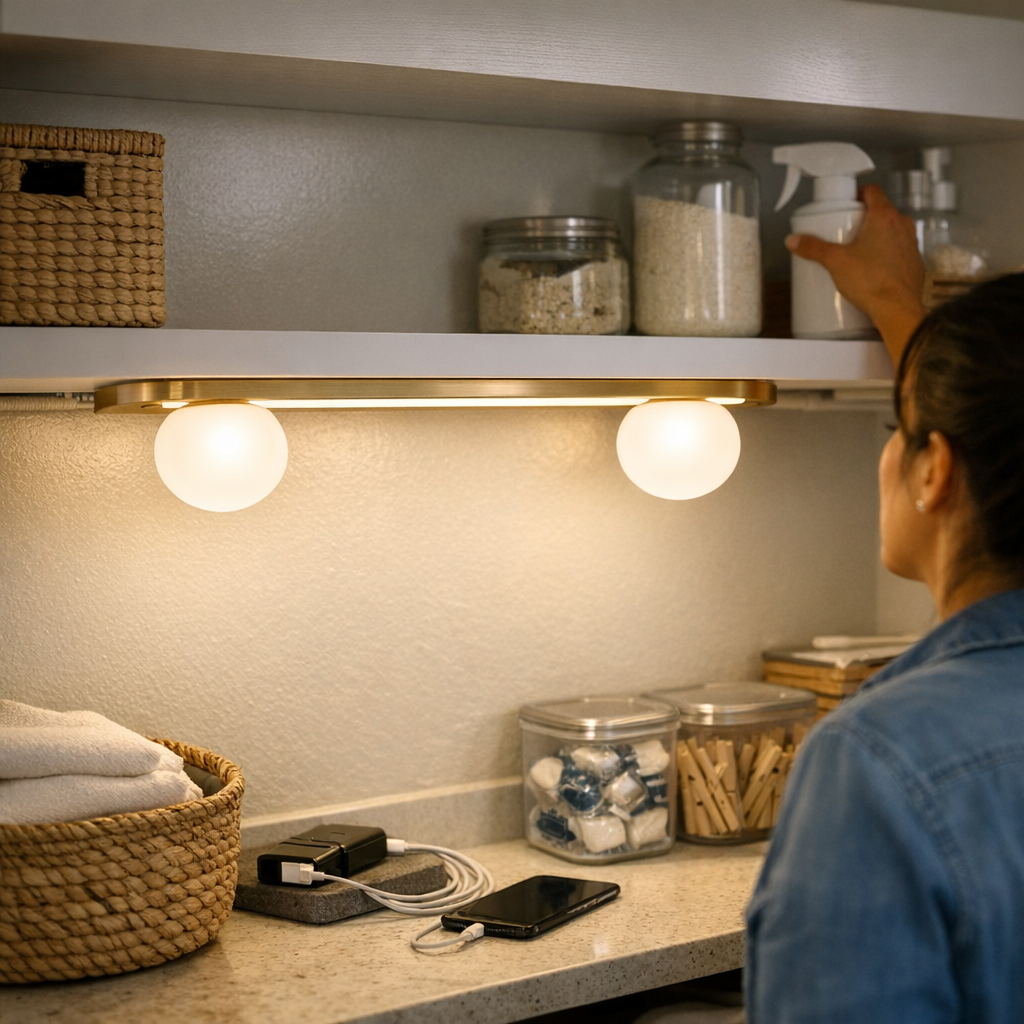
    Mounting lighting flush against the back of a shelf scores points for appearance. Slim LED strips, tidy bracket attachments, and cables almost invisible—a near-perfect product photo. But let the front edge go dim, and the surface becomes a guessing game. Your hands land there first: plugging in phones, sorting mail, flicking through notebooks, shifting kitchen tools. With the light source too far back, routine puts essentials in shadow every single day. That dim strip at the edge ends up the weak link: missing items, dust gathering in the gloom, daily reaches that feel like searching in a drawer rather than using a shelf. What felt visually strong up close actually encourages missed spots, harder wipe-downs, and a little more squinting or shuffling every time you use the space.

    Lighting isn’t the only culprit. Supports, brackets, and cable runs often look “fixed” right after install, until a misplaced bracket juts into arm’s reach, a cable line loosens and droops, or you catch yourself moving objects out of the line of sight. “Finished” is only as good as the setup’s behavior over time—hidden support points that interrupt actual use show up faster than you expect.

    The Real Cost of Weak Edge Lighting

    Most setups don’t collapse on day one. They slowly become aggravating. By the end of a busy week, bins migrate toward the front, mail piles up where light finally lands, and you start hesitating before grabbing anything: is it even visible? Is it clean? Is there a cable waiting to snag your sleeve?

    • Desk scene: That rear-mounted light bar spotlights the monitor and keyboard but leaves chargers, pens, and mail in the shadows. You end up sliding things forward or even lifting them into better light just to read a note or see what’s charging.
    • Kitchen corner: The under-cabinet strip fades halfway across the counter, so the cutting board is half-lit while recipes hunch closer to the splashback. You find yourself adjusting everything to chase the beam—not the routine anyone aims for.
    • Shared laundry zone: A bracket positioned for “no visible wires” leaves a rogue cable drooping into the basket path. Doing a load means dragging baskets around a nuisance you can’t unsee, while stray socks find new places to hide behind the support.

    The friction isn’t theoretical. It becomes habit-breaking, making you pause, repeat, and workaround a surface meant to be simple. The difference is small but stacks up every day.

    Balancing “Clean” Appearance With Real-World Use

    Tucking every fixture out of sight is tempting. Slide one LED strip to the rear; snap photos—mission accomplished. Except, if the working area stays half-lit, you’re sacrificing function for the idea of “clean.” The best setups risk a little more visibility—a bracket that actually supports the fixture closer to the edge, a cable run in plain sight but managed—to claim the territory that matters.

    Bring a wider light bar or panel forward, right to the edge. Maybe the mounting is now visible, maybe a cable trace can’t hide—but suddenly, labels are readable, bins stay sorted in any light, and no reach for the charger comes up empty. The “imperfection” in appearance is the very thing that unlocks a space you can actually use—mess, paperwork, dinner prep, or quick chores. The front-lit surface means the area doesn’t just look finished, it starts feeling easier to live with. Fewer items slide unseen into shadow. Less time is wasted repeating the same move. The trade-off isn’t more mess, but less hidden clutter and missed detail in the first place.

    What a Real Change Looks Like After a Week of Use

    Switching to a front-mounted light bar—bracket visible, cable run plotted along the underside—changes everything next week. You stop shuffling containers in and out just to find that one backup charger. You actually notice spilled coffee and clean it before it becomes a stain. Instead of dodging stray wires or repositioning the light, the space works at the pace you do. Even with multiple people or mixed uses, improvement is bluntly obvious: items get used and cleared away without extra steps, and you’re not stuck fighting the setup with every new routine.

    Staying Ahead of Clutter: Practical Adjustments and Small Fixes

    • Move fixtures toward the working edge. Mount a light bar or panel along the front—angled if needed—to cover where hands and objects actually land. Accept a little visible hardware: the payoff is instant edge clarity, no more accidental dark corners, and fewer fumbled reaches.
    • Handle cables before they distract. Every visible cable is either managed or in the way. Secure lines along brackets or the underside of shelves with slim adhesive clips; if one cable is loose for a day, it’s a snag point for weeks. Visual calm comes from cables you never think about after day one.
    • Test after several days, not just post-install. If you keep moving objects, wiping one shadowy area twice, or shifting gear to catch more light, the setup is still off. Useful is what works on the fifth use—not just what looks finished in the first hour.

    Edge Lighting and Support: Not Just a Quick Fix, But a Routine Upgrade

    Success is a shelf or counter you forget about—because it just works. Light that covers the full usable area, cables that never leave you dodging or detangling, a surface that looks ready but also stays available through real routines. Perfect in photos means nothing if you’re still reaching or reorganizing every day. Some visible hardware is better than hunting for what you need in gloom. Slightly exposed, stable support will always beat a “barely-there” option that keeps shifting out of place—or forces workarounds that become new clutter.

    Spotting the Tipping Point: From Appearance to Ease

    If the same section of shelf or counter keeps becoming a frustration zone—lost chargers, stacking bins just to see what’s behind, rearranging clutter that creeps back—don’t just reorganize and hope. The problem repeats because setup structure, not just neatness, is what needs attention.

    • Corners where cables and pocket clutter keep returning, no matter how many times you reset
    • Dim shelf edges that stay murky, even with ceiling lighting on full
    • Brackets sliding, cable guides loosening, or support lines drifting into view—visual “fixes” that quickly unravel
    • Surfaces that check every “done” box by looks, but still interrupt the routine or leave you annoyed after each use

    These are the sites where a blunt lighting or support upgrade stops the daily friction—not just for the sake of appearance but to make the area work without thinking about it.

    Explore lighting, mounting, and support options designed for real indoor setups and repeat use at LightSupport.

  • Why Shallow Storage Transforms Entryways for Faster Daily Routines

    Most entryways fall apart the same way: the bag you just dropped blocks the path, today’s shoes start a second row, and every reset takes longer than last time. No matter how clean it looks after a weekend sweep, beneath the surface, the friction returns—movement slows, overflow builds, daily routines stumble at the door. Whether you’re stacking shoes on a bench, using a slim wall rack, or trying to keep bags corralled in a cubby, the core problem isn’t just storage—it’s whether your setup keeps pace with real life: the rush out, the fast return, the pileup just inside the threshold.

    The Hidden Cost of Deep Storage in Entryways

    It’s tempting to assume a bigger bench or deeper cubby solves clutter: more room, more out of sight—or so it seems. What actually happens is deep storage becomes a slow-motion trap. Shoes migrate backward into double rows, every new bag pushes an old one farther from view, and anything left “just for now” disappears into the pile. Items vanish, retrieval takes extra steps, and resets spiral: digging for lost gloves means unloading half the bench. Each workaround—a jacket slung on the corner, a bag balanced on top—signals the whole system is stalling.

    Deep storage hides clutter—until it doesn’t. After only a few days, deep entryway setups breed their own mess. That stray shoe set aside on Monday is still blocking the bench on Thursday, and yesterday’s bag sits under today’s jacket. Pathways shrink. The threshold that should help you move instead creates choke points, forcing last-minute searches and slow resets. “Temporary” placements stick; routine bends around the buildup. Clutter drift stops being an exception and becomes the default.

    Shallow Storage: What Changes When You Flatten the Row

    Shallow storage—wall racks, slim benches, single-depth shelves—removes the places where overflow hides. There’s no hidden back row and nowhere to stash a jammed bag. Every item stays exposed in one line. The logic is clear: what you see is what’s in use. When something’s missing, it’s obvious; when overflow starts, it’s immediately visible. The setup holds you accountable, not the other way around.

    That visibility comes with a real trade-off. On crowded days—spiking with sports gear or extra shoes—shallow setups hit the edge fast: overflow collects in plain sight, not behind or beneath. But this limit is feedback, not a flaw. You’ll know exactly when the threshold can’t take one more drop, rather than slowly smothering in hidden piles. Deep storage quietly collects unfinished resets; shallow storage says “enough” up front. In daily use, that saves time. No digging, no guesswork, no mental checklist—just a visible reset point as soon as you walk in.

    Routine Stress Test: Morning Exits and Fast Returns

    Real problems show up during weekday chaos, not Sunday resets. The alarm rings late; three people rush through in ten minutes. Boots stack up in front, a bag lands half-off the bench, gloves slide down the side. In deep storage, new layers form—finding one shoe means unloading whatever backed up ahead of it. The whole entryway slows down. A slow reset today makes for a mess tomorrow.

    Shallow setups turn missing or misplaced items into immediate signals. If something’s gone, the empty spot shows it. If something shouldn’t be there, it stands out. After school or work, the return is fast: a quick scan, grab what belongs, drop what doesn’t. Resets shrink to a sweep of the hand, not a full excavation. There’s less temptation to pile things “for now”—the line fills, overflow stays visible, you’re pushed to deal with it before the path blocks again.

    From Looks-Organized to Functions-Every-Day

    If you’ve ever stuck with deep storage “because it looks tidy,” you’ve felt the downside. On the surface, the bench or cubby seems orderly, but under the coat pile or behind the first shoe row, chaos creeps in. Eventually you’re shuffling bags for a quick seat or dragging out every scarf to find what you need. The threshold turns into an obstacle course—not a passage.

    Switching to a shallow, wall-mounted rack changed the routine instantly. No stacks to lift, no layers to sort—just a single line of shoes and bags visible at a glance. If overflow happens, it’s right on the floor in your way. You see what doesn’t fit, so you deal with it before it blocks the reset. Overfull bins aren’t concealed under other items; they nudge you to clear out what’s over the line. The difference isn’t just a neat look—it’s a faster, less annoying reset under pressure, day after day.

    Where Shallow Depth Surprises You

    Shallow storage doesn’t create a perfect entryway. But it does make the edge visible. On busy days, when shoes start creeping past the end of the rack, the problem is out in the open, forcing a quick pickup or admission: too much gear, not enough flow. You can’t ignore the pile, but you won’t spend five minutes looking for what disappeared behind last week’s coat. Reset friction is lower because there’s nowhere for problems to hide—what’s out of place is right in front of you, every pass-through.

    For small entryways or shared routes, that matters. The path stays unblocked. Movement through the threshold isn’t pinched between stacked bins or half-dropped bags. Every person uses the same, visible row—resetting becomes a series of small, fast actions, not a single major cleanup. The trade is clear: you lose deep “capacity,” but you get a reset routine that keeps up with daily return flow, not just with weekend appearances.

    Everyday Tips for Real-World Transition Space Setups

    Balance visible limits with controlled overflow. If your routine includes extra shoes or bags some days, keep a small overflow bin close—but cap its size so it doesn’t start a new clutter zone. Lean on moveable or adjustable shallow racks that slide, extend, or swap as seasons shift or the family’s needs change. Place them where you already drop bags, not just where they look good in photos.

    Use built-in “pause points” for mini resets: after dinner, or during a weekend pickup, clear anything that’s drifted past its limit. With shallow storage, these spot-fixes stay manageable—you’ll never be two layers deep, so reset time stays short and control returns, fast.

    The Subtle Difference: A Threshold That Works With You, Not Against You

    What actually matters is how momentum holds up. Too-deep storage buries friction until it stops you cold—a blocked bench, a lost shoe, a reset you keep postponing. Shallow, open layouts show you what’s there and what’s missing as soon as you look; resets become a normal part of passing through, not a dreaded cleanup task.

    No setup banishes clutter or pressure completely, but the right format catches buildup before it blocks the way. Shallow storage isn’t about perfection—it’s about seeing problems early, fixing them fast, and keeping your entryway flowing. Even on the busiest days, the system helps you move—not just tidy up after the fact.

    Ready to see how your entryway can trade deep clutter for everyday flow? Start here: http://www.betweenry.myshopify.com

  • Creating a Seamless Pet Care Routine That Stays Effortless Every Day

    Why Everyday Pet Care Routines Break Down Faster Than Expected

    On day one, a pet feeding or cleanup zone feels under control—bowl set in place, cleaning cloth ready, water topped off, everything within arm’s reach. For a few days, the setup handles the routine. Then, silent friction creeps in: the bowl’s rim feels greasy faster than you expect, the cloth is missing just when spilled water needs to be wiped up, and that initial “system” starts to stall. The feeding area stays neat only if you track down whatever tool drifted away since yesterday. In real repeated use, “organized” isn’t enough—one delay, one missing item, or one awkward reach can turn a smooth routine into another slow, interruptive reset.

    The Hidden Cost of Repeated Pet Care Tasks

    Routines look stable until you run them daily. A feeding mat starts to build up stuck residue in the corners, and the water bowl earns its faint ring by midweek. Place the cleaning cloth too far from the zone, and “I’ll clean later” stacks up, leaving you with a dried mess during a rushed evening. When items migrate or slide out of reach, small chores compound into frustrating repeat work—usually surfacing right after meals or as you’re about to call it a night.

    The breakdown doesn’t announce itself. Tasks split into new detours—reaching for the water jug buried behind cat toys, tugging open a drawer that never slides smoothly to retrieve a brushing tool. Instead of a swift reset, there’s repeated shuffling and clearing, all while your focus is supposed to be elsewhere.

    When Routines Demand Attention Instead of Saving Time

    A pet care setup only succeeds if it absorbs repetition—if it actually gets easier the more often you use it. In most homes, small points of friction only show up after a few cycles: a missing wipe, a bottle out of place, a brush buried under extras. The moment you need a fast reset, the setup drags you back to tracking down what should have been ready.

    Scene: Two minutes before your first call, you reach for the water bowl—blocked by a notepad that wasn’t there yesterday. The cleanup cloth is upstairs, left to dry but forgotten, so you settle for leaving a small puddle to dry (and dread wiping it later, after work, when you’re less patient). Multiply these moments by a week, and a routine built for calm becomes a source of minor, recurring frustration—not visible mess, but time-slowing interruptions that eat away at the day.

    Comfort in One Area Can Undermine Others

    Hiding supplies seems smart—until you need them mid-routine with a distracted dog pacing circles or a cat darting underfoot. The more doors and bins between you and a brush or wipe, the more steps pile on. True: a tidy look can cover awkwardness, but it only works if you never have to reach for anything quickly with your hands full.

    Observation: After a walk, drying off your dog is seamless—if the towel actually hangs near the entry. The next day, it’s balled up across the house in a laundry basket. Now, wet paws trail halfway through the kitchen before you even grab the towel. Sudden extra cleaning wasn’t part of the plan.

    When Looking Tidy Isn’t the Same as Working Smoothly

    Order on paper doesn’t guarantee order under use. A storage bin hides gear, but its stiff lid guarantees supplies won’t actually go back in after a rushed feeding or grooming. Anything stored too low, too high, or behind another object becomes a daily obstacle—and leads to pet tools drifting right back onto counters or floors.

    Real-life pattern: Every time you want the grooming spray, you shuffle aside treat jars and a looped leash to reach it. Later, the water bowl sits empty because the refill bottle is stuck behind a stack of mail. Small holdups, but constant: the point where order collapses into a slower, piecemeal routine.

    Gaps That Keep Coming Back

    The same weakness returns, even after you try to tidy up. Skipping just one step—like putting the wipe-up cloth back where you can see it—brings the friction right back the next feeding. One hook above the feeding mat instantly solves the “missing cloth” cycle. Keeping a brush within plain sight (but out of the way) stops it from drifting room to room. Locating a refill bottle in a single, open cabinet means water isn’t skipped because of a stacked obstacle.

    Tight, visible placements do more than look neater—they cut out the routine “hunt” for missing basics, stop skipped resets, and keep chores from multiplying. The goal: every key item is easy to grab, use, and return without stacking new work for later.

    Practical Examples of Friction in Daily Pet Care

    • After midnight, checking your pet’s water, you notice a faint ring but can’t find the cleaning cloth—it’s part of last-load laundry again. Leave the ring or promise yourself you’ll clean it later, only to meet the same smudge tomorrow.
    • Coming in after a walk, you reach for grooming wipes that have slipped behind the dry food bag. The dog fidgets, paws damp, while you dig around—turning a quick reset into a minor wrestle and spreading the mess.
    • The feeding zone looks neat—every item stowed away. But feeding means bouncing between a cupboard, a drawer, and a side table just to gather the essentials, stretching out what should be a quick, seamless job.

    Strategies for Smoother, Less Demanding Routines

    – Place most-used items—wipes, brushes, refill bottles—within direct arm’s reach of their main zone. When access slips, skips and delays pile up.

    – Reset right after feeding, grooming, or walking—before puddles dry or crumbs cement into corners. Waiting turns quick cleaning into double-duty later.

    – Track which tools go missing or end up awkward to grab. Small fixes—like hooks, low baskets, or divider shelves—save more effort and time than reorganizing everything.

    Making Pet Care Fit Your Day Instead of Interrupting It

    Real calm in daily care isn’t about keeping things out of sight. It’s about setups that flow with repeated use: the wipe you grab before the spill dries, the brush that doesn’t wander, the refill that never needs a search. If handling gets easier by midweek, the routine’s working. If it gets slower, one access or placement flaw is blocking the flow—even in a setup that looks organized. Every daily care zone inherits its friction from one or two small weaknesses, and adjusting just one habit—where the cloth lives, where the brush goes back, where supplies actually sit—can prevent slowdowns and keep routines almost invisible.

    For a setup that stands up to real use, notice where friction returns and let everyday placements do the work—especially when the day’s already moving fast.

    See practical daily care setups at CalmPetSupply