Blog

  • Streamlining Pet Travel Gear for Smoother Evening Walks in New Places

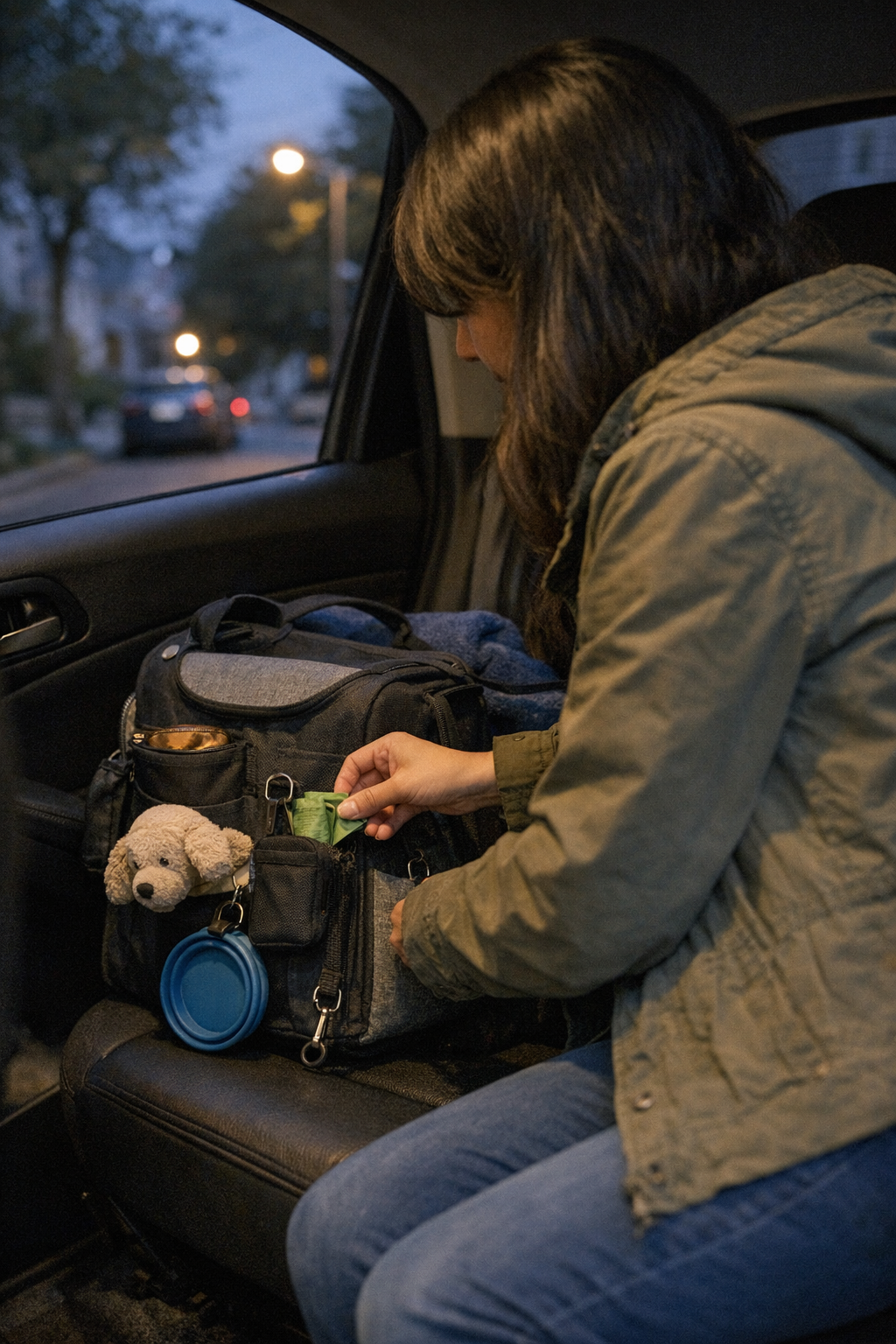
    Here’s where most pet travel setups fall apart: you’re out with your dog after dark, a leash in one hand, and what looked like a well-packed carrier now turns into a slow-motion scramble. Every stop, you’re guessing—was the clip in the side pocket, or buried with the wipes? That waste bag isn’t lost, but it’s pinned under a blanket and a collapsed bowl. The bag felt ready at the door, but now, every pause exposes one awkward truth: looking organized does nothing for speed when you actually need to grab, calm, or clean in motion. What you set up for neatness at home now works against you, trip after trip, and the moments you spend shuffling for essentials drag out your pet’s focus, notch up your own frustration, and turn a simple walk into a series of restarts.

    The Little Delays That Add Up

    Even a bag that leaves the house looking sorted—treat pouch stashed, bowl snapped flat, everything zipped up—doesn’t stay that way after a few real stops. The first delay comes when you stop to clean up; the wipes and bags are rarely on top. Instead, you’re elbow-deep, shifting folded mats for the same supplies every time. Try to pull a comfort toy quickly and find it has slid behind something else. It isn’t just wasted seconds. These repeated interruptions break your pet’s rhythm, making the outing less calm for both of you. Handling that seems fine at first exposes small flaws with every pause you did not plan for.

    Evening Movement Magnifies the Mess

    As light fades, search time nearly doubles. Items that seemed easy to reach are now scattered, or half-hidden in unfamiliar pockets. Your dog gets jumpy, tugging at the leash, while you fish for a leash clip that slid down behind stacked gear. The problem isn’t shortage of supplies—it’s unreachable supplies. Each new stop—grab waste bag, find treat, settle pet—becomes a blind dig.

    You reach for a waste bag but pull up the treat pouch instead. The spot you put the calming toy now means unzipping two compartments while your pet is already winding the leash tighter. The setup hasn’t completely failed, but friction creeps in with every repeated move, making return-to-action slower and clumsier—and your pet feels the tension first.

    Looks Organized, Handles Chaotic

    The false comfort of tidy packing vanishes the moment you’re actually in motion. Carefully built rows of gear look impressive at home, but by the third stop, your “system” demands you lift and shuffle items just to reach a simple need. Visual calm turns into physical chaos. With each restart, you replace visual clutter with shuffle time. What passes as “organized” before you leave the house becomes the very thing that interrupts the flow of a normal outing.

    Compounding Friction, Stop After Stop

    Each interruption builds on the last. The waste bags sink to the bottom by the second stop, blocking cleanup in a pinch. Leash clips and toys, wedged for tidiness, now mean everything moves when you tug one item. By the last half of a walk, your gear demands reset after every use. The more you have to reshuffle, the less your dog settles, and the more frustrated you get—because every extra second spent searching is one more moment pulled out of stride.

    Real-World Weak Points—Exposed Again and Again

    Actual travel weak points don’t show up the first time you use a bag—they creep in after a handful of ordinary interruptions. Standing by a dim street, your pet reacting to an unexpected noise, you realize the calming aid is buried for the sake of “tidiness.” Or as you wait to cross a busy intersection, you miss your window because your cleanup pouch tangled with your own essentials. Supplies that could resolve tension end up being the new source of it—because “organized” means little if you can’t get to what you need when you need it.

    When pet and owner items overlap—your phone blocking the leash, wipes wedged between snacks—every stop comes with its own extra handling. Each supposed “reset” makes the main problem worse: every stacked layer only demands another round of sorting at the next stop.

    The Value of Quick, Predictable Access

    True organizing wins when your most-used essentials—cleanup pouches, leash clips, calming items—are reachable in one direct move. Not “neatly nested,” not “tucked away.” Side or exterior-pouch access is what makes the real difference. Waste bag drawn in four seconds, not twelve. Toy grabbed right as nerves spike, not after a mat and treat switch. That’s the real test: repeat access, without new rummaging, every single outing.

    What Replaced the Hassle

    Adding just a few “movement-first” choices—cleanup pouch clipped right at hand, treats pocketed on the outside, comfort toy up front—not only sped things up but removed the constant bag reassembly ritual after every pause. What once felt like a series of forced stops now runs closer to “pause, grab, go.” Less reshuffling means your pet resets quicker, you keep pace, and the walk stays focused on the outing, not the bag.

    Choosing Structure Over Appearance

    Repeated use makes the real lesson obvious: efficiency always beats appearance. A good pet travel setup never hides essentials to create a look of order. If you have to unzip, lift, and hunt for a high-use item on every stop, your system isn’t working. Efficient structure means the stuff you need right now is always in one predictable spot—with less-used items sorted out of reach and out of the way. The best setups aren’t about being “packed” but about being ready for use without pause.

    When you judge bags, organizers, or carriers, focus on how they perform under travel, not how they appear fully loaded on a table. If access to waste bags or comfort items ever takes more than one step—or if a normal stop means a total reshuffle—you’re trading smooth movement for aesthetic neatness. That trade becomes painfully obvious the first time you need something fast on a dark curb or after an anxious startle.

    Better Walks, Fewer Interruptions—For Both of You

    Pet travel gear reveals itself in the little moments: a short reset, a quick-clean, a sudden grab for a comfort item. The only setups that work in real life are the ones built for reach and repetition, not a perfect pre-departure photo. When structure puts the right tool in the right place, you get a smoother outing, less stress with every stop, and an easier reset—trip after trip. Visible order means nothing if it eats up time and patience.

    The difference isn’t subtle to anyone who’s struggled with repeated reshuffling: the bag that moves with your routine—not against it—solves more than just mess. It keeps both pet and owner in rhythm and does the real work of travel, wherever the next stop actually takes you.

    Shop PawGoTravel for practical pet-travel gear and organizing essentials.
  • How Centering Weight Improves Stability of Dual Monitor Arms

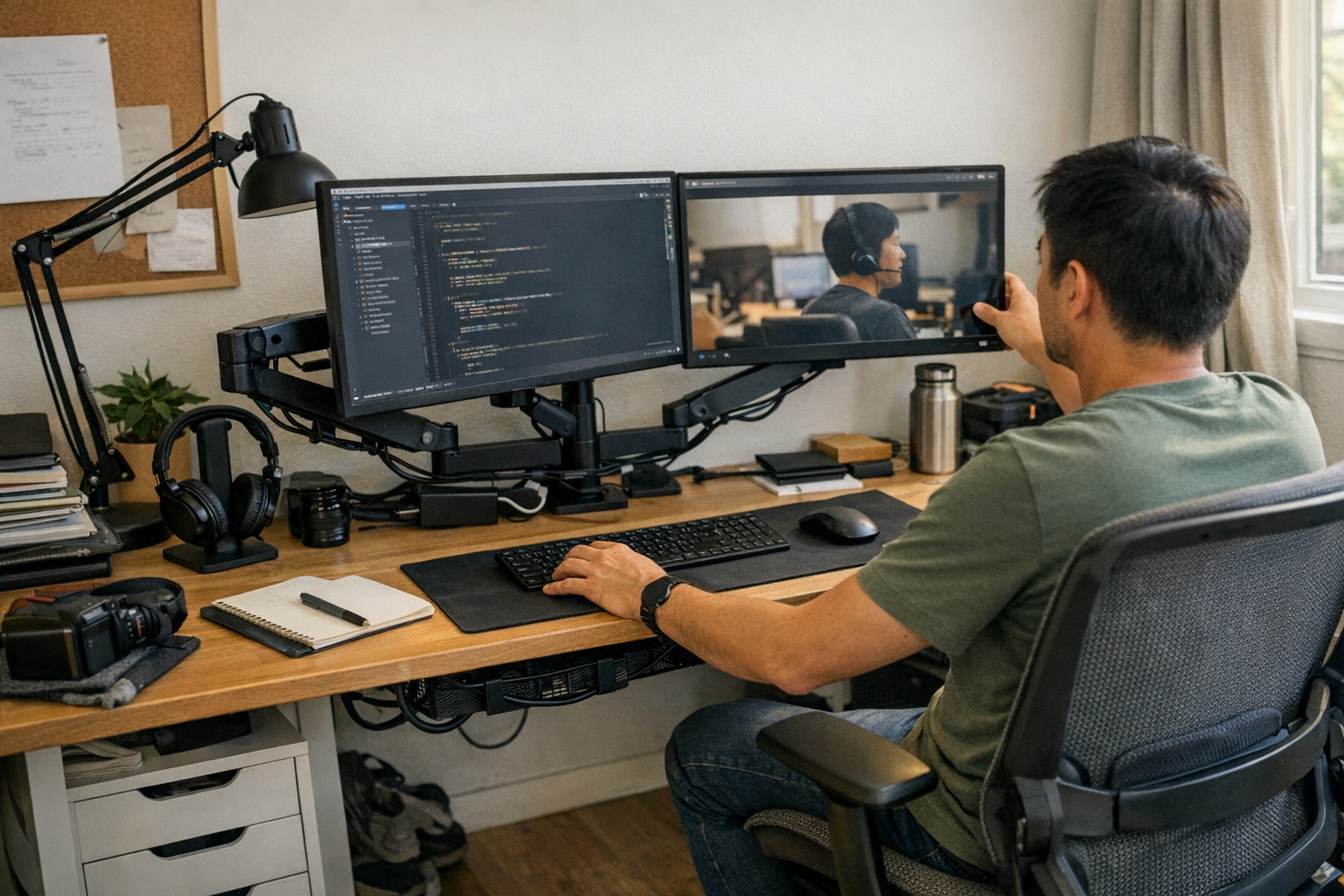
    Two monitors on arms should streamline your desk, not trap you in a slow-motion breakdown. It starts clean: both displays aligned, arms clamped tight, cables tucked just out of sight. But by your second or third real work session—switching between email, browser tabs, document editing—something unwanted drags its way in. One monitor edge sags lower, a cable pops up into view, or the screens drift out of symmetry each time you reset your chair. What looked stable quickly demands another round of hand adjustments, shifting and straightening, or outright unraveling the cable channels. The reality: a “fixed” setup that keeps slipping, forcing constant corrections, eating up attention, and crowding the desk surface you thought you’d regained.

    A Setup That Looks Stable—Until You Start Moving Monitors

    A pair of monitors, no visible clutter, clamp hardware hidden by laptop stands or desk organizers—it’s a workspace worth displaying in a team call. That illusion collapses the moment real work begins. Tug a monitor closer to work on a spreadsheet, swing the left arm sideways to pull up a notebook, or try adjusting both screens for clearer lighting—and you find resistance on one side, drooping on the other, and cables suddenly straining against their tie-down points. One display sags back, leaving the center gap off by a finger width. Even a slightly heavier monitor, a charger plugged in the wrong spot, or cables routed too tightly can warp the whole system. Each hands-on “fix” creates a new imbalance, and by midweek, the supposed clean setup requires more resets than before you brought in monitor arms.

    Desk Depth Disappears Faster Than You Think

    Actual desk depth can’t keep up with dual arms in action, especially on workstations under 24 inches deep. Even if the surface looks clear—a keyboard, notebook, maybe a compact drawer unit—the physical reach gets crowded. Picture two large screens and a laptop stacked above a shallow under-desk bin. Move one screen a few inches forward to zoom in on code, and suddenly a cable bundle scrapes the pencil tray or drops into view across the open notepad. Each pivot for a video call or reference check reintroduces slack, reroutes tension, or crowds the corner where you try to take written notes. After several cycles, the ergonomic upgrade starts to feel more like a rotating puzzle: arms fighting for position, cables never quite tamed, and “usable” desk space shrinking with every new shift.

    Subtle Imbalance Signals That Add Up

    It’s rarely a catastrophic slip—just a cascade of small, repeating cues that scream for attention during normal use. Watch for:

    • Monitor edges that drift out of level by the end of a typing session
    • Cable sleeves easing out and dangling, no matter how tightly tucked
    • Displays that won’t sit quite parallel, requiring a twist every time you log back in
    • Stiff motion in one arm that no longer matches the other’s tension

    Ignore the early warning signs and you pay in lost flow and micro-distractions. Each return to the desk turns into a ritual: rebalance, tuck, reset—a “solution” that keeps demanding your energy.

    Centering Weight Changes Everything

    After enough looped fixes and sidelong glances at a still-tilted display, the breakthrough comes: true balance isn’t about how “neat” things look, but how the actual weight rides the arm hardware each time you move. Instead of just eyeing the bottom edges, align both monitors so their combined center of mass is directly above the clamp and desk edge. Reset the cable channels and leave a purposeful three-inch slack just beyond the mount—no tension, no drag. Once weight and cable paths are centered, each monitor moves on its own, without sending the other off course. The impact is immediate: the desk stays in working shape from session to session, not just after a major reset. No slow-motion drift, no cable snags sliding out with every arm swing.

    Desk Flow: What Actually Gets Easier

    The upgrade isn’t about perfect alignment—it’s about stepping out of the cycle of correction:

    • Monitors remain level, regardless of how often you adjust them in a day.
    • Cables stay out of sight, freeing you from the repeated urge to hide them after every session.
    • Returning to the desk becomes a non-event: no scramble to center the screens, no reach-around to tuck loose power cords.
    • Switching focus between tasks is fluid, not awkward or blocked by a misaligned display.

    Most telling: repositioning a screen doesn’t set off a domino effect of small failures elsewhere. You’re not wrestling hardware or chasing moving targets—the desk starts working with you, not against you.

    Real-world Q&A: Identifying and Correcting Imbalance

    How do you know your monitor arm is out of balance?

    If your screen sags, twists, or creeps out of position with normal use—or if cables slowly squirm back into your work area—you’re facing imbalance. Needing frequent “just right” nudges to keep both displays aligned is your sign that the setup is drifting, not staying set between sessions.

    Does it really matter if one monitor is bigger or heavier?

    Absolutely. Even modest weight differences throw off most arm setups. Adjustable tension helps, but doesn’t solve the root problem if you haven’t centered the load. The heavier monitor wins—pulling that side down at the pivot or wrenching the arm farther than intended—forcing more resets over time.

    Is there a simple fix once monitors start drifting?

    The most effective fix is hands-on: loosen brackets, adjust both screens to the working position you use most, and tighten with the center of mass directly over the pivots. Make sure to leave at least an inch or two of slack in cables where arms rotate—tight routing is the single biggest source of drift or cable pop-out over repeated use. A small, tidy cable loop at the pivot point prevents day-to-day slippage and the need for unplanned mid-week rewiring.

    Why Centered Arms Outperform a Neat-but-Uneven Setup

    There’s a real difference between a workstation you can trust to “hold” and one that quietly slides out of alignment behind your back. Monitors that slip and cables that squirm create invisible friction: extra eye strain, little lags when you hunt for a centered view, cables drooping into the under-desk storage path. Even storage drawers or cable trays work better when the main visible gear stays put. Centered weight in a dual arm setup is the hidden backbone of a desk you don’t have to babysit—and one that actually lets organizers, risers, and bins all do their jobs without new workflow obstacles popping up.

    The Takeaway: Ongoing Corrections or a Trustworthy Desk?

    The real benchmark isn’t a desk that looks organized—it’s one that responds instantly, stays reset between long sessions, and never forces you to repeat the same manual tweaks every day. When weight and cables are centered, friction fades: no more hidden surprises when you return, and no more lost time to endless micro-fixes. You get back a usable work surface, ready for whatever needs to happen next.

    Explore the full WorkBasic collection

  • Why Visible Limits in Storage Prevent Hidden Clutter and Overflow

    Walk into a freshly organized closet and everything looks dialed: shelves in rows, socks paired and sorted, jackets hung just so. Give it seven days. After real life rolls through—quick mornings, muddy shoes, rushed laundry—what felt like lasting order starts quietly crumbling. Socks creep into the t-shirt zone. Scarves are swallowed by bins. The space is “organized,” but suddenly everyday access is slow, messy, and frustrating again. This is the real measuring stick for any storage setup: not how perfect it looks at the start, but how it survives daily pressure. Because real storage friction isn’t for show—it’s hunting for matching gloves in the dark, untangling gym shorts from a stack right before work, or hunting through the same bin again and again, each time finding less and less order left.

    The Relentless Slide: Why Surface Order Fades Fast

    It’s easy to think: add bins, use baskets, and clutter disappears. But most home storage fails in the details. Deep bins and open baskets swallow small items and let clutter multiply undetected. Reach for one shirt, two others slip; grab a hat, and half the pile shifts. Categories melt. That clear section for scarves now hides socks, sunglasses, receipts—a slow-motion disaster under a tidy surface.

    And when the system bogs down, so do your routines. Getting ready turns into an obstacle course. Instead of a ten-second grab, you spend a minute playing clothing Jenga. Quickly putting things away means tossing—not sorting—because the effort has outgrown the payoff.

    Hidden Breakdowns: When “Looks Organized” Stops Working

    The trouble usually isn’t obvious until you’re living in it. You glance at your closet, see neatly stacked shirts and labeled bins, and think it’s under control. Then you face reality:

    • Your most-used items slide behind stacks or vanish at the bottom of bins.
    • Piles on open shelves slump and sprawl after a single hurried morning.
    • Random extras—yesterday’s hat, today’s incoming mail—creep into any available space until sections blur together and roles are lost.

    Here’s what most systems miss: deep bins are an open invitation to the “toss and forget” habit. You never see the boundaries, and small category leaks are invisible until it’s a mess. Left unchecked, Monday’s tidy shoe bin quietly transforms into Friday’s collapsing pile.

    Why Visibility—and Containment—Change Everything

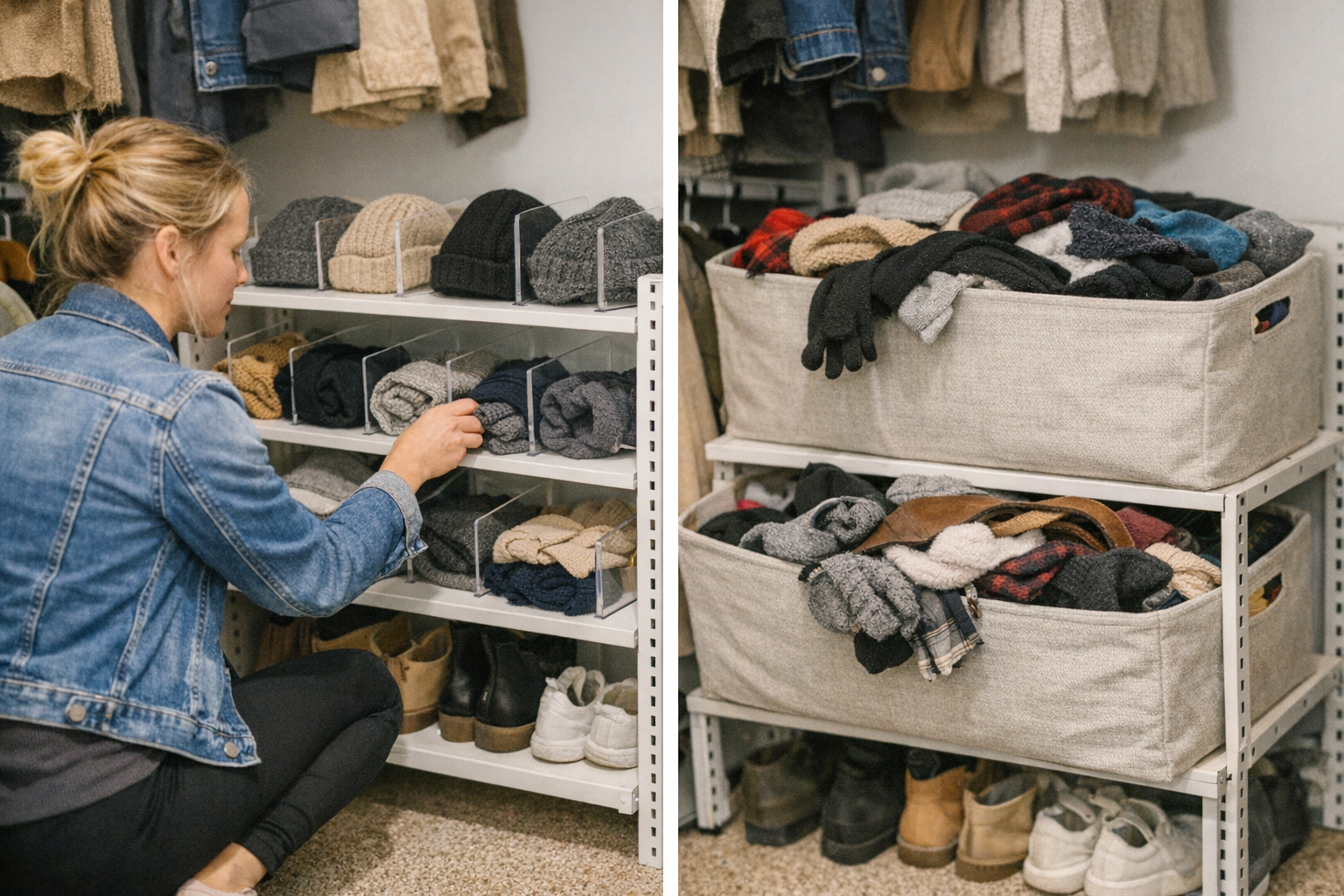
    The real shift? Shallow shelves and sturdy dividers create physical, visible boundaries for your stuff. Every scarf, t-shirt, or shoe has a home that can’t quietly overflow. You see when a category is maxed out. You feel when a section gets tight—well before it devolves into chaos. Instead of piles collapsing, you get crisp lines. Instead of mystery spaces, everything is in plain sight.

    This isn’t about getting every label perfect—it’s about making it impossible for piles to silently mushroom. Think about opening that hallway closet and seeing gloves upright in their own slotted space, not trapped under a random heap. When every division is visible, clutter doesn’t stand a chance to sneak up on you.

    Living With—And Without—Boundaries: Three Scenes

    Scene one: Hallway chaos remake. Two oversized bins for hats and scarves work for a week, then new stuff just piles on top. By Wednesday, you’re shivering in your coat, yanking out half the bin to get to winter gloves you know are in there—somewhere. Boundaries have vanished, and so has your patience.

    Scene two: Closet collapse in motion. Shirts were color stacked, but after late-night laundry, the lowest pile leans and sags. Accessories spill, socks wander into shirt territory, and grabbing one thing means disrupting everything else. Now “put away” just means “hide the mess and hope for the best.”

    Scene three: The entryway invasion. Shoes, mail, grocery bags—all competing for a few open cubes by the door. Lacking dividers, the pile quietly creeps outward. Midweek, tidy lines are gone; just finding one sneaker requires sifting, and the next reset is a full do-over.

    What Changes When You Get Sectioning and Depth Right

    Swap out those deep bins and sagging shelves for shallow, well-divided shelving and you’ll feel the difference in a day. In the hallway closet, each item stands visible and upright—nothing slipping down or getting lost. Everyday use no longer means undoing your whole system. The “grab and go” is finally just that.

    The practical move: Match shelf depth to what you actually store. Most accessible: shelves around 10 to 12 inches deep—enough for a single file of folded shirts, shoes, or gear. With fixed dividers, you keep each category tight and upright. No more disappearing gloves or T-shirts buried behind last week’s laundry.

    Spotting the Signs: Is Your Storage Failing in Practice?

    You don’t need an expert to tell you when a system’s failing—your routines will let you know. Watch for these tells:

    • Grabbing one item forces you to move, shift, or rebalance the rest.
    • Sections slowly morph: the mail shelf becomes a dumping ground for keys, chargers, and mystery objects.
    • Edge stacks slouch and never stay in line.
    • Each reset takes longer, and clutter always rebounds by midweek.

    These are daily reminders that visible limits and better design aren’t just extras—they’re necessary if you want storage that actually supports your routines.

    The Payoff: Smoother Days, Faster Resets, Fewer Storage Regrets

    Once you replace deep, shapeless containers with clear sections—just deep enough for daily essentials—everything changes. Most-used items stay findable. Categories don’t bleed. Resetting takes minutes, not afternoons. And you don’t have to “fix” things every night for the closet to work the next morning.

    It goes beyond surface-level tidy. Your storage actually fits into your day—so you spend less time digging, reshuffling, or resetting, and more living in a space that finally stays as usable as it looks.

    Shop ClosetWorks for practical storage that makes daily routines easier

  • How Small Routine Changes Can Fix Dog Walk Frictions and Improve Flow

    On paper, the walk is the “easy” part—but every dog owner knows the routine can trip you up in the same spots, again and again. That quick leash grab by the door turns into a fumble because the harness is wedged behind the winter jacket. The towel looks ready—but just out of reach once you come back with muddy paws. A walk that should clear your head instead drags with hidden stalls: a leash tangled at the same stretch of fence, a toy bin you still have to sidestep, the whole thing running slower, not just today but most days. The cost adds up quietly: it’s not just time lost, but a routine that wears you out, reset after reset—exactly where things were supposed to feel smooth, not stuck. The DogPile world lives here: not in more stuff, but in setups that actually match how your dog routine unfolds, friction and all.

    Recognizing the Repeat Snags in Everyday Dog-Walk Flow

    It’s easy to ignore a leash stop at one corner, or a tangled entry—until you notice it’s the same each day. Not random quirks: the fence where the leash hooks, the curb where paws slow, the reach for cleanup supplies that always seems one step too far. Most routines look organized—leashes on hooks, towels folded, gear in bins—but still break down when real movement starts. The dog bounces, you stumble over shoes, your hand lands on an empty hook. What felt “solved” visually isn’t solved in the flow. The test isn’t whether it looks under control, but how it holds up when you’re hustling and your dog is charging toward the door.

    When a “Settled” Zone Becomes a Routine Block

    A pause by the neighbor’s gate, a stall at the same driveway—these aren’t accidents. They signal the setup isn’t working with the actual pattern your walk follows. Maybe it’s the leash too close to the coat pile, a gate that always blocks the right turn, or a harness buried under bags by the entry. What looks calm on the surface breaks the moment you’re in motion, and the stall becomes part of your day, not a one-off.

    Scenes Where Setup Fails the Real Routine

    You reach for the leash—grab the wrong loop, coat falls, dog’s already antsy. The harness takes time to find, shoes shuffle mid-reach, and the dog pulls forward before you’ve clicked into gear. The minutes stack before you even leave. Coming back, door clears—but towel’s across the hall, wipes are missing, or you’re forced to manage a jumping dog while stepping around the toy pile. After a few days, what seemed “prepped” becomes a sequence of repeated stalls: cleanup slowed, water bowl knocked, home flow jammed as dog and owner try to move but keep crossing each other’s path.

    Visual Order vs. Real Flow—The Trap of Surface Calm

    Hooks, baskets, bins—they make things look organized. But looks flatten fast: if you dig for the leash every morning or find towels under yesterday’s coat, the “calm corner” has become a delay zone. The feeding bowl is right there, but blocked by stray toys. The storage solution works on the eyes but not on the sequence you run twice a day. The real measure: does everything move faster, or are you still forced to work around your own setup?

    Friction That Stacks—When Small Delays Take Over

    It isn’t chaos; it’s the invisible slowdowns—gear just out of reach, towels that drift, repeated shoe shuffles at the threshold. Watch for:

    • Pausing at the same spot during walks—even with new leashes or rerouted paths.
    • Leash snags on the same fence, walk after walk.
    • Always having to backtrack for towels or step over gear with a hyped-up dog post-walk.

    Miss these once and it’s nothing. Every day, and you’re facing chronic slow before-door transitions, tangled storage you learn to dread, and post-walk resets that feel heavier each week. By day four, the out-the-door “easy part” is now a source of grind.

    The Gap Between “Under Control” and “Usable”

    You fix one problem—leashes hung instead of tossed—only to find clean-up now means more steps. Maybe shoes or baskets block your exit, and the routine still asks for last-second stretches or reshuffling. “Look organized” slides into “used awkwardly”—and you can feel it, restart after restart.

    Solving the Routine: It’s Not Just About the Dog

    If you fix, but friction repeats, the setup—not the dog—needs rethinking. The same tangles, the same post-walk stumbles, the same energy drops: these are structure failures, not owner forgetfulness. The solution isn’t always new gear; it’s often a matter of moving what you already own—closer, clearer, or simply in line with the habit as it really runs, not as it “should.”

    Example: Small Change, Noticeable Payoff

    Take a nightly walk that always freezes at the neighbor’s gate after dinner. The win wasn’t a new leash—it was shifting the walk 15 minutes earlier, hitting an energy sweet-spot while the block wasn’t busy. At the same time, leash and harness got moved to a lower shelf, away from bags and coats. Suddenly, your reach is clean, the starting steps run smoother, the leash tangle at the fence fades to memory—not perfect, but easier. You come home: towel right where you land, water dish not blocked. The nagging reset loop loosens. The routine breathes, you’re not looping back to fetch wipes or rearrange bins, and both you and the dog reset faster.

    When Minor Tweaks Don’t Cut Through

    If shifting the timing, moving a shelf, or clearing the entry doesn’t kill the friction after a week, look closer. Is your dog suddenly pausing when you grab for leash or stall at the open door? Are they jumpier after walks or avoiding a spot? The trouble is likely in the sequence—something keeps tripping the habit, not just the gear.

    Looking Past the Tidy Surface: Judge by Friction, Not Sight

    Visual calm is a false signal. The walk routine might look buttoned-up, but if you need two corrections before every reset, it’s still leaking effort. Baskets and hooks do the decor work, but only friction signals show you what’s actually in need of change. Ask yourself: Where do you hesitate? Where does the delay live—in the threshold, at the leash, post-walk at the supply corner? Those are the real “tells.” Matching your storage and timing to these moments—not to how the space looks—gets you to a flow that holds up every day.

    Real-World Fixes for Smoother Dog Routine

    • Item in “reach” isn’t really ready. If it still takes longer to grab the leash than to grab your own shoes, shift the hook or the shelf closer. Even two feet makes repeated difference.
    • Cleanup works only if it’s instant-access. A towel that’s “in the area” doesn’t help when you’re holding a muddy, twisting dog—unless you can grab it without moving.
    • Comfort can steal time from cleanup. That plush bed right by the door—great for rest, but if it means removing the dog for every wipe, cleanup drags. Place soft zones where reset won’t fight routine.
    • No mess to see, but still slow to move? If tidy storage leaves comfort or movement awkward, that’s not the real fix—watch for places where routine flow still catches, even with less visible mess.

    Small Moves Matter More Than Big Overhauls

    Tiny frictions—misplaced towels, leashes hidden under jackets, resets that never run smooth—don’t fade just because the area is “organized.” They linger, stacking over days until the whole routine feels heavier. Find the points where reach, flow, or movement repeatedly ask for workarounds. That’s where the real setup improvement starts—where you trade surface calm for daily relief, and even the messiest day runs easier, not just neater.

    See what actually lifts friction in your own routine by checking out what DogPile can offer: DogPile’s shop.

  • Protect Entryway Floors with Non-Marking Glides for Everyday Use

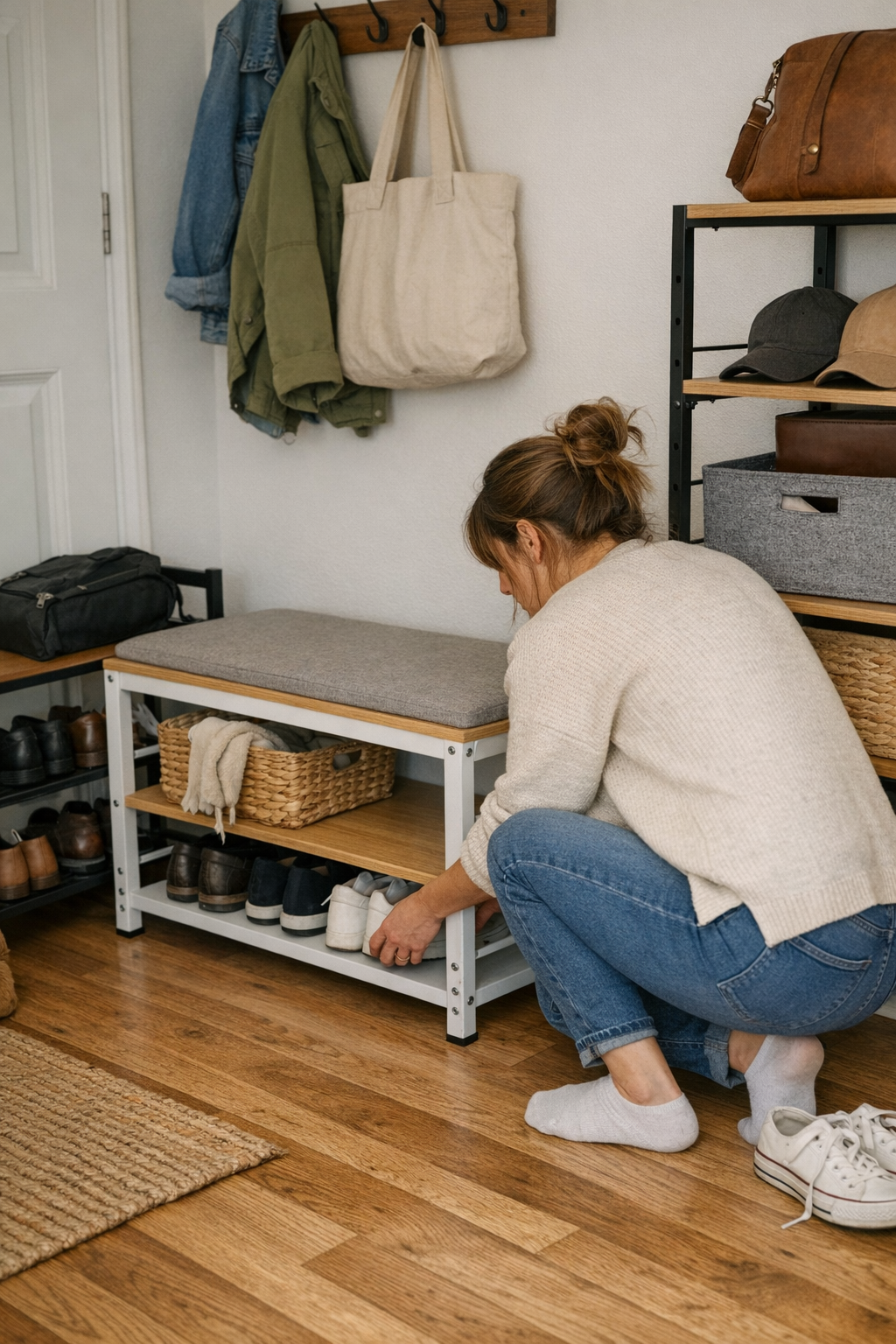
    Thresholds expose the truth fast: That first week with a new bench or shoe rack, the entryway holds its promise—bags find their corner, shoes line up, nothing blocks the path. But real use breaks the illusion almost instantly. Within days, scuffs bloom where everyone pivots, shoes breach their lineup, and the edge of the setup turns into an overflow trap. One hurry into the house, one muddy drop, and the “clean edge” already starts eroding. The reality of moving through a transition zone—bag drops, shoe kicks, rushed resets—shows up right where every piece meets the floor. If the setup falters here, frustration multiplies fast.

    Invisible Scuffs in Plain Sight: Where Standard Feet Fail

    In a busy entry, nothing stays where it started. Benches shift to clear the path, racks get nudged by careless elbows or arms full of groceries. If these pieces rest on basic plastic or bare wood feet, every shift leaves its mark—fine scratches deepen along the traffic path, small scuffs turn into hazy streaks, and sooner than you expect, the floor’s toughest zone looks the weakest. The “just sweep it clean” approach fails when scrapes don’t disappear and that low dull haze creeps across the entryway, signaling the hidden cost of ordinary feet. By the time it’s obvious, your reset routine already takes twice as long, just to line things up again and keep the scraped zone under control.

    Non-Marking Glides: Changing Daily Movement, Not Just Floor Wear

    Non-marking glides—pads of soft rubber or pressure-absorbing felt—replace scraping with sliding. Instead of the jarring sound and grit-grinding of hard feet, you get a quieter shift: the whole bench can move for cleaning or a quick realignment without gouging the finish. The difference is immediate—push a bench on non-marking glides, and it glides in near silence, needing barely a tug. On hard feet, you brace and drag, leaving a visible trail every week.

    This upgrade is a necessity in the setups where:

    • Entry benches double as quick-change spots and get shifted nearly every day—sometimes hour by hour.
    • Slim racks get backed into by bulky bags that push them progressively off-center, especially in narrow halls.
    • Movement is constant and space tight, so every misplaced edge starts a ripple effect—delays, more crowding, a shoe pile bleeding into walkway space.

    Living the Reset: Where Improvements Meet Drift

    Smoother movement feels like relief—until you risk new problems. A setup that glides makes daily resets easier: bump the bench straight, correct a shoe row, restore a clear path in seconds. But the friction drops for clutter, too. After a dozen comings and goings, a bench that moves easily will slide out of alignment without anyone noticing. Shoe racks set up for fast realignment drift into the main walkway, especially as items stack unevenly or bags hook and pull. What started as a streamlined setup gets subtly messier by midweek—not in a dramatic fail, but in small, accumulating misalignments that slow every re-entry.

    From “Looks Tidy” to “Actually Works by Wednesday”

    The difference isn’t just about appearance. By midweek, original order gives way to daily drift: shoes sprawl beyond the rack, the bench edge collects clutter, and a few inches of migration at a time turns a clear way in into an obstacle course. Even if wall hooks help, floor-level storage still shifts—even a few inches off means the return flow blocks up, and the next person squeezing through bumps things further off track. Awkward angles, blocked closets, and the need to shuffle the setup just to close the door become routine by Thursday, not occasional headaches.

    The Real Entryway: Pinch Points and Pressure Under Repeated Use

    Smooth glide pads aren’t magic. They absorb the sharpest damage, but the entry stays a pressure zone: bags slam down, sneakers kick grit under corners, and too many things try to share too little walkway. Hard feet catch on every stray pebble—scraping the floor and halting resets mid-move. Glides let you slide a bench with much less resistance, clearing space for a guest or mopping up a wet track line. But in a setting where every sidestep matters, even the best pads require vigilance: drift adds up, and the thin line between open access and a blocked entry can vanish in two days of high-traffic sliding.

    Unaddressed, this soft misalignment builds up: the bench now blocks storage behind the door, the shoe rack tips toward the walking path, and clutter reclaims what you fought to organize. Friction drops—but so does your margin for error.

    Real-World Installation: When the Details Decide What Actually Lasts

    Swapping standard feet for slim, 3mm-thick rubber glides, the first change is immediate—no more grinding marks, no rut buildup, and resets snap back to a one-handed push. Post-bag-drop, the bench moves without fuss, then straightens for the next rush without damaging the floor. Resetting after a sweeping or mop is now a gentle slide, not a wrestle that exposes fresh scratches or worn seams.

    But it matters what you’re installing: wire racks may not give enough grip for stick-on glides, and thin pads collapse under heavier cabinets—fast losing their protection and inviting embedded grit to do worse. The “right” solution adjusts to both foot shape and zone intensity:

    • Tip: Always size glides for the actual foot and load—expect to swap them out every 12 to 24 months if your entry is in daily rotation.
    • Tip: Notice furniture drift week to week: if items keep wandering, try wider or textured pads to curb the slide, especially on slick tile or glossy hardwood.

    Frequently Asked: Getting Entryway Storage to Behave

    Will non-marking glides fit everything?

    Most solid benches, low cabinets, and straight-leg racks can take glides easily—but narrow metal or wire legs may not hold adhesives reliably and could need a specialty solution.

    How long before glides wear out in real-world entryways?

    In high-shuffle zones, glides compress and gather grit fast. Inspect and clean at every deep reset; plan to switch them every year or two to keep the non-marking effect intact.

    Too much sliding—is it possible?

    If your storage is drifting out of position every few days, widen your pads, pick textured options, or tweak the floor plan so persistent pressure (like bag drops or shoe piles) isn’t always hitting the same edge.

    Everyday Adjustment, Not Entryway Perfection

    The switch to non-marking glides doesn’t erase the daily reset—wayward benches will still need nudging, compressed pads need checking, and busy weeks will test any routine. What changes is the cost of resetting—less friction, less damage, a recoverable shape even after a wild, muddy Monday. Instead of fighting with a deteriorating threshold, you get an entry that better endures the real churn of daily life. For threshold storage solutions that outlast quick-fix order and survive real movement, Betweenry keeps options practical and honest—letting your entryway recover faster from whatever the week brings.

    See practical solutions for entryway storage and transition zones at Betweenry.

  • How Wall Sconces Transform Shared Spaces with Softer Ambient Light

    Ceiling lights fool you at first glance: step into any room with a single overhead fixture, and everything “looks” illuminated. But as soon as you try to work, read, or relax, the real issues show up fast—stray shadows slice across your desk, glare bounces off your screen or glossy table, and you find yourself shifting position or squinting to make out details you thought were covered. Light fills the floor, but leaves corners and work surfaces patchy or harsh. After a few days, you notice your eyes working harder, the urge to drag a lamp closer, or the constant trip of cables stretched between outlets and tables. The whole setup may look minimal, but you’re always compensating for something the light can’t seem to reach or fix.

    Where Overhead Lighting Lets You Down

    On paper, overhead fixtures promise “full coverage.” In reality, the effect is often blunt and uneven. Sit through a couple of work sessions or try winding down on a sofa: shadow lines split your tabletop, while keyboards and documents fade into partial gloom. Every glossy surface turns into a flare point—computer screens, glass-topped desks, even a polished lamp base all catch stray light and create micro-glare you keep shifting to avoid. Table lamps and desk lights edge in as band-aids, their cords trailing wherever you can find a plug, creating clutter that’s always almost invisible but never quite gone. Each quick fix just rearranges the distraction: one day it’s harsh overhead glare, the next it’s a dark edge at your workspace, or a cord in the way of your chair.

    Discomfort doesn’t announce itself in a single moment. It builds in small, repeated frictions—reaching under a shelf and still missing the right edge, readjusting your seat to dodge a bright spot, catching a lamp cable with your foot for the fourth time this week. What looks finished is actually patched together, never quite working for the way you use the space every day.

    How Wall Sconces Change the Equation

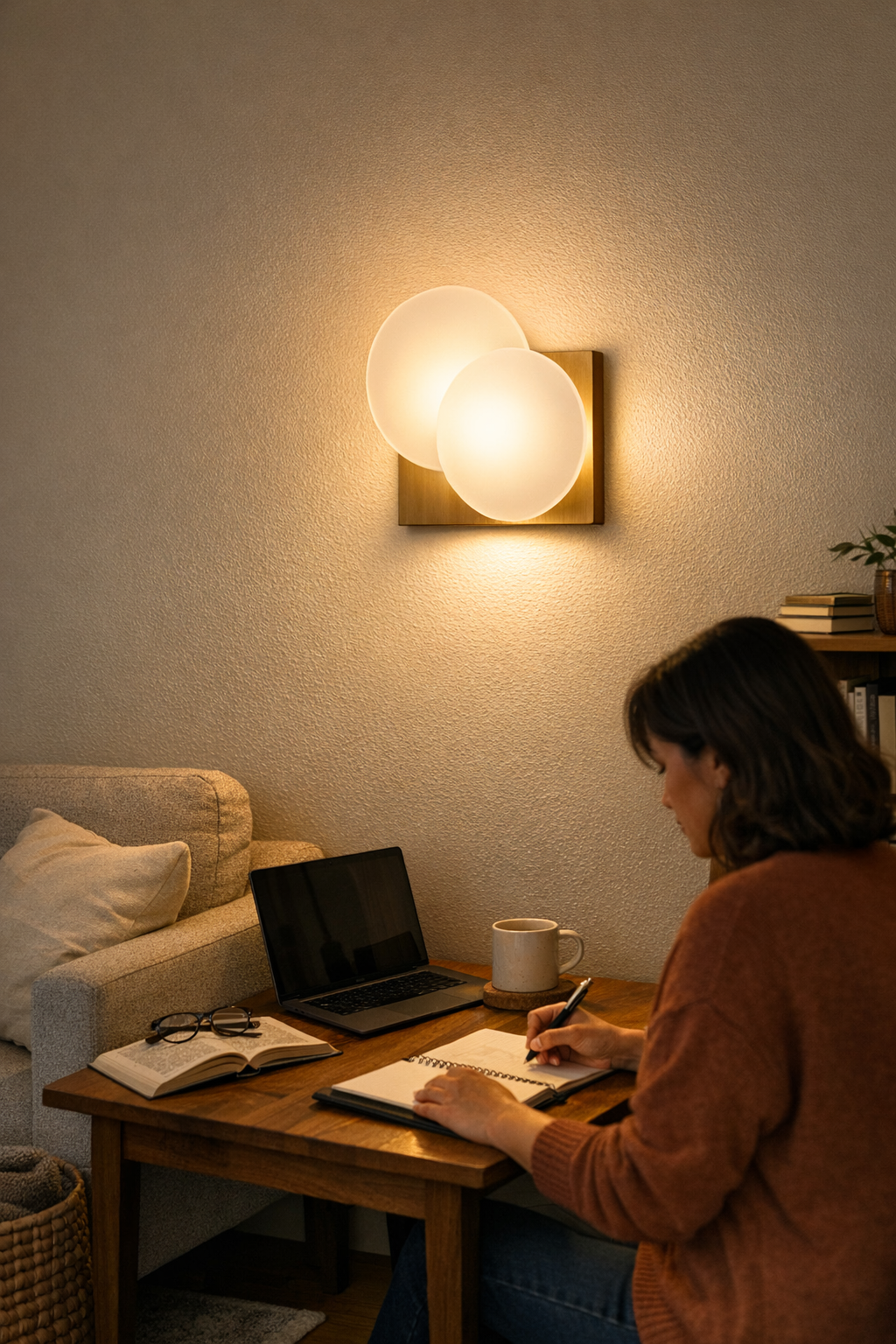
    Wall sconces solve problems overhead lights and desk lamps can’t touch. They send indirect, focused light right where it matters—across a wall, down a reading corner, or along the length of your work surface—flattening shadows and smoothing out glare. The change is immediate in mixed-use rooms: open your laptop in a living space, and the shadow that covered half your writing disappears. The bright “strip” along the wall softens the room and keeps power cords off surfaces, so you stop noticing cables before you can notice the room itself. Sconces shift attention back to where you actually need to see—papers, books, a conversation partner—letting your eyes relax for once, instead of battling sharp contrasts or peering past messy support gear.

    Unlike table or floor lamps, sconces mount off the surface—freeing up valuable desk and shelf space and clearing cables from walking paths. Surface-mount or plug-in sconce options sidestep complicated rewiring, so you can fix problem lighting in an evening instead of overhauling your room. The right placement delivers just enough light for shared tables, shelf runs, or reading zones, without leaking glare where it’s least wanted. Day-to-day, this isn’t a decorative upgrade. It’s a recalibration: the difference between a room that looks assembled and one that finally feels resolved in use.

    Shared Nooks & Real Use Friction

    Picture a corner sofa pressed into double duty—half reading nook, half laptop station. Ceiling light spills straight down: one end is overexposed, almost clinical, while the opposite side is left in a persistent, frustrating shade. The “lit” effect collapses as soon as you try to write, read, or even reach for your charger. Table lamps stretch their cords across floor space, but the trade-off is clutter. The effort of shifting, squinting, or sidestepping cables is ongoing—never dramatic, always a little disruptive.

    Now add a wall sconce, nudged just 30 centimeters toward the middle of the wall. Suddenly, the oversized shadow dividing your table or sofa falls away. Light pools softly across your papers and keyboard, cables vanish against the wall, and the friction of moving from screen to notebook or guest seat fades into the background. The impact isn’t dramatic at first—you just stop interrupting yourself. Weeks later, you realize what’s missing: the urge to rearrange or the routine frustration is simply gone. The area isn’t just neater, it finally supports the routines you need.

    Getting the Height and Spread Right

    For practical sconce placement, aim for mounting at eye or upper-shoulder height—about 150 to 170 centimeters from the floor. This height prevents harsh overhead glare, keeps the spread balanced, and ensures the light spills to where it’s most useful, not just diffused across a blank wall. Go too high, and you redo the ceiling mistake: strong light overhead, shadow where you work. Mount too low, and the glow falls short of the desktop or shelf. The advantage of surface-mount or plug-in models is obvious here: you can test placements and adjust before committing, bringing instant payoff to neglected corners and problem edges, all without opening a set of wire strippers.

    Plug-In Sconces vs. Hardwired Installs

    While hardwired fixtures suit permanent setups, plug-in sconces are the practical route in rentals or multi-function rooms. Run the cable discreetly along the wall; suddenly, surfaces stay clear and you’re not dodging wires every time you sit down or move around. The wall does the visual work—hiding wires and hardware in the background—so the space stays organized after actual use, not just in staged photos. Every return trip to the desk or nook, you notice what’s not there: no crawling for an outlet, no lamp base in the way, no light compromise just because you change seats.

    The Everyday Payoff: Calmer, Sharper, Less Distracting Space

    Routine is the test. Ceiling-centered “minimalism” starts failing as soon as daily patterns set in: tired eyes by midweek, faint gloom at one desk edge, streaky glare across your work or reading surface. Sconces, when placed where you most often work or sit, silently undo those failures. The result isn’t showy: it’s a gradual, steady ease that marks a clear difference after every repeated use. The cables fade. The desktop stays clear. Shadows lose their bite. Appearance matters less than function, and for the first time, your space supports real living—at the desk, under a shelf, across a shared table—without constant editing and workaround.

    If you’re caught in a cycle of glare, dim work areas, or constant cord-jockeying—even in a room that passes for “finished”—lighting layout is almost always to blame. A sconce, panel, or better-placed fixture fixes the real problem: making your space reliably usable, not just visually resolved, from the first day through the hundredth. The next time you catch yourself shifting again, consider if it’s really your furniture at fault—or just the wrong light in the wrong spot.

    For practical, everyday indoor-lighting and lighting-support that actually makes your space easier to use—not just easier to look at—visit LightSupport.

  • How Clear Movement Zones Transform Your Wall Storage System Efficiency

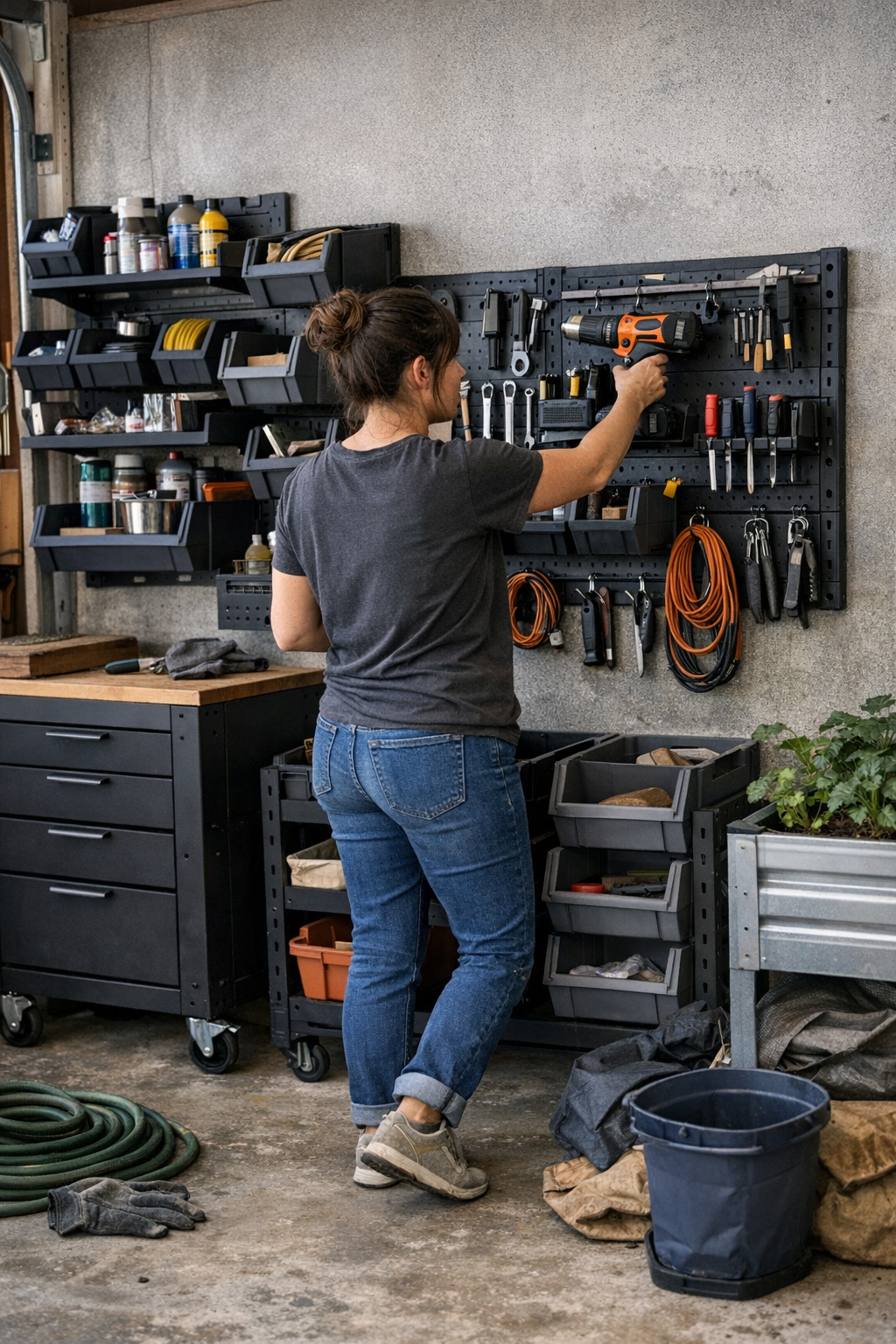
    The real test of any wall storage system isn’t how sharp it looks on install day. It’s what happens a month later—when the order promised by neatly lined panels, hooks, and bins collides with real, messy routines. In a garage, a corner workshop, even a crowded back room, you start with a blank slate: tools aligned, floor space visible, everything with a label or a rail. Then your habits take over. You’re rolling carts in and out, setting jobs down “just for a minute,” clawing past the edge of a cabinet you thought you’d finally placed out of the way. Suddenly, that well-ordered wall is just another background—yesterday’s gear pushed to the side, the prime strip near the bench jammed with overflow, and simple reset routines quietly dragging you down.

    Where Setup on Paper Slips in Daily Use

    Panels and rails rarely fail. But layouts often do—because they ignore the kinds of movement that actually happen. It’s not the hardware; it’s the habits and shortcuts that follow. Right after you hang the last hammer, everything fits. But fast-forward through a few projects and your resets get longer. The recurring friction piles up:

    • You edge a rolling cart, just to squeeze through—until every trip across the floor means bumping bins that stick out a few extra inches.
    • One patch of wall turns into the “catch-all”—the spot where nothing really belongs but everything lands after the rush of a job.
    • Putting things back isn’t automatic. It’s a jigsaw: if you hang up a wrench, two other tools are in the way—reshuffle, repeat.

    Two spaces with the same panels and the same instructions diverge fast. One, you move through cleanly. The other? You sidestep old projects, reach around the same awkward beam, and wonder why the path always manages to tighten up right when you need to move the most.

    Diagnosing Hidden Friction Before It Spreads

    Clutter rarely explodes overnight. It gathers in slow, subtle drifts—signals you notice only when routines stall:

    • A “clear” wall section never stays clear; something always migrates to that easy-to-reach spot, reappearing the next day no matter how many times you move it.
    • Your cart won’t settle where it used to—the path narrows, the angle’s wrong, that one bin keeps sticking out just enough to nick your hip.
    • The bin marked for ‘electrical’ ends up swallowing in-practice junk: pruners, work gloves, packs of screws temporarily abandoned for days.

    It’s tempting to blame too many tools, but the real problem is a setup that makes it too easy for categories to blur and blocks to build up. Labels only help when the flow of daily use agrees with them. Otherwise the overflow keeps creeping closer to the heart of your space.

    The Real World Isn’t a Showroom—Movement Beats Looks

    Wall systems win points in staged photos. But when you’re making repeated trips—hauling gear from the bench, parking a mower, zigzagging around drawers—the real question is simple: Are you moving through your space, or moving things out of the way? Each small interruption—a bin that’s inching into your path, a shelf that always needs another tweak, a dead corner swallowing “extra” gear—piles up.

    Take the classic problem: a rail below waist height near your bench. Seems ideal for those last-second grabs. In practice, it morphs into a drop point for whatever doesn’t belong anywhere else. Over days, that section clogs, blocks the cart’s spot, and forces you to adjust your route on autopilot. Leave it unsolved, and soon your “reset” is half an hour of sorting what should have never stacked up.

    Life in a Crowded Setup: A Day’s Evidence

    Picture the routine: the sun’s down, the garage door is half-up, and you’re racing to wrap up a bike repair before dinner. You reach for the essentials—but now a tangle of jumper cables and a borrowed drill crowd your most convenient bin. You try to step through the main aisle, but a floor jack wedges you against a shelf. To finish, you have to reshuffle lesser-used tools just to hang up the wrench. What should be a quick reset stretches—minutes lost fighting layout, not finishing the work.

    Overflow: The Silent Slowdown

    The offender isn’t always obvious—it’s the invisible “just for now” habit. Overflow builds up in the space that’s easiest to drop things: the busiest, most central strip of your storage wall. Bins and hooks get buried. The strongest hardware won’t save you if a key tool is always blocked, or if your favorite bin becomes a dumping ground. When main routes fill, every reset takes longer—and what started as a clutter fix now eats into your limited time and space.

    The Small Rules That Rescue Flow

    Making a setup work isn’t about adding more hooks—it’s about enforcing subtle boundaries:

    • Keep your main paths clear—no exceptions. The route from the bench to the door, or across your main zone, can’t shrink. If a bin overflows, move it now—not once you’re tripping on it every weekend.
    • Nip corner creep in the bud. Corners are magnets for clutter. Don’t let gear “rest there for a minute”—that moment becomes a month fast.
    • Honor your natural reach zone. Panels only help if your daily tools are where you grab them without a stretch. Put infrequent stuff high or low—keep core gear within waist to shoulder height.

    Real maintenance sometimes means sacrificing the illusion of maximum storage. For instance, committing to a clear 70cm slice of wall in your main walkway felt at first like a loss—until you noticed not having to fight for space on each pass-through. A clipped elbow isn’t just a bruise; it’s a warning your layout is crowding back in on you.

    Everyday Tweaks That Keep Systems Working

    Empty main zones on purpose. When you first see stray overflow in a walkway, move it before it sets in. Don’t settle for adapting to an annoying change—reverse it as soon as you catch it.

    Let reach guide your real estate. If a daily-use tool isn’t instantly at hand, don’t accept the inconvenience. Change the location or the panel height; you’ll notice the difference every session.

    Make overflow zones deliberate. Need a “parking lot” for project leftovers? That’s fine—just keep it out of your traffic lanes and clear it out often. If a hook or bin turns into a black hole, it’s time for a label or a hard reset, not a routine apology.

    Organization That Gets Out of the Way

    The most functional wall system fades into the background. It lets your projects set the pace—not the location of your screwdriver or the maze on your floor. The first hint of friction—the need to move things twice, the creeping block in the pathway—is your cue to intervene. Don’t wait until the system quietly becomes the obstacle it was supposed to solve.

    True storage control isn’t about a tidy surface for its own sake. It’s about having a space where movement stays fluid, resets stay short, and creativity isn’t choked by invisible slowdowns. That’s a setup that stays genuinely usable—session after session, not just for that first, “perfect” day.

    http://stacknest.myshopify.com

  • Why Packing Your Carry-On for Movement Beats Neatness Every Time

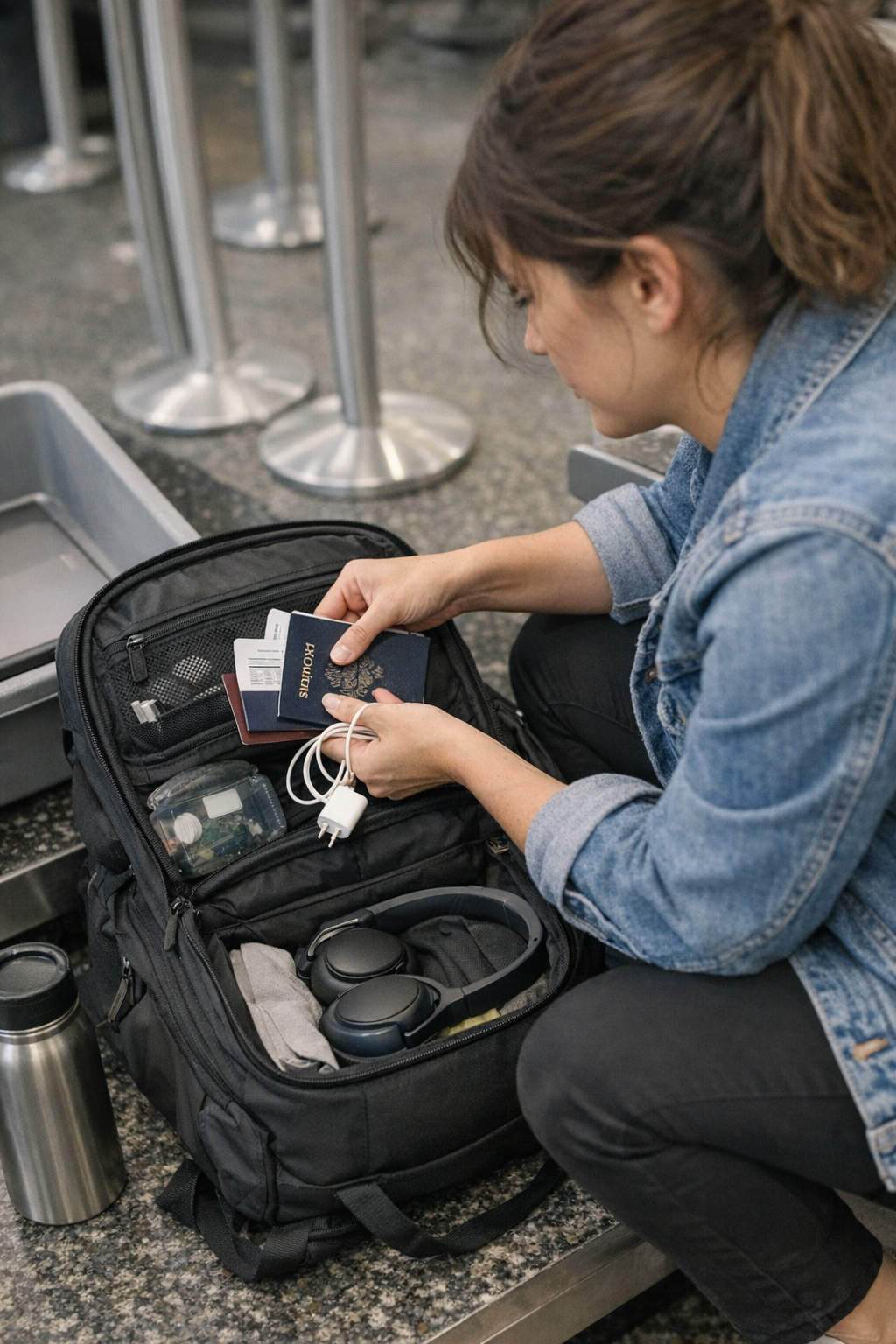
    The bag that looks “perfect” at home rarely keeps up inside an airport. Neatly stacked organizers, tucked-in document pouches, and zipped pockets all promise control—until you hit your first security line or need your passport in a hurry. It’s only after a few real-world retrievals that minor packing choices start turning into real slowdowns: multiple zippers to open for one boarding pass, a charger tangled under layers, or your bag suddenly splayed open across a checkpoint tray while others nudge forward and you dig for what you thought was accessible.

    When “Organized” Turns Into “Hard to Use”

    Tidy packing—cables rolled, toiletries locked away, documents slotted in labeled organizers—can fool you into feeling ready. But as soon as your feet hit busy airport concrete, appearance and function diverge fast. The structure that looked sharp at the kitchen table now requires you to unzip two or three compartments for a simple passport pull. At your first tray-transfer, you’re hesitating, pulling apart organizers, and stacking mesh pouches on the fly, with every delay amplified by the pressure of the line. Each time you repack after security, the “order” you built slips further out of reach.

    This isn’t just bad luck—it’s a side effect of setups made for storage, not movement. Things you reach for repeatedly—boarding pass, headphones, ID—end up buried under zipped pouches or behind layers built for visual neatness. That first access might feel smooth, but each repeated retrieval multiplies the problem: friction mounts and the original packing logic collapses through constant interruption.

    Repeated Access Reveals the True Structure

    The real test of any carry-on isn’t the first grab. By the third or fourth document check, access patterns start to show their weaknesses. A passport that’s slickly hidden behind organizers, a charger jammed below a mesh pouch, or an earbud case always at the bottom—they all slow you down at the worst moments. Each re-pack gets messier. A charger never quite goes back in its slot, a mesh pouch bulges after you pull just one cable, and what looked organized now refuses to cooperate. At home, none of these frictions exist; but in line, or on the move, every missed detail compounds. Flow is interrupted. Small messes accumulate.

    Recognizing the Cost: Slowdowns in Real Transit Moments

    Security Checks That Expose Every Flaw

    Airport security rarely cares how “clean” your packing looked before you left. One call for a laptop, another for liquids, and now your planned layout is scattering open on a hard tray. Mesh pouches catch, stacked organizers need to be transferred and restacked, and there’s no time to gingerly relayer everything. Your hand keeps darting into the bag just to find things that seemed obvious hours ago. Jam something back hastily, and it will slow you down again at your next checkpoint.

    Boarding and the Seat-Entry Struggle

    Breezing through security only trades one challenge for another. In the boarding line, your passport is lodged under the in-flight tech pouch—meaning you now have to balance your bag on one knee while you unpack in public. At your row, grabbing a tablet or headphones mid-aisle forces another round of loosening compartments, disrupting the fragile stacking order that looked so clever at home but now unravels into a juggling act.

    Overhead Bin Realities and In-Transit Retrievals

    Eagerly lifting your bag into the overhead bin? You’ll likely be pulling it back out within minutes if you miss a needed item. What was “on top” shifts and sinks, pouches slide, and suddenly a passport or boarding document is embedded in the middle instead of on hand. Each retrieval tugs at clashing layers—zippers catch, compartments sag, and a bag that looked organized when zipped now trips you up with every attempt to move quickly. The cost isn’t a visible mess—it’s the drag on your routine and confidence.

    Packing for Movement, Not Just Order

    Real airport cycles prove it over and over: storage-only setups get in your way, but packing for movement reduces friction. Every item you need more than once—passport, boarding documents, earbuds, a single charging cable—belongs in a spot you can reach in a single motion, with no layered pouches or secondary zippers in your path. Gear you won’t touch until landing? Bury it deep—out of reach, out of mind.

    Small structural tweaks quickly separate bags that slow you down from those that move with you:

    • Consolidate travel documents and top-use tech into one quick-access compartment, not scattered across pouches.
    • Keep separate organizers for cords and other low-frequency items, but out of your main retrieval zone.
    • Treat “organize everything” methods as checked-bag logic—not for your in-motion carry-on.

    After even a single trip, the change stands out. Instead of opening three zippers at every checkpoint, you’re making one move for high-frequency items. A laptop drops onto the tray without disturbing a dozen pouches. You can grab and stow your passport without losing the thread on airport flow. The bag looks less pristine—pouches and pockets might be a little looser—but it works with you, not against you, every time the routine repeats.

    Where “Less Orderly” Means More Useful

    The biggest concern many travelers have—“won’t my bag devolve into chaos?”—almost never matches reality. Allowing a little looseness in your main compartment gives you flexibility to adapt: this morning it’s your phone, this afternoon it’s your charger, every checkpoint your passport. Nothing ends up buried for long, and no retrieval feels like a teardown. The day’s rhythm gets smoother, not messier: fewer stops, fewer course corrections, less time untangling gear for a five-second ID check. The real improvement is cumulative—your movement gets easier, the small stresses fade, and you stop dreading every pause in the airport gauntlet.

    Small Adjustments That Deliver Lasting Relief

    The best setup isn’t the one that looks best right after packing, but the one that survives repeated in-transit use. Every multi-step retrieval—passport trapped under three layers, charger caught behind a sleeve, toiletries wedged deep—costs you seconds and patience each time. Changing the home for even one repeated-use item can make you the person breezing through security instead of the one rifling through pouches at every stop.

    So before you reach for another travel organizer, pause: think about which items you’ll want instantly, and whether your setup keeps them on hand when it really counts. The best systems aren’t just tidy—they keep up when your routine is exposed to real travel pressure, letting you move, reach, and reset with less drag at every step.

    See travel tools and organizers designed to make real movement easier at CarryOnSupply.

  • How Clear Access to Emergency Gear Transforms Your Driving Safety

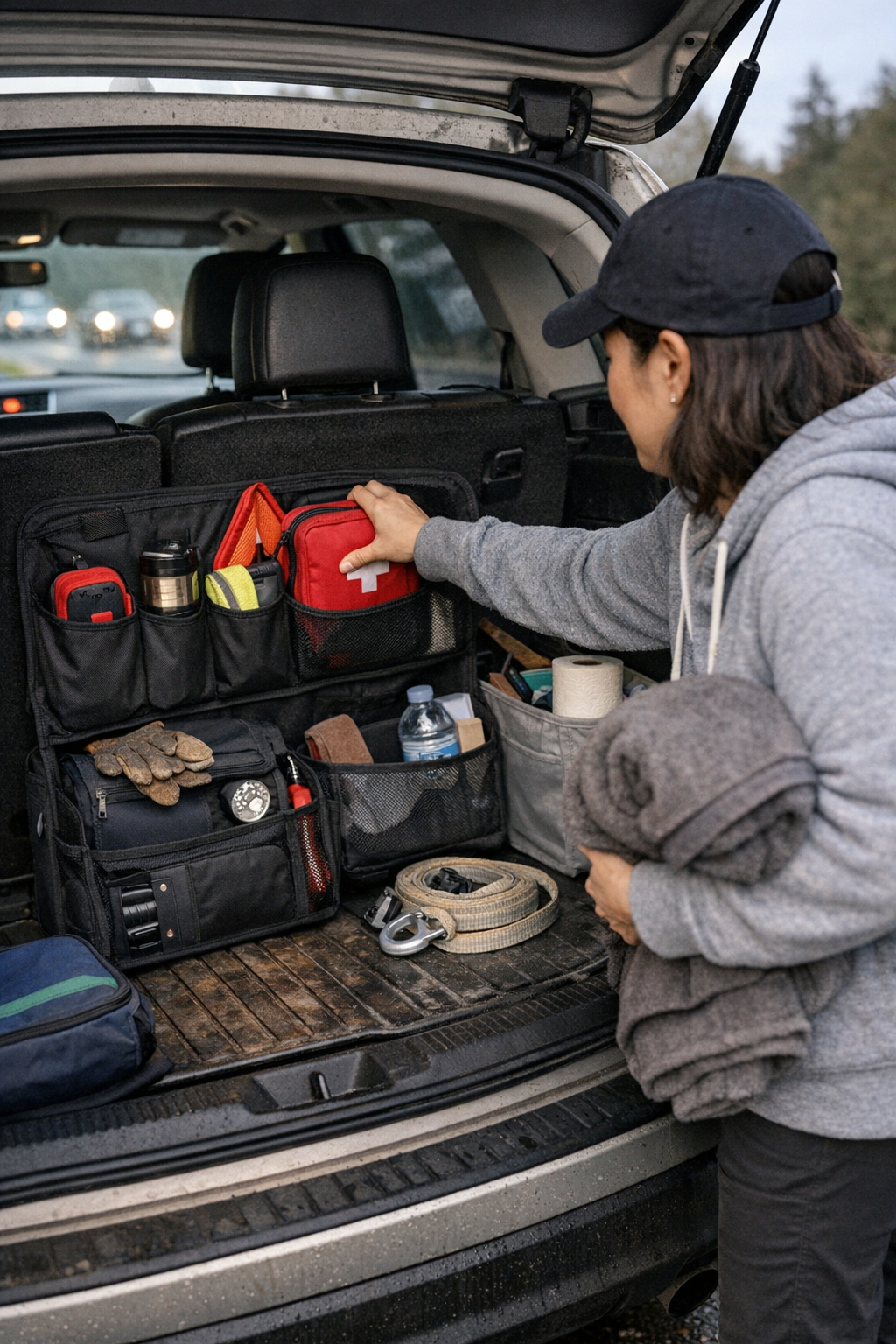
    A car that looks perfectly organized can still leave you stranded when it counts. Daily driving brutally exposes the difference between “neat” and actually usable: you return to your vehicle, everything appears sorted, but the gear you need is blocked, buried, or somehow harder to grab each week. That’s when you realize—tidy bins and hidden compartments aren’t worth much if it means fumbling under pressure, especially during rain, darkness, or a roadside stop.

    When Order Hides a Hidden Weakness

    Picture the everyday return: you open the door after a grocery run or shift, floor mats are clean, bags look squared away, maybe the trunk is even lined up for show. Then your low-battery warning pings, and the charger is wedged between jackets and old receipts. Next drive, you spot a tire light—only to remember the pump is sitting beneath soccer gear and last week’s reusable bags. Tidy looks don’t help while you’re hunched in awkward reach, kneeling in a puddle, or groping in the dark for a tool that should be in hand. And just because nothing is spilled onto the seats doesn’t mean you won’t be stuck moving three things just to find the fourth.

    Repeated Friction in Normal Routines

    This is not a rare disruption. Routine parking, reloading, and car-sharing expose the pattern week after week—setup that looks settled but makes common actions clunky:

    • You re-enter the car after errands, bumping aside a tote to get to a supposedly “easy-access” bin—never as smooth as intended.
    • You return jumper cables one day, only to bury them under the next load of bags or groceries—so the “organized” trunk becomes a slow trap at the next battery scare.
    • Your seat-back organizer brims with useful stuff, but a mix of paperwork and emergency tools slows you down more than if they had been left in a pile.

    With every loading and unloading, the system becomes harder to trust. The more you “sort” and tuck away, the more likely your next urgent grab means kneeling on the driveway, digging past extra layers.

    Why Visual Calm Doesn’t Guarantee Smooth Access

    Minimal-looking cabins and clever stowage are tempting—until a real situation demands speed. Every hidden compartment or jammed center console is just one more layer spoiling your flow: cords twisted beneath water bottles, tire kits lost behind snack packets, the first-aid bag shuffled under a hoodie. It only takes a midweek cargo shift for what “looked organized” to become three added steps before you get to the useful gear.

    Pressure Reveals the Real Structure

    The gap shows up fast: rain hammers the roof, you’re stranded at night, or a kid’s scraped knee demands first-aid—and your system’s flaw is exposed. Suddenly, unfolding half the trunk to get a warning triangle feels like a failure. Even thirty seconds lost to searching ups your frustration, or keeps you out in the cold, or turns an easy fix into a nerve-wracking pause for everyone on board.

    The Core Problem: Overlapping and Shared Storage

    Catch-all bins and multipurpose organizers create more subtle friction than obvious piles. Any spot that collects unrelated stuff—the trunk side bin, the floor bucket, the seat-back pouch—gets clogged after ordinary weeks:

    • A floor bin fills with chargers, then absorbs empty bottles, umbrellas, and shoes—until your actual cables are buried out of sight.
    • A seat-back pocket started for roadside tools, but now carries parking passes, leftover snacks, and random gloves—making emergency access indistinguishable from glove-box clutter.
    • “Hidden” spaces become both harder to check and easier to block, meaning every real emergency kit gets lost behind three daily items.

    Even with regular cleanup, it takes just a handful of trips to reset all your effort—turning “order” into a new kind of slowdown.

    Consequences in Real Use

    This all shows up as delayed access: that split-second pause, the sift through wrappers, shuffling bags just to find a light or tool. If it happens during mild weather, it’s an annoyance. Add rain, darkness, or a roadside rush, and the difference between “neat” and “actually ready” becomes a risk not just to your nerves, but your time and safety. Hidden friction makes everyday trips feel manageable, but exposes its cost the moment routine fails.

    How Single-Access Zones Change the Routine

    The real fix isn’t stacking more clever organizers; it’s separating true essentials from daily drift, using single-use, zero-compromise spaces. That might mean a side-pocket for jump packs and flashlights, a trunk divider for flares and the inflator, or a seat-back slot for medical gear—and nothing else ever invading that space. The seat might look busier, but now, during anything from a flat tire to a sudden storm, your hand finds the right item instantly, not with a desperate search.

    Field-Tested Adjustments that Stay Reliable

    Recently, switching my jump pack from the trunk bin (every week it disappeared under groceries) to a seat-side pocket meant one grab—no delays, no wasted searches, no arguing with awkward trunks during a downpour. Even after loading the back for sports or errands, I still reach directly for a flashlight and glucose kit, knowing nothing else blocks the way. What once involved unpacking, rechecking, and second-guessing now takes less than six seconds. It’s not theory—it’s fast action, week after week, chaos or calm.

    Small Daily Trade-Offs Add Up

    No, the car isn’t “showroom neat” this way. The dedicated emergency spots stay visible, sometimes a little cluttered. But every time you re-enter under pressure—a late-night stop, kids needing a bandage, or hands full of bags—the payoff is obvious. You can chase visual perfection any time, but the seconds lost fumbling for gear aren’t coming back. Function always pays you back faster than appearance.

    Practical Tweaks that Outlast the First Impression

    Try the real test: assign one trunk-side bin or seat-back pocket to actual emergencies only. No receipts, no snacks, no “extras.” When you’re parked on a shoulder after dark or hustling everyone in from a rainstorm, you’ll see why the change is worth it. Reset the system each week if you have to, but always let essentials stay separated from daily overflow. The gap between easy access and slow reach is not small—it’s the difference between stress and smooth handling.

    From Tidy-Looking to Trustworthy Under Pressure

    Emergency readiness isn’t about a spotless dashboard or spotless trunk. It’s about knowing your access points survive real-world chaos—multiple drivers, changing cargo, the mess after a road trip, or daily stop-and-go. Ignore this structure, and you’ll cycle through the same old friction: each “organized” drive ends with one more thing in the wrong spot. When car storage finally matches access—when every essential has a fixed, single-use home—routine driving feels lighter, and even actual emergencies become less of a disruption. It’s not perfection; it’s predictability under pressure.

    No setup stays flawless. But when you trust your car’s layout, every return, loading, and stop goes smoother—and what matters most is never out of reach.

    Find more practical car organization solutions at DriveWellSupply.

  • Why Overpacking Cat Supplies Slows Down Your Daily Routine

    Stockpiling extra bowls, mats, or scratchers for your indoor cat rarely makes daily life easier. Instead, every added “just-in-case” item builds invisible friction: an unexpected shuffle when you reach for the bowl, a mat edge under your heel, or another rinse before coffee because puddles appear in more than one spot. The problem isn’t surface mess—it’s how every extra, overlapping supply turns a quick routine into a clumsy, multipart reset. When each refill or wipe means moving more than one thing, your setup isn’t protecting you; it’s slowing everything down.

    When More Isn’t Better: The Hidden Costs of Extra Bowls and Mats

    Piling on extra mats, doubling up on water bowls, or adding that “backup” scratcher after one bad spill seems practical. But these surplus essentials refuse to fade into the background—they anchor new chores straight into your routine. You’re not prepared; you’re multiplying upkeep.

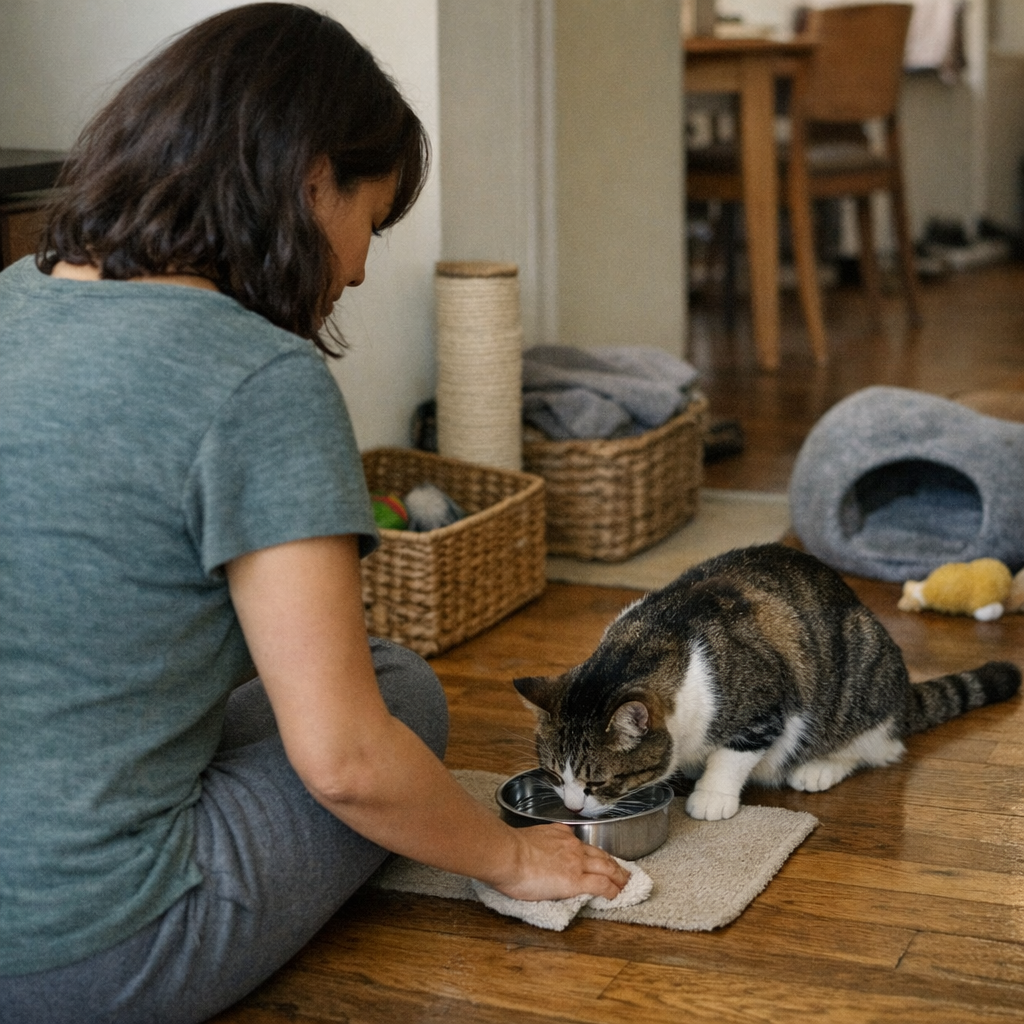
    Consider the water station: two or more bowls placed for “coverage” now demand double the daily cleaning. When your cat drinks messily, damp zones don’t concentrate—they spread. You find yourself down on the floor, wiping puddles at each bowl, negotiating where mats overlap, and discovering trapped fur and grit in seams that weren’t there before. Each extra mat, even if meant to “help,” collects its own layer of tracked litter and crumbs, hiding small messes until the next shift or slide exposes what’s gathered underneath.

    The Overpacked Setup: Organization That Slows You Down

    You line up bowls, stack grooming brushes, and sort toys into baskets, expecting order to translate to easier maintenance. But with each so-called improvement, the flow breaks up:

    • A feeding mat that extends too far becomes a constant obstacle, nudging you sideways during a refill or snagging your sock as you cross the room.
    • Extra toys drift outside their bin, lingering under couches and shelves, forcing you to crawl or reach before you can sweep or vacuum.
    • Multiple litter trays create a network of blockades—each one a separate checkpoint needing scooping, disposal, and the occasional rescue of stuck paws or spilled granules. Instead of providing “coverage,” they add steps and slowdowns at the points where you should move freely.

    The result: even if your home looks orderly, every routine—feeding, cleaning, resetting—requires more shuffling, more bends and checks, and more decisions. Skip one step and you’ll notice how crumbs, fur, or stray litter migrate beyond their zones. The labor is divided, but the effort is anything but light.

    Scenes From the Overpacked Home: How Cluttered Setups Interrupt Daily Flow

    Reaching for Water, Stopping for the Mat

    Morning routines should flow, not stagger. Instead, as you reach for your cat’s bowl, you step on a curled mat corner, crouch to fix it, then pivot around a second water bowl wedged into your walkway. Each time, what should have been a single smooth action is split by tiny course corrections and another spot to wipe. The tradeoff becomes immediate: every extra fixture claims time and space you never meant to spare.

    The Wandering Toy Parade

    Rotate in new toys and you’ll soon find old ones trailing just out of sight—wedged under furniture, hidden by mats, abandoned halfway to the door. You plan to reset after playtime, but it’s never a clean sweep: two toys back in the bin, one trapped again, and another delaying your walk to the kitchen. Instead of enrichment, the overflow shapes a daily scavenger hunt, and there’s never quite enough clear floor for human or feline to wander without a pause.

    Litter Zone Mission Creep

    Overlapping mats and doubled trays look like protection until cleaning day arrives. Each mat needs to be lifted then replaced in just the right spot to avoid overlap—otherwise, seams open up, catching stray litter and dust. It’s never just a sweep: it’s a lift, a nudge, a check for what’s slipped between corners, then another reset. Delay once and the next cleanup is that much worse: granules travel, dust escapes, and soon the “protected” area leaks mess two rooms away.

    Blocked Access in Small Spaces

    When living space is tight, every extra cat supply claims territory. Storage meant to help becomes blockade: a mat asks to be moved before you can reach the cupboard, a bowl blocks the quick path to retrieve groceries, and a scratcher wedged beside the bench is one more thing to step around with arms full. The room photographs tidy, yet you feel always one item away from a clear task.

    The Subtle Difference: Looking Organized vs. Feeling Effortless

    Perfect rows of bowls and mats corner-to-corner feel satisfying—until reality sets in. The eye likes symmetry, but your hands and feet care about reach and reset rhythm. If a feeding area takes extra steps or a litter zone becomes harder to sweep, the point of order is lost. The practical test isn’t how straight the lines are, but whether you hesitate before resetting because it’s one step too many. If you start leaving cleanups for “later” or dreading refills, your structure isn’t serving you—it’s winning on looks and losing on use.

    Scaling Down: Trimming to Essentials for Repeatable Upkeep

    Streamlining isn’t purge-for-purge’s sake. It’s about stripping out the pieces that interrupt flow so daily recovery stays genuinely easy. What shifts?

    • One bowl, not several: Unless you need two for medical or multi-floor reasons, one bowl is faster to clean and keeps spills contained. Cleanup shrinks without the double reach or double risk of sour water.
    • Mats sized to fit, not layer: A mat that lands cleanly just seven inches beyond the bowl stops splash spread without overlapping trouble zones. The right fit leaves less seam for crumbs, less edge to trip on, and fewer hidden patches for fur and dust.
    • Five to six toys, not a rolling surplus: With just a handful rotated in, each reset is a real reset. No endless hunt beneath couches, no pile-ups delaying your evening walk-through.
    • Tools stored for grab, not display: Hide grooming supplies within arm’s reach, not stacked out for show. You halve surface cleanup, cut visual clutter, and lose the temptation to skip resets when everything feels manageable.

    Real-World Reset: How Simplifying Makes Every Routine Smoother

    The difference shows up fast: the feeding zone is clear, the bowl lifts in a second, and wipe-downs become instant, not tasks you debate putting off. The water refill doesn’t trigger a chain reaction of shoves and resets. You find yourself keeping up with maintenance almost by accident—because nothing stands in the way. A comfort zone that’s easy to tidy survives real use. Attempts at “full coverage” at best add surface order but at worst stack up chores that slow you down every single day.

    Spotting Setup Trouble Before It Sticks

    Small friction points rarely announce themselves. Instead, hesitation builds: the extra moment before you tidy, or your hand pausing when a tool is buried under an unnecessary pile of others. Red flags for a setup that’s undermining itself:

    • Having to move a bowl or mat to get to cleaning wipes or brooms
    • Finding grooming tools tangled or buried instead of ready to grab
    • Walking an indirect route around spaces claimed for feeding, litter, or scratching
    • Noticing toys, blankets, or comfort items drifting from their base more than they stay put

    Whatever adds one more shuffle, step, or search isn’t bringing you control; it’s assigning you repeat work.

    From Appearance to Ease: Creating a Setup That Lasts

    The right StillWhisker setup isn’t measured by completeness, but by how little it interrupts day-to-day living. The right lineup is easy to reach, fast to reset, and doesn’t cramp the rest of the room. Organization should make recovers effortless, not artful. The win is quiet time saved, not another supply waiting “just in case.”

    Find practical setups, resets, and structures for real indoor cat life at StillWhisker.