Blog

  • Why Properly Fitting Indoor Lights Prevent Early Failures and Shadows

    The true disruption in indoor lighting isn’t in how stylish a fixture looks—it’s in what happens after it’s pressed too tightly against your ceiling or wall on day one. When you over-tighten a flush mount in a hallway or a damp-rated fixture above a bathroom sink, the wrong fit rarely reveals itself while you’re still on the ladder. The real signs appear weeks later: that streak of dimness stretching across your stair landing, a bathroom light that flickers softly every time steam lingers, or a shadow line that makes you shift left just to see the edge of your mirror. These aren’t casual quirks or design moodiness. They’re daily irritations—a sagging seam, an edge collecting dust, a work surface refusing to stay evenly lit—all triggered by a fixture tightened harder than the room was built to handle.

    Why Snug Really Matters: The Everyday Difference

    Daily routines expose weak lighting faster than any product sheet. In a narrow corridor, you find yourself slowing at the same patch where light doesn’t reach the floor. In the bathroom, you lean in to the mirror and your face splits between bright glare and persistent shadow. Grab a bottle in the laundry room and you have to hold it under the fixture just to read the label—the rest is lost to dim, mismatched spread. Each time, the space looks “well-lit” at a glance, but the experience is off: movement gets interrupted, task edges go undefined, and fixture seams catch dust you never remember noticing before.

    The cause is almost always the same: a ceiling or wall light clamped down too hard, bending its frame, distorting gaskets, or straining its contacts. The change goes unnoticed right after installation, but within a month, shadow arcs grow more obvious, small flickers invade your routine, and what was once clear and efficient becomes a source of hesitation or annoyance. Style doesn’t save a bad fit—if daily use makes you pause, squint, or sweep the same shadowed stretch yet again, overtightening may be quietly at work.

    Recognizing Subtle Signs Before Lighting Becomes a Problem

    In the world of indoor lighting, the damage rarely starts loud. Look for these recurring, easy-to-ignore signals:

    • Hallway flush mounts that leave a “dead zone” on one side at dusk, making half the path fade out as you cross
    • Mirror or wall lights that flicker after every hot shower, hinting at hidden moisture creeping in or a seal compressed too tightly
    • Stairway lighting that starts to rattle with each step, injecting hesitation right at every turn
    • Condensation tracks building above a utility sink, or fixture rims where dust returns in patterns no cleaning seems to resolve

    Both a perfectly snug and an overtightened fixture can look identical on install day. But as weeks pass, real differences emerge: paths you adjust for, awkward glare you learn to avoid, or bathroom routines stretched by uneven mirror light. If you catch yourself recalculating movement, dabbing at stubborn dust streaks, or tracing down the reason for new flickers after a seasonal change, the issue is no longer hidden.

    Room by Room: How Overtightening Quietly Undermines Use

    Narrow Hallways: When the Light Stops Following Your Path

    With every door swing and footfall, a hallway’s flush mount faces small but constant movement. Overtighten that ceiling base, and the fixture’s housing bends slightly with building shifts and temperature. It only takes a few weeks before you notice a band of shadow collecting where you need clear footing—or a hot spot of glare reflecting off a painted wall. The so-called even brightness is deceptive: you unconsciously dodge the dim edge, your stride briefly slows, and safe movement gives way to low-level adjustment, every single day.

    Laundry Rooms: The Cost of a Warped Edge

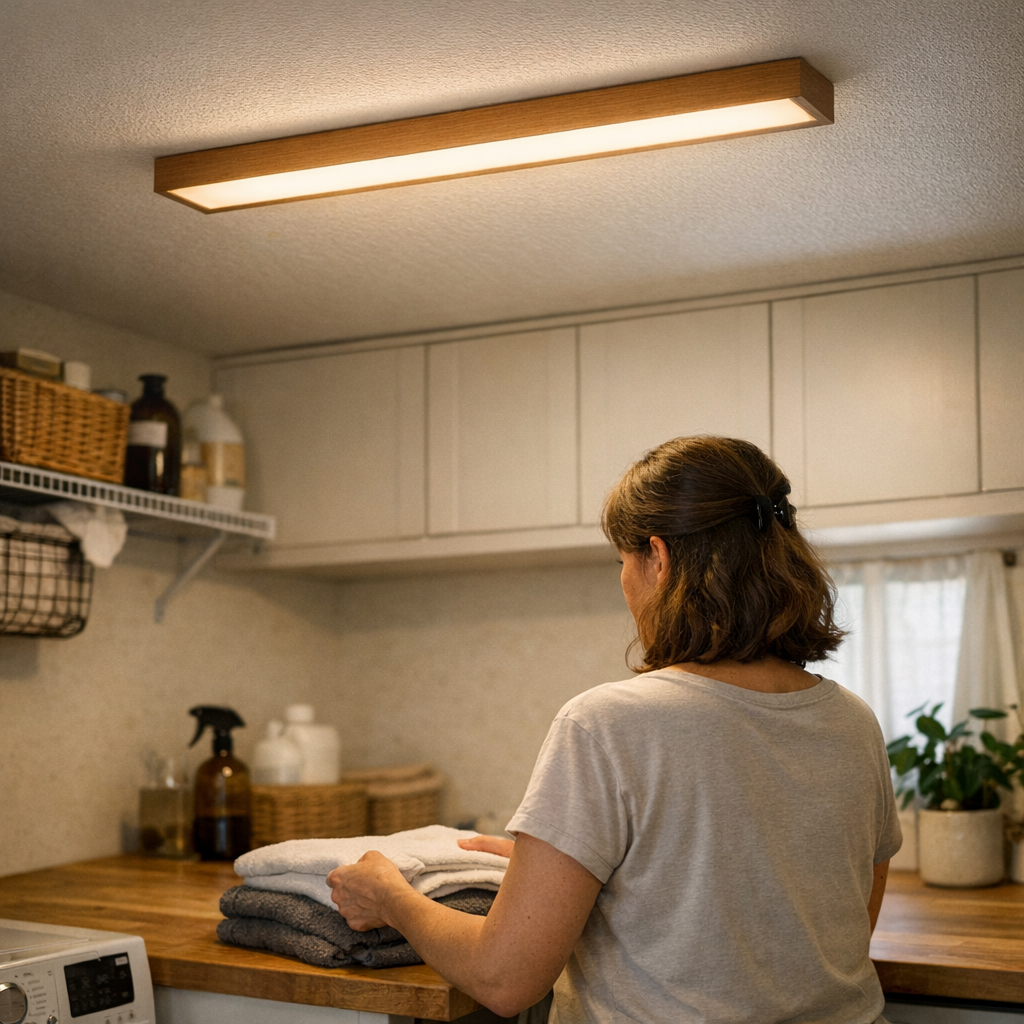
    Laundry and utility rooms push fixtures harder—moisture, abrupt temperature swings, and constant motion quickly reveal poor choices. When a flush mount or semi-flush light is too tight, humidity from dryer cycles seeps into small gaps opened by a flexed rim. Suddenly, the light falls away from the countertop, throwing a dented shadow over the load you’re folding. Lift a detergent bottle and you step left just to find useable light. Condensation beads at the fixture’s edge, making the next cleanup cycle a certainty and leaving you second-guessing how long the fixture will last before replacement.

    Utility and Bathroom Zones: Where Moisture Finds Its Way In

    Bathrooms are unforgiving to weak seals. A vanity or wall fixture pinched tightly to the wall can push its gaskets off center, inviting steam behind the lens with every shower. Over time, those droplets turn into a permanent lens fog or—worse—persistent flicker that pulls your attention every morning as you shave or apply makeup. Glance in the mirror and you see half your face clearly, the other half blurred by shadow, forcing makeshift adjustments in your daily routine. Corrosion risk and unreliable contacts hide behind the glass—what was “sealed” on install now collects problems in silence.

    From Friction to Fix: Returning to a Snug, Balanced Fit

    The fix is not a teardown—it’s a reset and a softer hand. Remove the lighting base, realign it, and tighten gently, only until truly flush—and never by wrenching force. Ensure gasket pressure is even and that the lens sits flat, no bowing, no visible tension. Even a minor readjustment can reclaim the original quality: stray shadows disappear from your movement path, obscure glare fades, and repeated condensate streaks hang back instead of invading lens seams. The lit zone feels whole, routine friction recedes, and your everyday movement resumes without that faint, automatic workaround you barely realized you were making.

    With a balanced install, you no longer find yourself glancing up in doubt, favoring one half of a mirror, or tracing dust lines that refuse to stay away. The space works, quietly, the way it should—movement and sightlines uninterrupted, brightness landing exactly where routines demand it.

    Recognizing and Preventing Future Lighting Headaches

    Pay attention during install and seasonal upkeep for the quiet warnings: a lifted rim, patchy seal pressure, odd creaks, or a persistent mini-flicker after cleaning. If the gasket’s not flat or the housing shows strain, reset before frustrating habits—and preventable problems—become permanent.

    Trust the most basic principle: tighten only by hand, just flush—never forced. A fixture should be secure and aligned, but never visibly compressed or under tension. The difference will show up faster than you expect in every daily move you make.

    Lighting That Works—Because It Disappears Into Your Routine

    The best indoor lighting isn’t the design centerpiece—it’s the solution you never notice once in place. If you’re not pausing at stair turns, shifting closer to the mirror, or working around a dim edge on your countertop, it means the fixture is doing its job: lighting the space, not interfering with it. In every real-use test, the quality of fit beats wattage or trend. Start with a snug, balanced install—and no overlooked hallway, stair, utility patch, or sink routine needs to suffer dullness, disturbance, or extra work to stay safely and clearly lit.

    Find dependable flush-mount, semi-flush, wall, and utility lighting built for real rooms and actual routines at LightHelper.


  • How Daily Pet Care Resets Prevent Messes and Save Time

    At a glance, your pet’s feeding corner can look organized: bowls stacked, brush at hand, water topped off. But when you head to refill water and a bottle blocks the scrubber, or reach for the grooming brush and find it missing, the “organized” look falls apart. Leftover grime clings to bowl edges, towels wander from their hooks, or basic tools shift just out of reach—small problems, but ones that quietly multiply. Each skipped wipe-down or delayed return turns fast resets into a grind. Over a week, you’re no messier—the system just slows. Routine care starts costing more time, and every reset drags compared to day one. Surface order gives way fast when setups aren’t built for repeated reach, refill, or cleanup. In the CalmPetSupply world, these friction points aren’t rare; they show up wherever quick grab-and-return steps get lost in the shuffle.

    Where Micro-Tasks Slip, Small Hassles Multiply

    You reach under the sink for the pet bowl scrubber, but a pile of containers blocks the way. That minute of rearranging turns a quick refill into a micro-hassle twice a day. The bowl returns, and now—because it skipped an immediate wipe—the rim needs an aggressive scrub to clear off the crust. When those little steps slide, resets stretch into chores. The single-day slowdown is forgettable; by the end of the week, water refills and feeding resets all feel heavier.

    Feeding has its own traps. Last night’s unwiped bowl becomes this morning’s hardened mess. Skip the quick wipe, and you’ve got crumbs tracked off the mat and into the living room. Delay one cleanup, and the next round turns from seconds to ten. With every missed micro-reset, effort snowballs—subtle in the moment, but cumulative and real.

    Why “Later” Quietly Becomes “Never”

    The real drag isn’t always piles of mess; it’s the silent build-up of misplaced tools and delayed steps. A scoop abandoned on the rack instead of its hook, a brush left near the door, a damp towel tossed wherever—each puts one more search between you and a clean reset. The next feeding or walk is interrupted not by clutter, but by the task of retracing your last “later.” Each delay means doubling back, and the cost is barely felt until the routine starts to ripple with friction.

    Setups that look okay can mask trouble—until that one missing scoop or wandering brush throws off a busy evening or a rushed morning. At the wrong moment, even a tidy layout can leave you stranded without what you need.

    Real Home Scenes: When Pet Items Interrupt Daily Flow

    Even the most intentional setup runs into resistance:

    — Filling the food bowl at breakfast, you find last night’s crust stuck to the edge—scrub now, or let the coat toughen.

    — After a walk, your towel for muddy paws is outside, so you either detour barefoot to the porch or let dirt track in.

    — During a quick sweep, the grooming brush lands on the bookshelf; later, you’re hunting through magazines instead of brushing as planned.

    It’s never dramatic, but these snags interrupt the routine. Bowls, towels, and tools creep into shared spaces, cover counters, block entryways, or stack up in odd places. A setup that looked straightforward starts demanding constant reshuffling. “Tidy” morphs into “awkward.” The more items drift from their spots, the less the whole system holds together.

    The Impact of One Weak Point

    One repeated snag can sink the best system. Maybe the towel never makes it back, or the brush keeps going missing—a single gap adds a friction loop, no matter how neat the rest appears. Even with most pieces dialed in, a persistent minor fail keeps the routine from ever feeling smooth.

    If your setup feels fine at first but wears on you over time, this is usually why. Friction multiplies, and what should take moments—feeding, water, grooming, evening checks—starts to siphon more attention and time, round after round.

    Tidy Versus Truly Functional

    Clearing counters hides mess, but not all clutter is visible. If every refill means moving four things first, or the brush ends up in three possible places, resets cost more every day. Surface neatness isn’t a substitute for simple access. Unless every basic step—refill, wipe, return—fits real use patterns, you’re storing up future work. Hidden disorder just delays the next interruption and drains the efficiency out of daily care.

    Small Practices That Make The Difference

    The fix is unglamorous: immediate micro-resets that don’t wait until “later.” Quick rinse after each meal, water topped off before it drops, towels returned before stepping away. Consistently wiping the bowl rim when breakfast ends means you’ll never need a chisel by dinner. Tools—towel, brush, scoop, bottle—must return to their spot right after use, not “eventually,” or the loop breaks again.

    The difference isn’t just in cleaner surfaces but in a routine that doesn’t break pace: feed, wipe, refill, walk, groom—no detours or hunts. The right setup lets every tool and supply meet you exactly where the routine repeats, not where it looks best for photos. Your pet’s daily care becomes lighter only when you stop cleaning up the last round mid-way through the next. Any setup can look fine for a day. The real test is if it still feels effortless by Friday.

    For setups that feel ready even after a week’s routine resets, explore practical solutions at CalmPetSupply.

  • How Pausing Between Brush Strokes Eases Indoor Cat Grooming Stress

    Indoor-cat grooming setups often look “good enough” on day one—until the small, repeat frustrations start stacking up. Brush in hand, you clear space for your cat, aiming for a smooth routine. But after a few sessions, the process feels heavier: fur clumps keep escaping the mat, your cleanup towel is somehow never within reach when you need it, and your cat starts ducking away at the first sight of the brush. The area still looks set, but hidden friction grows: more mess leaking into shared spaces, more bending and reshuffling between steps, and a creeping resistance to even start the next round. The difference between a grooming zone that works in daily life and one that just looks settled shows up fast—especially in a home shaped by StillWhisker-level routines, where gear needs to hold up under real, repeated use, not just “good intentions.”

    When Grooming Turns From Routine To Hassle

    The basics seem straightforward: brush, mat, cat, done. But it never stays that simple. One week in, you’re noticing: tufts of fur stuck along the mat’s edge, loose hair already drifting toward the sofa, and tools that migrate away from “right at hand” to “lost under a blanket or behind a cushion.” Your cat flinches sooner, tail flicking with each pass, and the session slows as you pause to untangle small messes. Suddenly, what once fit into a spare 10 minutes pulls out into a sequence of starts, stops, and post-session cleanups—often with your cat leaving after the first flurry or, worse, skipping the spot altogether the next time.

    Little Signals: Friction Comes From The Setup, Not Just The Cat

    It isn’t always a full rebellion. You see:

    • The same front paw yanks back each time you reach a certain angle.
    • Hair crowding the mat’s seam, resisting quick cleanup.
    • Finding more fur trailing away than collected on the actual brush.
    • You delay the session, knowing it means an extra room pass with the lint roller after.

    Repeated-use headaches add up quietly—often camouflaged by a setup that looks “pulled together” until it collapses under the strain of actual routines.

    What Really Drives Cat Tension During Grooming?

    Some tension is cat-driven—overstimulation from too many strokes at once or no escape route when nerves spike. But much of it is structural. Brushing straight through, or pausing only after your cat squirms, can leave both of you tense. Staging the session at the edge of a crowded chair or in a corner makes every pause feel forced: your cat gets boxed in, you reach awkwardly, and tension rebounds into every new gesture across the week.

    The Trap: Tidy On The Surface, Stressful Under Pressure

    That grooming nook with the matching mat and organized tools? It starts strong. But repeat friction sneaks in:

    • Mats fill up faster than you clear them, flinging hair into the hallway with every reset.
    • Your cat marks the spot as somewhere to avoid for naps—a low-level signal that “tidy” is too close to “stressful.”
    • Stray tufts wind up in resting corners or tracked beneath the dining table.

    Your grooming area may still look arranged. But the structure quietly fails: resets multiply, and fur shows up in new places that were never meant for the mess.

    Breaking The Cycle: Why Pausing Is More Than Nice

    Pausing isn’t decorative—it’s your only real tool for regaining control in a runaway session. That break resets tension in both you and your cat, especially if you use those few seconds to:

    • Let your hand rest, giving your cat a visible breather. Shrugging shoulders, relaxed ears: your cat often stays longer with you.
    • Clear fur from the brush and mat edge instead of waiting until the mess is overwhelming—so flyaway hair doesn’t spread into places you don’t notice until laundry day.
    • Allow your cat to step away and circle back, distinguishing overstimulation from disinterest. Sometimes, a short step aside means the session isn’t over—your cat just needed a break, not a total retreat.

    Slowdown now saves triple the hassle later: resistant cats ease up, piles of fur get managed mid-session, and cleanup doesn’t balloon into a whole-room project every weekend. The “pause, reset, repeat” pattern is invisible at first—but it’s what keeps a grooming setup from quietly collapsing into a high-maintenance job.

    Setup Friction Shows Up In Unexpected Ways

    Perfectly staged grooming areas break down once routine use grinds in. Typical pressure points:

    • Corner setups corral everything… but squeeze your cat (and you), ramping up resistance after two brushes.
    • Mats stashed behind furniture keep clutter off main paths—until each cleanup is a hunt for lost fur, making resets less likely until stray bits surface everywhere else.
    • Shared armchairs or daily throws blend comfort with crisis: once the cat dreads that spot for grooming, the “rest area” becomes another place you chase fur and avoid interruptions.
    • Cleanup supplies on stand-by are never quite reachable mid-session—so you lean, disturb the cat, or skip the step that could have saved time (and effort) later.

    The missing ingredient: a setup you can pause and reset, right when things start to go sideways—without needing to move half the living room or juggle everything within arm’s reach every single time.

    How Small Tweaks Change The Daily Flow

    The test isn’t how clean or cute your setup looks when new—it’s how it performs on session seven, or session thirty. Cat fur migrates. Habits bend. The slickest organization gets exposed the moment you skip a cleanup or can’t grab what you need mid-session.

    Pacing with Intention: Control > Appearance

    If you’re used to blitzing through, try this sequence:

    • 3–5 gentle strokes with the brush.
    • Pause: rest your hand, sweep stray tufts from the edge, let your cat shift or simply settle.
    • Repeat—watching for visible changes in your cat’s tension and for drift of fur beyond the mat.

    The result isn’t just a calmer cat. The surrounding floor and furniture stay cleaner. You spend less time searching for escaped fur and more time actually finishing the routine.

    Contain Mess At The Margin

    Mid-session, a quick drag with a lint roller or damp cloth around the mat edge stops flyaways from colonizing the nearby rug. Wipe as you reset, not after everything’s done and the room’s already lost the war to tumblefur.

    Location: Open Access Beats Hidden Corners

    Choose a mat or setup with at least one clear edge—reachable without bending or shuffling other supplies. Avoid setups that force you to squeeze next to tables or move water bowls, which interrupts you and unsettles the cat. Open, flexible zones make mid-session pauses usable instead of disruptive.

    Grooming Setup: Beyond The Brush And Mat

    The first days are deceptive. Organizing is easy; living with it gets harder. Questions to track:

    • Are grooming sessions skipped because you dread wrangling all the pieces back into place?
    • Is fur sneaking under bowls or into feeding setups anyway, even if the mat seemed well-placed?
    • Do you find yourself reaching around side tables or crouching for wipes, realizing mid-session that “at hand” is never actually “right here”?

    Often, the telltale weak point is a supply that lives close by—but never quite where you need it in the actual flow. Every shuffle or reach is another invitation for your cat to bail—or for cleanup to multiply in new, slow-to-reach angles.

    Spotting When To Refresh Your Grooming Routine

    Rising friction—longer resets, stickier mess, cats who treat grooming spots like enemy territory—means your setup isn’t keeping up. Watch for:

    • Your cat slipping away the moment the grooming mat comes out, not just after a few strokes.
    • Visible build-up: fur rings along mat seams, piles wedged under resting cushions, or tools scattering to far corners between sessions.
    • You putting off sessions because cleaning takes longer than the grooming itself—or because the extra squat and reach required makes you avoid the task entirely.

    The main sign: you’re working harder than you should for a routine meant to be simple.

  • Streamlining Pet Travel: How Easy Access Keeps Your Journey Smooth

    No pet travel bag feels as ready as it looks once the trip actually starts. Even perfectly packed, with every treat and cleanup supply tucked in, the first curb stop or rest area exposes friction you didn’t see standing still. Reaching for a blanket, you open the wrong compartment. That waste bag you swore was handy? It’s caught behind wipes and a balled leash right when your dog pulls, waiting for relief. The bag promises streamlined comfort, but as soon as real movement and quick stops return, familiar cracks open up—items buried, quick grabs blocked, calm moments lost to scrambling. In actual use, the gap between being packed and being prepared is hard to ignore, especially when your setup is supposed to make things easier. PawGoTravel’s world starts where those details matter—not just in what you bring, but how you reach it in motion.

    When “Ready” Doesn’t Mean Reachable

    Packing with care feels reassuring at home: treats zipped beside wipes, bowls nested cleanly, comfort items placed “within reach.” But these neat arrangements miss what happens in transit—pauses aren’t planned, and grabs rarely go as pictured. The tighter the packing for visual order, the more likely it is that you’ll be fighting layers or fumbling for the one thing you need before the moment slips away. At every stop—out of the car, leash in hand, juggling curb cleanup or vet check-in—the bag’s structure begins to resist the flow. The blanket isn’t “just there” if it’s beneath tomorrow’s food. Waste bags blend into lined pouches. Each delay stacks on the next, and the routine—supposedly smooth—starts stalling in quiet, annoying increments.

    The Hidden Cost of Deep Packing

    Put a well-organized bag through a real trip: twice in, and the logic breaks down. The treat meant for reinforcing calm is wedged under a towel and two zipped pouches. Cleanup bags require one hand’s blind fishing just as leash tension spikes. Every extra layer converts “well prepared” into “awkwardly delayed.” The surface stays tidy, sure, but new micro-delays creep in; frustration replaces the ease you packed for. The plan doesn’t fail all at once. Instead, every rescue-moment exposes the overlap: pet gear and owner gear shifting mid-journey, urgent items ducking behind non-essentials, repeated restarts burning through smoothness. After three stops, the so-called system can feel more work than your old, messier improv setup.

    The Fast-Fizz Routine: Real Scenarios That Wear You Down

    Hunting for Comfort During a Curbside Pause

    You pull up for a park break, prepping to reward a calm moment. But the blanket is at the bottom—wipes, harness and half a day’s snacks on top. Reward timing passes as you dig. Your dog waits, then squirms; you’re still flipping zippers. Instead of reinforcing comfort, you’re managing container chaos.

    Owner and Pet Items in the Way—Again

    Phone, wallet, waste bags, treats—stuffed together for “convenience,” but the moment you reach for a cleanup pouch, you end up sifting past keys or knocking snacks to the floor. Each overlap is a silent break in flow: a few seconds lost at each stop, patience thinning on both ends of the leash.

    The Mid-Drive Water Bowl Dance

    Midway through a drive, your pet needs water. You know the bowl is there—stored neatly behind a zipped divider. But by the time you unzip, double back, and fish it out, your pet’s already distracted. The illusion of being “prepared” falls apart the minute sequence matters: wrong zip, wrong grab, timing gone.

    What Actually Keeps the Routine Moving

    Bringing more gear doesn’t fix the problem; shuffling still kills momentum. The real shift is reorganizing for actual reach: putting the most-used comfort cues, treats, and wipes at the edge, at true seat-side or curbside access every time you need them—not just “somewhere inside.” One proven fix is reserving an open pocket along the bag’s edge or flap for the blanket, reward treat, and a waste bag, arranged for single-move access—so they come out together the instant you need them, no reshuffle required. This is not about neatness. It’s about making your bag or carrier work as fast and frictionless as real travel demands.

    How “Immediate Access” Feels on a Real Trip

    • No layering gymnastics when your pet’s hit their limit—just a direct grab.
    • Comfort handed out at the exact moment your cue is spoken—word and action synched, no scramble.
    • Cleanup is a two-second job—no more “almost there, just wait” delays.
    • Items drop straight back into their pocket, prepping you for a repeat grab, not a new puzzle.

    With that structure, tracking “where things are” fades. You focus on your pet’s body language, not zipper-order. Each stop-and-go cycle gets closer to seamless—less stuttering, more ready motion. The payoff isn’t a look; it’s a routine that finally matches how you and your pet actually move and wait, together.

    Real-World Observations: Less Mess, More Flow—But Not Perfect

    No system is bulletproof. Items still get jostled, pockets aren’t immune to scatter, and after a rushed day you’ll curse even a smart layout. But the real gain shows up in the numbers that don’t draw attention: fewer double-grabs, rarer wallet-treat collisions, less “where is it?” muttering with a leash and a waiting dog. The over-promised gap between “looks organized” and “actually travels well” narrows into something manageable—enough for seat-side access and timely handoffs to become the default rather than the exception. The instant fix doesn’t exist, but the everyday cost of ignoring true access becomes impossible to justify when you’ve lived the alternative, stop after stop.

    Find practical pet travel organizers, quick-access kits, and real-use travel gear at PawGoTravel.

  • Why Carry-On Organization Often Fails During Travel and How to Fix It

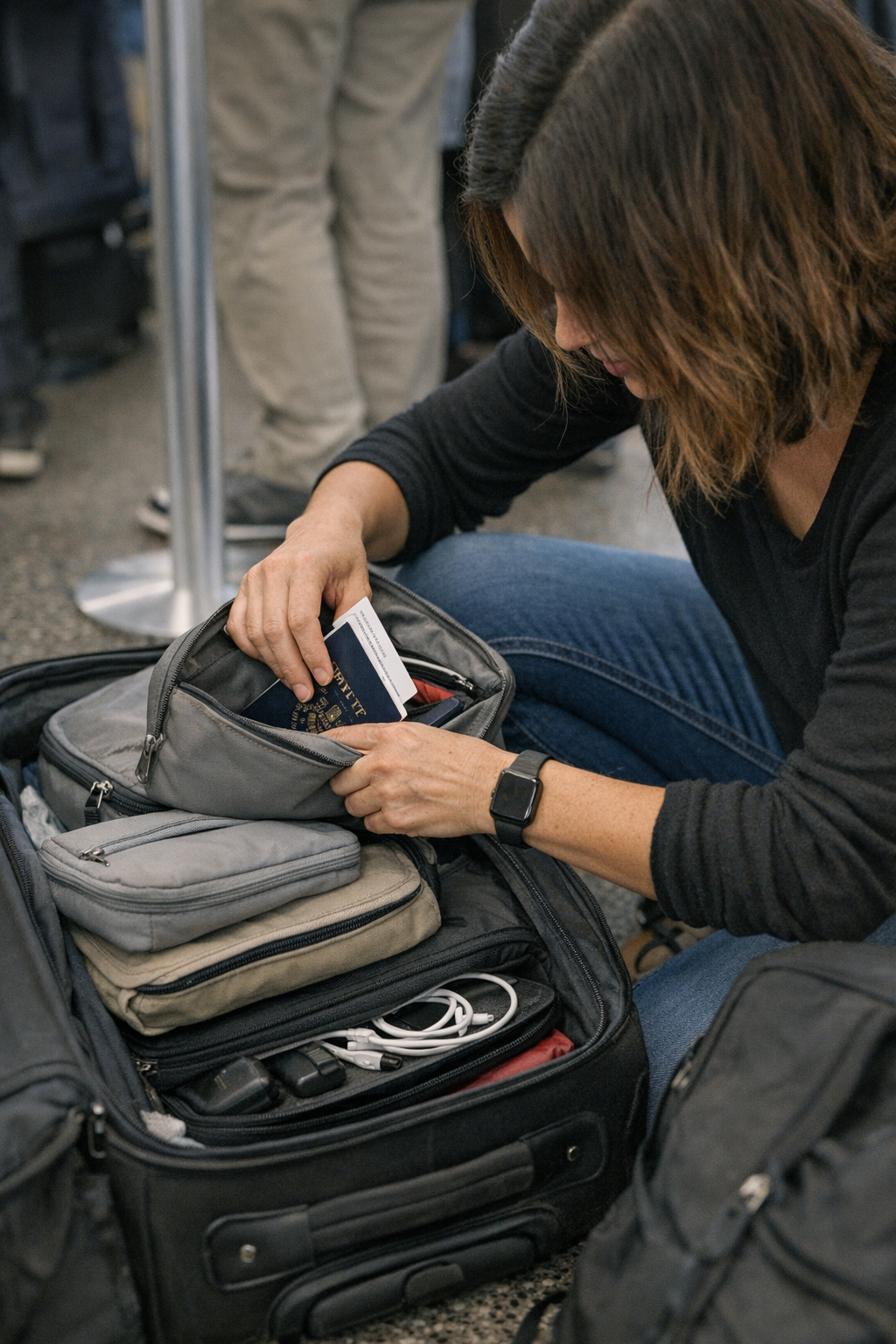
    An organized carry-on can feel perfect—right until airport reality starts grinding away the illusion. At home, every pouch is zipped, chargers are coiled, and your passport slips easily into a slim organizer. Step into an airport, and the difference between “packed neatly” and “built for movement” appears almost instantly: reach for your ID at security, fumble for your boarding pass while others wait, or yank out a charger at a crowded gate—each motion caught in a web of compartments that seemed like an asset just hours earlier. A bag that looks sharply ordered on your kitchen counter turns slow, uncooperative, and awkwardly layered when actual travel puts pressure on the setup. That’s where friction starts to build, and why what works at home can work against you after the first real use.

    Where Repeat Access Meets Real-World Friction

    Airports expose weaknesses you barely notice until you’re in the churn of check-in, security, and boarding. Every travel checkpoint demands the same few essentials—ID, documents, chargers—over and over, often under time pressure. This is when a “neat system” starts working against you. By the third time you’ve yanked a pouch free, unzipped yet another layer, or set your tote awkwardly on the floor to retrieve your passport, you feel it: structure built for tidy packing turns into minor chaos under repeated retrieval. Worse, if your hands are repeating the same clumsy search with each checkpoint, the flaw isn’t your memory—it’s the bag’s structure slowing you down, step by invisible step.

    The Quick-Access Trap: Organized but Not Usable

    A visually flawless bag—chargers in tech pouches, documents nested, toiletries lined up—photographs well, but stumbles in real use. The moment you’re rushed, everything you need is gated behind layered steps. Boarding pass? Unclip one pouch, move another, unzip, dig. Earbuds? Blocked by a charger you packed “efficiently.” One clean, gridded packing job adds three or four micro-barriers every time you want something in motion. Each repeat retrieval is a reminder: tidy at rest, tangled under pressure. The harder it is to reach what you actually use, the more the system works against the flow of the airport and the speed of your own muscle memory.

    Security: Where Organization Slows Down

    The security tray is where these small inefficiencies become public. With staff watching and a line behind you, there’s no patience for methodical unpacking. You need electronics and fluids out—quick, all at once. Instead, you unzip tight compartments stacked for “efficiency,” dig through two pouches for one item, and end up juggling half-unpacked gear. Now your order has become a bottleneck. If a passport or phone slips deep between layers, you feel it in sideways glances or the extra seconds spent shuffling items while the trays pile up. What helped you feel “organized” at home now slows everyone, including you, at the worst possible moment.

    Repacking Burden: A Cycle that Doesn’t End

    Every retrieval in transit comes at a cost. The first time you fish out a charger or ID, you promise yourself you’ll repack with care later. The second and third cycles? Reality sets in. Each round leaves essentials shuffled, pouches misplaced, cables loose. You find yourself kneeling awkwardly near a power outlet or at the gate, trying to restore the original order, but the “system” quickly becomes a pile you keep reorganizing. The friction becomes self-perpetuating: every access weakens the order, making the next access even slower, until the tidy setup that gave you peace at home produces real irritations with every flight segment.

    How Access Frequency Should Define Your Layout

    The key to a frictionless carry-on is prioritizing frequency over visual order. Anything you’ll reach for more than once—passport, boarding pass, headphones, main charger—deserves immediate, single-zipper access. If it has to move around or come out, it should never be behind another item, buried beneath a stack, or hidden under a pouch labeled “for order’s sake.” In a real-world setup, frequent-use items should dominate exterior or top-level sections, even if that means breaking your visual grid.

    Minimizing Steps Beats Visual Perfection

    This approach intentionally sacrifices some Instagram-worthy layout for speed you’ll actually feel—single-motion retrieval, fewer zip paths, less public scrabbling. The new benchmark: if you never have to move another pouch, unzip an extra layer, or disturb your secondary gear to get core essentials, your travel rhythm becomes smoother and your re-packing sprints disappear. Clean packing is worthless if every real use turns into a miniature unpacking ordeal. Layout designed by reach, not by look, proves itself by making you invisible in security and effortless at the gate.

    Spotting the Weak Points Before They Compound

    Most carry-on failures aren’t big—they’re slow-building and repetitive. Notice if you’re opening two compartments to get the same item at every stop, repeatedly searching a section for your phone, or re-zipping the same pouch after each document check. If the same access process clogs your flow in multiple airport segments, you’re staring at a structural issue, not a personal quirk. These small drag points don’t just waste time—they create a travel rhythm that’s more about fixing earlier disorder than actually making progress.

    Example: From Home to Boarding

    The night before, you build a “system”—tech in one spot, toiletries tightly arranged. By the time you reach security, retrieving electronics means unzipping three pockets. At boarding, your noise-cancelling headphones (packed deep for symmetry) slow you down once more, forcing you to hold up the aisle while you dig. When you hit your seat, your main charger is—again—at the bottom. Each interruption is nearly identical: too many layers, not enough access, and the same repacking motion repeated out of necessity, not choice. This isn’t “messy travel.” It’s misaligned structure: setup that works until you actually move.

    When to Rethink Your Setup

    Ask yourself:

    • Am I shifting more than one pouch or pocket to reach my most-used item?
    • Do I re-pack key essentials every time I touch them?
    • Is “order” costing me valuable seconds or creating new bottlenecks at security, the gate, or during seat entry?

    If the answer is yes, the solution isn’t more packing discipline—it’s a new structure. Promote high-frequency, high-stress items to instant-access compartments. Let the layout look “lived in” if it means you never stall at a checkpoint or block the aisle while re-zipping. The real payoff is fewer interruptions and a setup that doesn’t just survive three or four rounds of airport movement, but actively makes each round easier.

    The best carry-on isn’t just tidy on the first use; it’s one that silently absorbs the wear of three, four, or five real-world cycles—each faster and less fussy than the last. When your system removes friction instead of adding it, you’ll feel the quiet difference on every trip.

    Shop more practical carry-on solutions at CarryOnSupply

  • How Proper Cable Management Transforms Your Desk Workflow and Focus

    A desk can look sharp—pens lined up, monitor raised, everything seemingly in its place—while still delivering the same annoying slowdown: cables constantly tangling or dragging under your feet. The real friction starts beneath the surface, out of sight but not out of the way. Step in for a quick note beside your keyboard, adjust your chair to reach the second monitor, and suddenly your shoe hooks a cable, or a wheel grinds up against a charger you thought was tucked out of the way. Organization on paper doesn’t stop the reality: each time you change positions, cables pull or shift, breaking your concentration and forcing a reset. That line between a desktop that looks “organized” and a space that actually supports uninterrupted work is thinner—and more consequential—than it first appears, especially where cables are concerned.

    From clean surface to foot traffic: where cable friction really lives

    Desk setups rarely fail from a messy surface alone. Most slowdowns hide below, where legs, chair wheels, and cords battle for dominance. Maybe cables are looped behind the monitor and only a laptop charger is visible. But as your workflow shifts—grabbing a notepad, leaning to plug in a phone, gliding over to pull up a document—the cables beneath start drifting, sagging, or sliding into new paths. What felt clear at 9 a.m. turns unpredictable by late afternoon.

    Interruptions that never look big—just feel constant: Tripping a cable is a small event, but the aftermath costs more than you’d guess. Crouching to untangle a snag or hunting for what got unplugged pulls you off task repeatedly. In crowded desk corners, every charger or mouse cable that’s out of place means more cautious movement. Multiply that by each rush to switch devices or adjust your work zone, and sudden cable friction becomes part of your day whether you see it or not.

    Why “looks neat” doesn’t mean “runs smooth”

    Tidy cable paths taped along desk legs or routed behind drawers hold only until real use intervenes. Desk depth vanishes quickly—especially on compact workstations—leaving cables one bump away from spilling into leg space again. Routine resets add up: curling stray cords back, wrestling with a phone charger that pops free when you move your office chair, or sweeping the surface only to find the clutter has shifted below. A space can pass the visual test but fail under real pressure: the difference comes out in every tug, block, or pause you make without thinking.

    How subtle cable problems interrupt the whole work cycle

    Hidden cable trouble is the quiet enemy of repeated, focused work. It creeps into key actions, pulling attention and body alignment off track with every cycle:

    • Chair friction: Chair rolls aren’t smooth—you brace with a foot to dodge a loose cord, or your next move is slowed by a wheel hung up on something that shifted since last time.
    • Plugs you can’t trust: That lamp cable or monitor power cord, loose just enough for subtle flickers or full disconnects mid-call, triggers an unexpected scramble during work sprints.
    • Workarounds in posture: You alter your sitting angle, shifting right or leaning forward, just to avoid a recurring tangle by your left ankle. Over days, even a slight adjustment compounds into stiffness, distraction, and slower workflow.
    • Nagging resets: After a near-miss—like a sudden lamp shutoff—you become cautious, pushing in your chair with unnatural precision or scanning for slip zones, feeling the friction in every repetitive action.

    Each missed beat might look trivial. But over weeks, the total cost is lost focus, shortened work bursts, and physical wear—frustrations most visible not in your desktop, but in how you move and how often you have to recover momentum.

    Real-world fix: reclaiming movement with simple cable structure

    Immediate impact, no overhaul required: Elevating cables just a few centimeters—using an under-desk tray or channel—transforms leg space and movement. No more accidental unplugging as you slide in. No stopping to nudge a charger away from the chair wheel. The real upgrade isn’t aesthetic; it’s functional. On the left side of my own desk, regular entries and exits always meant brushing cables. Installing a slim tray solved this, clearing the movement lane so sitting down and repositioning became automatic again. The visual surface didn’t change; the experience underneath did, breaking the habit of double-checking for trip hazards after every work break.

    This isn’t about a big system overhaul. Even desks with barely enough clearance benefit from the shift: the repeated micro-stress of checking, fixing, and resetting simply drops away. The desk finally supports your movements instead of resisting them—day after day, not just after a tidy-up session.

    Why quick fixes rarely last in real routines

    Temporary solutions—tape, zip ties, office supply workarounds—fail fast under daily movement. Tape peels away from sweaty summer legs. Binder clips loosen just as wheels roll close. The cables you managed yesterday return to snag territory after a few hours, and new messes appear (sometimes stickier, often more tangled). Each short-term hack adds hassle, not stability, dragging your reset routines even further from smooth operation.

    Lasting cable control wins silently: Permanent under-desk structure is the only answer that actually protects your pathway. It doesn’t have to be elaborate—just consistent enough to hold the line between your feet and the cords meant to stay above them. The win isn’t just a less cluttered look, but a working rhythm not interrupted by sudden resistance every time you move.

    Daily returns: What actually changes with better cable flow

    As you tweak your setup—each cable tray, raceway, or upgraded organizer—the gains show up not on your desk but in your routine. No more second-guessing whether the charger might have migrated into chair space. No more hesitating before pushing back or leaning in. Sitting, working, and readjusting flow with far less interruption. What disappears are the “small” problems: accidental unplugging, cable drags, foot-level clutter. What’s left is a space that works with you, even as your workload, number of devices, or seating habits change across the week.

    Please don’t aim for perfect: Real desks evolve. But solid cable management holds its value through every change, making the space sturdy enough for long work hours, device swaps, and spontaneous note-taking. The relief isn’t showy—it’s felt every time you move and don’t get pulled out of the task.

    Quick answers: Cable clarity for your everyday desk

    • How does cable clutter hurt workflow? It blocks free foot and chair movement, pulls your eyes and attention, and turns small resets into constant, accumulative interruptions that eat away at focus.
    • Why not just tape, clips, or quick fixes? Because motion, gravity, and real desk use win every time—makeshift solutions break or slide, putting you back in the same tangle with more frustration.
    • What clears the way permanently? Elevated trays, raceways, or cable management solutions that keep cords above your contact zone—preserving clean movement even as device routines and layouts change.

    Desk efficiency seen, and felt, from underneath

    The test of a workstation isn’t what you see on first glance—it’s how easily you can move and reset throughout the day. Elevating cables out of foot and wheel space makes every shift, stretch, and routine work reset friction-free. Even if the surface looks similar, the space works better. For anyone moving between long sessions, fast interruptions, and shifting setups, these underneath fixes lock in real, repeated gains—minutes recovered, movement restored, and yet another invisible hassle cleared for good.

    Explore the full WorkBasic collection

  • How Linear and Panel Ceiling Lights Solve Everyday Lighting Frustrations

    Ceiling lights that look organized rarely solve the real problem: daily use keeps exposing the weak spots. Upgrade the fixture, reposition a lamp, adjust a dimmer—yet within a week, you’re back at the same routine: shifting seats to dodge glare, dragging in a backup light to reach a shadowed edge, dodging cables that break up the view, or working around a bracket that quietly eats into your space. That visual order you created vanishes under the hassle of constant micro-adjustments and persistent underlit zones that never quite disappear. If the lighting looks streamlined but keeps interfering with your routine, the setup’s failing where it counts.

    When Lighting That Looks Right Isn’t Actually Working

    Getting a fixture to “fit” visually is easy; making it support your real routine is where most setbacks begin. The mismatch becomes clear not in the first walk-through, but once the room is used in earnest. Shadowed desk edges make sustaining paperwork a daily strain. That glare-free tabletop turns into a source of eye fatigue when one half stays dim and the other starts bouncing harsh, direct light. Cables, at first pressed out of view, start creeping into sightlines during long evenings. Even the sturdiest bracket can trap usable surface, cutting off a key task zone or passage—reminding you, every time you sidestep, that the support was designed for order, not actual movement.

    • The far side of your desk is lost in shadow, no matter how often you reposition your chair.
    • Dinner becomes a test of endurance as bright spots alternate with dead zones along the table.
    • Exposed cords come back into view every time the room is used for what it was meant for, not what it was staged for.
    • A bracket solves visual symmetry but forces you to reach around it, changing how you use the work area.

    The grind isn’t about brightness—it’s about the slow, unfixable drag of uneven light and physical obstacles that no new bulb or higher lumen figure really resolves.

    Why Linear and Panel Lights Change the Routine

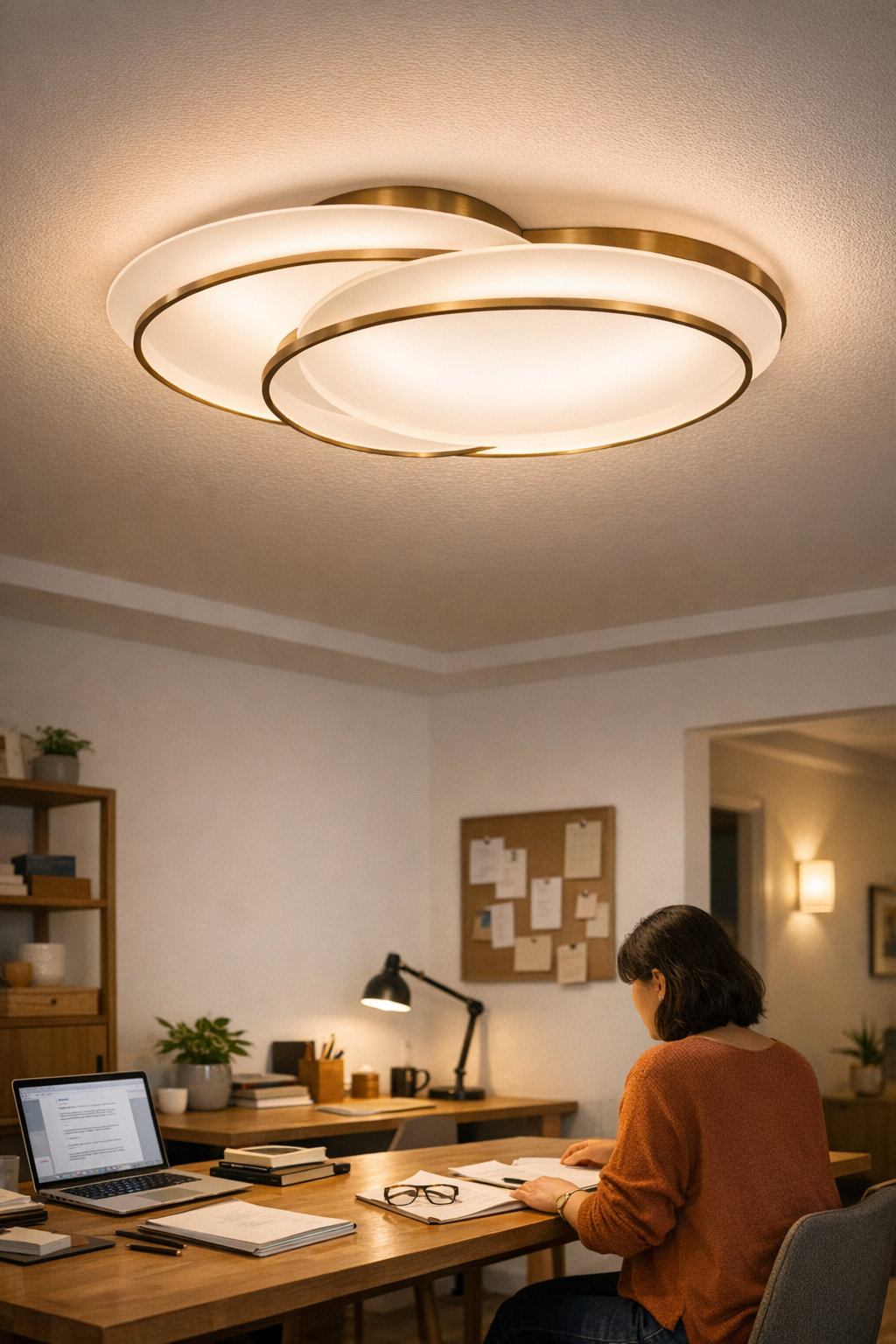
    Linear and panel ceiling lights shift the daily experience from “managing around darkness” to finally using every part of the room as intended. Their broad, even spread fills in the weak zones, leaving no excuse for a dim desk edge or a repeatedly shadowed corner. The difference is clearest at the edges: where a compact or spot fixture fizzles out, a panel carries light smoothly, so you stop moving the lamp or hovering near a single bright point. With less adjusting and chasing after clarity, the surface—worktable, hallway, or reading zone—just starts working without fuss.

    Standard options—can lights, spot fixtures, and most table lamps—scatter bright islands with dark patches in between. The result? Simple activities like switching from reading to team work become mini logistics puzzles; at least one person ends up in the shadow, or you keep tweaking lamps and adding cords just to smooth out the light. Attempts to patch these gaps—more lamps, new angles, an endless cycle of “quick” upgrades—merely add clutter, interrupting both the visual order and the routine. Even a bigger light backfires if mounting, cable path, or bracket placement ignore how you actually use the space: it’s easy to install a fixture that solves the schematic, but frustrates every day in practice.

    • Collaborative work leaves someone struggling with a shadowed stretch while the other squints into spillover glare.
    • Hallway travel turns into a hunt for shoes or keys as the light skips across the room center, missing the floor near the wall.
    • Patching one flaw creates another: more fixtures mean more cable paths, more supports, and more ways for glare—or a clumsy route—to creep back in.

    Clean Lines Matter—But Daily Behavior Matters More

    The instant appeal of panel and linear ceiling lights is all about visual calm—cables hidden tight to the beam, brackets flush with the ceiling, and work surfaces left open. But after a week, surface-level neatness is exposed by lived routines. A true flush-mount fills the edge spaces spotlights miss, maintaining usable brightness wherever you reach or sit—not just in the design mockup, but as you shift from task to meal to recharge. Makeshift combos or shotgunned task lamps may photograph well, but quick reveal their price: mismatched levels, reflections cutting across work, and the constant urge to tweak a lamp or adjust a shade just to get comfortable at night.

    The Tell-Tale Signs a “Clean” Install Isn’t Performing

    • The light covers most of the room, but leaves a dim strip right where hands rest or laptops sit—a sign the “fit” was only surface-deep.
    • Cable lines, bundled out of the way at first, end up exposed in real use as you sit, shift, or move deeper into the room.
    • A support bracket that keeps everything level still intrudes into the workspace, meaning you work around the solution instead of with it.

    These aren’t just small tradeoffs—they’re everyday distractions that chip away at comfort, add clutter, and erode the sense of calm the clean look first promised.

    Real-World Lighting Scenes: Where the Details Sneak Up

    Setup choices show their impact fastest in these two trouble spots:

    In the Hallway: Darkness Lurks at the Edges

    Two shallow panel lights installed along a hallway floor—not down the center line—turn low corners from blind spots into clearly visible paths. By contrast, a run of ceiling cans spaced only for aesthetics leaves shoes, cords, or dropped items in the dark, while glare splashes across unused wall surfaces. Walk the hallway at night, and the weak setup gets exposed: missed floor edges force you to slow down and avoid obstacles that shouldn’t be in your way at all.

    At the Shared Desk: Shadows and Surface Blind Spots

    A “minimal” ceiling fixture above a shared workspace might tick every visual box, but test it in action—two people lean in, one gains nothing but hand shadows while the other copes with direct glare off glossy papers. Task lamps breed across the table just to patch the blind zones. Cables sprawl, nightly cleanup includes another tangle, and the shortfall isn’t fixed—just disguised. With certain supports or brackets placed for symmetry rather than movement, you end up circling the problem: reach, adjust, reposition, repeat. Light that looks right on day one keeps interrupting each routine long after.

    And if cables or bracket arms rest too near reflective surfaces, glare is baked into the design, forcing a round of re-aiming or extra filters that just bring more mess and less comfort.

    The Pattern: Small Inconveniences Add Up

    None of these issues are rare—they simply accumulate in any room where lighting was chosen for appearance rather than real-world use. Within days, the setup that should have solved everything becomes another source of friction: chores take longer, comfort erodes, and what was meant to be maintenance-free demands constant attention.

    How Setup Details Actually Solve the Problem

    Lasting comfort starts with small, targeted adjustments—they matter as much as the fixture itself:

    • Moving a linear light’s support bracket to dodge a ceiling beam lets you neatly hide the cable along trim—suddenly, the light recedes into the structure instead of fighting it.
    • Routing power cords along the shadow of a wall or inside molded detail keeps exposures out of main sightlines and stops them from dominating the view every time you sit or get up.
    • Lifting a panel as little as a centimeter can erase missed edges on a desk or counter, restoring the surface to full, comfortable use—no extra lamp required.

    After dialing in these structural details, routine tasks become automatic again. No more nightly hunt for a better-lit spot; no more last-minute lamp shifts; no more tripping on cords you forgot to tuck away. The light simply works. The support setup fades—you no longer register it as a problem or a project, just as part of how you use the room.

    Is a Linear or Panel Light the Right Solution for Every Space?

    Panel and linear fixtures deliver higher payoff in open, broad-surface rooms where coverage, not visual novelty, matters most. But effectiveness always traces back to support—cable runs and bracket choices have to work with the structure and how you really use the space. If install logic breaks down, even the most “complete” light falls short during repeated use.

    The actual fix isn’t just choosing a bigger or brighter fixture, but rethinking how it gets positioned and supported. Cable paths work best when routed toward beam edges or concealed within architectural breaks; brackets need to clear major movements and work not just overhead, but around hands, tools, and paths on the surfaces below. It’s how you position, mount, and route support hardware—not just which light you install—that quietly decides comfort, downtime, and the look you keep living with.

    Height, Angle, and Space: The Subtle Difference

    Low ceilings demand flush panels or shallow-m

  • Maintaining Smooth Sliding-Door Storage in Dusty Entryways

    The problem with sliding-door storage doesn’t start on installation day—it starts weeks later when repeated use turns smooth entryways into chokepoints. In theory, sliding cabinets look like the solution: doors don’t eat up precious walkway space, everything is hidden, and the entry zone feels calm. But walk through that area for a month. By then, the daily parade—muddy shoes, pet hair, city grit, and backpack swings—has found every gap and groove. Sliding tracks fill up with debris you don’t notice until the door jams hard, halting the morning rush just when you’re least able to stop. The entryway isn’t a showroom; it’s a collision point where storage and real life collide, and sliding doors are first in line to collect evidence of every commute, storm, and careless bag drop.

    When Streamlined Looks Become a Slowdown

    Sliding-door cabinets are a go-to for narrow halls and improvised drop zones because they hug the wall, promise walkable space, and keep things out of sight. The trap: what looks organized is often quietly building up new friction. Every trip inside tracks in a new layer—sand, salt, pet fur—vanishing under the cabinet until you feel resistance instead of seeing a mess. Open shelving shouts when it’s time to sweep, but sliding tracks go silent until they’re jammed. Meanwhile, shoes left too close inch outward, bench seating blurs into overflow storage, and the space meant for flow starts backing up, one gritty glide at a time.

    Real-life routines break the illusion quickly. Damp sneakers nudge dirt into tracks as you stash them. A gym bag clipped carelessly against the base drives another dust line into hiding. Sit for a second on the bench and the row of shoes spreads wider, filling the only gap for cleaning or walking past. Lose track for a few days, and you’re wrestling a stuck panel just to start your shift, unload groceries, or keep evening mud off the floor. Reset is needed long before most people realize the track’s become a trap.

    The Realities of Reset Pressure

    The pain point doesn’t announce itself gently—it pops up during high-pressure minutes. Arms full, rushing out, and the door catches. Two people try to pass, and the whole pathway shrinks to one impatient shuffle as the cabinet resists. Suddenly, there’s nowhere to kick off shoes or drop a bag but right in the walkway. Even a bench that was supposed to collect clutter becomes a stranded island of random stuff—because a snarled track quietly froze the return flow.

    What happens next isn’t just frustration—it’s a loop. The more tightly “organized” the entry appears, the less headspace there is for hidden mess. A sticking door means more overflow: shoes along the edge, bags stacked, items rerouted to wherever there’s open floor. What was once a quick reset after coming home now means a chore list, as the first sign of trouble signals the bottleneck already formed.

    Why Sliding Tracks Fail Under Real Entryway Pressure

    Sliding tracks are invisible collection zones for what every threshold brings in. Swinging doors shrug off a bit of dirt, but sliders depend entirely on a clean run—every missed crumb, stray earring, or sprinkle of dirt compounds. And because the threshold is where inside and outside trade places, no cleaning routine ever fully keeps up. Even careful homes with mats and regular sweeping lose ground: pet hair and micro-grit will always outpace the schedule.

    Pressure points get sharper in busy or multipurpose spaces. Shoes sneak sideways to fill any open space, bags sprawl wider, and with each round, the track absorbs more without giving you a visual cue. Most people only act once it’s obvious—when a dropped backpack blocks the cabinet, or you have to double-stack shoes just to reach for the door. Temporary placements turn semi-permanent as the sliding storage quietly demands more maintenance than anyone bargained for. The fastest way to reset the space becomes to leave things scattered because it feels easier than wrestling the jammed track yet again.

    What Actually Works: The Small, Daily Reset

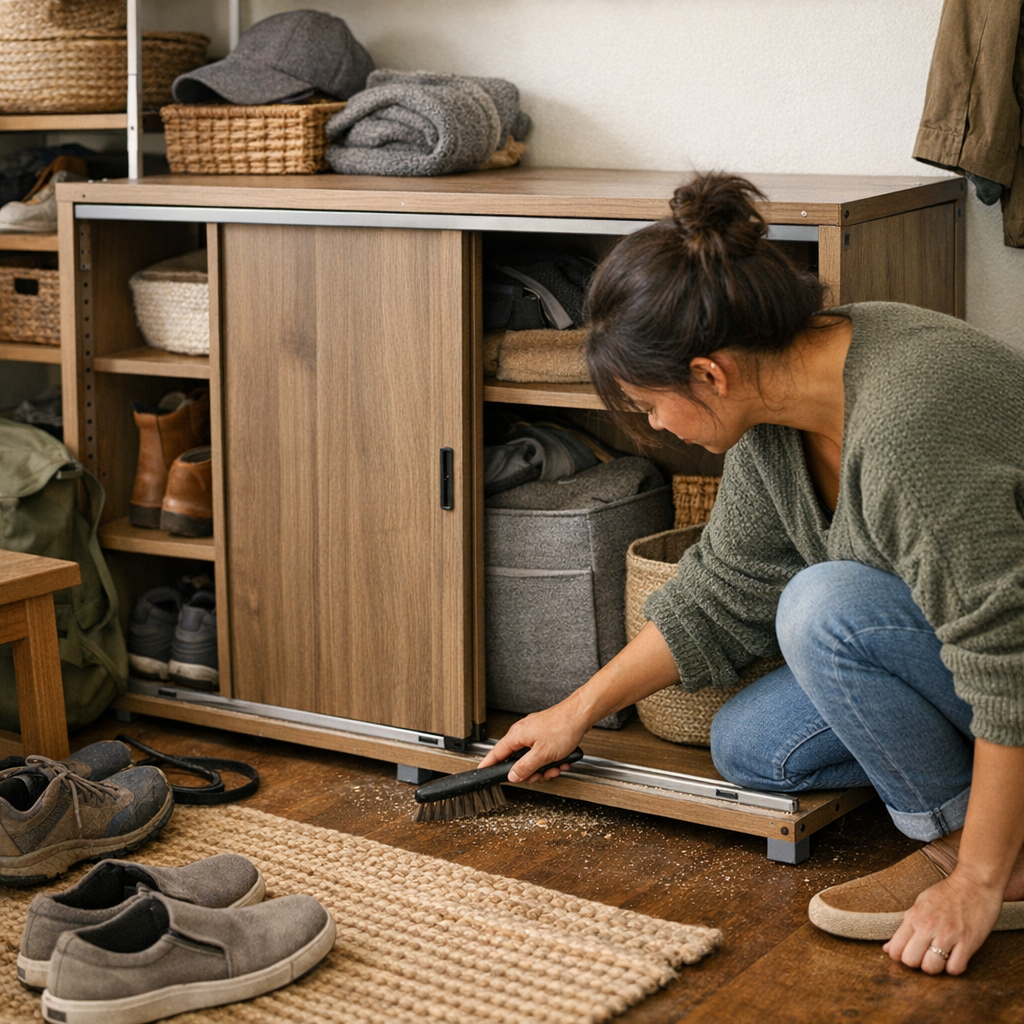
    The solution isn’t about perfection or complicated routines. A skinny nylon brush stashed next to the cabinet does more in a minute than any deep-clean schedule can promise: one deliberate nightly sweep across the track clears invisible buildup before it becomes a problem. This habit—quick, nearly automatic, often done while the rest of the house is quiet—undoes accumulation before it bites, keeping the mechanism reliable even during weekly chaos. No gear timeline, no specialty gadget, just a regular swipe right at the pressure point: the exact place friction wins if you leave it to build.

    Instead of waiting for grit to grind, build the routine where it interrupts least—after the last arrival, before the next rush. Homes with active pets or outdoor-heavy routines, especially, see the payoff. A brush within arm’s reach means fewer bottlenecks, less stalling in the path, and storage that stays trustworthy for the next return. It’s low effort but high return—the only kind of maintenance that survives a transition zone’s real turnover rate.

    Leave Breathing Room: The Four-Inch Rule

    Trying to pack every edge tight sabotages easy resets. Leaving even one shoe’s width (about 4–5 inches) clear in front of the sliding cabinet turns basic maintenance into a fast daily gesture, not a project. That extra bit of buffer makes it possible to sweep or reach the track without moving a dozen things out of the way. Once shoes creep in or overflow piles fill the gap, buildup multiplies—resetting spills over into the hallway, and congestion becomes all but guaranteed. The visible gap isn’t wasted space; it’s a pressure valve against permanent backup.

    Sliding Doors vs. Open Shelving: Tradeoffs That Don’t Show Until Later

    Open shelves air their problems right away—mess is visible and anyone can clear it fast. Sliding-door storage hides disruption until it blocks you, then demands extra steps to recover the lost function. If your routine means quick, shared resets—or you know clutter will always sneak back—open shelving’s visibility wins, even if it means sacrificing the showroom look. In tight or high-traffic entryways, streamlined sliding storage works only if “invisible cleaning” fits your reality. The difference isn’t about style; it’s about whether you want a zone that tells you when it needs help or one that hides trouble until it’s too late to prevent messy overflow.

    Some entryways thrive with sliding doors because the extra minute spent maintaining actually happens. Others find the hassle outweighs the “clean” appearance and end up with their controlled look undone by daily pressure. The choice depends on your entry’s real job—churn, recovery, and how you want to contend with the constant arrival of new mess, not just the photo at move-in day.

    Watch for Breakdowns Before They Become Routine

    The real test isn’t how storage looks the first week; it’s how well the mechanism stays effortless under normal churn. Are resets taking longer, or does the panel still glide on the first try? Have shoes and bags started drifting back onto the floor because the threshold is too hard to keep clear, or is stashing still frictionless? Do minor setbacks—like a day of rain gear or a visit from a friend’s dog—leave clutter lingering, or do you have a way to clear it before it becomes a fixture?

    Entryways rarely fail overnight—the drift is subtle: a handle that sticks, a row of shoes that reshuffles after every trip, or bags lingering one day longer. Strong sliding storage doesn’t just look right behind closed panels; it works right when the pressure is highest, keeping access open and reset simple in spite of constant pushback from real-world debris.

    No entryway stays spotless, and no cabinet stays frictionless forever. But with the right habits and a little space left to maneuver, your storage can carry its weight instead of adding to it—especially when you need its promise the most.

    http://www.betweenry.myshopify.com

  • How Closed-Door Cabinets Reduce Clutter but Hide Hidden Storage Challenges

    Closed-door storage cabinets promise instant relief from visible clutter—but that sense of order is often an illusion that unravels under repeated, real-world use. Shut the doors on a kitchen mess or a hallway scramble, and surfaces snap back to calm. But the hidden friction doesn’t vanish; it shifts behind the panels, where every rushed search or missed category quietly strains your routine. In everyday zones like busy entryways, overstuffed kitchens, or shared family corners, the difference between looking organized and actually functioning well shows up fast: misfiled shoes block umbrellas, bread bins crowd out lunchboxes, and what appears “tidy” keeps disrupting the flow you need most.

    When Calm Surfaces Hide Everyday Friction

    The urge to “just close the door on it” runs strongest in the areas hit hardest by daily drop-offs—entryways thick with shifting piles, kitchens where small appliances and bags have no single home. From the outside, closed cabinets flatten the chaos, especially in tight apartments where any exposed item feels like clutter multiplying. But inside, closed storage turns new issues loose: blind zones, slow retrieval, and the quiet buildup of items nudging out of place. The cost isn’t just cosmetic—it’s measured in lost steps and interrupted escapes, like having to dig for a jacket buried behind grocery overflow, or scavenging beneath shoe piles for a charger you swore you returned yesterday.

    Picture the classic family entry zone: jackets and shoes tucked behind slim doors, backpacks upright—briefly. Real use blows past the initial system. Shoes drift sideways, mail clogs the path, one mitten slides behind gym bags and instantly blocks everything else. “Organized” at a glance means little when you’re already late and the cabinet demands a full search just to get out the door. Each closed-door rescue is paid back with extra reshuffling later, often making the next reset more exhausting than the mess you tried to avoid.

    Why Hidden Storage Can Slow You Down

    Closed cabinets exist to clear the view, but they do it by hiding movement and overflow signals you’d spot right away on open shelves or hooks. With doors in the way, category drift creeps forward—jackets on shoe space, gloves blending with shopping bags—until even the basics get lost in the shuffle. Overflow builds because you don’t see it until something jams. Retrieval turns slow and indirect: you open one cabinet for bags, then have to cross back to search another for a missing hat, all because the divided zones inside blur and blend until there’s no real shortcut left.

    You trade visible mess for hidden disorder: peaceful fronts, but insides wired for accidental sprawl. Shared or high-traffic spaces multiply these invisible costs. One person’s quick drop-off blocks another’s path; a guest jams in a new bag and the entire shelf buckles. With everything out of sight, minor buildup goes unchecked, and full resets become longer, rarer, and more dreaded. You don’t just lose items—you lose rhythm, with each blocked grab or awkward shuffle accumulating into daily friction.

    The Surprising Cost of “It Looks Tidy”

    Line a wall with closed cabinets and watch the illusion of control set in—until a normal routine “sticks” at the worst moment. The first hint is often a hiccup: reaching twice for the same lunch container, detouring around an overfilled section, or pulling open three doors just to get at what floated to the back. These movement bottlenecks slow everything down, especially where speed and repetition matter—entryways, kitchens, and mixed-use halls that need to clear daily volume, not just hide it.

    Overflow and Category Drift: The Invisible Enemies

    Open a closed cabinet a week after a big tidy, and the cracks show. One shelf is suddenly jammed, another hosts a jumble of oddball objects, and categories merge with no clear boundary. In pantries, pasta blends with gadgets; in hallway cabinets, scarves push shoes into blind corners. Moment of recognition: open the door expecting easy access, and hit a compressed tower of unrelated things—a mixed layer you need to pull apart, with each reach risking collapse or total reshuffling.

    The longer category drift and overflow go unchecked, the heavier the penalty: what should be a five-second grab turns into a full redo that kills momentum and morale. Instead of a quick shelf adjustment, you’re hauling everything out—vacuum, hiking boots, abandoned mail—just to restore basic function. For many households, that threshold is never met; items linger in the wrong spot for months, until even looking for them feels like a chore.

    Shared Spaces: When One Person’s Drop-Off Blocks Everyone Else

    Multi-user zones—front halls, shared closets, family bath cabinets—are especially susceptible to hidden drift. A gym bag lands, then groceries, then school supplies; the door closes but inside, categories compress. With walls hiding it, blending grows uninterrupted: cords tangle with gloves, boots swallow shelf space meant for towels, and one person’s “just for now” becomes a weeks-long block for everyone else. Unlike open organizers, where category creep is visible and little issues get fixed in passing, closed-storage slip-ups linger until someone finally empties and resets the whole system. Not surprisingly, that task slides down the priority list for as long as possible.

    What Actually Makes Cabinets Work: Internal Dividers and Bins

    Visual order on the outside doesn’t fix chaos on the inside—only structure does. The most powerful change? Breaking up closed cabinet space with removable bins and real boundaries. Dividers make insides use-specific: a shoe bin for five pairs flags crowding instantly, while a labeled tote for cleaning gear prevents lost mail or stacked coats from vanishing into the mix. Instead of having to dig across everything, search and resets stay sharply focused. When buildup happens, you fix the one zone that’s slipping, not the entire cabinet wall.

    Add defined zones, and closed storage moves from blind spot to early warning system: categories stay in their lanes, overflow gets caught while it’s still small, and resets shrink from half-day projects to matter-of-fact tweaks. Instead of dreading the next overhaul, you spot issues as they emerge—handling exceptions in real time, not letting them spiral until they undermine the whole setup.

    Tip: Choose Container Sizes That Fit Your Routine, Not Just the Shelf

    Bin size dictates system stability. Too big, and the boundaries disappear—everything gets lumped together, making resets grueling. Too small, and every load triggers overflow, annoying everyone involved. Match your bin or divider to the amount and access rhythm of each real-life category: lunchboxes one layer deep so nothing gets buried, cleaning bottles in a single, easy-out tote. Slide-out trays for tools instead of stacking multiple boxes where the bottom is never reached. The right container makes retrieval automatic and return flows reliable—avoiding the slow creep that sabotages the whole wall.

    Making Closed Storage an Ally, Not a Source of Hidden Stress

    Closed cabinets earn their spot in spaces overloaded by volume or visual noise—provided the inside matches your use. Their core weakness plays out over time: slow retrieval, blocked access, creeping resets, and hidden mess that turns up only when your routine already feels strained. Real relief doesn’t come from closing more doors, but from separating zones inside and catching drift before it cascades.

    If you’re trapped in repeat reshuffles or delayed resets, the solution isn’t just “more cabinets”—it’s a smarter, more visible structure inside the space you already have. When each category has a defined home and movement stays unblocked, closed storage supports the speed and flow real rooms demand—not just the look. That’s the shift from looking tidy to functioning fluently, especially in the rooms that test your storage the most.

    Visit Gridry for modular storage solutions that adapt to real-life use.

  • Why Fixed Storage Roles Outperform Flexible Systems in Busy Workshops

    Every new garage or workshop setup feels full of potential: bins neatly mounted, pegboards bristling with promise, carts gliding smoothly into empty corners. For a brief stretch, the whole area looks engineered for speed and efficiency. But then real work starts—pulling a few tools, stashing supplies in a rush, reaching for the cart you rolled aside last night. Almost overnight, that “modular flexibility” turns sideways. Quick grabs turn into mini scavenger hunts. Carts block the path you meant to keep clear. The system that looked right on day one quietly starts working against you when the pressure’s on and your hands are full.

    Where “Flexible” Turns Frustrating

    Walk into a freshly arranged space: open bins everywhere, a cart you can roll “wherever you need it,” peg hooks waiting to be reassigned. For a moment, it’s perfect. But stick around through a few project swaps, and the cracks appear. That mobile cart? Now wedged halfway across the room because you needed the work surface, blocking every pass to the other side. The bin for “miscellaneous” screws? Overflowing and stacked beneath a toolbox, impossible to sift through quickly. Every quick change or small reset means pausing, nudging, peeking, and second-guessing. The flexibility that sounded so empowering now soaks up your momentum in tiny, annoying ways.

    At the root of it all: When every slot and shelf is open to “whatever fits,” the mental load creeps up. Tools don’t flow naturally back to their homes—they just end up wherever’s easiest in the moment. You bend, detour, and hesitate—until a five-minute project leaves the space a little less sorted than before. The pattern keeps repeating: more time spent shuffling, less time actually working.

    Fixed Homes vs. Free-For-All: Where Real Use Draws the Line

    Flexible storage seems like the antidote to clutter. It promises adaptability, the power to change with your workflow. But spend a week in a garage or shop actually living with all that flexibility, and you start to see why it falls short when pressure mounts:

    • Overflow zones multiply. That empty shelf becomes a dumping ground for random fasteners, paint cans, or half-finished side projects. You lose sight of what’s intentional and what’s just “sitting there for now.”
    • Mobile pieces get in the way. The cart that started out neatly nested becomes a speed bump. Instead of freeing up space, it blocks the path between workbench and door.
    • The hunt extends. Favorite tools drift farther from their “usual” resting places after every session. You scan pegboards, move bins aside, crouch to check under the bench, all for one lost driver.

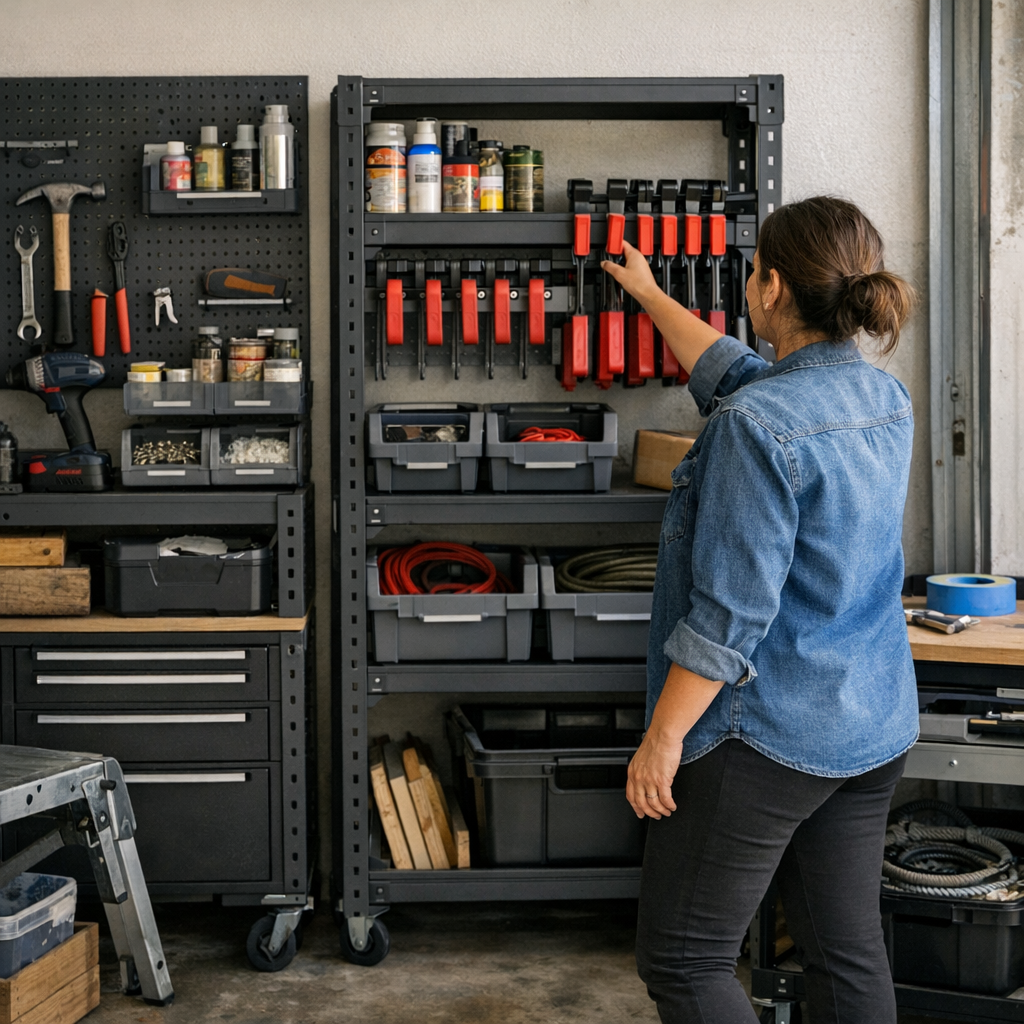
    Compare this to a fixed-role setup. Assign a wall rack—no exceptions—for drivers. Carve out a shelf labeled clamps, and never let anything else creep onto it. Suddenly, every end-of-task reset is quick, almost automatic. Tools land exactly where they belong, so next time you reach, they’re already within arm’s distance. Your workspace returns to “ready” with nothing to untangle or explain.

    Looking Organized vs. Working Smoothly

    This is the honest frustration: a garage can look orderly—bins lined up, hooks filled, no loose clutter in sight—but still work against you. Watch for a week and you’ll spot the cracks: a tape measure buried in a parts drawer, clamps scattered across three zones, the hardware bin absorbing loose washers, wire, and shims. Visual tidiness hides growing confusion, and every reset gets a little slower, a little less certain, as the lines between categories blur.

    Scene in Motion: The Anatomy of Setup Drift

    Imagine a real workbench routine: you’re sanding a frame, fixing an outdoor chair, sorting hardware for a quick fence repair—all in the same week. By Friday, the shelf for abrasives is half-filled with glue bottles. That dedicated spot for pliers now hosts a soldering iron. The rolling cart—meant to follow you—sits stuck by the back door, blocking the path because you wanted it “out of the way” yesterday. Overflow stacks up on the edges, brushes drift to the floor, and every time you reset, you have to scan the whole wall just to find the basics.

    This isn’t messy—yet—but it’s slow, awkward, and full of little workarounds. Each misplaced item means a pause, a rethink, or a detour. Over a month, it steals hours. More often, it chips away at your willingness to start a new project—who wants to spend fifteen minutes reshuffling just to clear a spot?

    Assigning Roles: Small Shifts, Real Relief

    The breakthrough often comes with a tiny change: labels on shelves, one definite hook per tool group, a strict “clamps go here, nothing else” rule. In real use, these fixed markers do what flexibility never can—reset routines turn mindless, tools flow predictably, and overflow stops collecting where it shouldn’t. Even after a flurry of repairs or a long build, clamps end up on their own shelf. Drills hang right back on the pegboard, no questions. There’s no guessing, no scanning the whole space—just a smooth, fast return before you head out the door.

    You haven’t added square footage. You haven’t covered every inch of wall. But the system works better, because your usual movements—grab, use, return—actually fit the setup instead of fighting it.

    Spotting Friction Points: Signs Your System is Slipping

    Keep an eye on your own space for a few days. Odds are you’ll spot these problem zones:

    • Carts stranded awkwardly in passageways, moved just because it’s easier than rethinking where they belong
    • One shelf or wall nook quietly ballooning with overflow—paints, gloves, mystery hardware—all “just for now” but never truly reset
    • Every tool return forcing you to scan three surfaces instead of going straight to one spot
    • Dead corners where bins gather dust and nothing you need is ever close at hand

    Each one signals a system out of sync with your actual habits. The space looks logical when empty, but it slows you down, nudges you off balance, and builds up silent inefficiencies you feel with every pass through the shop.

    Fixed Where It Matters—Flexible Where It Doesn’t

    Here’s the secret rhythm of a space that stays truly usable: high-use tools—drills, drivers, clamps—get unchanging homes, always visible and always accessible. That saves not just seconds but energy, making resets fast and return flow nearly automatic. Meanwhile, seasonal or low-frequency items—odd hardware, paint trays, rags—can float in open bins or flexible drawers. You don’t need perfection, just the critical routines anchored down so nothing slows you when you’re mid-project.

    Quick experiment: Instead of remaking every inch, just pick your most-used tool group. Assign it a fixed, unmistakable home and watch a week’s worth of routines. Most of the “Where did I…?” moments disappear overnight—and so does the creeping frustration that chokes off momentum.

    The Hidden Power of Stable Roles

    It feels counterintuitive to lock in floor or wall space for dedicated tools when you crave adaptability. But dependable setups win in the long run: the system quietly boosts clarity, the awkward dead zones disappear, and every tool is right where you expect, every single time. The penalty for blurring roles is clear—more piles, more blocked paths, more head-scratching, and less actual building or fixing.

    The setups that last—year in, year out—aren’t just tidy on install day. They stay smooth because routines have priority. Your movements rule the layout, not the other way around. Fixed roles for your core tools preserve zone clarity, harness every square inch, and make expansion or reconfiguration painless instead of overwhelming. The best spaces mix security where it counts with flexibility where it’s earned—leaving you free to get to work, not get bogged down by reset after reset.

    You can explore tools and modular systems designed to solve these everyday setup problems at StackNest.