That moment you open the closet in a rush—missing glove, vanishing scarf, socks buried under yesterday’s T-shirts—the frustration isn’t a lack of containers. It’s the daily shuffle: reaching, rummaging, moving piles just to get one thing. Bins and baskets promise order, but the mess reappears—just in new disguises. The right container isn’t about matching labels; it’s about stopping the morning hunt before it starts.
At First, Everything Looks Tidy—Then Real Life Moves In
The day you line up bins or baskets, your closet looks transformed: straight rows, clean corners, a sense of new possibility. Maybe for a week, the surface stays calm. But the routines—the pre-work scramble, kids running late, laundry day resets—reveal the weak spots no catalog photo shows. One shelf turns crowded, items spill between zones, and you’re back to digging for what you need.
Bins: Tidy Facade, Hidden Headaches
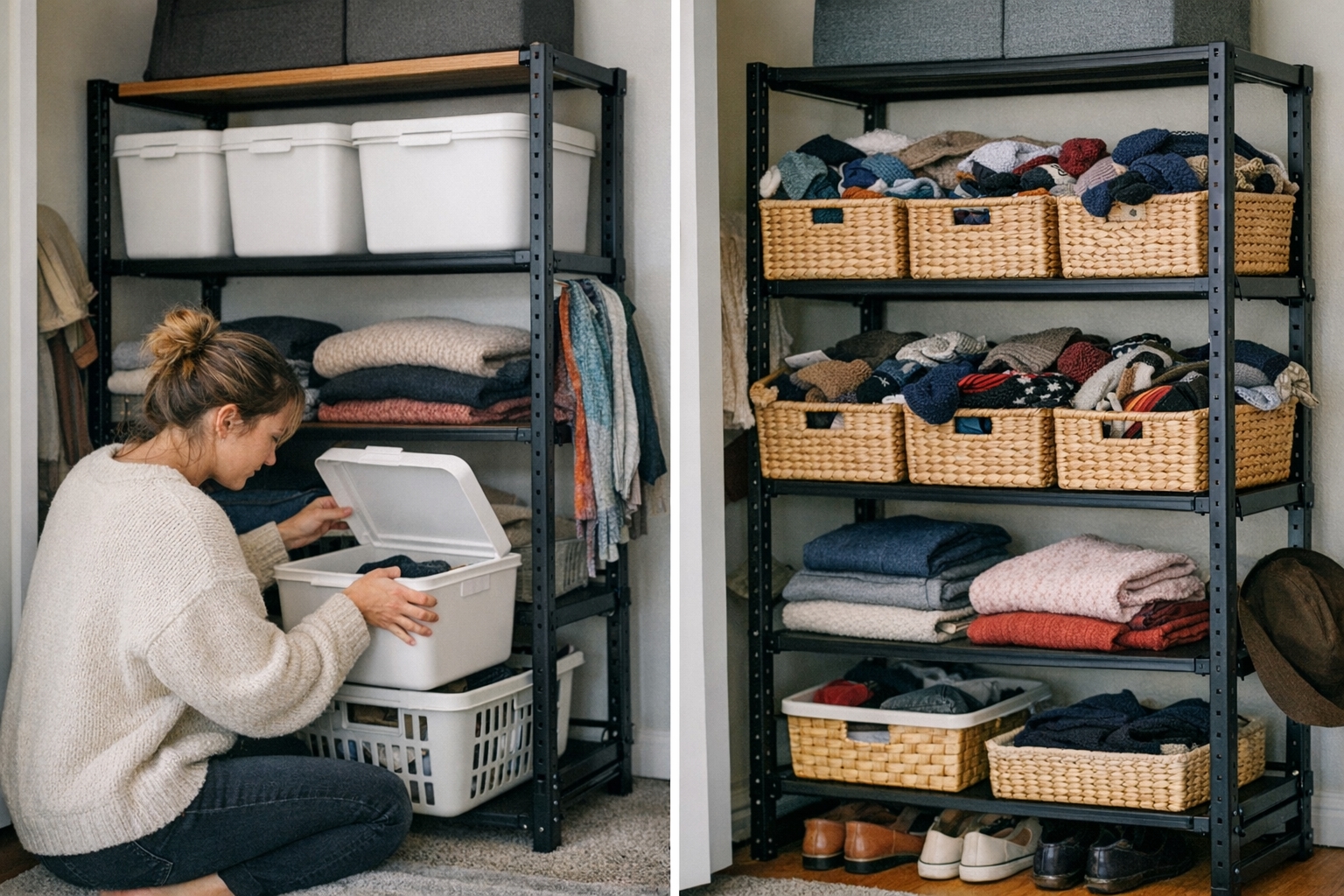
Beneath the smooth surface, bins turn every small retrieval into a hassle. Lids off, bins stacked, categories blurred—half your morning goes to searching for that one short-sleeved shirt or pair of gloves. Smaller items drown at the bottom, while new laundry gets squashed on top “just for now.” Trying to pull one thing means reshuffling the rest. Shelves look organized, but inside chaos quietly spreads. The more you try to “contain” the mess, the more you lose track of what’s buried where.
The Repeated Scene: Dig, Dump, Delay
Imagine school drop-off in ten minutes. You reach for the labeled “winter gear” bin, but everything you need is at the bottom. Scarves and hats blend together; yesterday’s lost mitten surfaces only after two layers come out. Soon, lids stay off and new piles form in front, defeating the original system. Look closely, and you’ll see: the more you hide for neatness, the more you end up repeating the same search every week.
Baskets: Quick Access, Category Creep
Baskets make grabbing what you see easier, but they can’t keep boundaries in place when the week takes over. You spot socks or sunscreen instantly, avoiding the full-bin search. But baskets with open sides or no dividers let items migrate—scarves slide over, toys mix with shoes, sunglasses get lost under hats. Use the shelf a few times, and your careful categories start merging in plain view.
The Pile-Up: When Boundaries Disappear
That basket meant for belts? A week later, pacifiers, headbands, and old receipts are mixed in. Every open-top solution starts as a shortcut, but the shortcut quickly collapses into a heap when life gets busy. Sure, nothing is hidden—but now the shelf always looks like it’s mid-cleanup, never finished.
What Happens When It’s Time to Reset?
The difference between a workable system and wasted shelf space shows during real resets, when you actually have to put things away—fast. If you find yourself sighing at the idea of restacking, opening lids, or separating jumbled items after laundry or a late-night cleanup, the container isn’t helping. Bins can create “dead zones”—places you never reach for because it’s too much work. Baskets can become overflow traps, with small items breaking the system’s boundaries. Both stall progress for one reason: access is never as easy as it looks.
How Long Does “Put Away” Take in Your Closet?
A closet only works if resets fit real-life energy levels. After switching to mid-sized, solid-sided baskets—nothing too high, nothing too open—reset time changed from multi-step chore to one motion: grab, drop, done. No more hunting for lost pairs, no more refolding. One decision—better basket shape—cuts the constant cycle of fix, mess, repeat. You start trusting the shelf to keep its role, instead of treating it like a zone of constant repair.
Kids, Categories, and the Chain Reaction
Let kids loose with baskets, and you’ll watch their cleanup habits unravel after a single sleepover—matchbox cars in with hats, Legos hiding under books. Bins, on the other hand, turn into black holes where no one—adult or child—remembers what went where. Either way, the “organized” look falls apart as soon as busy life intervenes. Rushed weeks, last-minute packing, seasons changing—all multiply the drift away from the system you set up.
Where Do Items Drift During the Week?
Yesterday’s clean pile becomes today’s mixed stack. Towels blend with T-shirts, accessories scatter into new territory. If your shelves aren’t guiding you—if you find yourself always “fixing” categories or digging out missing things—your container choice is working against your routines, not with them. And the busier the schedule, the faster the shelf dissolves into disorder.
Spotting Where the Real Friction Lives
This isn’t about bins versus baskets—it’s about finding out where storage breaks down for your family. Is the frustration hiding in things you can’t see, or in the categories that won’t stay put? Do you avoid tidying up because it takes too many steps, or because your shelves don’t actually hold boundaries? The repeat pain point signals the true fix—not a label, but a gentle change in structure that matches your habits.
Try this: Swap one cluttered shelf for mid-height, solid-sided baskets—just for a week. Track how fast you put items away and how often you have to dig or redo a category. If the reset gets easier—and the shelf stays orderly with less fuss—you’ve found the right fit. If not, shift again. Storage is never “done.” It’s about making what’s visible stay useful, not just neat on day one.
Don’t Just Store—Set Up Shelves You Can Live With
Your closet is a living space, not a frozen photo. Every shelf is a test of your real habits—how fast you can reach, reset, and keep like with like, even on messy days. Bins can turn shelves into lost & founds. Baskets can turn into pile zones. The best system is the one you barely notice each day, because it matches how you actually move, reach, and reset. Watch the friction points—then don’t be afraid to try an upgrade, even if it’s just one basket at a time. A closet that works is about less hunting, less fixing, and more space actually working quietly in your real life.