
The warning signs aren’t subtle if you know where to look (and listen). You’re deep into sanding down panels, sawdust feathering onto your boots, the fan’s hum pressing dust toward the exit. Then the pitch shifts—less zip, more drag. Not catastrophic, but you feel it: the shop air thickens, the fan’s restart drags, and even your next cut feels harder. It’s not just about comfort; tool performance and your own energy take the hit. Overlook this, and even the sharpest blade or the newest cordless drill starts to feel bogged down.
Skipping Maintenance? The Tools Notice First
It’s tempting to see filter cleaning as an afterthought—piggybacked onto a bench cleanup or ignored until light through the vent looks suspiciously gray. But in actual use—drilling into seasoned pine, grinding through steel hangers, sanding compound from wall repair—neglected filters put pressure where you notice it most:
- Subtle, then stubborn drop in airflow, making dust linger over your workstation
- Fan pitch deepens under load, adding a whine to background noise
- Fan body radiates uncomfortable heat midway through a busy morning
Stretch cleaning too far and you pay not just with haze in the air. Dust hovers, motors run hotter, and soon it’s not just filter life on the line but bearings, ductwork, and your patience with every clogged drill fluting or slow-to-cool saw blade.
Why “Set-It-and-Forget-It” Schedules Backfire
On real jobs, the clean-every-week mentality crumples fast. The pace and type of your work explode that system: two days of cutting MDF or drywall mud outpace a light week of assembly by a mile. By the time you spot caked dust on vent fins or breathe in a muskier haze, you’re already losing tool sharpness and shop stamina.
Work Surges Don’t Wait for Friday
Maybe you just finished a long day cutting cement board in the back shed. Dust claims every flat surface—fan grills, clamps, even the phone you set on a shelf two hours earlier. No “Friday” reset covers for Monday’s sudden grind. Those unchecked surges don’t just mean longer cleanups; the grime ends up inside tools, tightening collets and scraping bearings, costing you precision and adding resistance to every new cut or battery swap.
Fan Feedback: When Small Changes Signal Bigger Trouble
Not all filters behave the same, and guessing is a bad wager. Two filters, side by side, might look identical at a glance. Throw a week’s worth of belt sanding at both—the finer media chokes early, fan noise switches from hum to groan, your next drill pass throws more dust than it catches. The other filter, coarser but lower-rated, breathes easy (for now), but lets more grit slip through and line your saw’s moving parts. Look for what the fan is telling you, not just what you see with a flashlight.
- The fan’s whine shifts lower, more strained, after each session attaching fence plates
- Heat climbs with every run of long drywall cuts or deep hole drilling
- Grit accumulates not just inside duct seams, but also on miters, bit trays, and battery chargers
These signals show up most when you’re mid-task, not standing idle—thick air after a sanding marathon, fans lagging when you power-up for the next round, small upticks in hand fatigue as tools work just a bit harder with each pass.
Saying Goodbye to Guesswork: Pressure Tells the Truth
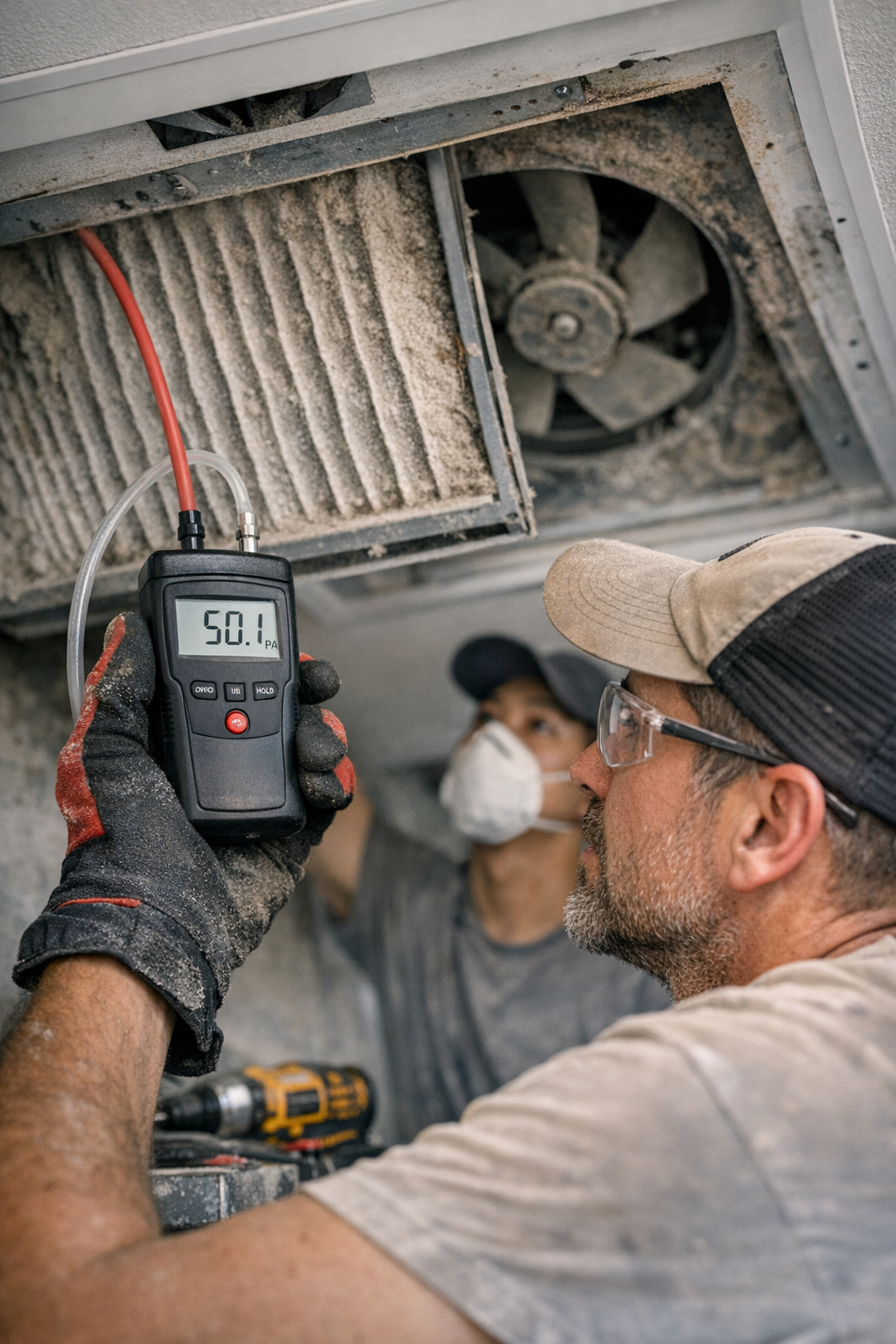
If you’ve wasted time on both extremes—waiting too long and cleaning obsessively “just in case”—switching to measurement instead of hope changes everything. A manometer mounted to the fan housing tells you real pressure, not guesses; for one dust-blown workshop, 50 pascals was where trouble started. Once that line tipped, quick filter cleaning meant snapping airflow and sound back to normal, every single time—regardless of how superficially clean the filter seemed.
After every high-dust stint—planing edges, batch drilling joist holes—checking static pressure trumped every tired calendar schedule. It landed cleaning right where it belonged: after 9–12 hours of real load, not “once per week” by habit. The result? Fewer sluggish re-cuts, sharper bit handling, steadier tool pace without surprise slowdowns.
Adapt or Burn Time
Keeping cleaning tied to performance, not guesswork, pays off:
- Constant airflow and a familiar fan note, even after back-to-back grinding rounds
- Longer stretches between pricey filter swaps
- Far less rogue grit sabotaging smooth miters or seizing up blade guides
No manometer? Use what you have: check for fan warmth mid-way through a heavy cut session, tune in to pitch changes when the chop saw throws sparks, or spot fine powder at duct exits instead of at the main filter. These are the workshop’s way of keeping score, and they always beat the calendar.
The Filter You Pick Changes Everything
Swapping to a finer, denser filter mesh might make the air smell cleaner, but expect tighter windows for cleaning. Finer filters choke faster under real dust loads—especially after you spend hours sanding filler or ripping fiberboard. Coarse filters can fake a longer light-duty interval, but send more grit to tools where it does the most harm. If you just upgraded filters and suddenly find yourself cleaning more often, you’re seeing reality, not a defect. It means more dust is being caught before it gets to your hand tools and motor windings.
Workable Cleaning: Tools, Timing, and Real Signs
Skip the wall calendar. Let tool feel and shop air set your pace. If the fan’s getting louder, the body’s almost hot to the touch, or fine dust refuses to clear, it’s time. Pay close attention after the dirtiest tasks: sanding rough plywood, grinding old bolts, building a run of cabinets that covers the floor in sawdust. Count these as your checkpoints—don’t wait for a marked date.
If you invest in a pressure gauge, use it as your reality check. If not, rely on the shop’s narrative: the shift in fan tone, odd warmth at the casing, grit sneaking into hinge points. These are as good as any calendar when it comes to keeping tools sharp and air clear.
Bottom line: every less-burdened filter helps your saws cut quicker, bits run cooler, batteries last that much longer, and your own focus holds steady—without the drag of a dusty, sluggish shop. That’s productivity you feel every session, not just when you clear the vent for inspection.
For practical fan filters and more workshop-tested tools, visit Gumboll.